The 2021 Israel conflict, widely referred to as Operation Guardian of the Walls by Israel and Operation Sword of Jerusalem by Hamas, was an eleven-day military confrontation between Israel and Palestinian militant groups in the Gaza Strip. Triggered by a confluence of legal disputes over property evictions in East Jerusalem and unrest at the Al-Aqsa Mosque, the hostilities escalated into intensive rocket fire and airstrikes, resulting in significant casualties, infrastructure destruction, and widespread civil unrest within mixed Jewish-Arab cities inside Israel.
Context and Background: The Lead-Up to May 2021
To understand how the 2021 Israel conflict erupted, one must examine the compounding legal, religious, and political tensions that accumulated in Jerusalem and the West Bank during the first half of 2021. The immediate flashpoint centered on the neighborhood of Sheikh Jarrah in East Jerusalem, where several Palestinian families faced potential eviction following legal battles with Jewish nationalist organizations claiming ownership of the land dating back to the late 19th century.
Simultaneously, the political landscape among Palestinians was in flux. Palestinian Authority President Mahmoud Abbas had indefinitely postponed Palestinian legislative elections scheduled for May 2021, ostensibly citing Israel's refusal to guarantee voting access in East Jerusalem. This decision created a political vacuum, leaving Hamas an opening to position itself as the primary defender of Jerusalem and Palestinian rights against perceived Israeli encroachment.
Religious and Territorial Flashpoints
The friction in Sheikh Jarrah coincided with the holy month of Ramadan, a period historically marked by heightened religious devotion and heightened sensitivities in Jerusalem's Old City. Restrictions placed by Israeli police on Damascus Gate—a traditional gathering place for Palestinians during Ramadan evenings—sparked nightly protests and clashes.
The tension culminated during the final days of Ramadan around the Al-Aqsa Mosque compound, revered by Muslims as Haram al-Sharif and by Jews as the Temple Mount. Clashes erupted between Palestinian protesters throwing stones and fireworks and Israeli police deploying tear gas, stun grenades, and rubber bullets inside and around the mosque. These images circulated rapidly across global media and social networks, amplifying outrage across the West Bank, within Arab communities inside Israel, and throughout the broader Middle East.
Chronology of the Eleven-Day Escalation
The crisis transitioned from civil unrest to open warfare on May 10, 2021, following the expiration of an ultimatum issued by Hamas demanding that Israel withdraw its security forces from the Al-Aqsa Mosque compound and Sheikh Jarrah.
| Date (May 2021) | Major Milestones and Events |
|---|---|
| May 10 | Ultimatum expires; Hamas launches rockets toward Jerusalem; Israel responds with airstrikes in the Gaza Strip. |
| May 11–12 | Heavy rocket barrages target Tel Aviv and central Israel; high-rise residential and commercial towers in Gaza fall. |
| May 13–15 | Ground forces mass along the Gaza border; civil unrest erupts in mixed Israeli cities (Lod, Acre, Jaffa). |
| May 16–20 | Intensive diplomatic mediation efforts by Egypt, Qatar, and the United Nations gain momentum. |
| May 21 | A mutual, uncoordinated ceasefire takes effect at 2:00 AM. |
As detailed in the timeline above, the conflict moved swiftly. Within hours of the initial rocket fire on May 10, the Israel Defense Forces (IDF) launched Operation Guardian of the Walls, striking targets across the Gaza Strip. For nearly two weeks, millions of Israelis sought shelter as Palestinian Islamic Jihad and Hamas fired over 4,300 rockets toward southern and central Israeli population centers, including Tel Aviv, Ashkelon, and Beersheba.
The Role of the Iron Dome Missile Defense System
A defining technical aspect of the 2021 conflict was the performance of Israel's Iron Dome air defense system. Designed to intercept short-range rockets and artillery shells, the system utilized radar and predictive algorithms to calculate the trajectories of incoming projectiles, firing interceptors only at those heading toward populated or strategic areas.
During the eleven days of fighting, the Iron Dome reportedly intercepted approximately 90% of the rockets that threatened Israeli towns and cities. This technological shield significantly mitigated Israeli casualties, reducing fatalities compared to previous rounds of conflict, though it also shaped the strategic calculus by allowing leaders on both sides time to manage the political and military intensity of the confrontation.
Impact on Civilians and Infrastructure
The human and physical toll of the 2021 Israel conflict was severe, disproportionately affecting the densely populated Gaza Strip while also disrupting normal life across Israel.
Casualties and Humanitarian Conditions
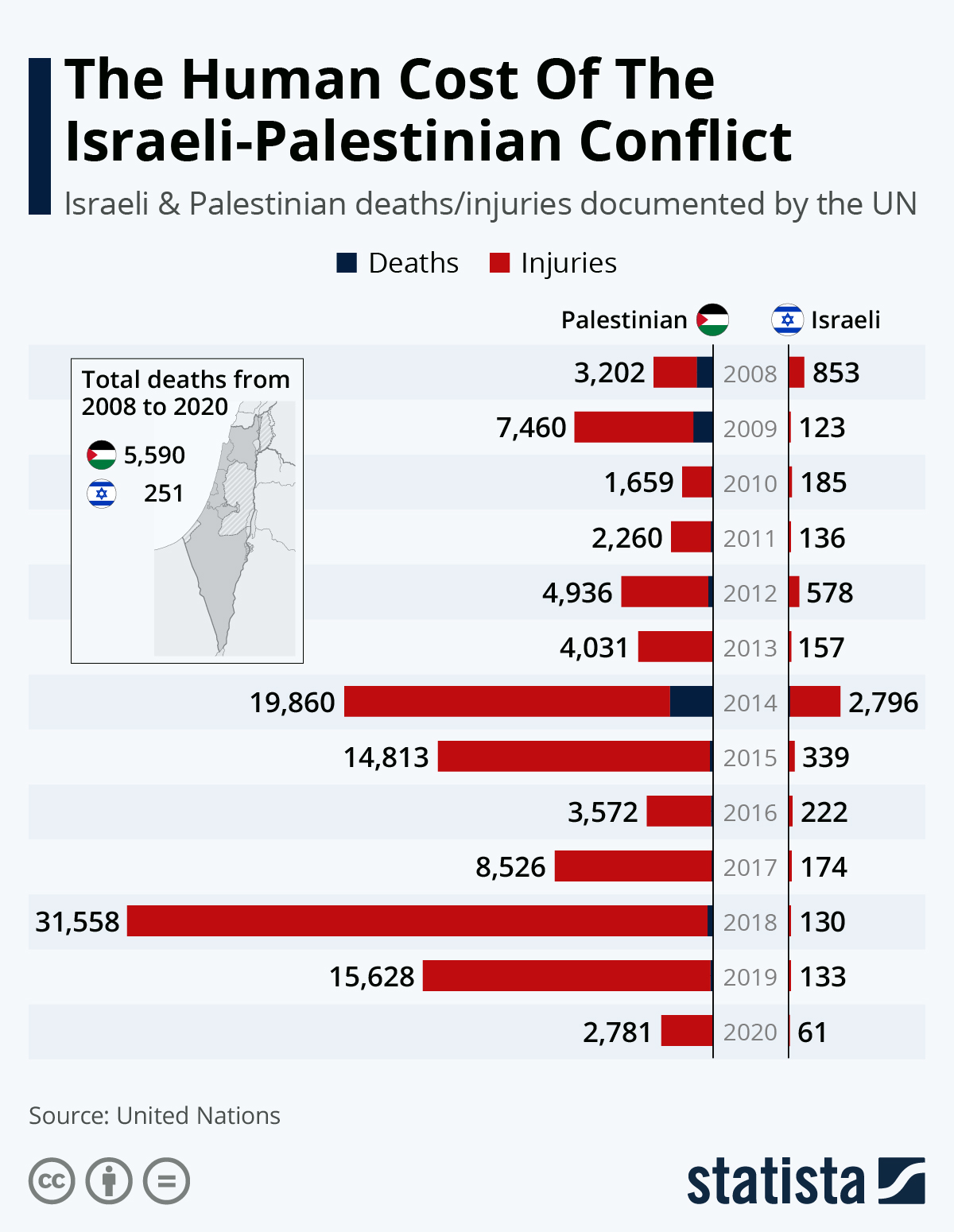
According to reports by the United Nations Office for the Coordination of Humanitarian Affairs (OCHA) and local health authorities, over 250 Palestinians were killed in the Gaza Strip, including dozens of children and women, with more than 1,900 wounded. In Israel, 13 people were killed by rocket fire and related unrest, including two children, and hundreds sustained injuries while running to shelters.
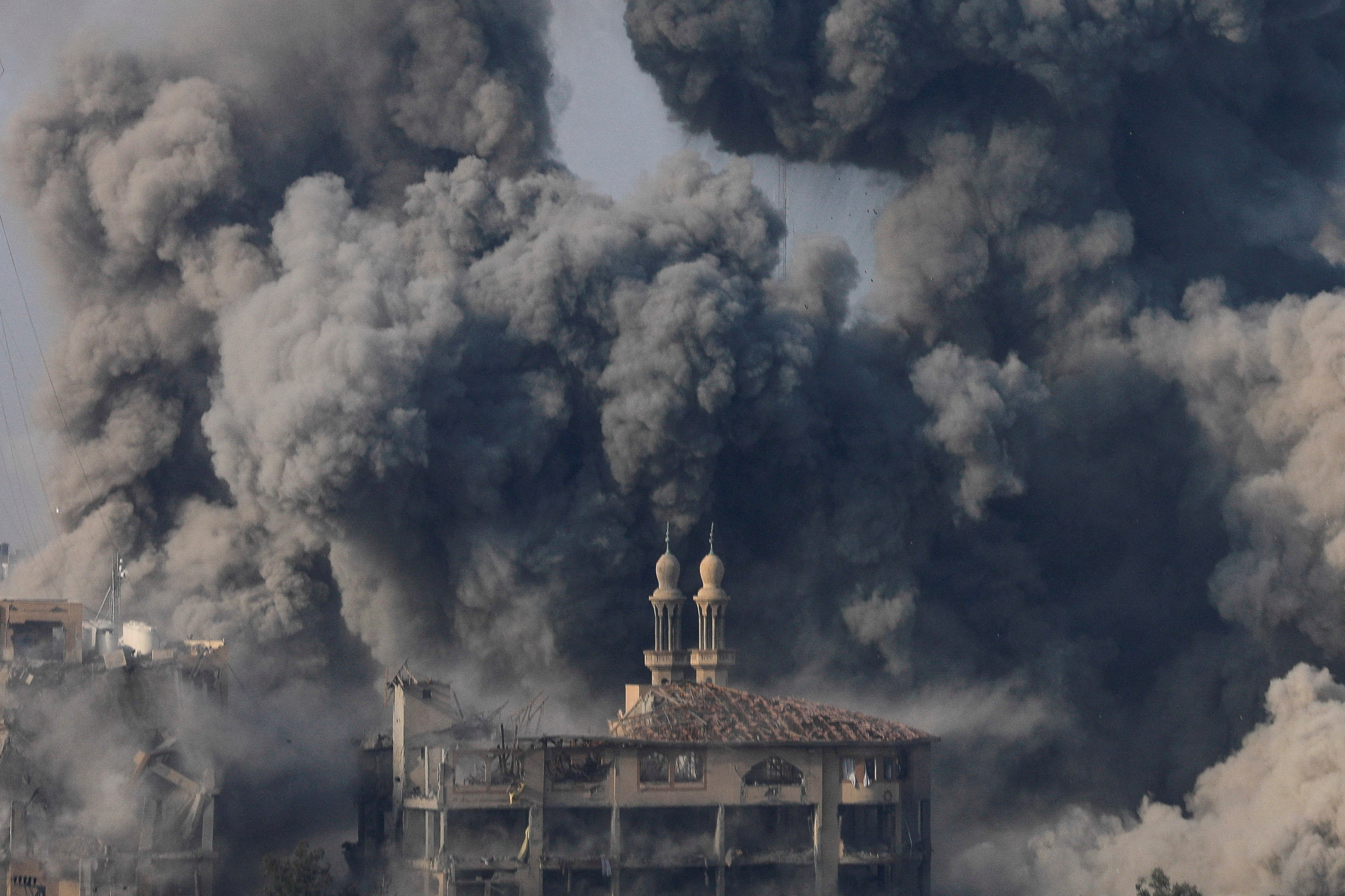
In Gaza, the structural damage was extensive. Airstrikes destroyed or severely damaged dozens of multi-story residential and commercial buildings, water and sanitation networks, power lines, and health facilities. The blockade on Gaza, maintained by both Israel and Egypt, complicated immediate rescue operations and subsequent humanitarian aid distribution, leaving tens of thousands temporarily displaced.
Internal Civil Unrest in Mixed Cities
A unique and alarming dimension of the 2021 conflict was the outbreak of violent civil disturbances within "mixed cities" inside Israel—such as Lod, Ramle, Acre, Jaffa, and Haifa—where Jewish and Arab citizens live side by side.
Intercommunal violence, riots, synagogue arsons, attacks on vehicles, and assaults by extremist groups on both sides shattered the fragile coexistence in these municipalities. This internal unrest prompted the deployment of Israel Border Police reserves internally and left deep social scars that persisted long after the military ceasefire took effect.
Regional and International Diplomatic Reactions
The international community responded swiftly to the escalation, balancing expressions of support for Israel's security with urgent appeals for restraint and humanitarian access for Gaza.
- United States: Maintained strong diplomatic backing for Israel's right to defend itself while President Joe Biden's administration engaged in intensive behind-the-scenes quiet diplomacy alongside Egyptian mediators to secure a ceasefire.
- United Nations: The UN Security Council held emergency sessions, though diplomatic friction delayed unified statements. Secretary-General António Guterres repeatedly called for an immediate halt to hostilities and warned of a potential humanitarian crisis.
- Regional Actors: Egypt played a pivotal role as a traditional intermediary, utilizing its intelligence channels with both Hamas and Israeli authorities to negotiate terms for a cessation of hostilities. Qatar provided financial aid and coordinated with the UN for post-conflict reconstruction efforts, while Jordan utilized its traditional status regarding Jerusalem holy sites to calm religious tensions.
Frequently Asked Questions
What was the immediate trigger for the 2021 Israel conflict?
The immediate trigger involved legal disputes over potential property evictions of Palestinian families in the Sheikh Jarrah neighborhood of East Jerusalem, alongside escalating clashes between Palestinian protesters and Israeli police at the Al-Aqsa Mosque compound during Ramadan.
How long did the military confrontation last?
The active hostilities lasted for eleven days, beginning with rocket fire and airstrikes on May 10, 2021, and concluding with a mutual ceasefire brokered primarily by Egypt that took effect on May 21, 2021.
How effective was the Iron Dome missile defense system?
The Iron Dome system successfully intercepted approximately 90% of incoming rockets fired from the Gaza Strip that were projected to land in populated areas, preventing widespread civilian casualties within Israel.
What were the total casualties reported during the conflict?
Over 250 Palestinians were killed in the Gaza Strip due to Israeli airstrikes, and 13 people were killed in Israel by rocket fire and domestic unrest. Thousands more were injured on both sides.
Did the conflict remain restricted to Gaza and Israel proper?
No. While the primary military exchange occurred between the IDF and militant groups in Gaza, the conflict sparked widespread protests across the West Bank and unprecedented intercommunal civil unrest in mixed Jewish-Arab cities within Israel.
Conclusion and Subsequent Developments
The 2021 Israel conflict fundamentally altered the security and political dynamics of the region, demonstrating how local grievances in Jerusalem can rapidly cascade into a multi-front escalation. While the ceasefire restored a degree of calm, the underlying political drivers—including the status of Jerusalem, the expansion of settlements, the blockade of Gaza, and the lack of a political horizon for a two-state solution—remained unresolved. Policroms, military planners, and humanitarian organizations continue to study the events of May 2021 as a watershed moment that reshaped domestic politics and security doctrines across the region.