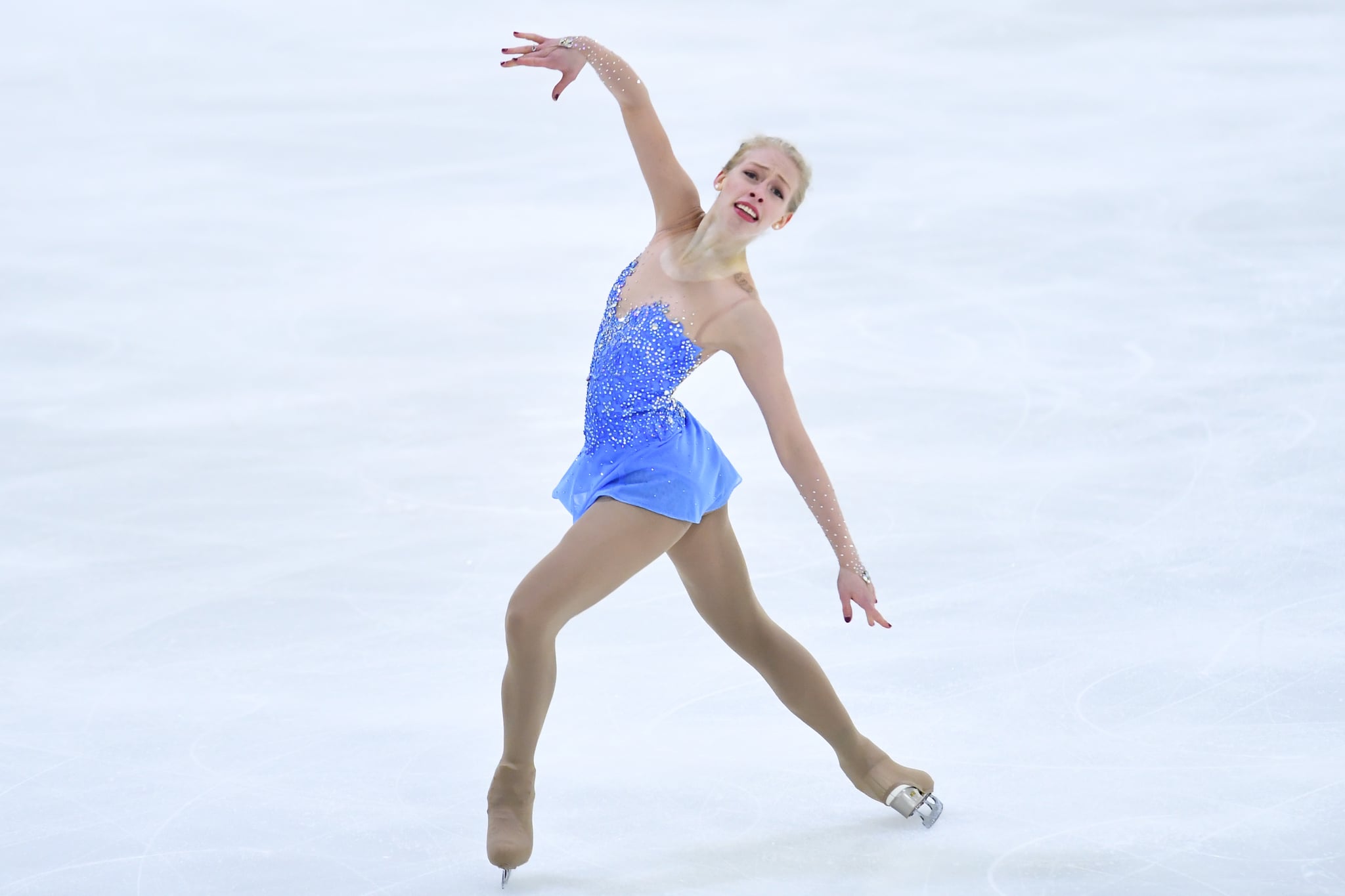
The 2018 Winter Olympics in Pyeongchang, South Korea, featured 153 figure skaters from 24 nations, competing across five events: Men’s Singles, Ladies’ Singles, Pairs, Ice Dance, and the Team Event. These athletes qualified through rigorous international standards set by the International Skating Union (ISU), representing the pinnacle of competitive skating during the 2017–2018 season.
The Qualification Pathway and Entry Requirements
Participation in the 2018 Winter Olympics was not based on subjective selection but on strict performance benchmarks. The qualification process was two-pronged: the qualification of quota places for nations and the eligibility of individual athletes.
The International Skating Union allocated quota spots based on the results of the 2017 World Figure Skating Championships in Helsinki, Finland. Nations that did not qualify spots at the World Championships had a second opportunity to earn them at the 2017 Nebelhorn Trophy in Oberstdorf, Germany. This system ensured that the field in Pyeongchang represented the top global talent, balancing representation across different National Olympic Committees (NOCs).
Individual skaters had to meet two primary criteria to be eligible for nomination by their respective federations:
- Age Requirement: Skaters must have reached the age of 15 by July 1, 2017.
- Minimum Technical Elements Score (TES): Athletes were required to achieve specific minimum scores in the short program and free skate segments at selected ISU-sanctioned international events during the 2016–2017 or 2017–2018 seasons.
These requirements served to maintain the high technical standard of the Olympic Games, preventing unqualified entries and ensuring that the level of competition remained consistent with the prestige of the event.
Event Categories and Competitor Dynamics
The 2018 Winter Olympics maintained the traditional structure of the sport while showcasing the immense skill of the participants in four individual disciplines and one team discipline.
Men’s Singles
The men’s event in Pyeongchang was headlined by the battle for gold between Japan’s Yuzuru Hanyu, who successfully defended his 2014 Olympic title, and his compatriot Shoma Uno, who took silver. Spain’s Javier Fernández secured the bronze. The field featured 30 competitors, representing a diverse mix of veteran champions and rising stars from nations including the United States, Canada, Russia (competing as Olympic Athletes from Russia), and China. The technical landscape was defined by the prevalence of quad jumps, which became the standard requirement for podium contention.
Ladies’ Singles
The Ladies' event was arguably the most anticipated, characterized by the rivalry between Russian training partners Alina Zagitova and Evgenia Medvedeva. Zagitova claimed the gold medal by a narrow margin, while Medvedeva took silver. Kaetlyn Osmond of Canada earned the bronze. This event highlighted the tactical use of the scoring system, particularly the placement of jumping elements in the second half of the program to maximize point totals—a strategy Zagitova executed with clinical precision.
Pairs
The Pairs discipline required synchronization and immense physical strength. The German duo of Aljona Savchenko and Bruno Massot delivered a historic free skate, rising from fourth place after the short program to win the gold medal. The silver went to Sui Wenjing and Han Cong of China, and the bronze was claimed by Meagan Duhamel and Eric Radford of Canada.
Ice Dance
Ice Dance focused on musical interpretation, edge quality, and intricate footwork. The French pair of Gabriella Papadakis and Guillaume Cizeron set world records during the event but ultimately took silver behind the Canadian duo of Tessa Virtue and Scott Moir. This victory made Virtue and Moir the most decorated figure skaters in Olympic history at the time. The bronze went to Maia Shibutani and Alex Shibutani of the United States.
Summary Table: 2018 Olympic Medalists by Discipline
| Discipline | Gold Medalist(s) | Silver Medalist(s) | Bronze Medalist(s) |
|---|---|---|---|
| Men's Singles | Yuzuru Hanyu (JPN) | Shoma Uno (JPN) | Javier Fernández (ESP) |
| Ladies' Singles | Alina Zagitova (OAR) | Evgenia Medvedeva (OAR) | Kaetlyn Osmond (CAN) |
| Pairs | Savchenko / Massot (GER) | Sui / Han (CHN) | Duhamel / Radford (CAN) |
| Ice Dance | Virtue / Moir (CAN) | Papadakis / Cizeron (FRA) | Shibutani / Shibutani (USA) |
| Team Event | Canada | Olympic Athletes from Russia | United States |
The Complexity of the Team Event
The Team Event, introduced in 2014, continued in 2018 as a test of a nation's overall depth rather than individual mastery. Each country submitted entries for all four disciplines: Men’s, Ladies’, Pairs, and Ice Dance. Points were awarded based on placements in each segment, with the lowest score per segment being the most desirable (1st place = 10 points, 2nd = 9, etc.).
This format forced nations to balance their skaters’ energy across the multi-day event. Canada’s victory underscored their strength across every discipline, while the Olympic Athletes from Russia and the United States showcased how critical consistency is when managing multiple entries over several days of competition.
Technical Challenges and Judging Standards
The 2018 Games were governed by the ISU Judging System (IJS), which evaluates performance through two main components: the Technical Element Score (TES) and the Program Component Score (PCS).
- TES: Judges analyze the difficulty and execution of jumps, spins, and footwork sequences. Technical Specialists verify the level and base value of each element.
- PCS: Judges score five areas: Skating Skills, Transitions, Performance, Composition, and Interpretation of the Music.
One of the significant challenges for competitors in 2018 was the “backloading” of programs. By performing high-difficulty jumping combinations in the latter half of the program, skaters earned a 10% bonus on those elements. While this encouraged higher technical scores, it also increased the physical toll on the athletes, making training for stamina as important as training for technical execution.
Historical Context and Olympic Athletes from Russia (OAR)
A critical element of the 2018 competitor list was the presence of the "Olympic Athletes from Russia" (OAR). Due to findings regarding a systemic doping program, the International Olympic Committee suspended the Russian Olympic Committee, allowing clean athletes to compete under the Olympic flag. This necessitated unique protocols, including the use of the Olympic anthem rather than the Russian national anthem during medal ceremonies. Despite the political and administrative complexities, these athletes competed under the same technical standards as all other nations, demonstrating high levels of skill in both the singles and team disciplines.
Frequently Asked Questions
How did skaters qualify for the 2018 Winter Olympics? Skaters qualified through a combination of national performance at the 2017 World Championships and the 2017 Nebelhorn Trophy. Each athlete also needed to meet minimum technical element scores set by the ISU and pass age requirements.
Who were the most decorated competitors at the 2018 Games? Tessa Virtue and Scott Moir of Canada stand out as the most decorated, winning gold in both the Ice Dance and the Team Event, cementing their legacy as the most successful Olympic figure skaters in history at that time.
What was the "Olympic Athletes from Russia" designation? The OAR designation was a neutral status granted to Russian athletes after the Russian Olympic Committee was suspended. These athletes wore neutral uniforms and did not compete under the Russian flag.
Did any skaters compete in multiple events? Yes. In the team event, many top-tier skaters were selected to represent their countries, meaning many competed in both their individual discipline and the team competition, requiring significant physical endurance over the course of the Olympics.
What determined the difficulty level of a jump in 2018? Difficulty was determined by the ISU base value system. Jumps were categorized by rotations (e.g., Triple Axel, Quadruple Toe Loop). Each had a specific point value, and "Grade of Execution" (GOE) marks were added or subtracted based on the quality of the jump.
Professional Guidance for Researching Historical Skating Data
When researching historical Olympic results, it is essential to utilize official records from the International Skating Union (ISU) and the International Olympic Committee (IOC) archives. Avoid relying on unofficial fan forums or blogs for specific scoring data, as technical scores and deductions can be complex and are often misinterpreted without access to the full protocol sheets. Official "Event Protocols" provide the exact scores, judges' panel notes, and deductions for every single element performed by every competitor, making them the most reliable resource for technical verification.
Next Steps for Enthusiasts and Researchers
If you are interested in deep-diving into specific performances from the 2018 Games, begin by accessing the ISU results page for the 2018 Winter Olympic Games. Look for the "Protocols" document for each discipline; this will allow you to see exactly how individual skaters performed compared to their competitors. For those analyzing the evolution of the sport, comparing the 2018 judging protocols to those from the 2014 and 2022 games will reveal significant shifts in how technical difficulty and artistic expression were weighted by the judging panel.