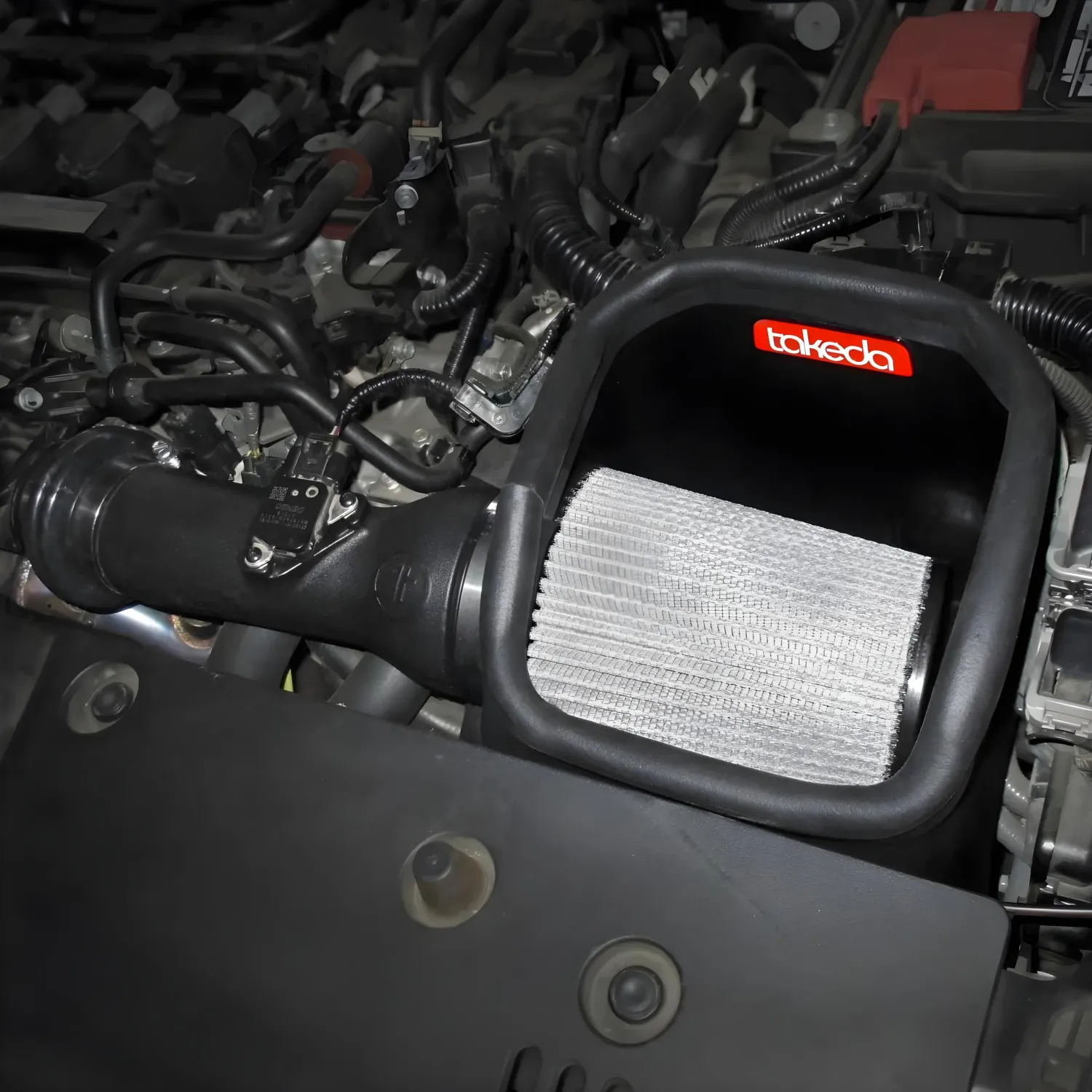
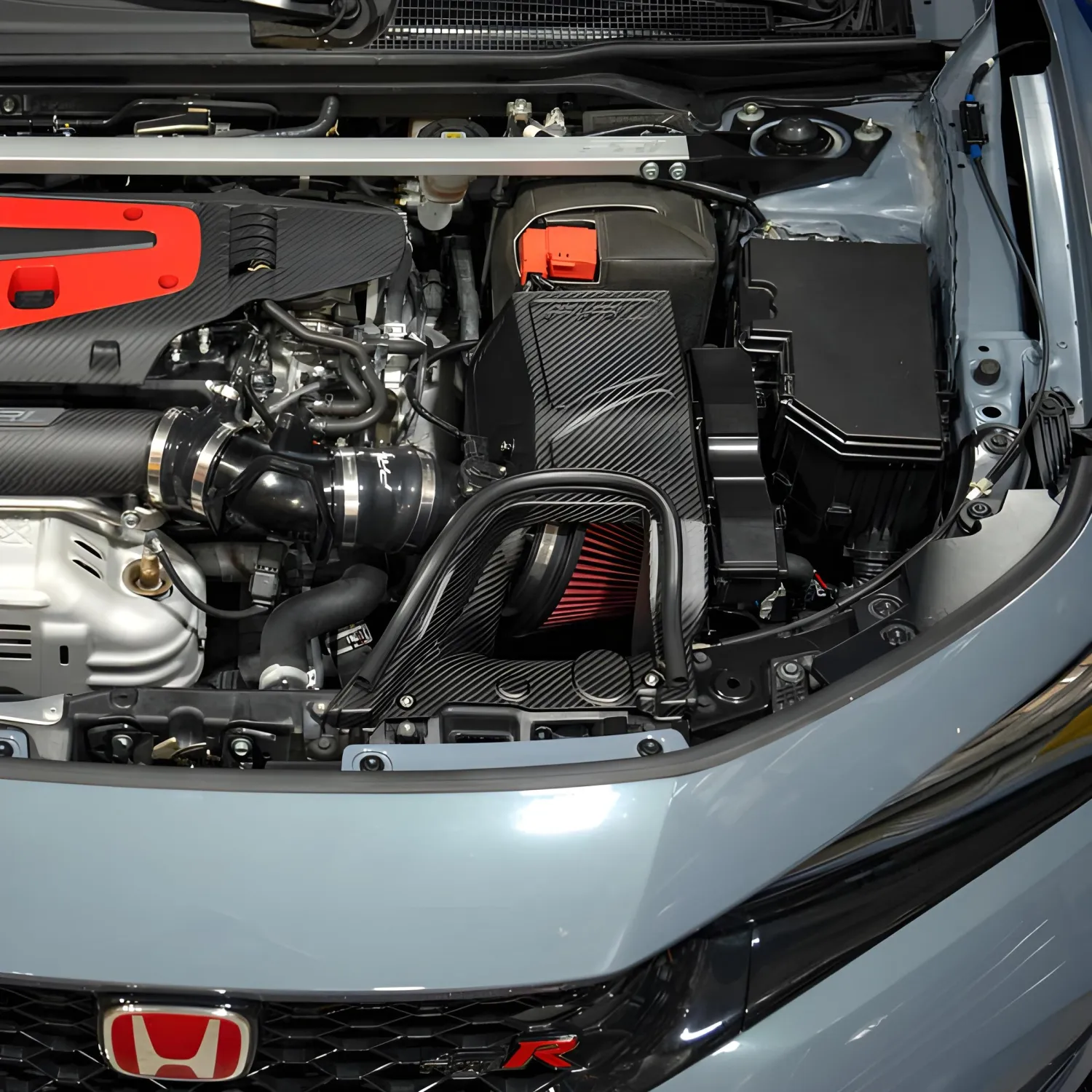
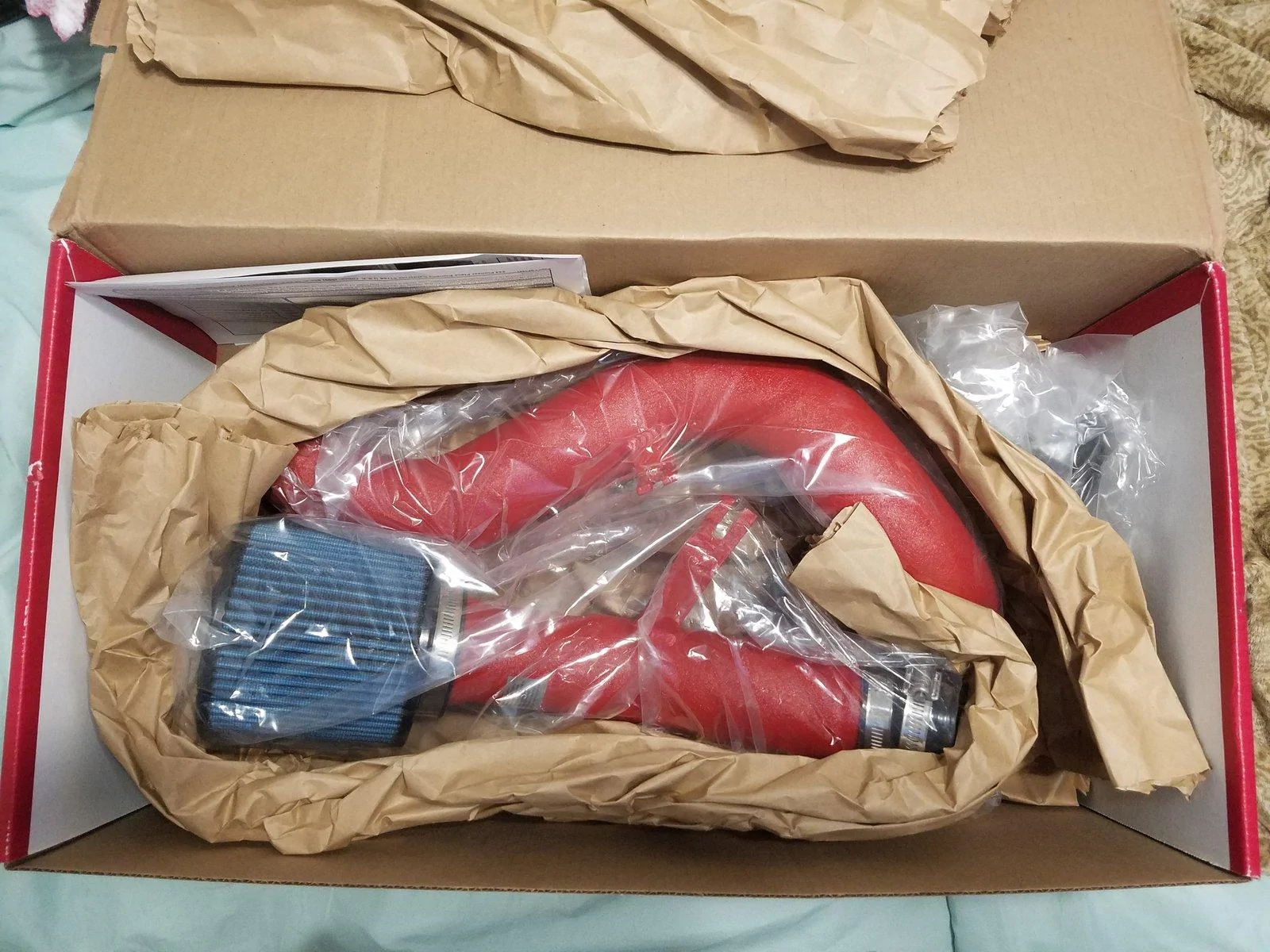
Upgrading to a 2018 Honda Civic Si cold air intake is one of the most popular modifications for enthusiasts looking to enhance engine bay aesthetics, improve throttle response, and unlock a more aggressive induction sound from the 1.5-liter turbocharged L15B7 engine. By relocating the air filter away from the hot engine bay to draw in cooler, denser ambient air, an aftermarket intake system helps optimize combustion efficiency. However, choosing the right kit requires careful consideration of design configurations, tuning requirements, and local climate conditions to balance power gains with daily drivability.
Understanding the 1.5L Turbo L15B7 Intake Dynamics
The 2018 Honda Civic Si comes equipped from the factory with a turbocharged 1.5-liter four-cylinder engine. While the factory airbox is engineered to suppress induction noise and meet strict emissions and NVH (Noise, Vibration, and Harshness) standards, it creates a restrictive path for airflow.
When you accelerate, the turbocharger works to compress air, forcing it into the cylinders. A restrictive factory intake forces the turbo to work harder to draw air through narrow passages and restrictive paper filters. An aftermarket cold air intake addresses this bottleneck by widening the diameter of the intake piping, smoothing out interior transitions, and utilizing high-flow synthetic or oiled cotton cone filters.
It is important to understand the fundamental difference between a short ram intake and a true cold air intake on this platform:
- Short Ram Intake (SRI): This configuration places the air filter inside the engine bay, usually connected directly to the turbo inlet pipe via a short metal or plastic tube. While easier to install and maintain, an SRI is susceptible to "heat soak," pulling warm air from around the exhaust manifold and radiator, especially during idling or low-speed city driving.
- Cold Air Intake (CAI): This setup routes the intake piping downward into the inner fender well or behind the front bumper, positioning the filter away from engine heat. This allows the engine to ingest genuinely cooler ambient air from outside the engine compartment, yielding denser oxygen charges for better combustion.
Evaluating Performance Gains and Tuning Requirements
A common question among tenth-generation Civic Si owners is whether a cold air intake requires a tune (engine recalibration via a flash device such as Hondata or Ktuner).
Air-Fuel Ratios and MAF Housing Calibrations
Most reputable manufacturers design their intake systems with precise Mass Air Flow (MAF) sensor housings that mimic the factory internal diameter or incorporate specific calibration scaling. If the MAF housing diameter is altered significantly without adjusting the engine control unit (ECU) fuel and ignition maps, the car may run lean or rich, potentially triggering a Check Engine Light (CEL) with diagnostic trouble codes (DTCs) related to system lean conditions or MAF sensor correlation.
While some short-term systems can operate safely on the factory stock tune if they maintain exact stock MAF scaling, pairing a performance intake with an aftermarket ECU flash is generally recommended to maximize power output. A proper tune adjusts boost targets, ignition timing, and fuel delivery to take full advantage of the increased airflow.
Realistic Power Expectations
On a stock 2018 Honda Civic Si, a cold air intake alone typically yields modest peak horsepower gains—often in the range of 5 to 10 horsepower—with slightly better improvements in mid-range torque. The most dramatic changes are subjective and operational:
- Sharper throttle response during initial tip-in.
- Audible turbo spool, bypass valve (blow-off) venting sounds, and aggressive induction roar under heavy acceleration.
- Improved top-end pull as the turbo maintains boost pressure more efficiently at high RPMs.
Popular Cold Air Intake Options for the 2018 Civic Si
The aftermarket community offers several well-engineered intake systems for the 2018 Honda Civic Si. Each option utilizes different materials, filtration media, and routing strategies.
| Brand & Model | Design Type | Filter Media | Tuning Required? | Notable Features |
|---|---|---|---|---|
| Prl Motorsports Cobra | High-volume CAI / Street or Race | Reusable Cotton / Synthetic | Street (Optional), Race (Required) | Available in 3-inch (Street) and 3.5-inch (Race) variants; requires battery relocation for the Race version. |
| Injen Evolution | Enclosed Airbox / CAI | Dry or Oiled Synthetic | No (Factory MAF housing scale) | Rotomolded cross-linked polyethylene housing; clear sight window for filter inspection. |
| 27WON Performance | Convertible SRI / CAI | Dual-chamber dry filter | No (Optimized MAF housing) | Can be configured as a short ram or fully routed cold air intake; features custom flow straightener. |
| K&N 63 Series AirCharger | High-Flow Intake | Oiled Cotton Gauze | No | Mandrel-bent aluminum tubing; million-mile limited warranty backed by dyno testing. |
Step-by-Step Installation Overview
Installing a cold air intake on a 2018 Honda Civic Si is a moderately straightforward DIY project that typically takes between one to three hours, depending on whether the front bumper or inner fender liner needs to be removed to access the lower routing.
Required Tools
- Metric socket set (10mm, 12mm)
- Ratchet and extensions
- Phillips and flathead screwdrivers or trim removal tools
- Pliers (for factory spring clamps)
- Hex (Allen) key set
- Isopropyl alcohol and a clean microfiber towel (for cleaning MAF sensors)
Installation Procedure
- Disconnect the Battery: Always disconnect the negative battery terminal before working on electrical components or sensor wiring to prevent ECU codes or accidental shorts.
- Remove the Factory Airbox: Unclip the wire harness from the Mass Air Flow (MAF) sensor. Loosen the worm-gear clamp securing the factory intake hose to the turbo inlet or factory resonator. Unbolt any mounting brackets securing the airbox assembly to the chassis and lift the entire assembly out.
- Transfer or Install the MAF Sensor: Carefully remove the MAF sensor from the factory housing using a security Torx or standard screw driver (depending on hardware). Install the sensor into the new aftermarket intake pipe, taking care not to touch the delicate sensing element and ensuring the rubber O-ring seal is properly seated.
- Route the Piping: Depending on your chosen kit, feed the lower piping down into the fender well or secure the heat shield and filter assembly. Ensure all couplers and silicone joints are loosely fitted before tightening.
- Position and Secure the Filter: Verify that the filter has adequate clearance from surrounding frame rails, belts, and body panels to prevent rubbing or chafing from engine vibration.
- Final Inspection and Reconnection: Double-check all hose clamps, mounting bolts, and electrical connections. Reconnect the negative battery terminal. Start the engine and let it idle while listening for vacuum leaks or unusual rattles before taking the vehicle for a test drive.
Maintenance and Operational Considerations
Proper maintenance ensures your cold air intake continues to deliver optimal performance over the lifespan of your vehicle.
Filter Maintenance Intervals
Depending on whether your kit uses an oiled cotton gauze filter (such as K&N or PRL) or a dry synthetic media filter (such as AEM or Injen), cleaning requirements will vary:
- Oiled Filters: Inspect every 15,000 to 30,000 miles depending on driving conditions. Clean using specialized filter cleaner, rinse with low-pressure water, allow to dry completely, and apply a light, even coat of filter oil. Over-oiling can contaminate the MAF sensor filament, leading to erratic idling or engine codes.
- Dry Filters: Inspect at similar intervals. Tap out loose debris or use compressed air from the inside out at a safe distance. Do not wash dry synthetic filters with harsh solvents unless explicitly permitted by the manufacturer.
Weather and Hydro-Lock Risks
Because true cold air intakes position the air filter lower in the vehicle—often near the inner wheel well or behind the front bumper—drivers living in areas prone to heavy seasonal flooding or torrential downpours must exercise caution. Driving through deep standing water that submerges the filter can cause "hydro-lock" (water ingestion into the combustion chambers), which results in catastrophic engine failure. If you live in an extremely wet climate, consider a hydro-shield water-repellent pre-filter sock or choose a modular intake system that can be converted into a short-ram configuration during rainy seasons.
Frequently Asked Questions
Will a cold air intake void my factory warranty?
Under the Magnuson-Moss Warranty Act, the installation of an aftermarket part cannot legally void your entire vehicle warranty simply for being aftermarket. However, if a dealership can prove that the aftermarket cold air intake directly caused a mechanical failure (such as water ingestion or MAF sensor failure due to over-oiling), they can deny warranty coverage for that specific repair.
Do I need a tune for a PRL Race Intake?
Yes. The PRL Motorsports 3.5-inch "Race" intake features a significantly larger MAF housing diameter than the factory setup. Running this specific variant without a corresponding custom or OTS (Off-The-Shelf) tune will cause severe air-fuel ratio discrepancies, leading to drivability issues and engine codes.
Can a cold air intake cause a Check Engine Light?
It can, though it is not common with properly designed kits. A Check Engine Light following an intake installation is usually caused by an unplugged MAF sensor harness, an air leak past an unsealed coupler, unmetered air entering downstream of the sensor, or sensor contamination from excess filter oil.
Will an aftermarket intake make my Civic Si faster on a track?
While peak horsepower increases slightly, the primary benefit on a track is improved throttle recovery and enhanced thermal efficiency when paired with supporting mods like an upgraded intercooler and exhaust. For sustained track use, managing engine intake air temperatures (IATs) is crucial to preventing heat soak and power loss.
Next Actions for Enthusiasts
If you are ready to upgrade your 2018 Honda Civic Si, begin by assessing your local climate, inspection laws, and tuning goals. Decide whether you prefer the convenience and lower hydro-lock risk of a short-ram/enclosed box design or the maximum airflow potential of a full fender-well cold air intake. Verify whether your chosen kit requires an accompanying ECU flash, and ensure you retain your factory airbox components in case you ever need to revert to stock configuration for emissions testing.