The 2015 Oregon Workers’ Compensation System Report, published by the Department of Consumer and Business Services (DCBS), serves as a definitive historical benchmark for one of the nation's most successful state-run insurance frameworks. It highlights Oregon’s achievement in maintaining exceptionally low employer premiums while providing comprehensive benefits and robust return-to-work programs, rooted in the structural reforms initiated in the early 1990s.
The Context of the 2015 Oregon Workers’ Compensation Report
As we evaluate the landscape of labor protections and insurance efficiency from the perspective of 2026, the 2015 report remains a critical document for policy analysts and insurance professionals. To understand the significance of the 2015 data, one must first look at the trajectory of Oregon's system. In the late 1980s, Oregon faced a crisis: premium rates were among the highest in the United States, and the system was plagued by litigation and slow return-to-work outcomes.
The 2015 report represents the culmination of 25 years of refinement following the landmark 1990 special legislative session. By the time this report was issued, Oregon had successfully transitioned from having the 6th most expensive workers' compensation rates in the country to having the 43rd lowest. This transition was not a matter of luck but the result of specific policy levers described in the report, including medical cost controls, aggressive safety programs, and unique incentives for employers to re-hire injured workers.
The Department of Consumer and Business Services (DCBS) is the state agency responsible for overseeing this system. The biennial report they produce is designed to provide the Oregon Legislature, employers, and labor advocates with a transparent view of the system’s health, including the solvency of the Workers’ Benefit Fund and the effectiveness of the Workers’ Compensation Division (WCD) and the Workers’ Compensation Board (WCB).
Premium Rate Rankings and Economic Impact
One of the most cited sections of the 2015 report is the biennial premium rate ranking. Oregon’s Department of Consumer and Business Services performs a national study every two years to compare how much employers pay for workers’ compensation insurance across all 50 states.
In the 2014-2015 period, Oregon’s ranking was a point of significant pride for state regulators. The study revealed that Oregon’s average premium rate was $1.37 per $100 of payroll. For comparison, the national median was significantly higher, often hovering around $1.85 to $1.90 during the same period. This low cost provided Oregon businesses with a competitive advantage in the Pacific Northwest, particularly when compared to neighboring California, which consistently ranked among the most expensive states for workers' compensation.
Factors Driving Low Premiums
The report attributes these low rates to several key factors:
- Safety Innovation: The work of Oregon OSHA (Occupational Safety and Health Division) in reducing workplace injuries.
- Claim Frequency: A steady decline in the number of claims filed per 100 workers.
- Managed Medical Care: The use of Managed Care Organizations (MCOs) to streamline treatment and control costs.
- System Stability: Low levels of litigation compared to other states, which reduces the "frictional costs" of insurance.
Understanding the Oregon Return-to-Work Programs
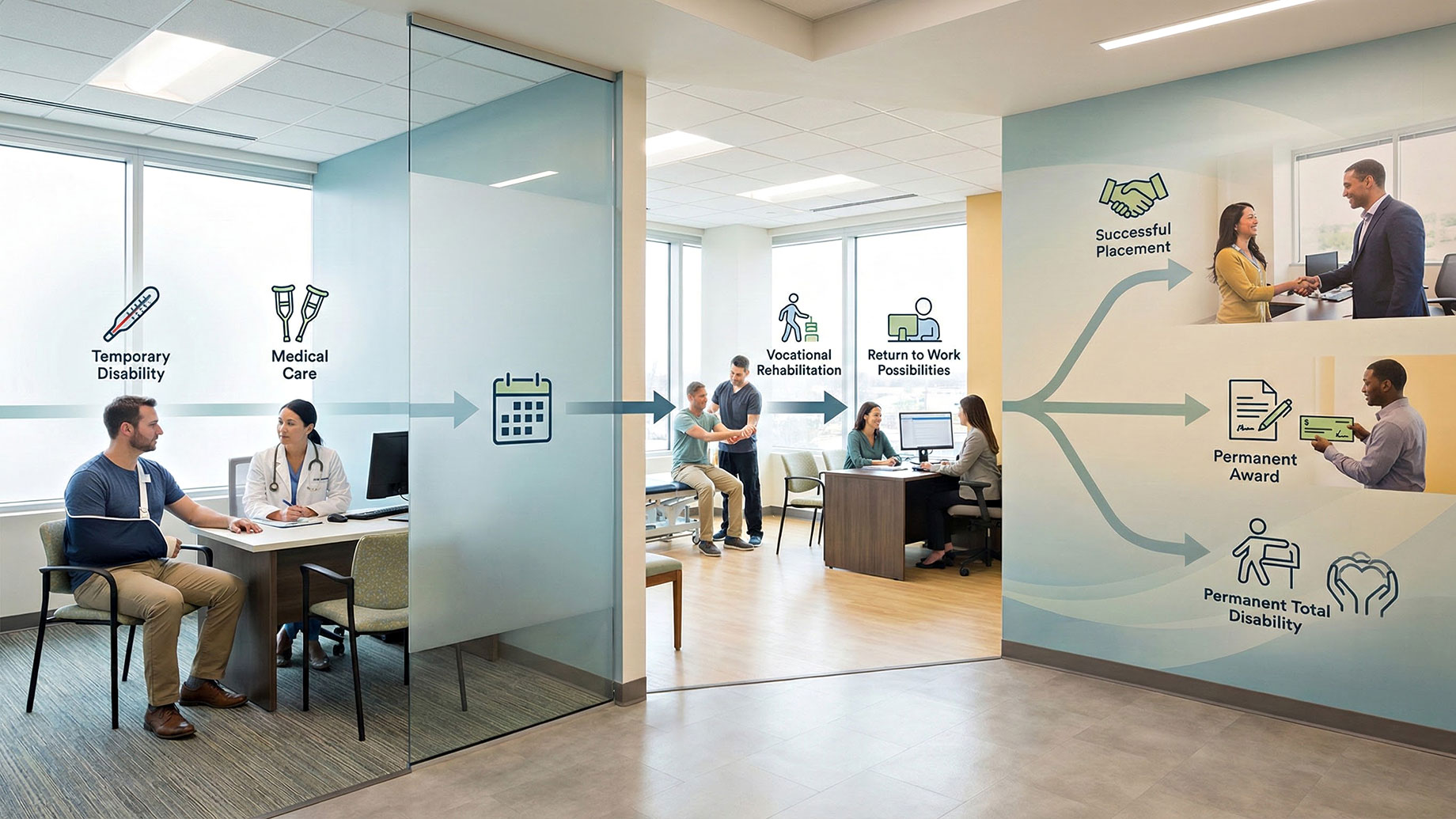
A standout feature of the Oregon system detailed in the 2015 report is its proactive approach to reintegrating injured workers into the labor force. Unlike many states that focus purely on indemnity (cash) payments, Oregon invests heavily in two specific programs: the Employer-at-Injury Program (EAIP) and the Preferred Worker Program (PWP).
Employer-at-Injury Program (EAIP)
The EAIP is designed for the early stages of a claim. It provides financial incentives to employers who provide light-duty work to injured employees while they are still recovering. The 2015 report noted that this program helped thousands of workers maintain their employment connection, which is statistically proven to improve long-term recovery outcomes.
Benefits under EAIP mentioned in the report include:
- Wage Subsidies: Reimbursing the employer for a portion of the worker’s wages during light duty.
- Worksite Modifications: Funding for tools or equipment needed to accommodate the worker’s temporary limitations.
- Purchases: Funding for items such as tuition or clothing required for the modified role.
Preferred Worker Program (PWP)
The PWP is a more long-term solution for workers who have permanent disabilities that prevent them from returning to their regular jobs. If a worker is designated a "Preferred Worker," the state offers significant incentives to any Oregon employer who hires them.
Key features of the PWP in 2015 included:
- Premium Exemptions: Employers do not pay workers' compensation premiums on the preferred worker for up to three years.
- Claim Cost Reimbursement: If the worker suffers a new injury during the benefit period, the costs of that new claim are reimbursed to the insurer from the Workers’ Benefit Fund, meaning the employer’s experience rating is not negatively impacted.
- Employment Incentives: Direct payments to help with worksite modifications or specialized equipment.
Claims Statistics and Trends in 2015
The 2015 report provided a granular look at the types of claims processed within the state. A "claim" in Oregon is generally categorized as either "medical-only" or "disabling."
A disabling claim is one where the worker loses time from work or has a permanent impairment. The 2015 data showed that while the total number of workers in Oregon was increasing due to economic recovery, the incidence rate of disabling claims remained relatively stable or slightly declining. This decoupling of employment growth from injury growth is a primary indicator of a successful workplace safety culture.
| Category | 2014-2015 Data Point (Approximate) | Significance |
|---|---|---|
| Total Accepted Disabling Claims | ~18,500 - 19,500 annually | Reflects stabilized injury rates despite workforce growth. |
| National Premium Ranking | 43rd (1st = most expensive) | Confirms Oregon as one of the lowest-cost states. |
| Average Cost per Claim | ~$10,000 - $12,000 (Indemnity) | Shows controlled growth in cash benefit payouts. |
| PWP Participants | ~3,500 active workers | Indicates high utilization of vocational incentives. |
| Median Time to First Payment | 12-14 Days | Demonstrates efficiency in the initial claims process. |
The Role of the Workers’ Benefit Fund (WBF)
The Workers’ Benefit Fund is a unique aspect of Oregon's financial architecture for social insurance. It is not funded by insurance premiums but by a cents-per-hour-worked assessment paid equally by employers and employees.
The 2015 report detailed the solvency and usage of this fund. It pays for the return-to-work programs (EAIP and PWP), as well as "retroactive" benefits. Retroactive benefits are essential for workers injured decades ago whose original benefit rates have been eroded by inflation. The WBF provides cost-of-living adjustments to these long-term beneficiaries, ensuring that workers injured in the 1970s or 80s are not living in poverty by 2015.
Maintaining the balance of the WBF is a delicate act. If the fund grows too large, the DCBS may reduce the assessment rate; if it shrinks, they must raise it. In 2015, the fund was considered healthy and stable, reflecting the general fiscal discipline of the department.
Medical Management and Dispute Resolution
Medical costs typically represent about 50% or more of total workers' compensation system costs. The 2015 report analyzed how Oregon managed these expenditures. Oregon utilizes a medical fee schedule that limits what providers can charge for specific services, and it encourages the use of Managed Care Organizations (MCOs).
MCOs are networks of doctors and healthcare providers who specialize in occupational medicine. By directing workers to these specialists, the system aims for "Evidence-Based Medicine," focusing on treatments that are proven to get workers back to health and work more quickly.
Dispute Resolution and the Board
When a claim is denied or the extent of disability is questioned, the case goes to the Workers’ Compensation Board (WCB). The 2015 report noted that the number of "Requests for Hearing" had declined significantly since the 1990s reforms. This suggests that the "rules of the road" established by the legislature—such as the "Major Contributing Cause" standard—had become well-understood by both insurers and attorneys, leading to fewer frivolous disputes.
The "Major Contributing Cause" (MCC) standard is a pivot point in Oregon law. For a claim to be compensable, the work-related incident must be more than 50% responsible for the resulting condition or the need for treatment. This high bar for compensability is often credited with keeping costs low, though it remains a point of debate among labor advocates.
Safety and Health: The Oregon OSHA Connection
The 2015 report does not look at the insurance system in a vacuum; it acknowledges the critical role of Oregon OSHA. By 2015, Oregon OSHA had shifted from a purely "enforcement and fines" model to a "consultative" model.
Under this framework, businesses (especially small businesses) can invite OSHA consultants to their worksites to identify hazards without fear of receiving a citation. This partnership approach contributed to the downward trend in injury rates reported in 2015. High-hazard industries, such as logging and construction, showed marked improvements in their safety records during this era, which directly impacted the insurance premiums for those sectors.
Practical Recommendations for Reviewing Historical Reports
When analyzing the 2015 report today, stakeholders should focus on the "Oregon Model" as a blueprint for balancing stakeholder interests. For researchers or policy-makers, this report serves as a "control group" data set showing how a system performs after maturity.
- Benchmark for Costs: Use the 2015 premium data to understand how modern rates have evolved. If rates have risen since then, look for changes in medical inflation or legislative shifts.
- Evaluating Programs: The success of the EAIP and PWP in 2015 should be used as a baseline when evaluating current return-to-work initiatives. If participation has dropped, it may indicate a need for better employer outreach.
- Legislative History: The report provides context for the "Major Contributing Cause" standard. Understanding its impact in 2015 helps in arguing for or against further modifications to compensability standards.
For a comprehensive view of these regulations and the full historical reports, interested parties should consult the Oregon Department of Consumer and Business Services (DCBS) and the Workers' Compensation Division.
Frequently Asked Questions
What was the main purpose of the 2015 Oregon Workers' Compensation System Report?
The primary purpose was to provide a biennial update on the financial health, efficiency, and efficacy of the state's workers' compensation system. It served as a transparency tool for the legislature and the public to see the results of long-term reforms and to compare Oregon’s performance against other states.
How did Oregon’s premium rates compare to other states in 2015?
According to the 2014-2015 biennial study, Oregon had the 43rd lowest premium rates in the nation. This meant Oregon was among the ten least expensive states for employers to purchase workers' compensation insurance, a significant achievement given its high level of worker benefits.
What are the EAIP and PWP mentioned in the report?
The Employer-at-Injury Program (EAIP) and Preferred Worker Program (PWP) are Oregon’s signature return-to-work programs. EAIP provides temporary assistance to keep a recovering worker at their job, while PWP provides long-term financial incentives and premium exemptions for employers who hire workers with permanent disabilities.
Who publishes the workers' compensation reports in Oregon?
These reports are published by the Central Services Division of the Oregon Department of Consumer and Business Services (DCBS). They coordinate data from the Workers’ Compensation Division (WCD), the Workers’ Compensation Board (WCB), and Oregon OSHA.
Why is the "Major Contributing Cause" standard important in the 2015 context?
The Major Contributing Cause (MCC) standard, established in 1990 and highly relevant in 2015, requires that work be the primary cause (more than 50%) of a disability or need for treatment. This standard helped stabilize the system by providing a clear legal threshold for compensability, which reduced litigation and unpredictable claim costs.
How is the Workers' Benefit Fund (WBF) funded?
Unlike the insurance side of the system, which is funded by premiums paid to private insurers or SAIF Corporation, the WBF is funded by a cents-per-hour assessment. This assessment is paid by every employee and employer in the state for every hour worked, ensuring a shared responsibility for safety and long-term worker benefits.
Final Practical Action
If you are an employer or a legal professional analyzing workers' compensation trends, the 2015 report is best used as a comparative baseline. To see how the system has evolved, compare the 2015 "Incidence Rates" and "Premium Rankings" with current 2026 data. This will reveal whether the state is successfully maintaining the "Oregon Model" of low costs and high return-to-work success or if new economic pressures are beginning to strain the system. For current updates, always verify with the Oregon Workers' Compensation Board.