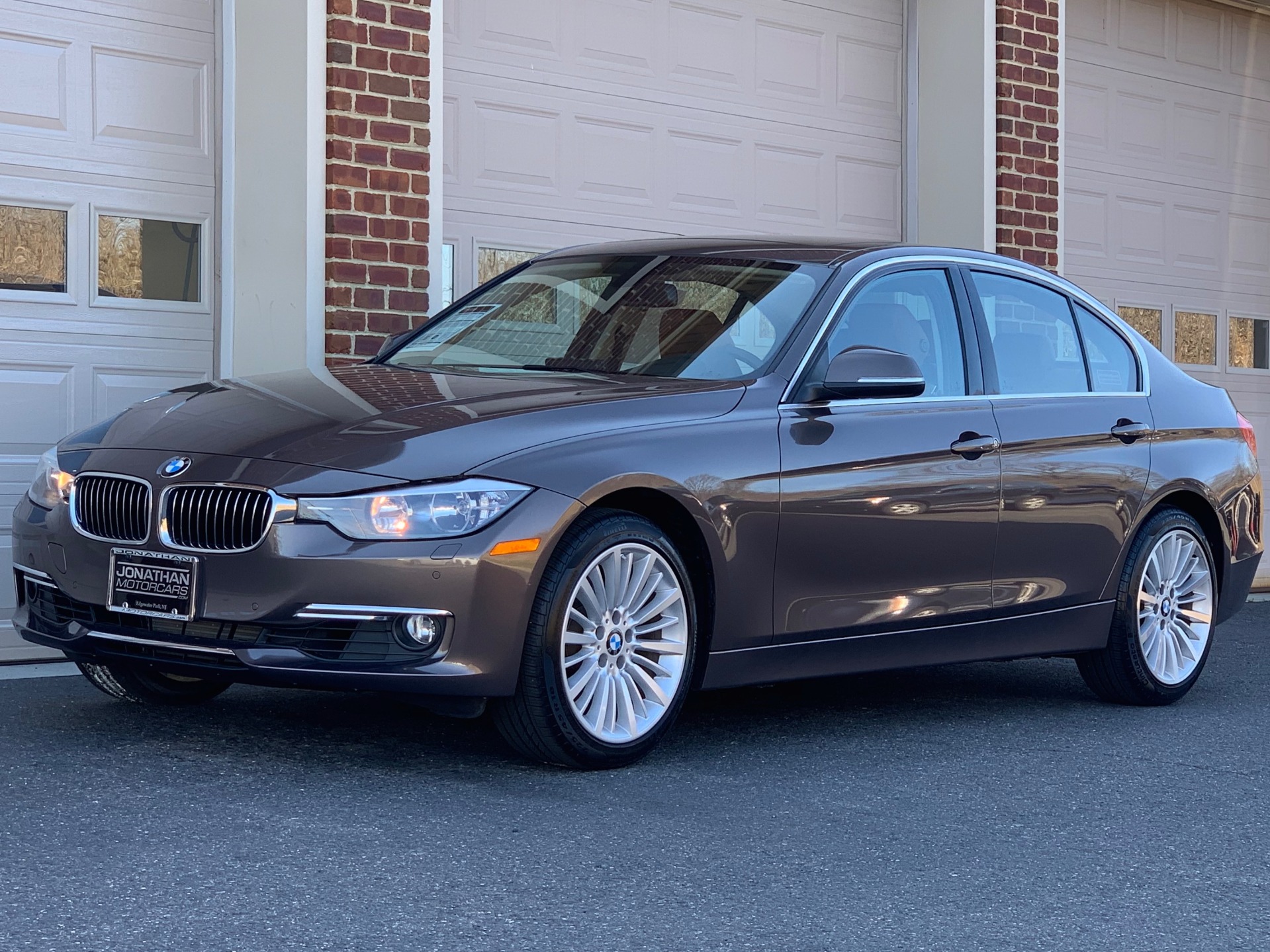
The 2014 BMW 328i delivers a balance of performance and fuel efficiency powered by a 2.0-liter turbocharged inline 4-cylinder engine generating 240 horsepower and 255 lb-ft of torque. Available in rear-wheel drive or xDrive all-wheel drive, it features an 8-speed automatic or 6-speed manual transmission, delivering a 0–60 mph acceleration time of 5.6 to 5.7 seconds.
Powertrain and Engine Technical Specifications
At the heart of the 2014 BMW 328i (F30 sedan generation and F31 wagon variant) is the N20B20 engine, a 2.0-liter (1,997 cc) all-aluminum inline 4-cylinder powerplant. This engine replaced the naturally aspirated N52 3.0-liter inline-6 found in earlier generations, introducing forced induction to the core 3 Series trim while meeting stricter global efficiency and emissions mandates.
- Air Intake
- Twin-Scroll Turbocharger
- Direct Injection (3,000 PSI) (with Valvetronic Variable Lift)
- Combustion Chamber
- Double-VANOS Valve Timing
Turbocharging and Valve Technology
The N20 engine incorporates BMW’s TwinPower Turbo technology suite, which combines four primary engineering elements:
- Twin-Scroll Turbocharger: Instead of a single exhaust pulse channel, the exhaust manifold separates pulses from cylinders 1/4 and 2/3 into two distinct spirals (scrolls) driving the turbine wheel. This layout reduces exhaust gas backpressure, eliminates scavenging interference, and minimizes turbo lag, enabling maximum torque production as low as 1,250 rpm.
- High Precision Direct Injection: Solenoid injectors positioned centrally between the valves deliver fuel at pressures up to 200 bar (nearly 3,000 psi) directly into the combustion chamber. This high pressure creates atomized fuel spray for complete combustion, higher thermodynamic efficiency, and reduced engine knock.
- Valvetronic Variable Valve Lift: Eliminating the traditional throttle butterfly during normal operation, Valvetronic uses an electric motor and eccentric shaft to continuously adjust intake valve lift from 0.18 mm to 9.9 mm based on accelerator pedal input. Pumping losses are reduced, increasing engine responsiveness.
- Double-VANOS Camshaft Control: Continuously variable valve timing operates on both the intake and exhaust camshafts, shifting timing across the rev range to optimize low-end torque and high-end power output.
Power, Torque, and Internal Architecture
The 2.0-liter engine features an undersquare cylinder geometry with an 84.0 mm bore and a 90.1 mm stroke, favoring low-end to mid-range torque production. It operates with a 10.0:1 compression ratio, balanced for forced induction on pump gas.
- Engine Horsepower: 240 hp @ 5,000–6,500 rpm
- Engine Torque: 255 lb-ft @ 1,250–4,800 rpm
- Specific Output: 120.2 hp per liter
- Redline: 7,000 rpm
Horsepower & Torque Curves (N20 Engine):
- Torque (lb-ft): 255 lb-ft flat from 1,250 to 4,800 rpm, then drops off
- Horsepower (hp): Rises linearly to peak 240 hp @ 5,000–6,500 rpm
Transmission Options and Gearing
The 2014 BMW 328i offered two transmission choices depending on body style and drivetrain configuration:
- 8-Speed Steptronic Automatic (ZF 8HP45): Developed in partnership with ZF Friedrichshafen, this torque-converter automatic utilizes four gearsets and five shift elements. Wide ratio spread (7.07:1 overall ratio) allows short lower gears for acceleration and tall upper gears for highway efficiency. Shift times range from 200 milliseconds down to sub-100 milliseconds when configured with the optional Sport Automatic transmission (which adds steering wheel paddle shifters and aggressive shift mapping).
- 6-Speed Manual (Getrag GS6-17BG): Available exclusively on rear-wheel-drive sedan models for driving enthusiasts. It features dry single-plate clutch engagement and dual-cone synchromesh on lower gears for precise shift feel.
Transmission Gear Ratios (ZF 8HP45 8-Speed Automatic)
- 1st Gear: 4.714:1
- 2nd Gear: 3.143:1
- 3rd Gear: 2.106:1
- 4th Gear: 1.667:1
- 5th Gear: 1.285:1
- 6th Gear: 1.000:1 (Direct Drive)
- 7th Gear: 0.839:1 (Overdrive)
- 8th Gear: 0.667:1 (Overdrive)
- Reverse: 3.317:1
- Final Drive Axle Ratio: 3.154:1 (RWD Automatic)
Performance, Acceleration, and Fuel Economy Statistics
The broad torque curve of the N20 engine allows the 2014 328i to match or exceed acceleration figures of previous-generation 6-cylinder models while maintaining competitive fuel economy numbers.
Acceleration and Speed Ratings
- 0–60 mph (RWD Automatic Sedan): 5.7 seconds
- 0–60 mph (xDrive AWD Automatic Sedan): 5.6 seconds (enhanced launch traction)
- 0–60 mph (RWD Manual Sedan): 5.7 seconds
- 0–60 mph (xDrive AWD Sports Wagon): 5.8 seconds
- Standing Quarter-Mile: 14.2 seconds @ 97–98 mph
- Top Speed (Standard): 130 mph / 210 km/h (electronically limited)
- Top Speed (M Sport Package / Increased Speed Limiter): 155 mph / 250 km/h (electronically limited with performance summer tires)
EPA Fuel Economy Ratings and Range
Fuel consumption varies by drivetrain and body configuration. The inclusion of Auto Start-Stop technology—which shuts down the engine when coming to a complete stop—helps lower city idling consumption.
| Model Configuration | EPA City | EPA Highway | EPA Combined |
|---|---|---|---|
| 328i RWD Automatic Sedan | 23 mpg | 35 mpg | 27 mpg |
| 328i RWD Manual Sedan | 22 mpg | 34 mpg | 26 mpg |
| 328i xDrive AWD Auto Sedan | 22 mpg | 33 mpg | 26 mpg |
| 328i xDrive Auto Wagon | 22 mpg | 33 mpg | 26 mpg |
- Fuel Tank Capacity: 15.8 US gallons (60.0 liters)
- Maximum Highway Cruising Range (RWD Auto): ~550 miles (885 km)
- Recommended Fuel Grade: Premium Unleaded (91 AKI minimum; 93 AKI recommended for peak performance)
Exterior Dimensions, Chassis, and Suspension Architecture
The F30 generation 3 Series expanded its overall footprint compared to its E90 predecessor, offering increased high-speed stability and interior legroom while keeping weight manageable through high-strength steels and aluminum body components (such as the aluminum hood and front spring struts).
- Wheelbase: 110.6 in
- Overall Length: 182.5 in
Exterior Footprint and Weight
- Overall Length: 182.5 in (4,624 mm)
- Overall Width (excluding mirrors): 71.3 in (1,811 mm)
- Overall Width (including mirrors): 80.0 in (2,031 mm)
- Overall Height (Sedan): 56.3 in (1,429 mm)
- Overall Height (xDrive Sedan): 56.5 in (1,434 mm)
- Wheelbase: 110.6 in (2,810 mm)
- Front Track Width: 60.3 in (1,531 mm)
- Rear Track Width: 61.9 in (1,572 mm)
- Ground Clearance: 5.5 in (140 mm)
- Curb Weight (RWD Auto Sedan): 3,410 lbs (1,547 kg)
- Curb Weight (xDrive Auto Sedan): 3,595 lbs (1,631 kg)
- Curb Weight (xDrive Sports Wagon): 3,780 lbs (1,715 kg)
- Weight Distribution (Front / Rear): 50.0% / 50.0% (RWD Sedan)
Chassis, Steering, and Suspension Layout
- Front Suspension: Double-pivot spring-strut axle featuring lightweight aluminum lower control arms and anti-roll bar. The double-pivot geometry reduces torque steer and stabilizes directional tracking over uneven road surfaces.
- Rear Suspension: Five-link independent suspension mounted on a steel subframe, utilizing elastokinematic mountings for high lateral stiffness and longitudinal displacement flexibility.
- Steering System: Electromechanical Power Steering (EPS) with speed-sensitive Servotronic assistance as standard. Optional Variable Sport Steering alters the steering rack ratio dynamically, requiring less wheel rotation during parking maneuvers while maintaining high-speed stability.
- Turn Circle Diameter: 37.1 feet (11.3 meters) for RWD; 38.4 feet (11.7 meters) for xDrive.
Braking System Specifications
- Front Brakes: Ventilated disc, 12.3-inch diameter (312 mm) with single-piston floating calipers (Standard).
- Rear Brakes: Ventilated disc, 11.8-inch diameter (300 mm) with single-piston floating calipers (Standard).
- M Sport Brake Upgrade (Optional): Four-piston fixed aluminum calipers with 13.4-inch (340 mm) discs front; dual-piston fixed calipers with 13.6-inch (345 mm) discs rear.
- Brake Assistance Features: Anti-lock Braking System (ABS), Dynamic Brake Control (DBC), Brake Standby, Brake Drying, and Hill Start Assist integrated into the Dynamic Stability Control (DSC) module.
Interior Dimensions, Cargo Capacity, and Equipment Lines
The redesigned interior of the F30 generation increased rear legroom by nearly 0.71 inches (18 mm) compared to earlier 3 Series models, addressing past criticisms regarding rear-seat passenger comfort.
Front Seat Dimensions:
- Headroom: 40.3 in (1,024 mm)
- Legroom: 42.0 in (1,067 mm)
- Shoulder Room: 55.1 in (1,400 mm)
Rear Seat Dimensions:
- Headroom: 37.7 in (958 mm)
- Legroom: 35.1 in (892 mm)
- Shoulder Room: 55.1 in (1,400 mm)
Cargo Capacity
- Sedan Trunk Volume: 13.0 cubic feet (368 liters)
- Sedan Rear Seat Fold Ratio: 40/20/40 split-folding rear backrests (standard or optional depending on packages).
- Sports Wagon Luggage Volume (Seats Up): 17.5 cubic feet (495 liters)
- Sports Wagon Maximum Cargo Capacity (Seats Folded): 53.0 cubic feet (1,500 liters)
Luggage & Cargo Comparison:
- Sedan Trunk: 13.0 cu ft (Accommodates 3 medium suitcases)
- Wagon Trunk: 17.5 cu ft (Expandable to 53.0 cu ft with seats folded)
Equipment Lines and Trim Variations
In 2014, BMW structured the 328i options around discrete design "Lines" alongside standalone packages:
2014 BMW 328i Equipment Lines:
- Sport Line (High-gloss black exterior trim, sport seats, staggered 18" wheels, sport suspension)
- Luxury Line (Chrome exterior trim, multi-spoke 18" wheels, premium wood inlays, Dakota leather)
- Modern Line (Satin aluminum accents, dark oyster interior themes, turbine-style wheels)
- M Sport Package (Aerodynamic body kit, M sport steering wheel, adaptive M suspension option, 18"/19" M wheels)
- Sport Line: Features high-gloss black exterior trim elements, black chrome exhaust tips, 8-way power front sport seats with red contrast stitching, sport instrument cluster dials, and 18-inch light-alloy wheels. Includes stiffer suspension tuning on RWD models.
- Luxury Line: Highlights bright chrome accents on the kidney grille slats, air intakes, and rear bumper strip. Adds multi-spoke 18-inch wheels, premium wood trim options (such as Anthracite or Fine-line Anthracite), and standard leather upholstery.
- Modern Line: Uses satin-aluminum exterior trim, turbine-style alloy wheels, and unique interior color schemes featuring dark oyster dashboards and light wood accents.
- M Sport Package: Replaces front and rear fascias with aggressive aerodynamic bodywork, adds side skirts, shadowline window trim, an M leather steering wheel, anthracite headliner, and optional 18-inch or 19-inch M-double-spoke alloy wheels.
Detailed Specifications Comparison Table
The following matrix compares key operational and technical data for the primary 2014 BMW 328i variants:
| Feature / Metric | 328i RWD Sedan (Auto) | 328i xDrive Sedan (Auto) | 328i xDrive Sports Wagon |
|---|---|---|---|
| Engine Code | N20B20 | N20B20 | N20B20 |
| Displacement | 2.0L (1,997 cc) | 2.0L (1,997 cc) | 2.0L (1,997 cc) |
| Aspiration | Twin-Scroll Turbo | Twin-Scroll Turbo | Twin-Scroll Turbo |
| Horsepower | 240 hp @ 5,000–6,500 rpm | 240 hp @ 5,000–6,500 rpm | 240 hp @ 5,000–6,500 rpm |
| Torque | 255 lb-ft @ 1,250–4,800 rpm | 255 lb-ft @ 1,250–4,800 rpm | 255 lb-ft @ 1,250–4,800 rpm |
| Drive Configuration | Rear-Wheel Drive (RWD) | All-Wheel Drive (xDrive) | All-Wheel Drive (xDrive) |
| Standard Transmission | 8-speed automatic | 8-speed automatic | 8-speed automatic |
| Optional Transmission | 6-speed manual | None | None |
| 0–60 mph Acceleration | 5.7 seconds | 5.6 seconds | 5.8 seconds |
| Curb Weight | 3,410 lbs (1,547 kg) | 3,595 lbs (1,631 kg) | 3,780 lbs (1,715 kg) |
| EPA Fuel Economy (City/Hwy) | 23 / 35 mpg | 22 / 33 mpg | 22 / 33 mpg |
| Trunk / Cargo Volume | 13.0 cu ft | 13.0 cu ft | 17.5–53.0 cu ft |
| Fuel Tank Capacity | 15.8 gal (60 L) | 15.8 gal (60 L) | 15.8 gal (60 L) |
| Turning Radius | 37.1 ft | 38.4 ft | 38.4 ft |
| Front Brake Diameter | 12.3 in (312 mm) | 12.3 in (312 mm) | 12.3 in (312 mm) |
Known Mechanical Considerations and Service Intervals
Owners and buyers should evaluate key service items and documented failure modes unique to early-generation N20 engines.
N20 Timing Chain Assembly
The early revision of the N20 engine (produced up to January 2015) incorporated a plastic timing chain guide and assembly prone to premature fatigue, cracking, or failure.
- Failure Mechanism: The plastic guide material deteriorates over extended oil change intervals. As it breaks apart, plastic fragments fall into the oil pan, blocking the oil pump pickup screen, leading to oil starvation and total engine seizure.
- Diagnostic Signs: Excessive high-pitched whining noise from the front of the engine synchronized with revs, or looseness in the chain accessible through the oil filler cap.
- Preventative Action: Inspection of the timing chain slack and replacement with updated BMW timing chain assemblies (which use revised guide rail compositions).
Timing Chain Guide Failure Pathway:
- Excessive Oil Heat/Age
- Plastic Guide Brittle
- Guide Chips Break Off
- Blocked Oil Pump Screen
- Engine Starvation
Auxiliary Components and Fluid Maintenance
- Electric Water Pump & Thermostat: Driven electrically to reduce engine drag, the composite housing water pump typically experiences internal electronic or impeller failure between 70,000 and 100,000 miles. Replacement of both the pump and thermostat simultaneously is standard procedure.
- Oil Filter Housing Gasket (OFHG): Over time, the rubber gasket hardens, leaking oil down the front of the block onto the belt drive system. If oil contacts the serpentine belt, the belt can slip off and wrap around the crank hub, potentially destroying front crank seals.
- Valve Cover and Gasket: Integrated PCV (Positive Crankcase Ventilation) valves inside the plastic valve cover can stick or fail, causing vacuum leaks, high oil consumption, or whistling noises.
Recommended Fluid Replacement Schedule
- Engine Oil: 5,000 to 7,500 miles (Full Synthetic meeting BMW Longlife-01 specification, 5W-30 or 0W-30).
- Automatic Transmission Fluid (ZF 8HP): Every 50,000 to 60,000 miles (ZF recommends servicing despite BMW's original "lifetime fill" claim).
- xDrive Transfer Case Fluid: Every 50,000 miles (uses specialized BMW DTF 1 fluid).
- Brake Fluid: Flush every 2 years regardless of mileage (DOT 4 specification).
Option Packages and Factory Upgrades
The standard feature set of the 2014 328i included automatic headlights, rain-sensing wipers, dual-zone climate control, iDrive with a 6.5-inch screen, Bluetooth connectivity, and dynamic cruise control. Most vehicles were equipped with one or more factory option packages:
Technology Package
- iDrive System: Navigation System Professional with an expanded 8.8-inch high-resolution widescreen display.
- iDrive Controller Touch: Added a touch-sensitive surface to the rotary control knob for gesture input and handwriting recognition.
- Head-Up Display (HUD): Projects speed, turn-by-turn navigation arrows, and driver assistance warnings directly onto the windshield in full color.
- BMW ConnectedDrive: Advanced Real-Time Traffic Information (RTTI) and remote smartphone connectivity features.
Premium Package
- Dakota Leather Upholstery: Replaces the standard SensaTec synthetic leather on seat surfaces.
- Comfort Access Keyless Entry: Proximity sensors allow locking, unlocking, and trunk opening without taking the key fob out of a pocket or bag.
- Power Lumbar Support: Adds 4-way adjustable pneumatic support to both front seats.
- Moonroof: Two-way power glass sunroof with tilt and slide functions.
Driver Assistance Packages
- Driver Assistance Package: Includes Rearview Camera and Park Distance Control (front and rear parking ultrasonic sensors).
- Driver Assistance Plus: Adds Active Blind Spot Detection, Lane Departure Warning, Speed Limit Info, and Side/Top View cameras for 360-degree parking visibility.
Dynamic Handling Package
- Adaptive M Suspension: Electronically controlled dampers adapt constantly to road conditions and selected driving mode (Eco Pro, Comfort, Sport, or Sport+).
- Variable Sport Steering: Non-linear rack ratio adjusting steering rotation based on lock angle.
Frequently Asked Questions
What is the difference between the 2014 BMW 320i, 328i, and 335i?
The 320i uses a de-tuned version of the 2.0-liter N20 turbo-four producing 180 hp and 200 lb-ft of torque. The 328i uses the higher-output N20 engine generating 240 hp and 255 lb-ft of torque via higher turbo boost pressures and modified pistons. The 335i houses a larger 3.0-liter turbocharged inline-6 engine (N55) producing 300 hp and 300 lb-ft of torque.
Does the 2014 BMW 328i have a timing chain issue?
Yes, early N20 engines produced before January 2015 can experience failure of the plastic timing chain guides and oil pump drive assembly. BMW extended warranty coverage for this issue on qualifying vehicles in select regions and introduced redesigned assembly components for subsequent repairs.
Is the 2014 BMW 328i available as a coupe or convertible?
No. Starting in the 2014 model year, BMW separated the 3 Series body styles. The 4-door sedan (F30) and 5-door station wagon (F31) retained the 3 Series nameplate, while the 2-door coupe (F32) and convertible (F33) were rebadged as the 4 Series.
What octane fuel is required for the 2014 328i?
BMW recommends Premium Unleaded gasoline with a minimum octane rating of 91 AKI. Using lower-grade 87 AKI fuel causes the engine computer to retard ignition timing to prevent detonation, resulting in reduced horsepower, diminished torque, and lower fuel efficiency.
What is the towing capacity of the 2014 BMW 328i?
In North America, BMW does not officially rate the 328i sedan for trailer towing. In European markets, equipped with a factory or approved aftermarket tow hitch, the 328i is rated for braked trailers up to approximately 3,900 lbs (1,800 kg), depending on gradient and drivetrain choice.
Summary Recommendation
When evaluating a 2014 BMW 328i, prioritize models that document consistent oil service records and verification of timing chain assembly inspections. For optimal ride customization, models equipped with the Dynamic Handling Package (Adaptive M Suspension) offer a clear step up in chassis adjustability over the base static suspension. If max cargo versatility is required, the xDrive Sports Wagon (F31) provides expanded utility without sacrificing the balanced driving dynamics inherent to the 3 Series platform.