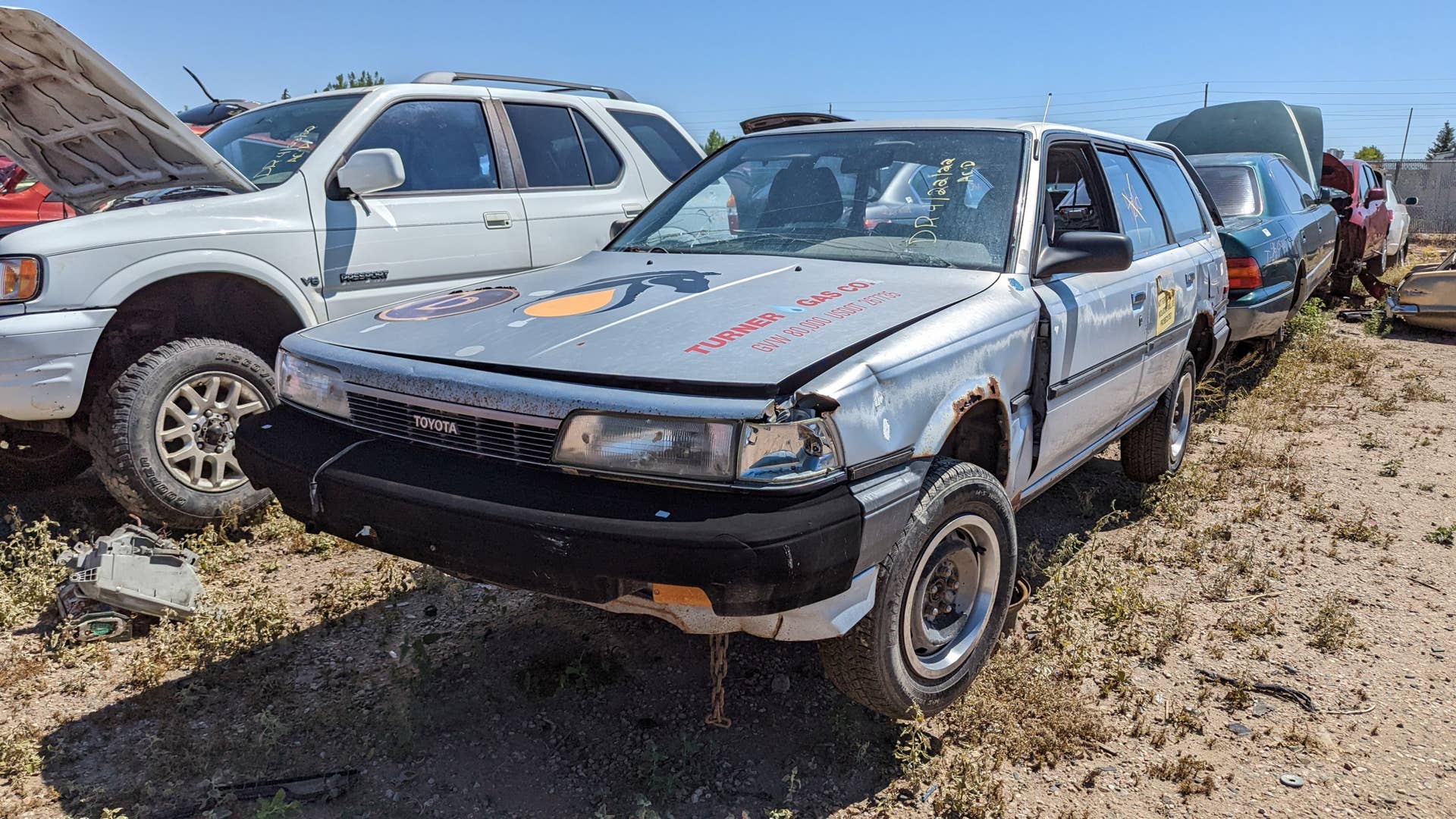
In 1987, Toyota’s wagon lineup represented the pinnacle of functional Japanese engineering, offering unmatched reliability and versatility across three distinct platforms: the Tercel 4WD, the Corolla, and the Camry. Today, in 2026, these vehicles have transitioned from everyday commuters to highly sought-after vintage classics prized for their mechanical simplicity and "Radwood-era" aesthetic.
Understanding the 1987 Toyota Wagon Lineup
The term "1987 Toyota wagon" actually refers to a diverse family of vehicles, each catering to a specific market segment. While many enthusiasts immediately think of the iconic, boxy Tercel 4WD Wagon, Toyota also offered the mid-sized Corolla Wagon and the larger, more sophisticated Camry Wagon.
Choosing between these models in 2026 requires an understanding of their original design intent. The Tercel was the rugged, mountain-climbing eccentric; the Corolla was the indestructible urban workhorse; and the Camry was the refined long-distance cruiser. By 1987, Toyota had perfected the "bulletproof" reputation that still defines the brand today. This was a year of transition where carburetors were still common in smaller models, while Electronic Fuel Injection (EFI) was becoming standard in the premium trims.
The Icon: 1987 Toyota Tercel 4WD Wagon (SR5)
The 1987 Toyota Tercel 4WD Wagon, known in Japan as the Sprinter Carib, is perhaps the most recognizable "Toyota wagon" of the decade. Its tall greenhouse, asymmetrical rear window, and "pizza cutter" narrow wheels gave it a look that was part-economy car and part-SUV.
Mechanical Engineering and the 3A-C Engine
At the heart of the 1987 Tercel was the 1.5-liter 3A-C SOHC four-cylinder engine. Producing approximately 63 horsepower, it was never a speed demon. However, its longitudinal layout (despite being a front-wheel-drive based vehicle) allowed for a unique four-wheel-drive transfer case.
The 4WD system was a "part-time" setup. Under normal conditions, the car operated in front-wheel drive. By pulling a lever located behind the shifter, the driver could engage the rear wheels. This model famously included an "Extra Low" (EL) gear, available only when 4WD was engaged. This ultra-short first gear allowed the Tercel to crawl out of deep snow or mud, compensating for its lack of low-end torque.
The SR5 Trim and the "Inclinometer"
For collectors in 2026, the SR5 trim is the gold standard. It featured a more premium interior, often with multi-color plaid seats that have become a hallmark of 80s nostalgia. The most famous feature of the SR5 was the dashboard-mounted inclinometer, a pod that showed the car's pitch and roll angles. While largely unnecessary for most drivers, it signaled the car’s adventurous spirit.
The Workhorse: 1987 Toyota Corolla Wagon
The 1987 Corolla Wagon (AE82 series) represented the transition of the Corolla line toward a front-wheel-drive architecture. While the Corolla GT-S coupes of this era remained rear-wheel drive (the legendary AE86), the wagon was designed for maximum interior volume and efficiency.
Durability and the 4A-C Engine
Most 1987 Corolla Wagons were equipped with the 1.6-liter 4A-C engine. This engine is a larger sibling to the Tercel’s 3A-C and is widely regarded as one of the most durable engines ever produced by Toyota. In an era where many domestic competitors struggled to reach 100,000 miles, it was not uncommon for an AE82 Corolla to surpass 300,000 miles with basic maintenance.
The Corolla Wagon offered a more conventional driving experience than the Tercel. It was lower to the ground, had a wider track, and provided better on-road stability. It was the "invisible" car of 1987—reliable to a fault and so ubiquitous that many were simply driven until they rusted away, making clean examples rare finds in 2026.
The Family Classic: 1987 Toyota Camry Wagon
The 1987 Camry (V20 series) marked the second generation of the model that would eventually become America’s favorite sedan. The wagon version was a significant step up in terms of luxury, size, and technology.
The Shift to Fuel Injection
Unlike the Tercel and Corolla, which still utilized carburetors in many configurations, the 1987 Camry Wagon featured the 2.0-liter 3S-FE engine with Electronic Fuel Injection. This provided a much smoother power delivery, better cold-start reliability, and a significant jump in performance to roughly 115 horsepower.
The Camry Wagon was also notably larger, offering a spacious cargo area and, in some markets, a rear-facing third-row seat, though this was less common than in the larger Cressida wagons. It featured a more sophisticated independent rear suspension, providing a "big car" ride quality that the smaller wagons lacked.
Technical Specifications and Comparison
The following table compares the primary specifications of the three main 1987 Toyota wagon models to help identify which version best suits a collector's or enthusiast's needs.
| Feature | Tercel 4WD Wagon | Corolla Wagon (AE82) | Camry Wagon (V20) |
|---|---|---|---|
| Engine Type | 1.5L 3A-C (I4) | 1.6L 4A-C (I4) | 2.0L 3S-FE (I4) |
| Fuel System | Carburetor | Carburetor | Electronic Fuel Injection |
| Horsepower | ~63 hp | ~70-74 hp | ~115 hp |
| Drivetrain | FWD / Part-time 4WD | Front-Wheel Drive | Front-Wheel Drive |
| Suspension | MacPherson Strut (F) / Solid Axle (R) | MacPherson Strut (F) / Beam Axle (R) | Independent MacPherson (F/R) |
| Best For | Off-road / Snow / Camping | Urban reliability / DIY repair | Family road trips / Comfort |
Why the 1987 Toyota Wagon Remains Relevant in 2026
As we navigate 2026, the appeal of a 40-year-old Toyota wagon has shifted from "cheap transportation" to "mechanical heritage." There are several reasons why these vehicles continue to command attention.
Mechanical Transparency
Modern vehicles are computers on wheels, often requiring proprietary software for even basic diagnostics. The 1987 Toyota wagon lineup belongs to the era of mechanical transparency. A hobbyist with a basic set of metric wrenches can perform a timing belt change, replace an alternator, or tune a carburetor in their own driveway. This "right to repair" is a major draw for younger enthusiasts who want to understand how their machines work.
The "Radwood" Aesthetic
The 1980s aesthetic—sharp lines, boxy silhouettes, and functional interiors—is currently at a peak in automotive culture. The Tercel 4WD, in particular, fits the "overlanding" trend that has remained popular through the mid-2020s. Its small footprint and high utility make it an ideal candidate for "lifestyle" builds that prioritize style and quirkiness over raw power.
Exceptional Parts Interchangeability
Toyota's engineering philosophy in the 1980s relied heavily on a "parts bin" approach. Many components—such as door handles, light switches, and engine gaskets—are interchangeable across different models or even across different years (1983–1988). This makes sourcing parts in 2026 surprisingly manageable through specialized retailers like Toyota Parts Direct or vintage salvage networks.
Essential Maintenance for 40-Year-Old Toyotas
Owning a 1987 Toyota wagon in 2026 is an exercise in preventative maintenance. While the engines are robust, the "soft" components of the car are well past their intended lifespan.
- Vacuum Line Management: The Tercel and Corolla wagons are famous for their "vacuum hose nightmares." These cars used a complex web of rubber hoses to manage emissions and idle speed. By 2026, original hoses are almost certainly cracked. Replacing these with silicone lines is the first step in resolving rough idle or poor fuel economy.
- Rust Prevention: Japanese steel from the 1980s was notoriously susceptible to corrosion. Potential owners should inspect the rear wheel arches, the fuel tank filler neck, and the "strut towers." Once rust takes hold in the unibody, repairs can quickly exceed the value of the car.
- Carburetor Health: If the car has been sitting, the ethanol in modern fuels can gum up the narrow jets of the original Aisan carburetors. Rebuild kits are still available, but many owners choose to swap in a Weber 32/36 carburetor for improved reliability and slightly better performance.
- Cooling System: The plastic end tanks on the original radiators are prone to cracking after four decades of heat cycles. Upgrading to an all-aluminum radiator is a common and recommended "insurance" modification to prevent engine overheating.
According to historical data from the NHTSA, these vehicles had very few safety recalls compared to modern standards, but owners should always verify that historical steering or fuel system recalls were addressed by previous owners.
Buyer’s Guide: What to Look for and Current Market Values
If you are looking to purchase a 1987 Toyota wagon in 2026, the market has bifurcated into "beaters" and "survivors."
Condition Assessment
- The 4WD Test: For Tercel models, ensure the 4WD lever moves smoothly and the "4WD" light illuminates on the dash. Listen for "clunking" from the rear differential or the center CV joints.
- The Blue Smoke Test: Start the car from cold. A puff of blue smoke indicates worn valve stem seals—a common issue on the 3A and 4A engines. While not a dealbreaker, it is a significant bargaining point.
- Interior Plastic: High-mileage cars often have "sun-baked" dashboards that crack. Finding a car with an intact dash and original upholstery significantly increases its 2026 resale value.
Estimated Pricing in 2026
Valuations for these wagons have risen steadily. Based on recent trends seen on auction platforms like Bring a Trailer, here is what you can expect to pay:
- Project Condition: $1,500 – $3,500. Expect rust, interior damage, and the need for a full mechanical overhaul.
- Driver Quality: $5,000 – $9,000. A functional car with some cosmetic flaws, suitable for daily or weekend use.
- Collector/Concours Grade: $12,000 – $20,000+. These are "time capsule" cars with low mileage (under 75k) and original paint, usually the Tercel 4WD SR5 variant.
For accurate historical valuation trends, enthusiasts often refer to Hagerty's Valuation Tool, which tracks the rising interest in 80s Japanese "utilitarian" classics.
FAQs
Can a 1987 Toyota wagon be a daily driver in 2026?
Yes, but with caveats. While mechanically reliable, these cars lack modern safety features like airbags, ABS, and crumple zones. They are best suited for local commuting or secondary vehicle status. You must also be comfortable with a slower pace of travel, especially in the underpowered Tercel.
How is the fuel economy on these older wagons?
Surprisingly good. The Tercel and Corolla wagons can still achieve 25–30 MPG on the highway if properly tuned. The Camry Wagon is slightly lower, typically averaging 22–26 MPG. However, they lack the aerodynamic efficiency of modern cars, so fuel economy drops significantly at speeds above 70 MPH.
Are parts still available for the 1987 Tercel 4WD?
Most mechanical parts are still available through aftermarket channels. However, model-specific body panels, glass, and interior trim are increasingly difficult to find. Owners often rely on "part-out" groups on social media or specialized forums like Tercel4WD.com.
Does the 1987 Toyota wagon require premium gasoline?
No. These engines were designed to run on 87-octane unleaded fuel. In 2026, using an ethanol-free fuel (if available) is highly recommended for carbureted models to prevent damage to the internal seals and fuel lines.
Final Recommendation
The 1987 Toyota wagon is more than just a relic; it is a testament to an era when Toyota prioritized longevity and serviceability above all else. For the enthusiast seeking a mix of nostalgia and utility, the Tercel 4WD Wagon remains the most charismatic choice. However, for those who want a classic they can truly drive every day with minimal fuss, the Corolla Wagon or Camry Wagon offers a more refined experience.
If you are considering a purchase, prioritize a rust-free body over a perfect engine. Mechanical issues are easily solved in these "analog" machines, but structural rot is often the only thing that can truly kill a 1987 Toyota.