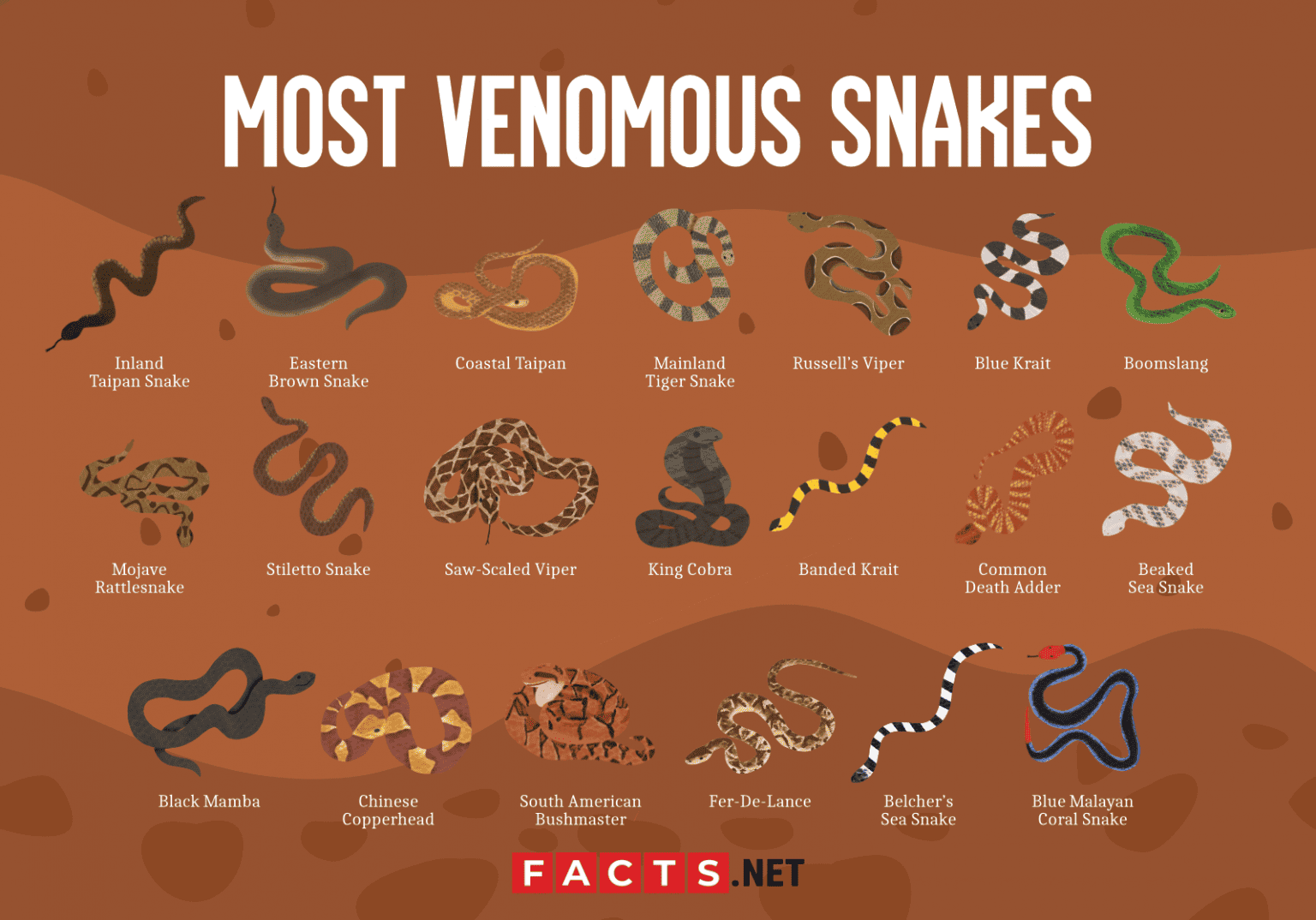
Understanding the difference between venomous and poisonous creatures is crucial when evaluating dangerous wildlife, as snakes are strictly venomous rather than poisonous, injecting toxins via specialized fangs rather than being toxic to consume. Among these remarkable reptiles, certain species possess exceptionally potent venoms capable of causing severe medical emergencies in humans.
When analyzing the world's most dangerous serpents, herpetologists and medical toxicologists evaluate not merely the potency of the venom—frequently measured via median lethal dose ($\text{LD}_{50}$) tests in laboratory settings—but also venom yield, delivery mechanisms, and the frequency of human interaction. The distinction between laboratory toxicity and real-world clinical danger is significant; a snake with extremely potent venom that rarely encounters humans or injects small quantities poses a different threat profile than an aggressive species living in densely populated agricultural regions.
Evaluating these animals requires an understanding of how venoms function as complex mixtures of proteins, enzymes, and peptides designed to immobilize prey and initiate digestion. These biological cocktails typically target specific physiological systems, including the nervous system, the circulatory system, and cellular structures. Recognizing the geographical distribution, behavioral patterns, and physiological impacts of these remarkable predators is essential for anyone living in or traveling through their natural habitats.
Understanding Venom Potency and Toxicity Metrics
To evaluate dangerous snakes objectively, scientists rely on standardized toxicological metrics, most notably the median lethal dose ($\text{LD}_{50}$). This measurement indicates the amount of venom per kilogram of body weight required to kill 50% of a test population, typically standard laboratory mice.
Lower $\text{LD}{50}$ values indicate higher toxicity, meaning smaller quantities of venom are required to prove fatal. However, relying solely on $\text{LD}{50}$ values can be misleading because it measures laboratory potency under controlled conditions rather than the clinical outcome of a real-world envenomation.
Several critical variables influence the actual danger a snake presents to humans:
- Venom Yield: The total volume of venom a snake can deliver in a single strike varies dramatically by species, age, and size. A species with moderately toxic venom that delivers a massive volume can be far more dangerous than a tiny snake with ultra-potent venom and limited delivery capacity.
- Delivery Efficiency: The design of the fangs and the striking mechanics dictate how effectively venom is injected. Solenoglyphous snakes, such as vipers, possess hinged, hollow fangs that fold against the roof of the mouth and swing forward during a strike, allowing for deep intramuscular injection. Proteroglyphous snakes, such as elapids, have fixed, shorter front fangs that require chewing or holding to deliver maximum venom.
- Venom Composition: Snake venoms are complex chemical cocktails containing neurotoxins, hemotoxins, cytotoxins, and myotoxins. Neurotoxins disrupt nerve impulses, leading to paralysis and respiratory failure. Hemotoxins destroy red blood cells, disrupt clotting, and cause massive internal hemorrhaging. Cytotoxins cause localized tissue destruction and necrosis around the bite site.
- Human Ecology and Behavior: The frequency of human-snake encounters is often the most important factor in bite statistics. Species that inhabit rural agricultural fields, suburban gardens, or forest trails where humans walk frequently account for vastly more bites than isolated, highly toxic species living in deep wilderness or remote deserts.
The 10 Most Dangerous and Potent Snakes
The following selection highlights ten of the world's most formidable snakes, chosen for their exceptionally potent venoms, significant venom yields, and historical impact on human envenomation statistics. While the term "poisonous" is colloquially used, these species are strictly venomous predators found across diverse global ecosystems.
1. Inland Taipan (Oxyuranus microlepidotus)
Found in the semi-arid regions of central Australia, the Inland Taipan is widely recognized by toxicologists as possessing the most toxic venom of any land snake based on $\text{LD}_{50}$ testing. Its venom is a complex neurotoxic and myotoxic cocktail designed primarily to immobilize warm-blooded prey such as rodents.
A single bite delivers enough venom to potentially kill over 100 adult humans or hundreds of thousands of mice. Despite its extreme toxicity, the Inland Taipan is a shy, reclusive creature that rarely bites unless cornered or handled. The development of an effective polyvalent antivenom by Australian researchers has made fatalities exceedingly rare for those who receive prompt medical treatment.
2. Eastern Brown Snake (Pseudonaja textilis)
Inhabiting eastern and central Australia as well as parts of New Guinea, the Eastern Brown Snake is responsible for the majority of snakebite fatalities in its home region. Its venom contains powerful procoagulants and neurotoxins that can cause rapid collapse, cardiac arrest, and progressive paralysis.
Unlike the Inland Taipan, the Eastern Brown Snake is frequently found in agricultural areas, suburban neighborhoods, and around rural homes, where it hunts rodents. It possesses an irritable disposition and will readily defend itself when threatened, adopting an S-shaped strike posture and striking with high speed.
3. Coastal Taipan (Oxyuranus scutellatus)
The Coastal Taipan is a large, highly alert elapid native to the coastal regions of northern and eastern Australia as well as the island of New Guinea. It is the third-most toxic land snake globally, featuring massive front fangs that can exceed 12 millimeters in length.
Its neurotoxic venom acts rapidly on the nervous system, blocking nerve transmissions to skeletal muscles and paralyzing the diaphragm, leading to asphyxiation. Coastal Taipans are fast-moving predators that strike with precision and can deliver multiple strikes in rapid succession if provoked.
4. Black Mamba (Dendroaspis polylepis)
Native to parts of sub-Saharan Africa, the Black Mamba is legendary for its speed, size, and potent neurotoxic venom. It is Africa's longest venomous snake, capable of reaching lengths exceeding 3 meters, and can slither at speeds up to 16 to 20 kilometers per hour over short distances.
The venom of the Black Mamba contains dendrotoxins that disrupt ion channels in nerve cells, causing rapid paralysis and respiratory failure. Without prompt administration of specific antivenom, the mortality rate for an untreated bite approaches 100%. Despite its fearsome reputation, the snake prefers to flee rather than fight when encountered.
5. Saw-Scaled Viper (Echis carinatus)
Found across arid regions of the Middle East, Central Asia, and the Indian subcontinent, the Saw-Scaled Viper is physically small compared to the mambas and taipans, but it is responsible for an immense number of human envenomations and fatalities across its range.
Its common name derives from the distinctive rasping sound it makes by rubbing its serrated lateral scales together when threatened. The hemotoxic venom causes severe local tissue damage, blistering, and systemic coagulopathy, leading to spontaneous bleeding from mucous membranes and internal organs. Its widespread distribution and aggressive defensive posture make it exceptionally hazardous.
6. Russell's Viper (Dabiola russelii)
A stout-bodied snake native to the Indian subcontinent, Southeast Asia, and parts of China, Russell's Viper is a member of the infamous "Big Four" snakes responsible for the vast majority of snakebite deaths in India. It inhabits open grasslands, scrub forests, and agricultural fields, often coming into close contact with rural farmers.
The venom is a potent hemotoxin that triggers disseminated intravascular coagulation (DIC), kidney failure, and severe hemorrhaging. Survivors of Russell's viper bites frequently experience long-term pituitary gland damage, known as Sheehan's syndrome, resulting from ischemia induced by the venom.
7. Common Krait (Bungarus caeruleus)
Distributed across the Indian subcontinent, the Common Krait is a nocturnal elapid with a sleek, glossy body and highly potent neurotoxic venom. Its venom contains alpha-bungarotoxins and beta-bungarotoxins, which block acetylcholine receptors at the neuromuscular junction.
One of the most dangerous aspects of a Common Krait bite is that it is often painless and produces minimal localized swelling or irritation. Victims frequently suffer bites while sleeping on the ground in rural dwellings, waking hours later with severe paralysis as the neurotoxins take full systemic effect.
8. Blue Malayan Krait (Bungarus candidus)
Found in Southeast Asia, including parts of Indonesia, Malaysia, Thailand, and Vietnam, the Blue Malayan Krait is a striking snake with alternating bands of dark blue-black and white. Its venom is exceptionally potent, causing muscle spasms, paralysis, and respiratory arrest.
Unlike many other snakes, approximately 50% of systemic envenomations by Malayan kraits result in death even when patients receive hospital care and antivenom, due to the irreversible nature of the neurotoxin binding at the neuromuscular junctions.
9. Bothrops jararaca / Fer-de-Lance Group (Bothrops atrox)
The Fer-de-Lance and its close relatives within the Bothrops genus are native to Central and South America. These pit vipers are responsible for the majority of snakebite injuries in the Neotropics. Their hemotoxic venom causes agonizing localized pain, extensive tissue necrosis, blistering, and severe systemic bleeding disorders.
Because they inhabit agricultural plantations, particularly banana and sugarcane fields, agricultural workers face a high statistical risk of accidental encounters during harvest activities.
10. King Cobra (Ophiophagus hannah)
As the world's longest venomous snake, reaching lengths of up to 5.5 meters, the King Cobra is native to the forests of India, Southeast Asia, and the Philippines. Unlike most other snakes, its primary diet consists of other snakes, including venomous species.
A King Cobra can inject a massive volume of neurotoxic venom in a single bite, sufficient to kill an adult elephant or over twenty humans. Despite its immense size and potent venom, the King Cobra is generally shy and avoids human contact, though brooding females guarding their nests display extreme defensive aggression.
Comparative Overview of Notable Venomous Snakes
| Common Name | Scientific Name | Primary Geographic Region | Main Venom Type | Typical Clinical Effects |
|---|---|---|---|---|
| Inland Taipan | Oxyuranus microlepidotus | Central Australia | Neurotoxin, Myotoxin | Paralysis, respiratory failure, myolysis |
| Eastern Brown Snake | Pseudonaja textilis | Australia, New Guinea | Procoagulant, Neurotoxin | Coagulopathy, cardiac arrest, paralysis |
| Black Mamba | Dendroaspis polylepis | Sub-Saharan Africa | Neurotoxin, Cardiotoxin | Rapid paralysis, respiratory collapse |
| Saw-Scaled Viper | Echis carinatus | Middle East, South Asia | Hemotoxin | Severe bleeding, DIC, local necrosis |
| Common Krait | Bungarus caeruleus | Indian Subcontinent | Neurotoxin | Painless bite, delayed progressive paralysis |
Medical Treatment and Emergency Response
When an envenomation occurs, immediate medical intervention is critical for survival and recovery. First-aid protocols for snakebites have evolved significantly over recent decades, moving away from dangerous historical practices such as incision, suction, tourniquet application, and ice packing, which frequently exacerbate tissue damage and systemic complications.
Modern first-aid guidelines emphasize the Pressure Immobilization Technique (PIT) for elapid bites in regions like Australia, where neurotoxic venoms dominate. This technique involves wrapping a firm elastic bandage over the bite site and extending it up the entire length of the affected limb to slow lymphatic drainage of venom into the circulatory system, while immobilizing the limb with a splint.
However, PIT is generally discouraged for hemotoxic vipers in other regions, as restricting blood flow in limbs experiencing severe localized tissue necrosis can worsen localized tissue destruction.
In all cases, the primary objective is stabilizing the patient's airway, breathing, and circulation while rapidly transporting them to a medical facility equipped with species-specific antivenom. Antivenom consists of purified antibodies harvested from horses or sheep hyper-immunized against specific snake venoms. When administered correctly, these antibodies bind to venom molecules, neutralizing their toxic effects and halting disease progression.
Frequently Asked Questions
What is the difference between a venomous snake and a poisonous snake?
A venomous snake actively injects toxins into its prey or attackers using specialized fangs and venom glands. A poisonous snake, by contrast, contains toxins within its body tissues or skin that cause harm only when the animal is ingested or absorbed through mucous membranes. Nearly all dangerous snakes are venomous rather than poisonous.
Which snake has the most toxic venom in the world?
Based on laboratory $\text{LD}_{50}$ testing on mice, the Inland Taipan (Oxyuranus microlepidotus) of Australia possesses the most toxic land snake venom. A single drop of its venom contains sufficient neurotoxic potency to kill over 100 adult humans, though human bites are extremely rare due to its remote habitat and docile temperament.
What should you do immediately if bitten by a venomous snake?
Call emergency services immediately, keep the victim calm and still to slow heart rate and venom distribution, remove tight jewelry or clothing near the bite site before swelling begins, and immobilize the affected limb. Never attempt to cut the wound, suck out venom with your mouth, apply a tourniquet, or use electric shocks.
How does antivenom work?
Antivenom is manufactured by injecting small doses of snake venom into domestic animals, such as horses or sheep, prompting their immune systems to produce specialized antibodies. Medical researchers harvest and purify these antibodies from the animal's blood plasma. When administered to an envenomated human, these antibodies bind directly to the venom toxins, neutralizing their chemical structure and preventing further cellular damage.
Are all snakebites fatal if left untreated?
No, not all snakebites result in death without treatment, but the outcome depends entirely on the species involved, the amount of venom injected, the bite location, and the health of the victim. Some bites are "dry bites," where the snake injects no venom at all. However, bites from species like the Black Mamba or Inland Taipan carry extremely high mortality rates and require urgent medical care.
Conclusion and Practical Safety Precautions
Navigating habitats shared with dangerous snakes requires a combination of environmental awareness and sensible behavioral precautions. When walking through tall grass, forests, or rocky terrain within the range of venomous species, wear sturdy closed-toe boots and long trousers, use a flashlight when walking outdoors at night, and never reach blindly into hollow logs, rock crevices, or dense brush.
If you encounter a snake in the wild, remain calm, give the animal ample space to retreat, and back away slowly without making sudden movements. Most snakebites occur when people attempt to capture, kill, or handle wild snakes; respecting their space remains the most effective strategy for preventing tragic encounters.