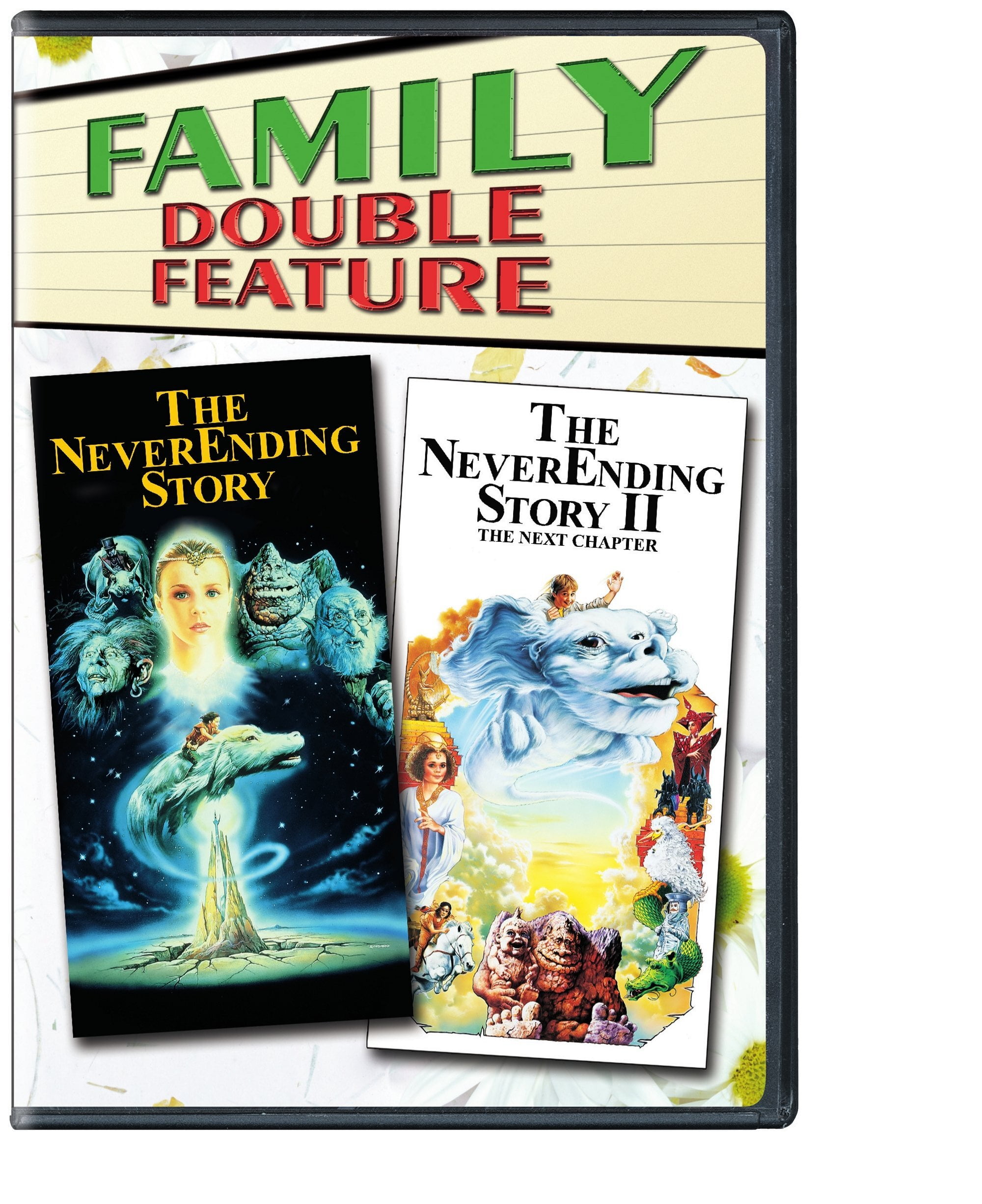
The most significant unexpected truth regarding The NeverEnding Story II: The Next Chapter is that its screenplay, written by Karin Howard, is structurally a synthesis of the second half of Michael Ende’s original 1979 novel Die unendliche Geschichte, despite the film famously diverging from the thematic tone and philosophical depth of the source material. While often dismissed as a mere derivative sequel, the film functions as a deliberate attempt to adapt the remaining narrative arc of Bastian Balthazar Bux’s journey into Fantasia, stripped of the postmodern metafiction that defined the first installment.
The Source Material: Understanding the Book vs. The Film
To understand why The NeverEnding Story II occupies such a contentious space in cinematic history, one must recognize the scope of Michael Ende’s novel. The book is divided into two distinct halves. The first half follows Atreyu’s quest to save the Childlike Empress and culminates in Bastian entering Fantasia. The second half of the book, which serves as the direct inspiration for the 1990 film, details Bastian’s transformation from a lonely, bullied child into a powerful but corrupted ruler who loses his memories as he gains his wishes.
In the novel, Bastian’s time in Fantasia is a cautionary psychological study. He is granted the power to create anything he desires, but every time he makes a wish, he loses a memory of his life in the real world. This process leads him toward a state of existential oblivion. The film attempted to capture this downward spiral, yet it lacked the nuanced, philosophical pacing of the prose. The "unexpected truth" for many viewers who only know the 1984 Wolfgang Petersen film is that the sequel is actually "more faithful" to the book's second half than the first film was to the whole, yet it is widely considered the inferior adaptation.
The Shift in Direction: George Miller and Beyond
The production of The NeverEnding Story II saw a massive transition in both budget and artistic vision. The first film was a German-led production with significant international investment, characterized by the dark, surreal aesthetic of Wolfgang Petersen. In contrast, the 1990 sequel, directed by George Miller (not to be confused with the Mad Max director), leaned heavily into the visual effects landscape of the early 1990s.
The studio, Warner Bros. and Bavaria Film, pivoted toward a more "Hollywood" approach, favoring spectacle and simplified moral stakes. This shift is the primary reason the film feels disconnected from its predecessor. The unexpected truth here is that the film was originally envisioned as a high-concept fantasy epic that would anchor a larger franchise. When the critical reception failed to meet these lofty projections, it effectively stalled the intellectual property for years, leading to the eventual third installment which bore almost no resemblance to the established source material.
Analyzing the Narrative Arc: Bastian’s Internal Conflict
In The NeverEnding Story II, the core conflict is not just about the "Nothing" or the destruction of Fantasia; it is about the cost of escapism. Bastian, played by Jonathan Brandis, uses the Auryn to rewrite Fantasia according to his whims. This creates a fascinating technical premise: the protagonist becomes the antagonist of his own story.
| Feature | The NeverEnding Story (1984) | The NeverEnding Story II (1990) |
|---|---|---|
| Primary Conflict | External (The Nothing) | Internal (The loss of self) |
| Bastian's Role | Observer/Reader | Active Creator/Tyrant |
| Setting | The Quest of Atreyu | The Reconstruction of Fantasia |
| Tone | Existential/Grim | Adventure/Family Drama |
The tragedy of the film’s narrative is that while it attempts to tackle the mature themes of memory and self-worth, it does so through a lens of 1990s family-friendly adventure. The result is a tonal dissonance where the stakes are high, but the delivery feels constrained by the era's visual effects limitations and the pressure to produce a "blockbuster" experience.
Visual Effects and Practical Realities
A critical component of The NeverEnding Story II is its reliance on practical effects, animatronics, and the maturing capabilities of matte painting. By 1990, the industry was on the cusp of the digital revolution, but this film exists in the "twilight of the puppets." The creatures of Fantasia, such as the Rock Biter and Falkor, were redesigned with a softer, more approachable aesthetic to appeal to a wider audience.
From an archival perspective, the film serves as a time capsule of European-American co-production techniques. The collaboration between German production houses and American distributors meant that the film had to satisfy two different markets—one looking for the gravitas of European fantasy literature and the other looking for the pacing of American children’s adventure films. This dual-market requirement often resulted in scenes that were cut or expanded in ways that left the internal logic of the world feeling inconsistent.
Common Misconceptions About the Sequel
One of the most persistent rumors regarding the film is the claim that Michael Ende hated the production so much that he took his name off it. In reality, Ende had already been deeply dissatisfied with the 1984 film, having famously attempted to stop its production due to the creative changes made by Wolfgang Petersen. The 1990 film was a continuation of that divergence, but by that time, the legal rights were firmly out of the author’s hands.
Another misconception is that the film was a total box office failure. While it was a critical disappointment compared to the cultural impact of the original, it performed adequately in various European territories, providing enough financial justification for the series to persist in other media.
Why the Sequel Remains Historically Relevant
Despite its reception, The NeverEnding Story II is an essential study in the difficulty of adapting introspective literature. It highlights the "adaptation trap," where studios retain the title and characters of a beloved property but strip away the philosophical interiority that made the book resonate with readers.
In 2026, looking back at the trajectory of 90s fantasy films, the movie stands as a warning against oversimplifying complex themes. The attempt to quantify the "magic" of Fantasia into a standard three-act structure led to the loss of the intangible quality—the wunderkammer atmosphere—that defined the 1979 novel and the initial film adaptation.
Frequently Asked Questions
Does The NeverEnding Story II follow the book accurately? Only in its plot outline. The film uses the second half of Michael Ende’s novel as a skeleton for its story, but it removes the deeper, darker psychological progression that defines Bastian’s journey in the book.
Why does the film look so different from the first? The production moved from West Germany to a more international model. With a new director and a different crew, the aesthetic choices favored a lighter, more brightly lit, and more "traditional" fantasy appearance, moving away from the moody, shadowy atmosphere of the 1984 original.
Is The NeverEnding Story II considered canon by fans? The concept of "canon" is fluid for this series. Most fans consider the original 1984 film and the 1979 book to be the primary pillars of the franchise, often ignoring the sequels because they do not capture the spirit of the original material.
What happened to the original cast? Noah Hathaway, who played Atreyu in the first film, did not return. The sequel features a completely different set of actors playing the core roles, which contributed to the feeling that the film was a detached imitation rather than a true continuation of the story.
Is it worth watching for the fantasy elements? For enthusiasts of practical effects, the film is worth watching to see the evolution of puppetry and set design before the dominance of CGI. It offers a glimpse into how fantasy worlds were constructed on a massive budget in the early 90s.
Final Assessment: The Legacy of a Fragmented Story
When analyzing The NeverEnding Story II, one must separate the intent from the execution. The film set out to complete a narrative that many readers found essential, but it ultimately failed to translate the internal transformation of the protagonist into a visual medium. The unexpected truth is that the film tried to remain faithful to the plot points of the novel while simultaneously betraying the core message of the author.
If you are a fan of the franchise, view the 1990 installment not as a direct extension of the original film’s soul, but as an experimental effort to close the loop on Bastian’s story. It is a piece of cinema that illustrates the tension between creative integrity and commercial adaptation. For those interested in the craft of storytelling, it remains a useful case study in why some internal narratives simply do not survive the transition to the screen.