Proposition 108 auto insurance refers to legislative proposals, state ballot measures, or regulatory frameworks commonly associated with insurance reform, liability structures, and consumer protections. While various jurisdictions utilize ballot initiatives to reshape mandatory minimum coverage, premium rates, and litigation rights, understanding these frameworks requires a close look at how public policy intersects with private-market underwriting, state insurance departments, and consumer financial obligations.
Introduction to Proposition-Based Insurance Reforms
Insurance markets across the United States operate under state-specific statutory frameworks. When voters or legislators introduce measures labeled under numbers like Proposition 108—or similar state-level ballot initiatives—the primary objective typically centers on altering the cost of coverage, restructuring how fault is determined in motor vehicle collisions, or modifying the minimum limits drivers must carry to legally operate a vehicle.
For the average motorist, deciphering these regulatory changes involves understanding how shifting statutory mandates impact monthly premium calculations, uninsured motorist protection, and personal liability exposures. This overview examines the structural mechanics of such initiatives, the core components of mandatory auto insurance frameworks, and the practical implications for policyholders navigating evolving legal landscapes.
Core Objectives of Insurance Ballot Measures
Ballot initiatives and legislative propositions concerning auto insurance generally arise due to public dissatisfaction with rising premium costs, limited access to affordable coverage, or perceived inefficiencies in the claims dispute process. Proponents and opponents frequently clash over whether specific measures will expand consumer protection or destabilize insurance risk pools.
Premium Stabilization and Cost Reduction
A primary driver behind insurance-related propositions is the promise of lower rates for consumers. Measures often propose rate freezes, mandatory discounts for specific demographic groups (such as good drivers or seniors), or restrictions on the factors insurance companies can use when underwriting policies. Underwriters traditionally rely on variables such as credit history, ZIP codes, driving records, and annual mileage to assess risk. Reforms seek to limit or eliminate certain rating factors to promote equity and affordability.
Minimum Coverage Adjustments
States mandate specific levels of financial responsibility, typically expressed as split limits (e.g., bodily injury liability per person, bodily injury liability per accident, and property damage liability). Propositions frequently attempt to adjust these mandatory floors upward to ensure that accident victims receive adequate compensation for medical expenses and property damage, or downward to make basic coverage more accessible to low-income drivers who might otherwise drive uninsured.
Tort Reform and Litigation Limits
Many comprehensive insurance measures address the legal environment surrounding motor vehicle accidents. Proposals may oscillate between traditional tort systems—where the at-fault driver's insurance pays for damages—and no-fault systems, which require drivers to turn to their own insurers for medical payments regardless of fault, theoretically reducing costly litigation.
Key Components of Modern Auto Insurance Frameworks
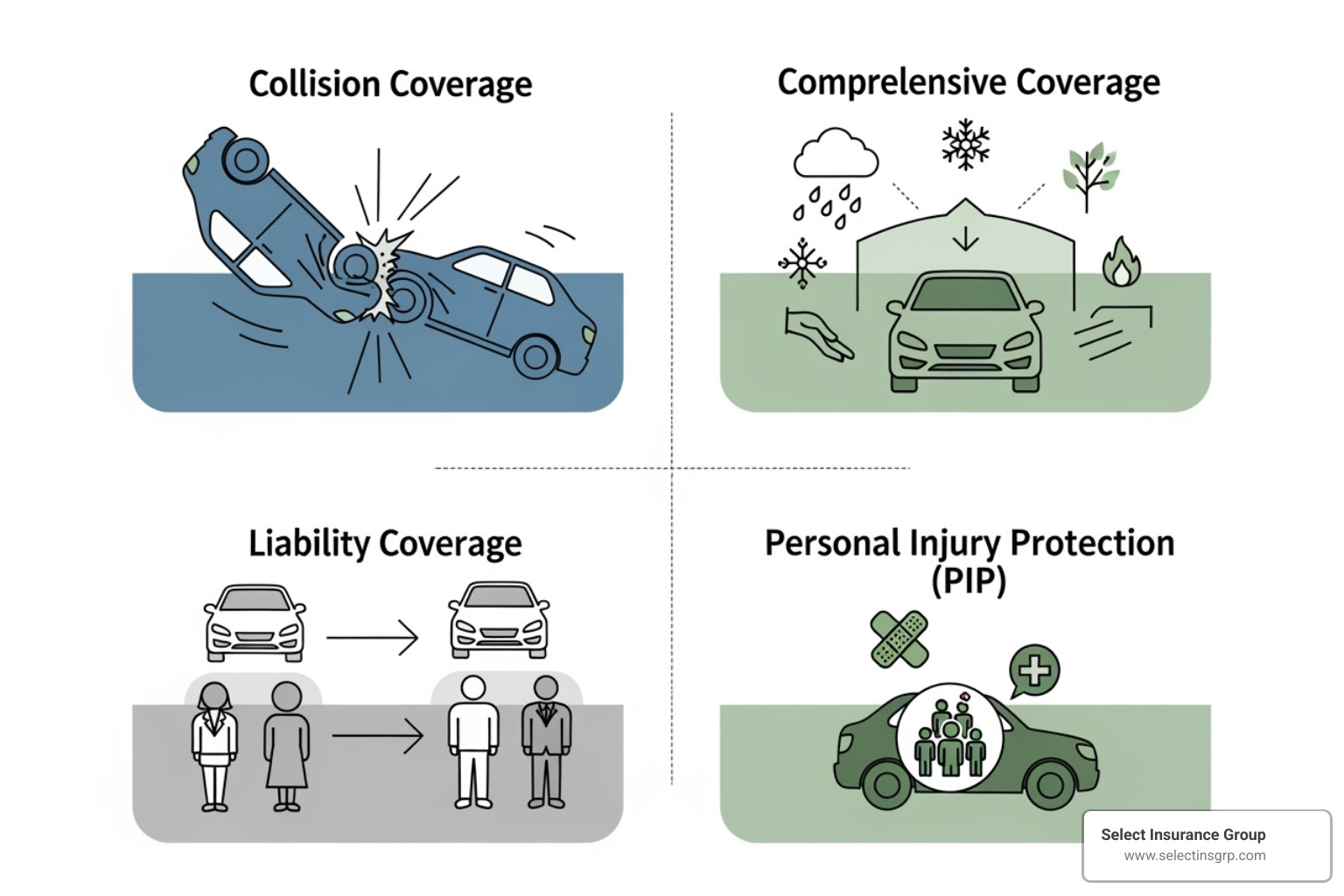
To evaluate the impact of any sweeping regulatory measure, policyholders must understand the foundational elements that constitute a standard personal auto insurance policy. These components interact directly with state statutory minimums and determine a driver's financial protection level.
| Coverage Type | Primary Function |
|---|---|
| Bodily Injury Liability | Pays for injuries you cause to others in a crash. |
| Property Damage Liability | Pays for damage you cause to another's property. |
| Personal Injury Protection (PIP) | Covers medical bills and lost wages regardless of fault (in no-fault jurisdictions). |
| Uninsured/Underinsured Motorist | Protects you if hit by a driver without adequate or any insurance. |
| Comprehensive & Collision | Covers physical damage to your own vehicle from collisions, theft, weather, or vandalism. |
Liability Coverage
Liability insurance is mandatory in nearly all jurisdictions. It does not pay for the policyholder's own injuries or vehicle repairs; instead, it shields personal assets from lawsuits arising from at-fault accidents. State requirements set the baseline, but financial planners routinely recommend purchasing limits higher than the statutory minimum to protect against catastrophic legal judgments.
No-Fault Versus Tort Systems
The structure of a state's insurance system dictates how claims are filed after a collision:
- Tort (Fault) Systems: The injured party must establish negligence on the part of the other driver. Compensation is pursued through the at-fault driver's liability insurance or via civil litigation.
- No-Fault Systems: Drivers carry Personal Injury Protection (PIP). Following an accident, each driver's insurer pays medical expenses and economic losses up to policy limits, regardless of who caused the crash, limiting lawsuits to severe injury thresholds.
Economic and Consumer Impacts
When states evaluate significant structural changes to their insurance markets, economists and regulatory bodies analyze the trade-offs between consumer savings and insurer solvency.
Impact on Uninsured Motorist Rates
A central argument against raising mandatory coverage minimums is that higher policy costs price low-income drivers out of the market. When legal minimums become too expensive, the proportion of uninsured motorists often rises, shifting the financial burden onto conscientious drivers through higher uninsured motorist premium surcharges. Conversely, lowering minimums may reduce immediate premium outlays but leaves accident victims vulnerable to severe out-of-pocket expenses when colliding with underinsured parties.
Underwriter Market Participation
Insurance companies operate within strict actuarial margins. Measures that cap rates or restrict underwriting criteria without addressing underlying cost drivers—such as rising medical inflation, vehicle repair complexity, and litigation expenses—can lead carriers to restrict coverage availability, non-renew existing policies, or withdraw entirely from a state's market, reducing consumer choice.
Practical Guidance for Policyholders
Navigating an evolving insurance regulatory environment requires proactive management of personal coverage levels. Consumers should evaluate their policies independently of minimum statutory requirements to ensure comprehensive protection.
Steps to Optimize Auto Insurance Coverage
- Review Current Policy Limits: Compare existing bodily injury and property damage limits against personal net worth and asset exposure.
- Assess Deductibles: Adjust comprehensive and collision deductibles based on emergency savings availability to balance monthly premium costs against out-of-pocket risk.
- Audit Discounts: Inquire with insurance providers about telematics programs, bundling options (home and auto), defensive driving course credits, and low-mileage discounts.
- Monitor Legislative Changes: Stay informed regarding state insurance department bulletins and ballot measures that alter local minimum liability requirements or claims processes.
Disclaimer: Insurance regulations and statutory minimums vary significantly by jurisdiction. Consumers should consult with licensed insurance professionals or state department of insurance representatives for personalized guidance regarding specific policy requirements.
Frequently Asked Questions
What does a major auto insurance proposition typically change?
Propositions and ballot measures generally target mandatory minimum coverage limits, rate-setting regulations, underwriting factors permitted by insurers, and the legal framework governing fault and tort liability in motor vehicle accidents.
How do minimum coverage limits affect monthly premiums?
Higher mandatory coverage limits increase the insurer's potential payout exposure, which typically results in higher baseline premiums. Conversely, lower limits reduce premium costs but expose drivers to greater financial liability in an accident.
Are no-fault insurance systems better than traditional tort systems?
Neither system is universally superior; each balances priorities differently. No-fault systems aim to streamline medical claims processing and reduce minor litigation, whereas traditional tort systems hold at-fault drivers directly accountable for all damages caused.
How can drivers protect themselves against uninsured motorists?
Purchasing Uninsured Motorist (UM) and Underinsured Motorist (UIM) coverage ensures that medical expenses and property damage are covered even if the at-fault party lacks adequate insurance or flees the scene.
Where can consumers verify their state's current insurance requirements?
Policyholders should consult their state's official Department of Insurance or Office of the Insurance Commissioner website for verified, up-to-date statutory minimums and consumer resources.