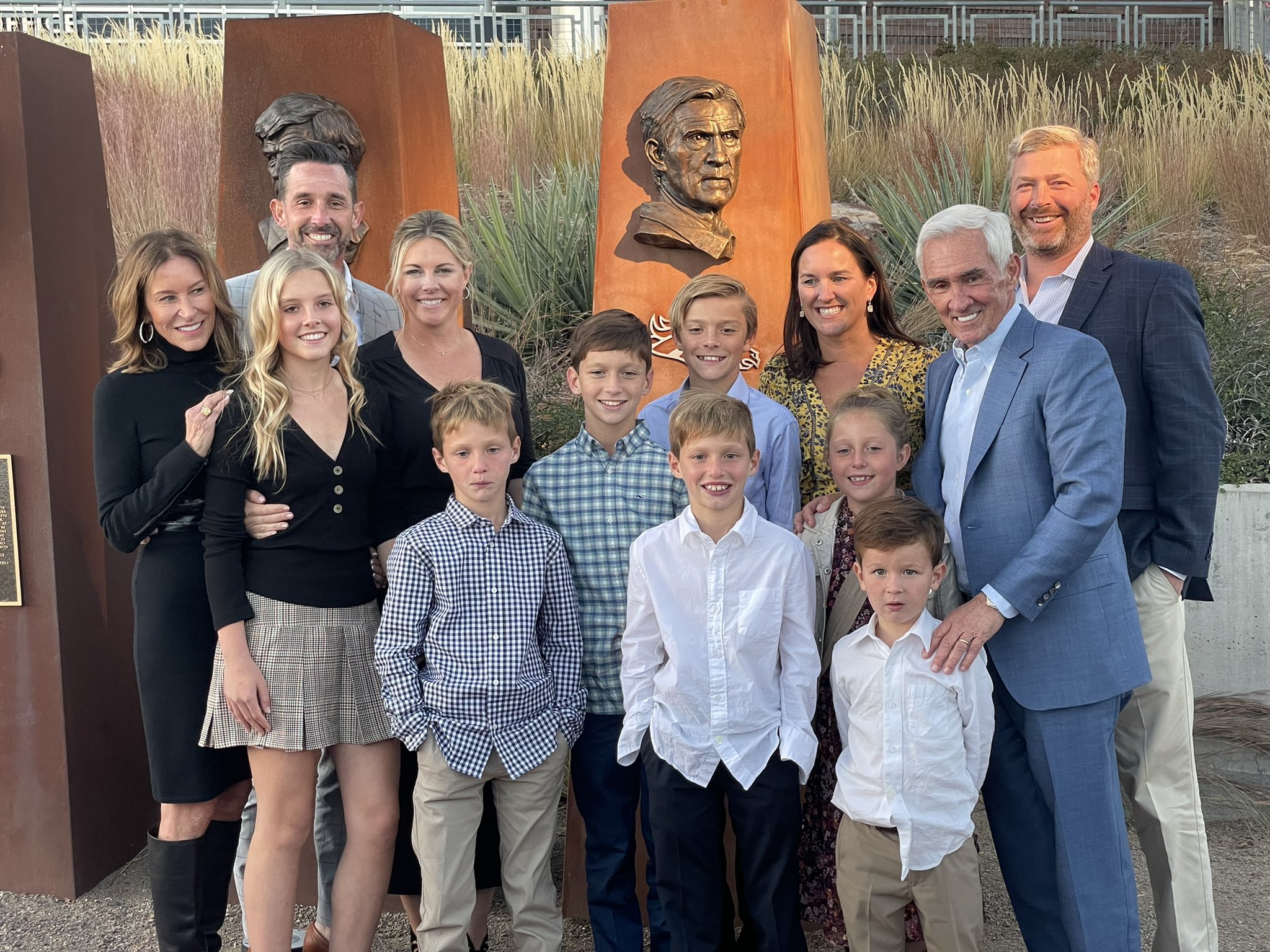
Yes, Kyle Shanahan and Mike Shanahan are related; they are father and son. Mike Shanahan is the legendary NFL head coach who won three Super Bowl titles, while his son, Kyle Shanahan, has established himself as one of the most innovative offensive minds and head coaches in modern professional football. Their shared lineage represents one of the most successful familial successions in the history of the National Football League.
The Foundations of the Shanahan Coaching Legacy
The name "Shanahan" has been synonymous with offensive innovation and tactical excellence in the NFL for over four decades. To understand their relationship, one must first look at the career trajectory of the patriarch, Mike Shanahan. Born in 1952, Mike began his coaching journey in the collegiate ranks before breaking into the NFL as an assistant. His reputation was forged largely through his association with legendary figures like Dan Reeves and his instrumental role as the offensive coordinator for the San Francisco 49ers during their championship years in the mid-1980s.
Mike Shanahan’s tenure as the head coach of the Denver Broncos in the 1990s and 2000s cemented his status as a titan of the sport. Under his leadership, the Broncos secured back-to-back Super Bowl victories in 1998 and 1999. His implementation of the "Zone Blocking Scheme" revolutionized how offensive lines operated, focusing on lateral movement and athletic engagement rather than traditional, power-based blocking. This philosophical framework was passed down to his son, forming the backbone of the offensive identity that defines the family name today.
Kyle Shanahan’s Rise through the Coaching Ranks
Kyle Shanahan, born in 1979, grew up on the sidelines of NFL stadiums, observing his father’s methodical approach to game planning and personnel management. After a collegiate playing career at the University of Texas, Kyle transitioned quickly into coaching. Unlike some coaches’ sons who relied solely on nepotism, Kyle spent his formative years grinding through the ranks of entry-level assistant positions.
His early career included stops as a graduate assistant and a wide receivers coach before he earned his first opportunity as an NFL offensive coordinator with the Houston Texans in 2008. Over the next decade, Kyle honed his craft in Washington—where he worked on his father’s staff—as well as in Cleveland and Atlanta. It was his time as the offensive coordinator for the Atlanta Falcons, where he orchestrated one of the most prolific offenses in league history, that launched him into head coaching consideration. Since becoming the head coach of the San Francisco 49ers in 2017, Kyle has consistently been at the forefront of offensive strategy, known for his creative personnel usage and complex play-calling sequences.
Parallels in Coaching Philosophy: The Zone Scheme
The most significant link between the two men beyond their biological relationship is the evolution of their shared offensive philosophy. While the game of football has changed drastically since Mike Shanahan’s peak in the 1990s, the core tenets of the "Shanahan System" remain visible in Kyle’s work.
Key Components of the Shanahan System
- The Outside Zone Run: This remains the primary weapon. The goal is to force the defense to flow horizontally, creating "cutback lanes" for running backs who possess high-level vision.
- Play-Action Passing: Both Shanahans mastered the art of making the pass look identical to the run. By utilizing the same motion and formation for both run and pass plays, they force linebackers and safeties to commit to the run, leaving open gaps in the secondary.
- Personnel Versatility: Both coaches prioritize "positionless" football. They value players who can function in multiple roles, such as tight ends who act as wide receivers or fullbacks who operate as extra blockers and pass-catchers.
While Mike’s offense was often characterized by a punishing, physical edge that mirrored the toughness of the teams he built in Denver, Kyle’s offense is characterized by speed, deception, and extreme efficiency. Kyle has successfully integrated modern metrics and analytics into the foundational structure his father pioneered, proving that the system is capable of evolving with the pace of the game.
Comparative Overview of Career Achievements
To understand the scope of their shared history, it is helpful to look at the statistical and historical milestones that define their careers. While the eras in which they coached vary significantly in terms of rule changes and passing volume, their success rates are objectively high among their peers.
| Metric | Mike Shanahan | Kyle Shanahan |
|---|---|---|
| Primary Team Tenure | Denver Broncos (1995–2008) | San Francisco 49ers (2017–Present) |
| Super Bowl Titles (As HC) | 2 | 0 |
| Total Head Coaching Wins | 170 | 80+ (as of 2026) |
| Offensive Philosophy | Zone Run/Power Hybrid | Modern Wide-Zone/Motion |
| Key Legacy | Dynasty builder in Denver | Elite offensive strategist |
Note: Data for Kyle Shanahan is reflective of his career status entering the 2026 season. Super Bowl figures represent titles won specifically as a head coach.
Familial Dynamics and Professional Separation
One of the most frequently asked questions regarding their relationship is how they navigated working together. During the years 2010 through 2013, Kyle served as the offensive coordinator under his father in Washington. This period was often scrutinized by the media, as the dual pressure of familial expectations and the difficulty of rebuilding a struggling franchise created a high-stakes environment.
Critics often point to the limitations of that specific tenure as a rare moment of turbulence in an otherwise trajectory-ascending career for both. However, professional observers have noted that this experience served as an informal "masterclass" for Kyle. Having to navigate the complexities of an NFL locker room while reporting to his father provided him with a unique perspective on managing egos and administrative challenges—skills he has clearly utilized to maintain locker room harmony in San Francisco.
Since that era, both men have gone to great lengths to ensure their professional reputations remain distinct. Mike has largely transitioned into an advisory and mentorship role, frequently appearing in public discourse to support his son’s career, but staying clear of daily operations. This separation has been vital in allowing Kyle to shed the "coach's son" label and establish his own authority as a leader of men in the modern NFL.
Common Misconceptions About the Shanahan Name
Because of their immense fame, there are several myths that circulate in sports media. Addressing these helps clarify the true nature of their relationship and career paths.
1. The "Silver Spoon" Narrative
A common, yet unfounded, critique is that Kyle received his opportunities solely because of his father’s connections. While having a father with high-level NFL experience undoubtedly opened doors, the longevity of Kyle’s career is entirely attributable to his own output. He has been tasked with rebuilding offenses from the ground up on multiple occasions and has consistently improved the efficiency of teams that were struggling prior to his arrival.
2. Identical Coaching Styles
While they share the same fundamental vocabulary regarding run concepts, they are vastly different personalities. Mike was often viewed as a strict, authoritarian figure—a "my way or the highway" coach who demanded total compliance. Kyle is widely regarded as a more collaborative leader, one who invites input from his players and coaching staff. This shift reflects the broader evolution of management styles in the NFL, where the "player-coach" dynamic has become more centered on psychological buy-in.
3. The "Legacy" Pressure
The idea that Kyle is chasing his father’s shadow is a common theme in sports columns. However, interviews with both men suggest that their relationship is built on mutual respect rather than competition. Kyle has often stated that he views his father’s achievements as a roadmap for what is possible, rather than a benchmark he feels pressured to replicate exactly.
The Impact on Modern Football
The influence of the Shanahan family extends far beyond their own wins and losses. A significant portion of the NFL’s current coaching fraternity consists of "coaching trees" that branch directly from either Mike or Kyle. Coaches like Sean McVay, Matt LaFleur, and Mike McDaniel all spent time working under one or both of the Shanahans.
This "Shanahan Tree" now controls a substantial percentage of the league’s head coaching positions. The cross-pollination of ideas—where assistants learn the base system and then branch off to add their own modern flourishes—has effectively made the Shanahan system the most influential offensive framework in the 2020s. Whether it is through the use of pre-snap motion to diagnose coverage or the utilization of tight ends as primary playmakers, the fingerprint of the Shanahan family is visible in almost every Sunday game played across the league.
The Future of the Dynasty
As of 2026, the question is no longer about whether they are related, but rather how much further the Shanahan influence can grow. Kyle is currently in the prime of his career, having built a franchise in San Francisco that is a perennial contender. Mike, having stepped back from the grind of full-time coaching, now occupies the role of the elder statesman, occasionally providing insights into the game he helped shape.
For fans and analysts, the relationship serves as a bridge between the traditional, grit-and-grind football of the 1990s and the high-speed, precision-based tactical warfare of the present. They represent a rare continuity in a league defined by rapid turnover. While the younger Shanahan continues to pursue his first Super Bowl title as a head coach, the historical record of his family is already secured among the sport’s most important dynasties.
Frequently Asked Questions
Did Kyle Shanahan play for his father?
No, Kyle Shanahan never played for his father at the professional level. Kyle played college football at the University of Texas as a wide receiver. His professional involvement with his father occurred exclusively on the coaching side of the ball, specifically when Kyle served as the offensive coordinator in Washington.
Are there other coaches in the family?
While Mike and Kyle are the most prominent, the family’s involvement in football is deep. Other family members have been involved in scouting or coaching capacities in the past, but Mike and Kyle are the only two to have reached the head coaching level in the NFL.
How did the "Zone Blocking Scheme" start?
The Zone Blocking Scheme was popularized by the Denver Broncos under Mike Shanahan in the 1990s. While not invented by the Shanahans, they were the first to implement it as a universal system that demanded smaller, more athletic linemen who could move laterally, moving away from the "big and slow" archetype that dominated the NFL previously.
How many teams have they coached?
Mike Shanahan served as the head coach for the Los Angeles Raiders, Denver Broncos, and Washington Commanders. Kyle Shanahan has served as an assistant or coordinator for the Tampa Bay Buccaneers, Houston Texans, Washington Commanders, Cleveland Browns, and Atlanta Falcons, before taking his current head coaching role with the San Francisco 49ers.
Are they currently working together?
No. As of 2026, Mike Shanahan is not formally employed by any NFL team, and Kyle Shanahan remains the head coach of the San Francisco 49ers. They operate independently, though they maintain a close personal relationship and discuss football frequently as father and son.
What is the primary difference in their coaching style?
The primary difference lies in their approach to team culture. Mike was a traditional "old-school" head coach who exerted rigid control over his organization. Kyle is known for a more modern, collaborative approach that emphasizes high-level communication and individual player empowerment to execute complex schemes.
Next Steps for Further Research
If you are interested in deep-diving into the tactical evolution of the Shanahan offense, the best approach is to analyze the "All-22" game footage of the 49ers’ offensive schemes over the last three seasons. Comparing these sets to the film of the 1998 Denver Broncos will provide a granular look at the similarities in motion and blocking structures. Additionally, published biographies of the Denver Broncos' championship era provide significant context regarding how the family’s philosophy regarding personnel acquisition and scouting was formed.