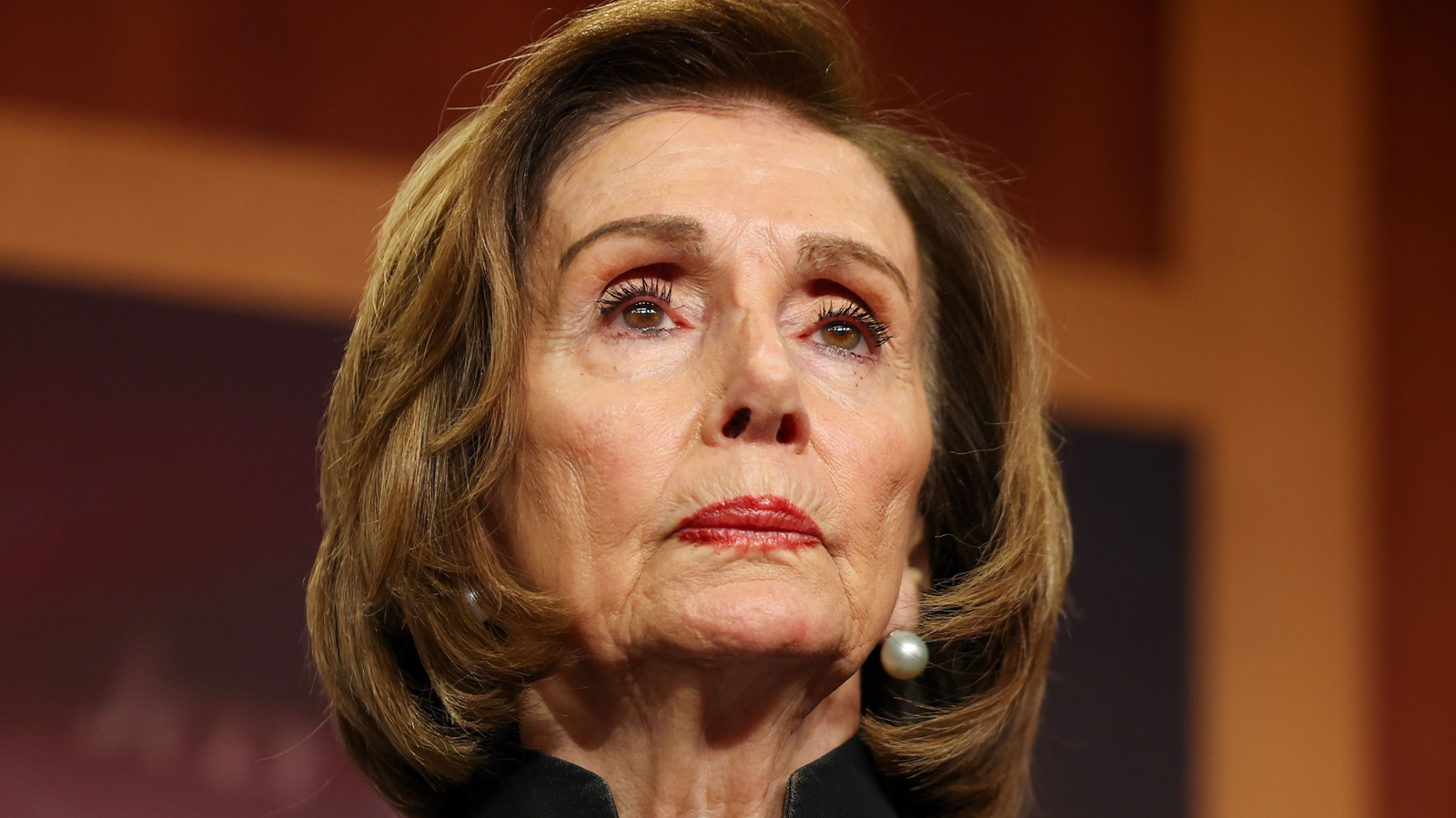
Nancy Pelosi is an American politician who served as the 52nd Speaker of the House, making history as the first woman to hold the position. Her journey spans decades of public service, characterized by her influential roles in passing the Affordable Care Act, navigating two impeachments of Donald Trump, and serving as a central figure in the Democratic Party for over 30 years.
As we look back from the vantage point of 2026, Nancy Pelosi’s legacy remains a cornerstone of modern American legislative history. Her career was defined not just by the titles she held, but by her mastery of parliamentary procedure, her fundraising prowess, and her ability to maintain a unified Democratic caucus through some of the most polarized eras in United States history. Understanding her life requires examining her upbringing in a political dynasty, her late-blooming career in San Francisco, and her eventual rise to becoming one of the most powerful women in the history of global governance.
The Foundations of a Political Dynasty
Nancy Pelosi (née D'Alesandro) was born on March 26, 1940, in Baltimore, Maryland. She was the youngest of seven children and the only girl. Politics was not a choice for the D'Alesandro family; it was the atmosphere they breathed. Her father, Thomas D'Alesandro Jr., was a Democratic Congressman and later the Mayor of Baltimore for twelve years. Her mother, Annunciata M. "Nancy" D'Alesandro, was also deeply involved in political organizing, particularly among women.
Growing up in Baltimore’s Little Italy, Pelosi learned the mechanics of "retail politics" early. She famously helped her father manage his "favor file," a system used to track the needs and requests of constituents. This early exposure taught her that politics was fundamentally about service, organization, and the distribution of resources. She attended the Institute of Notre Dame and later Trinity College in Washington, D.C., where she earned a Bachelor of Arts in political science in 1962. It was during her college years that she attended the inauguration of John F. Kennedy, an event she frequently cited as a major inspiration for her lifelong commitment to the Democratic Party.
The San Francisco Transition and Grassroots Organizing
After marrying Paul Pelosi in 1963, the couple moved to New York and eventually settled in San Francisco in 1969. For the first two decades of her adult life, Nancy Pelosi focused primarily on raising her five children: Nancy Corinne, Christine, Jacqueline, Alexandra, and Paul Jr. However, even as a busy mother, she remained active in local politics behind the scenes.
Her rise through the ranks of the California Democratic Party was deliberate and effective. She began as a volunteer, working her way up to becoming a Democratic National Committee member from California in 1976. By 1981, she was the chair of the California Democratic Party. Her ability to raise money and organize diverse coalitions became her trademark. When Sala Burton, a close friend and the Representative for California's 5th District, was dying of cancer in 1987, she urged Pelosi to run for her seat. Pelosi won the special election at the age of 47, marking her official entry into elective office.
Early Congressional Career and the HIV/AIDS Crisis
When Nancy Pelosi arrived in Washington in 1987, the political landscape was vastly different. She was one of only 23 women in a House of 435 members. From the outset, she focused on issues that were often overlooked by the male-dominated leadership. Representing San Francisco during the height of the HIV/AIDS epidemic, she made the crisis a central pillar of her early legislative work.
At a time when many politicians were afraid to even speak the name of the disease, Pelosi advocated fiercely for funding, research, and healthcare for those affected. She played a pivotal role in the passage of the Housing Opportunities for Persons with AIDS (HOPWA) Act. Beyond healthcare, she established herself as a human rights advocate, famously protesting in Tiananmen Square in 1991 against the Chinese government’s treatment of political dissidents—an act that demonstrated her willingness to challenge international norms for the sake of democratic principles.
The Climb to Leadership and Breaking the Glass Ceiling
Pelosi’s ascent through the House leadership was fueled by her legendary work ethic and her ability to count votes with surgical precision. In 2001, she was elected House Minority Whip, the first woman to hold that post. A year later, she became the House Minority Leader.
The most significant milestone of her career occurred on January 4, 2007, when she was elected the 52nd Speaker of the House. This was a transformative moment in American history. As the first female Speaker, she was third in the line of presidential succession. Her first term as Speaker (2007–2011) was marked by a flurry of legislative activity, most notably in response to the Great Recession. Under her leadership, the House passed the American Recovery and Reinvestment Act and the Dodd-Frank Wall Street Reform and Consumer Protection Act.
The Landmark Achievement: The Affordable Care Act
Perhaps no single piece of legislation defines Nancy Pelosi’s legislative skill more than the Patient Protection and Affordable Care Act (ACA) of 2010. After the 2009 death of Senator Ted Kennedy and the subsequent loss of the Democratic supermajority in the Senate, many in the Obama administration were ready to abandon the bill or settle for a far more modest version.
Pelosi refused to back down. She famously told President Barack Obama that "we will go through the gate. If the gate is closed, we will go over the fence. If the fence is too high, we will pole-vault in. If that doesn’t work, we will parachute in. But we are going to get this done." Through a complex series of legislative maneuvers and intense personal lobbying of her caucus, she secured the votes necessary to pass the ACA, which provided health insurance to millions of previously uninsured Americans.
The Years of Opposition and the Second Speakership
After Republicans took control of the House in 2011, Pelosi returned to her role as Minority Leader. For the next eight years, she served as the primary foil to the GOP agenda, successfully keeping her caucus unified against attempts to repeal the ACA. Her ability to maintain leadership despite internal challenges from younger members of her party spoke to her deep-rooted support among the various factions of the Democratic coalition.
In 2019, following a Democratic "blue wave" in the 2018 midterms, Pelosi was once again elected Speaker of the House. Her second tenure was defined by her adversarial relationship with President Donald Trump. This era produced several of the most iconic images of her career, including her rhythmic clapping at the State of the Union and her public ripping of a copy of Trump's speech.
Key Legislative Actions (2007–2023)
| Legislation | Year | Impact |
|---|---|---|
| Affordable Care Act (ACA) | 2010 | Expanded healthcare coverage to 20+ million Americans. |
| Dodd-Frank Act | 2010 | Overhauled financial regulation following the 2008 crisis. |
| Lilly Ledbetter Fair Pay Act | 2009 | Enhanced protections against pay discrimination. |
| Infrastructure Investment and Jobs Act | 2021 | $1.2 trillion for roads, bridges, and broadband. |
| Inflation Reduction Act | 2022 | Major investment in climate action and prescription drug reform. |
| CHIPS and Science Act | 2022 | Boosted domestic semiconductor manufacturing. |
The Impeachments and Jan. 6th
As Speaker, Pelosi presided over two separate impeachments of President Donald Trump. The first, in 2019, centered on allegations of soliciting foreign interference in the 2020 election. The second, in 2021, followed the insurrection at the U.S. Capitol on January 6th.
During the January 6th attack, Pelosi was a primary target of the rioters. Footage released later showed her calmly coordinating with governors, military leaders, and Vice President Mike Pence from a secure location to ensure the certification of the election results could continue. This period cemented her reputation as a defender of institutional stability. Despite the personal danger she faced—including a later, brutal attack on her husband, Paul Pelosi, in their San Francisco home in late 2022—she remained a steadfast presence in the Capitol until the end of her Speakership.
Stepping Down and the Transition to Speaker Emerita
In late 2022, after Republicans won a slim majority in the House, Nancy Pelosi announced she would not seek a leadership position in the next Congress. She paved the way for a new generation of Democratic leaders, including Hakeem Jeffries, Katherine Clark, and Pete Aguilar.
By 2026, her role has transitioned to that of a senior stateswoman. Holding the honorary title of Speaker Emerita, she continues to represent her San Francisco district. Her influence, however, remains palpable. She serves as a mentor to the current leadership and continues to be a formidable fundraiser for the Democratic Party. Her "journey" is now viewed through the lens of history—a career that bridged the gap between the old-school ethnic politics of the mid-20th century and the highly digital, polarized, and diverse political landscape of the 21st.
Common Questions Regarding Nancy Pelosi's Career
How many terms did Nancy Pelosi serve as Speaker of the House?
Nancy Pelosi served two distinct terms as Speaker. The first lasted from 2007 to 2011, and the second from 2019 to 2023. Between these terms, she served as the House Minority Leader, maintaining her position as the head of the House Democratic caucus.
What is Nancy Pelosi's most significant legislative achievement?
Most political analysts and historians consider the passage of the Affordable Care Act (ACA) in 2010 to be her crowning achievement. Her ability to keep her caucus together despite intense political pressure and the loss of a Senate supermajority was a masterclass in legislative strategy.
Why did Nancy Pelosi step down from leadership in 2023?
Pelosi chose to step down from leadership following the 2022 midterm elections to allow for a "new generation" to lead the Democratic caucus. This decision was also influenced by her desire to spend more time with her family following the traumatic assault on her husband, Paul Pelosi, in October 2022.
Has Nancy Pelosi ever run for President?
No, Nancy Pelosi never sought the presidency. She famously stated that she felt she could be more effective as a legislative leader, focusing on "the power of the gavel" to shape policy and manage the House of Representatives.
What was Nancy Pelosi’s role in the 2021 Infrastructure Bill?
As Speaker, Pelosi was instrumental in navigating the internal divide between the progressive and moderate wings of the Democratic Party. She successfully decoupled the Bipartisan Infrastructure Law from the broader Build Back Better Act, ensuring that the $1.2 trillion investment in American infrastructure was signed into law by President Biden in November 2021.
Practical Takeaways for Students of Political History
To truly understand the journey of Nancy Pelosi, one must look beyond the partisan rhetoric that often surrounds her. Her career offers a blueprint for several key political skills:
- Coalition Building: Pelosi’s success was rooted in her ability to find common ground among disparate groups, from the most progressive "Squad" members to moderate "Blue Dog" Democrats.
- Institutional Knowledge: She understood the rules of the House better than almost anyone, allowing her to use procedural maneuvers to her advantage.
- Resilience: Throughout her career, she was the target of thousands of attack ads and intense personal vitriol, yet she maintained a focused and disciplined public persona.
- Financial Strategy: She was one of the most successful fundraisers in the history of the U.S. Congress, a factor that helped her maintain loyalty and power within her party.
For those looking to engage more deeply with her legacy, visiting the official House of Representatives archives or reading her memoirs provides a detailed look at the specific votes and legislative battles that shaped the modern United States.