A corporation’s net worth is composed of the difference between its total assets and its total liabilities. Also known as shareholder equity or book value, it represents the residual interest in the company's assets after all debts have been settled. Key components include contributed capital, retained earnings, and accumulated other comprehensive income.
The Accounting Equation: The Foundation of Net Worth
To understand what a corporation's net worth is composed of, one must first look at the fundamental accounting equation: Assets = Liabilities + Shareholders' Equity. In this context, "Shareholders' Equity" is the technical term for the corporation's net worth.
Assets represent everything the company owns, from tangible items like machinery, real estate, and cash to intangible items like patents, trademarks, and goodwill. Liabilities are the company’s obligations—what it owes to creditors, suppliers, employees, and tax authorities. When you subtract the liabilities from the assets, the remaining figure is the net worth. This value belongs to the owners (shareholders) of the corporation.
As of 2026, corporate reporting standards under both Generally Accepted Accounting Principles (GAAP) and International Financial Reporting Standards (IFRS) emphasize the transparency of these components. For a modern corporation, net worth is not just a static number; it is a dynamic reflection of the company's historical performance, its capital structure decisions, and its ability to generate and retain profit over time.
Primary Components of Corporate Net Worth
The composition of a corporation's net worth is typically broken down into several distinct line items on the balance sheet. Each of these represents a different source of value for the shareholders.
1. Contributed Capital (Paid-In Capital)
Contributed capital is the total amount of "new" money that shareholders have invested in the corporation in exchange for stock. This is the primary way a company raises equity financing. It is often divided into two sub-categories:
- Common Stock at Par Value: This is the nominal value assigned to each share of stock, often as low as $0.01 per share. It is a legal requirement in many jurisdictions but does not reflect the market value.
- Additional Paid-In Capital (APIC): This represents the "excess" amount paid by investors over the par value. For example, if a company sells a share with a $0.01 par value for $50, the $49.99 difference is recorded as APIC.
2. Retained Earnings
Retained earnings are perhaps the most critical component of a corporation’s net worth for long-term growth. This figure represents the cumulative net income the corporation has earned since its inception, minus any dividends paid out to shareholders.
- Reinvestment: When a corporation is profitable, the board of directors decides whether to distribute those profits as dividends or keep them (retain them) to fund expansion, research and development, or debt reduction.
- Cumulative Nature: Unlike net income, which is reported for a specific period (like a quarter or a year), retained earnings are a running total. A company with high retained earnings often demonstrates a history of sustained profitability.
3. Treasury Stock
Treasury stock refers to shares that the corporation once issued but has since bought back from the open market. On the balance sheet, treasury stock is a contra-equity account, meaning it actually reduces the total net worth.
- Why buy back shares? Corporations often engage in share buybacks to return capital to shareholders, increase the earnings per share (EPS), or prevent hostile takeovers.
- Effect on Net Worth: Since the company uses its cash (an asset) to buy back the stock, and the stock is no longer "outstanding," the overall net worth of the corporation decreases.
4. Accumulated Other Comprehensive Income (AOCI)
AOCI includes gains and losses that are not yet "realized" and therefore do not appear on the traditional income statement. This is a complex but essential part of a corporation's net worth in a globalized economy. Common items in AOCI include:
- Foreign Currency Translation Adjustments: If a corporation has operations in Europe and the Euro strengthens against the Dollar, the value of those assets increases in USD terms.
- Unrealized Gains/Losses on Investments: Changes in the value of available-for-sale securities.
- Pension Plan Adjustments: Fluctuations in the funded status of company-sponsored pension plans.
Comparative Breakdown of Equity Components
| Component | Description | Impact on Net Worth |
|---|---|---|
| Common Stock | Initial value of shares issued to investors. | Increases |
| Retained Earnings | Profits kept in the business after dividends. | Increases |
| Preferred Stock | Special class of stock with dividend priority. | Increases |
| Treasury Stock | Shares repurchased by the corporation. | Decreases |
| AOCI | Unrealized gains/losses (e.g., currency). | Variable |
| Dividends Paid | Cash distributions to shareholders. | Decreases |
Net Worth vs. Market Capitalization: A Critical Distinction
A common mistake for investors is confusing a corporation's net worth (book value) with its market capitalization (market value). While they are related, they rarely equal the same amount.
Market Capitalization is the total value of all a company's outstanding shares as determined by the stock market. It is calculated as:Price per Share × Total Shares Outstanding.
Net Worth (Book Value) is the value of the company according to its financial records (the balance sheet).
Why the Gap Exists
In 2026, many high-growth technology and service-oriented corporations have market capitalizations that are five, ten, or even twenty times their book value. This is because:
- Future Earnings: Investors pay for the company’s potential to make money in the future, not just what it owns today.
- Intangible Assets: Brand recognition, customer loyalty, and proprietary algorithms are often not fully reflected in "Net Worth" because accounting rules (like FASB guidelines) require these to be recorded at historical cost rather than current market value.
- Inflation: Assets like real estate may have been purchased decades ago and are kept on the books at their original cost, despite having appreciated significantly in value.
Factors That Influence Corporate Net Worth
A corporation's net worth is never static. In the course of a fiscal year, several operational and financial activities cause this figure to fluctuate.
Profitability and the "Bottom Line"
The most direct way a corporation increases its net worth is by generating a net profit. At the end of every fiscal period, the net income is "closed out" to the retained earnings account. If a company earns $100 million in profit and pays no dividends, its net worth increases by exactly $100 million. Conversely, a net loss (deficit) reduces the net worth.
Capital Expenditure and Debt
While taking on debt (a liability) to buy an asset (like a factory) technically leaves net worth unchanged (Assets +$1M, Liabilities +$1M), the interest on that debt reduces future net income, thereby slowing the growth of retained earnings. On the other hand, using existing cash to pay down debt reduces both assets and liabilities equally, leaving the net worth stable but improving the corporation's debt-to-equity ratio.
Dividend Policy
Dividends are a direct distribution of a corporation's net worth to its owners. When a company declares a dividend, it creates a liability. When it pays the dividend, it uses cash. In both scenarios, the retained earnings—and thus the total net worth—decrease. Companies that consistently pay high dividends, like "Dividend Aristocrats," may have lower net worth growth than "Growth Stocks" that reinvest every penny.
Analyzing Net Worth for Financial Health
Financial analysts use the composition of a corporation's net worth to calculate several key performance indicators (KPIs). These metrics provide insight into how efficiently a company uses its owners' capital.
Return on Equity (ROE)
ROE is calculated as Net Income / Average Shareholders' Equity. It measures how much profit a company generates with the money shareholders have invested. A high ROE suggests that the management is adept at turning the corporation's net worth into even more wealth.
Debt-to-Equity Ratio
This ratio is calculated as Total Liabilities / Total Shareholders' Equity. It shows the balance between what the company owes and what it owns. A very high ratio indicates that the corporation is "highly leveraged," meaning it is using a lot of debt to finance its assets. While this can magnify gains during good times, it increases the risk of insolvency if the business faces a downturn.
Price-to-Book (P/B) Ratio
By comparing the market price of a share to the book value per share, investors can determine if a stock is undervalued or overvalued. A P/B ratio under 1.0 might suggest that the market thinks the company's assets are worth less than their recorded value—often a sign of a "value trap" or a potential turnaround opportunity.
The Role of Intangibles and Goodwill
In the modern economy of 2026, the composition of net worth has become increasingly skewed by Goodwill. When one corporation acquires another for more than the fair market value of its physical assets, the difference is recorded as Goodwill.
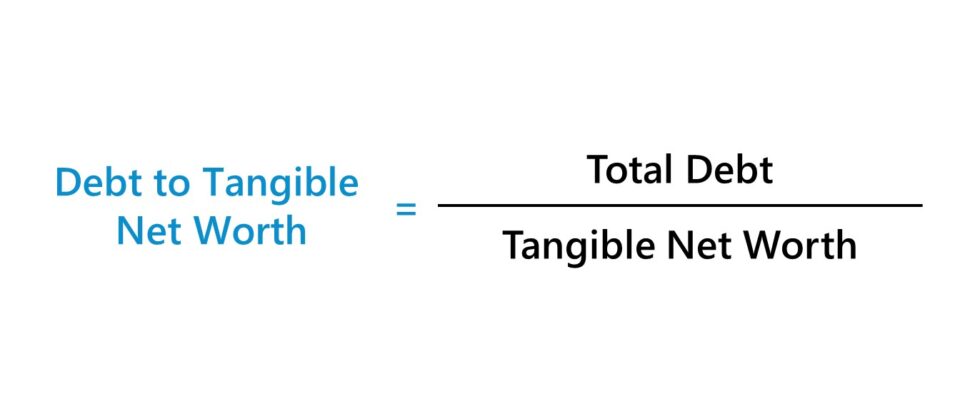
Goodwill is part of the assets, and therefore part of the net worth. However, it is an intangible asset that can be "impaired." If the acquired company performs poorly, the corporation must write down the value of that goodwill, which immediately slashes the corporation's net worth without any cash actually leaving the business. Analysts often look at "Tangible Net Worth" (Total Net Worth minus Intangible Assets) to see what the company is worth in a "liquidation" scenario.
Frequently Asked Questions
Can a corporation have a negative net worth?
Yes. A corporation has a negative net worth if its total liabilities exceed its total assets. This often happens in two scenarios: either the company has suffered years of significant financial losses that have wiped out its retained earnings, or it has borrowed large sums of money to fund massive share buybacks or dividends. While a negative net worth is often a sign of financial distress, some stable, cash-flow-heavy companies operate with negative equity for years.
How do stock splits affect a corporation's net worth?
Stock splits have no effect on a corporation's total net worth. While the number of outstanding shares increases, the par value per share decreases proportionally. It is essentially "cutting the pizza into more slices"; the size of the pizza (the net worth) remains the same.
Is net worth the same as "Owner's Equity"?
The terms are often used interchangeably. "Owner's Equity" is typically used for sole proprietorships or partnerships, while "Shareholders' Equity" or "Stockholders' Equity" is the correct term for corporations. Both represent the net worth of the entity.
Does the market price of a stock change the corporation's net worth?
No. The daily fluctuations of a stock's price on an exchange like the NYSE or NASDAQ do not change the corporation's internal net worth. The net worth only changes based on the company's internal financial activities, such as earning profit, issuing new shares, or buying back existing ones.
What is the difference between "Book Value" and "Carrying Value"?
In the context of net worth, "Book Value" usually refers to the total equity of the entire corporation. "Carrying Value" usually refers to the value of a specific asset or liability as it appears on the balance sheet after accounting for depreciation or amortization.
Summary of Recommendations
Understanding a corporation's net worth is vital for anyone looking to assess a company's financial stability. When reviewing a balance sheet in 2026, it is recommended to:
- Look beyond the total number: Analyze how much of the net worth comes from retained earnings (organic growth) versus contributed capital (external funding).
- Check for "Quality of Equity": A net worth padded with high amounts of Goodwill or intangible assets may be more volatile than one backed by cash and equipment.
- Monitor the Trend: A rising net worth driven by consistent retained earnings is generally a sign of a healthy, sustainable business.
For specific investment or accounting advice, always consult with a certified financial planner or a professional auditor to ensure compliance with current SEC regulations and tax laws.