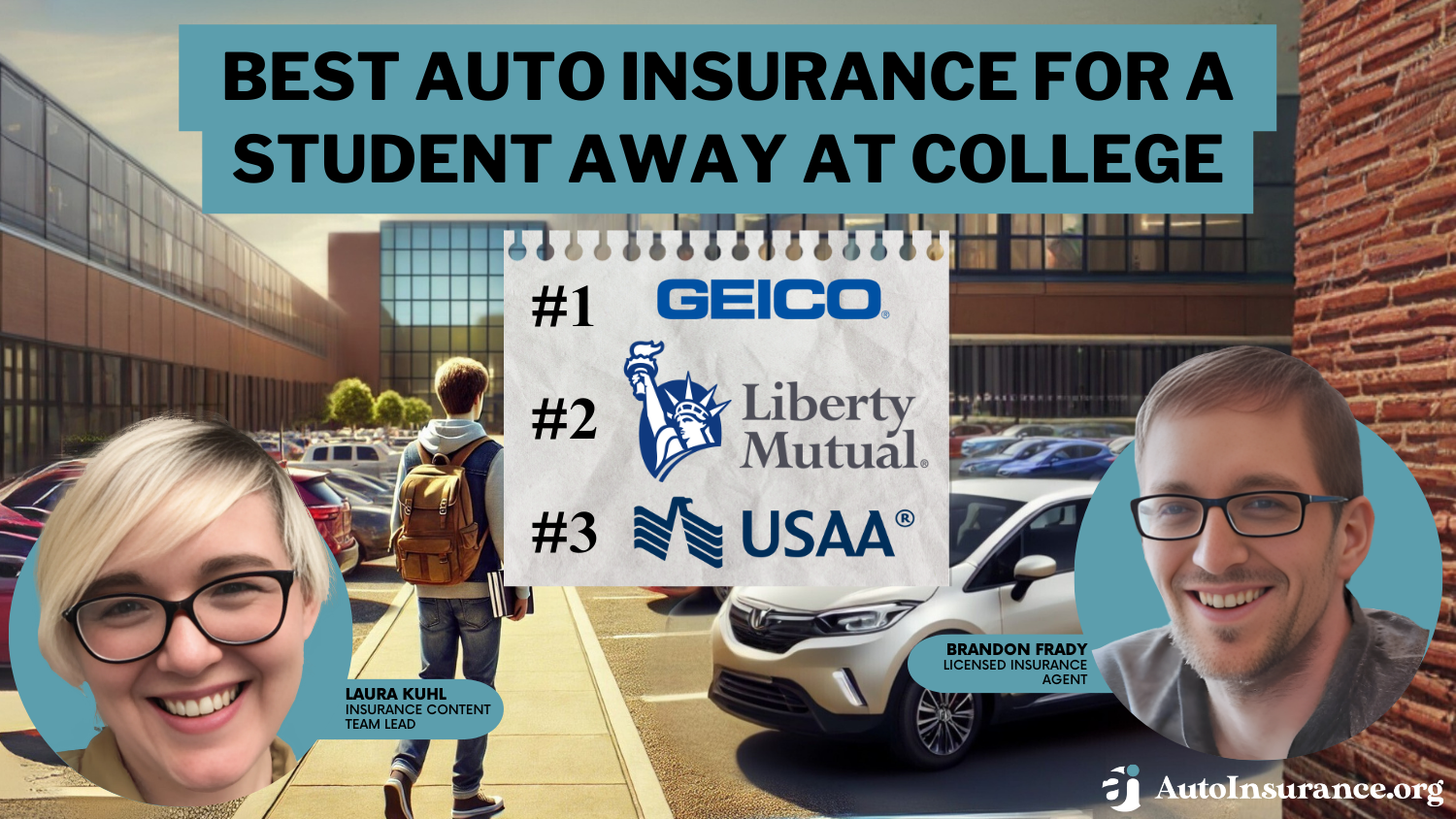
College students should maintain auto insurance coverage even without a personal vehicle to prevent expensive coverage gaps, ensure liability protection when borrowing cars, and preserve eligibility for "student away" discounts. While not legally mandated for non-owners, staying insured is a critical financial strategy to secure lower long-term premiums.
Maintaining an active auto insurance policy as a college student—even when you do not own a vehicle or plan to drive regularly—is often viewed as an unnecessary expense. However, in the 2026 insurance landscape, the decision to "drop" coverage can have cascading financial consequences that far outweigh the monthly premium costs. Whether you are living in a high-density urban campus or a remote university town, the technicalities of insurance underwriting and liability law make a compelling case for continuous coverage.
The Financial Risk of Insurance Gaps
The primary reason a non-driving college student must have insurance is the prevention of a "coverage gap" or "lapse." In the eyes of insurance underwriters, a driver who has been uninsured for even a short period (typically 30 to 60 days) is classified as a high-risk individual.
When a student eventually graduates and decides to purchase a car or move to a city where driving is necessary, they will find that their premiums are significantly higher than if they had maintained continuous coverage. Insurance companies reward "loyalty" and "stability." A student who has been a listed driver on a parent's policy or who has held a non-owner policy for four years of college is seen as a lower risk than a peer who has been off the books for that same duration.
As of 2026, many major insurers use advanced predictive modeling that heavily weights "prior insurance history." Without this history, you may be disqualified from "preferred" or "standard" tiers of insurance, forcing you into "non-standard" markets where rates can be 50% to 100% higher for the first six to twelve months of new coverage.
Protection for Permissive Use and Borrowed Vehicles
College students frequently find themselves in situations where they might need to get behind the wheel of a vehicle they do not own. This could be moving a friend’s car, taking turns on a road trip, or an emergency situation. This falls under "permissive use."
While it is a common insurance myth that "insurance follows the car," this is only partially true. The car owner’s insurance is indeed the primary coverage in an accident. However, if the damages from an accident exceed the owner’s policy limits, the driver’s own insurance serves as secondary coverage.
Consider this scenario: A student borrows a roommate's car. The roommate carries the state-minimum liability limits (e.g., $25,000 for property damage). The student accidentally causes a multi-car pileup with $75,000 in property damage. Without their own insurance policy to act as a secondary layer of protection, the student (and potentially their parents) could be held personally liable for the $50,000 shortfall. Having a policy—even as a non-driving student—provides an essential umbrella of protection against such catastrophic financial loss.
The Strategy of the "Student Away at School" Discount
For many families, the most cost-effective way to keep a student insured is to leave them on the existing household policy. Most insurers in 2026 offer a "Student Away at School" discount, which recognizes that the student is a lower risk because they do not have a car on campus.
To qualify for this discount, students generally must meet specific criteria:
- Distance: The university is typically required to be more than 100 miles from the primary residence.
- Age: The student is usually under the age of 23 or 25.
- Vehicle Status: The student must not have a vehicle registered in their name at the school location.
By utilizing this discount, the cost of keeping the student on the policy is often negligible—sometimes as little as $15 to $30 per month—while providing all the benefits of continuous coverage and liability protection when they return home for holidays or summer break.
Non-Owner Car Insurance: A Specialized Alternative
If a student cannot remain on a parent's policy—perhaps because they have moved out permanently or the parents do not have a car—a "Non-Owner Car Insurance" policy is the ideal solution. This is a technical product designed specifically for individuals who drive occasionally but do not own a vehicle.
Non-owner insurance primarily provides liability coverage (Bodily Injury and Property Damage). It does not include collision or comprehensive coverage because there is no specific vehicle to protect. However, it satisfies the "continuous coverage" requirement that underwriters look for.
In 2026, non-owner policies have become more robust, often including Uninsured/Underinsured Motorist (UM/UIM) coverage and Personal Injury Protection (PIP) or Medical Payments (MedPay). This means that if the student is a pedestrian or a passenger in a friend’s car and is injured by an uninsured driver, their own non-owner policy can help cover their medical expenses.
PIP and MedPay for Pedestrians and Passengers
Many students do not realize that auto insurance provides benefits even when they aren't driving. In "no-fault" states or states with robust Personal Injury Protection (PIP) requirements, a student's auto insurance policy (or the policy they are listed on) may cover their medical bills if they are hit by a car while walking on campus or riding a bicycle.
Furthermore, if a student is a passenger in a vehicle involved in an accident, their own insurance can provide a secondary layer of medical coverage if the driver’s limits are exhausted. In university environments where ride-sharing and carpooling are standard, this personal layer of protection is invaluable.
Comparison of Coverage Options for Non-Driving Students
| Feature | Remaining on Parent's Policy | Non-Owner Policy | Dropping Coverage Entirely |
|---|---|---|---|
| Primary Benefit | Lowest cost (w/ discounts) | Establishes own insurance history | Zero immediate monthly cost |
| Liability Protection | High (Parent's limits apply) | Moderate (Standard limits) | None |
| Future Premium Impact | Maintains "Continuous" status | Maintains "Continuous" status | High "Lapse" penalty later |
| Coverage Gaps | None | None | 100% Gap |
| Best For | Students < 100 miles or on break | Independent students/Non-residents | Not recommended |
| Pedestrian Protection | Usually Included | Often Included | None |
When Is It Truly "Required"?
While we have focused on why you should have it, there are rare cases where you must have it. If a student's driver's license has been suspended or if they have an SR-22/FR-44 filing requirement due to a past violation, they must maintain a policy to keep their license valid, regardless of whether they own a car.
Additionally, some high-end apartment complexes or urban housing agreements in 2026 may require proof of liability insurance (sometimes through a Renter's policy, but occasionally inclusive of auto liability) to ensure that residents are financially responsible for any damages they might cause to property or others on the premises.
Long-Term Career and Credit Implications
While the link between auto insurance and career prospects is indirect, it is present. Many entry-level professional roles—especially in sales, consulting, or field research—require a valid driver's license and proof of "insurability." If a graduate applies for a job that involves driving a company vehicle, the company’s commercial insurer will run a motor vehicle record (MVR) and a CLUE (Comprehensive Loss Underwriting Exchange) report.
A student with a four-year gap in insurance history may be more expensive for a company to insure, which can occasionally complicate the hiring process for roles involving heavy driving. Furthermore, in many states, insurance companies are permitted to use a version of a credit-based insurance score to determine rates. Maintaining a steady relationship with an insurer and paying premiums on time contributes to a positive "stability score" that can benefit the student in other areas of financial life.
Practical Steps for College Students
- Audit the Household Policy: Parents should call their agent to verify if the "Student Away at School" discount is being applied. Ensure the student is still listed as a "deferred" or "occasional" driver.
- Compare Non-Owner Rates: If the household policy is too expensive (perhaps due to the parents' driving records), the student should get quotes for an independent non-owner policy.
- Monitor the Odometer: If the student does have a car but rarely drives it, look into "pay-per-mile" insurance, which provides full coverage but bases the premium on the actual distance driven.
- Maintain Good Grades: Most insurers in 2026 offer "Good Student" discounts (typically a 3.0 GPA or higher) which can be stacked with other discounts to keep the cost of staying insured extremely low.
Disclaimer: Insurance laws and requirements vary significantly by jurisdiction. This article is for informational purposes and does not constitute legal or financial advice. Consult with a licensed insurance professional in your state to determine the best coverage for your specific situation.
Frequently Asked Questions
Can I be a listed driver on my parents' policy if I live in a dorm?
Yes. As long as the dorm or student housing is considered a temporary residence and your parents' home remains your permanent legal address (the address on your driver's license), you can usually remain on their policy. You should inform the insurer that the car (if you have one) is at a different location, or that you are a "student away" without a car.
What happens if I drive a friend's car and I don't have insurance?
If you are at fault in an accident, the friend's insurance is primary. However, if the damage exceeds their policy limits, you are personally responsible for the difference. Without your own insurance, your assets and future wages could be at risk. Additionally, some insurance policies exclude "unlisted drivers" who reside in the same household (like a roommate), which could leave you with no coverage at all.
Is non-owner insurance expensive for a college student?
Non-owner insurance is significantly cheaper than standard auto insurance because it does not cover a physical vehicle. For a student with a clean driving record, a non-owner policy in 2026 can often be found for a few hundred dollars per year, making it a very affordable way to maintain continuous coverage.
Will my rates go up if I have a gap because I was studying abroad?
Yes. Most insurance companies do not distinguish why you had a gap. Whether you were studying abroad, living in a city with public transit, or simply couldn't afford it, the underwriting software simply sees a "lapse in coverage," which triggers higher rates upon your return.
Does a non-owner policy cover rental cars?
Often, yes. Many non-owner policies provide liability coverage for rental cars, which allows you to decline the expensive liability waivers at the rental counter. However, it still won't cover "Physical Damage" to the rental car (Collision/Comprehensive), so you would still need a credit card that provides rental coverage or purchase the rental company's CDW (Collision Damage Waiver).
Final Recommendation
Do not drop your auto insurance when you head to college. If you are eligible, remain on your parents' policy under a "Student Away at School" rating. If you must be independent, purchase a non-owner liability policy. The small monthly investment protects you from immediate liability and secures your financial future by keeping your long-term insurance premiums affordable.