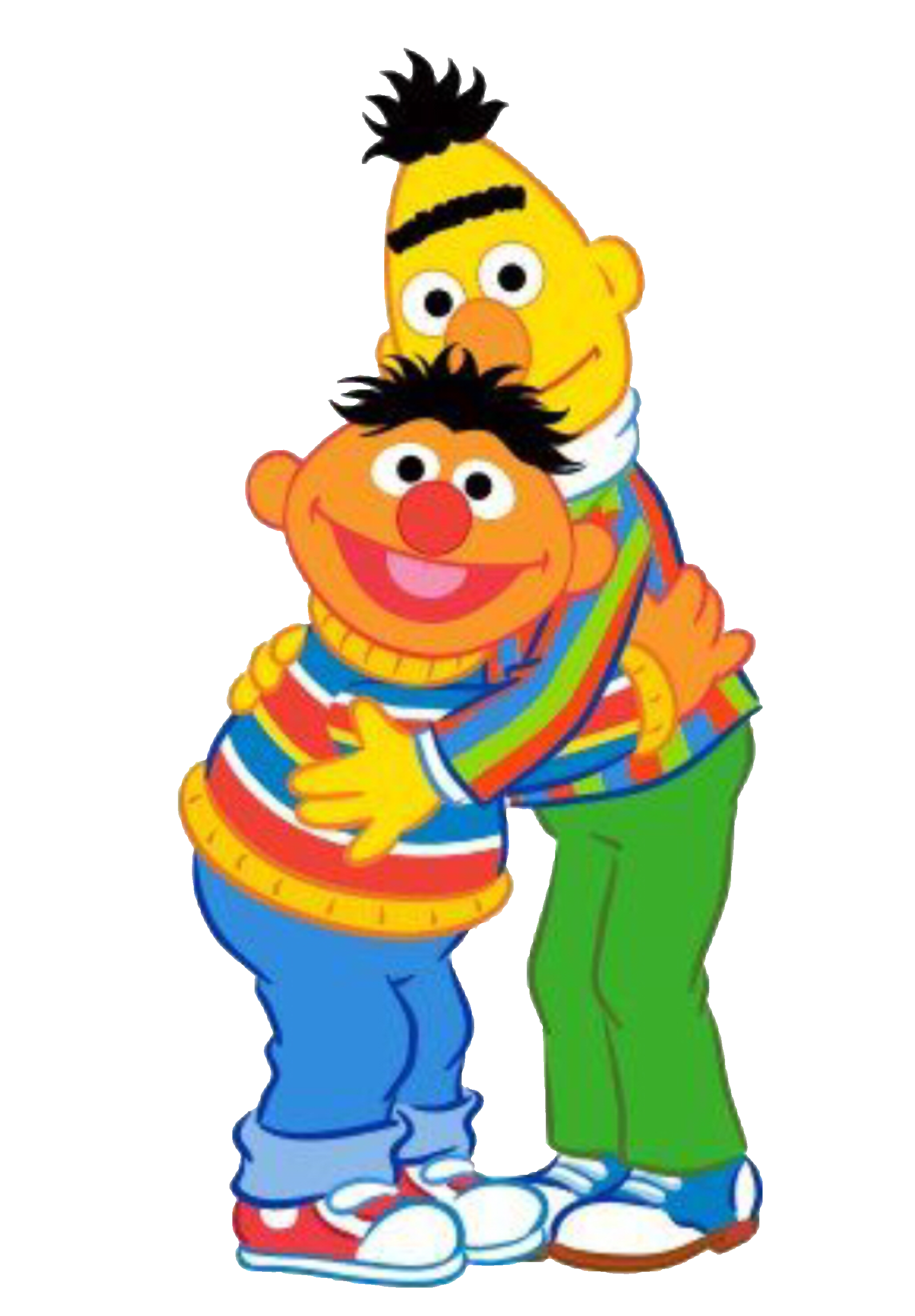
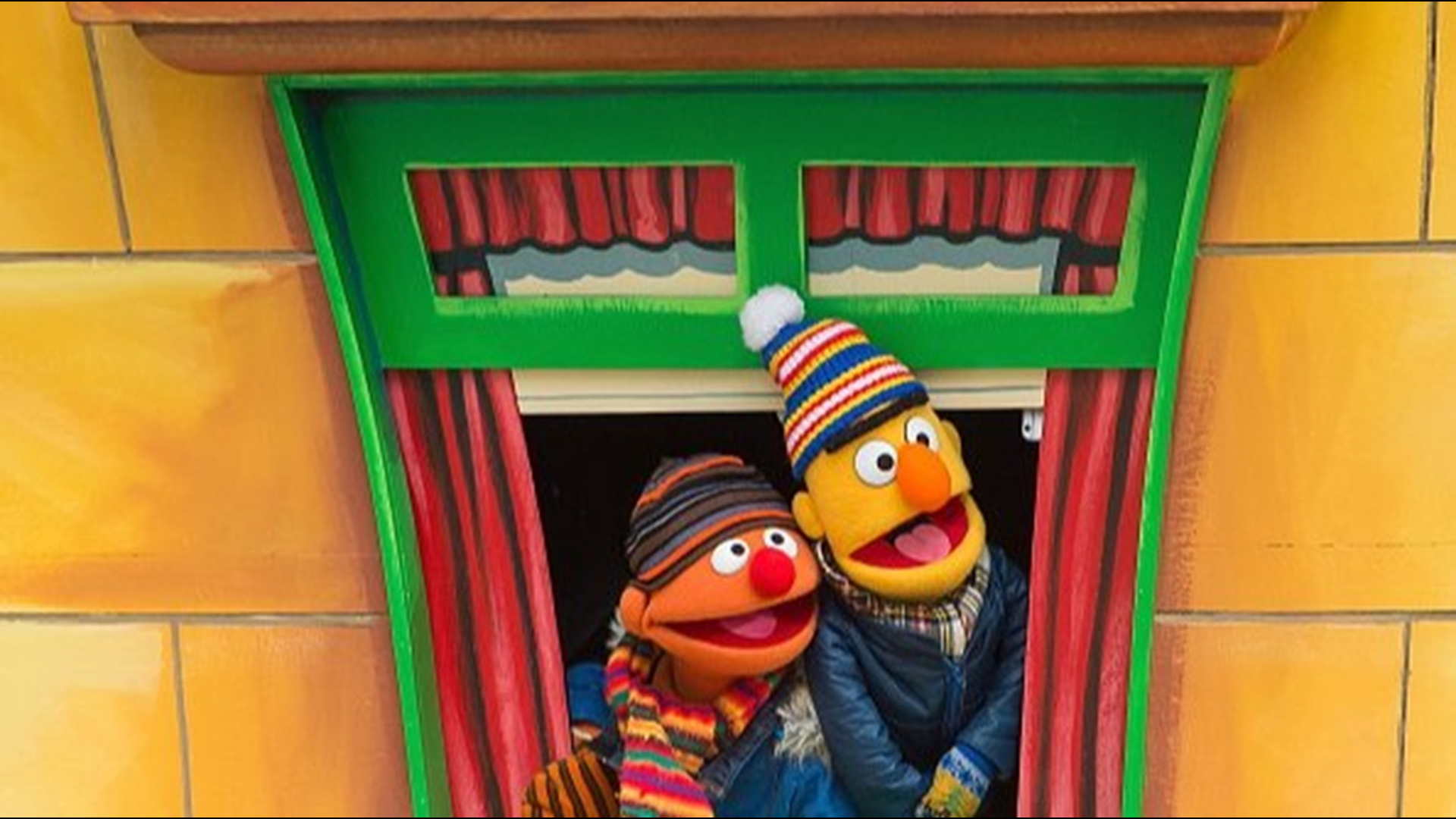
Officially, Bert and Ernie are not a romantic couple. Sesame Workshop has repeatedly clarified that the famous Sesame Street duo are best friends and roommates created to teach preschool children how to form friendships with people who have vastly different personalities. However, their decades-long domestic bond has made them enduring pop culture icons within the LGBTQ+ community.
Understanding the dynamic between Bert and Ernie requires examining multiple perspectives: the corporate and educational canon established by Sesame Workshop, the original creative vision of Muppet creators Jim Henson and Frank Oz, the personal headcanon of former writers, and the broader cultural interpretation embraced by audiences worldwide.
The Official Stance of Sesame Workshop
Sesame Workshop (formerly the Children's Television Workshop), the non-profit educational organization behind Sesame Street, has maintained a consistent official stance regarding Bert and Ernie's relationship. According to the organization, the characters are best friends who share an apartment, designed specifically to demonstrate social-emotional learning concepts to young children.
The topic of their relationship status has resurfaced publicly several times over the decades, prompting explicit clarification from the show's producers:
- 1993 Clarification: In response to recurring rumors and public inquiries, the Children's Television Workshop issued a public statement clarifying that Bert and Ernie do not portray a romantic couple. The statement emphasized that the characters were created to show that people can be good friends even if they are very different from one another.
- 2011 Petitions: Following legal developments around marriage equality in the United States, an online petition gathered thousands of signatures requesting that Bert and Ernie get married on the show. Sesame Workshop responded with an official press release stating that Bert and Ernie are best friends created to teach preschoolers that people can be good friends with those who are very different from themselves. The release noted that even though they are identified as male characters and possess many human traits, they remain puppets and do not have a sexual orientation.
- 2018 Statement: In September 2018, following commentary from a former writer, Sesame Workshop reiterated its official position on social media, asserting that Bert and Ernie were designed to be best friends and that Muppets do not possess a sexual orientation.
From an educational production standpoint, Sesame Street treats Bert and Ernie as childlike figures despite their adult-like living arrangements. Their living situation reflects classic middle-grade roommate tropes rather than adult romantic cohabitation, serving as a vehicle for comedic sketches about compromise, patience, and mutual affection.
The Origins of Bert and Ernie: Creator Intent and Design
To understand why Bert and Ernie share an apartment, it helps to look back at the show's origins in 1969. Jim Henson and his team designed the characters to anchor the comedic, human-like segments of Sesame Street.
| BERT | ERNIE |
|---|---|
| • Serious, analytical, orderly | • Playful, spontaneous, energetic |
| • Loves paperclips & pigeons | • Loves rubber duckies & practical jokes |
| • Performs low-key, calm activities | • Performs musical numbers & games |
| • Voiced originally by Frank Oz | • Voiced originally by Jim Henson |
The "Odd Couple" Dynamic
The character design and interaction style of Bert and Ernie were heavily inspired by classic comedic duos, most notably Oscar Madison and Felix Ungar from Neil Simon's play The Odd Couple, as well as traditional vaudeville double acts.
- Bert (originally performed by Frank Oz) was designed as the straight-laced, serious, and easily frustrated partner. He enjoys quiet hobbies like collecting bottle caps, studying paperclips, and watching pigeons.
- Ernie (originally performed by Jim Henson) was designed as the impulsive, imaginative, and endlessly optimistic instigator. He plays the rubber ducky, plays practical jokes, and frequently keeps Bert awake at night with absurd questions or musical numbers.
The contrast between Bert's rigid demand for order and Ernie's chaotic playfulness provides the central engine for their humor. The dynamic relies on mutual acceptance: despite Ernie driving Bert to distraction, the two always resolve their differences and express deep loyalty to one another.
The Twin Beds and Living Situation
In mid-20th-century television and classic children's literature, adult or adolescent characters sharing a room with twin beds was a standard storytelling convention. Shows ranging from I Love Lucy to classic comedy sketches utilized twin-bed bedroom layouts to allow dialogue between characters before sleep without carrying romantic connotations.
Bert and Ernie share a basement apartment at 123 Sesame Street, complete with a shared living room, kitchen, and a bedroom containing two separate single beds. For young viewers, this setup mimics childhood sleepovers or sharing a bedroom with a sibling, making the dynamic instantly relatable to preschoolers learning about personal space, sharing, and bedtime routines.
The 2018 Mark Saltzman Interview and Writer Headcanon
The debate over Bert and Ernie’s relationship reached a major turning point in September 2018, when former Sesame Street writer Mark Saltzman gave an interview to the LGBTQ+ news outlet Queerty. Saltzman, an Emmy Award-winning writer who joined the show in the mid-1980s, shared his personal perspective on how he wrote the characters during his tenure.
Saltzman's Perspective
Saltzman explained that when he wrote sketches featuring Bert and Ernie, he naturally drew from his own long-term romantic relationship with film editor Arnold Glassman. Saltzman stated that he did not know how else to write the characters except as a loving couple, as his real-life dynamic with Glassman closely mirrored the contrast between Bert's fussiness and Ernie's playfulness.
Saltzman's comments were widely reported across global media outlets as confirmation that Bert and Ernie were gay. However, Saltzman later clarified his statements in an interview with The New York Times, explaining that while he personally wrote them through the lens of his own life experiences, his interpretation was a personal writing technique rather than an official change to the show's canon.
Response from Frank Oz and Sesame Workshop
Following Saltzman's interview, both Sesame Workshop and veteran Muppeteer Frank Oz publicly addressed the comments to clarify the history of the characters.
Sesame Workshop issued a statement emphasizing that while writers bring personal experiences to their work, Bert and Ernie were created as best friends by Jim Henson and Frank Oz, and remain non-sexual Muppets.
Frank Oz, who originated the character of Bert and spent decades defining his personality, weighed in heavily on social media:
"It seems Mr. Mark Saltzman was asked if Bert & Ernie are gay. It’s fine that he feels they are. They’re not, of course. But why that question? Does it really matter? Why the need to define people of only as gay or straight? There’s much more to a human being than just straightness or gayness."
Oz explained that Jim Henson created the characters solely to highlight great comedic interactions, based partly on the real-life camaraderie and banter between Henson and Oz themselves. Oz reiterated that the characters had no sexual orientation whatsoever, though he expressed respect for fans who found personal comfort in viewing them differently.
Bert and Ernie as LGBTQ+ Cultural Icons
Regardless of official corporate statements or creator intent, Bert and Ernie have evolved into significant symbols within LGBTQ+ culture. This phenomenon—where a community adopts characters who are not canonically queer—is a recognized aspect of media reception and queer history.
Queer Coding and Domesticity
For decades, gay men and lesbians seeing media with limited positive queer representation identified strongly with Bert and Ernie's cohabitating, affectionate dynamic. The characters lived together peacefully, cared for each other, shared a home, and accepted each other's flaws—qualities that resonated deeply with audiences looking for positive depictions of long-term domestic partnerships.
In pop culture, this interpretation was frequently referenced, parodied, and celebrated:
Parodies and Satire: Programs like Saturday Night Live, The Simpsons, and Family Guy have frequently joked about Bert and Ernie’s domestic setup.
Broadway's Avenue Q: The Tony Award-winning 2003 musical Avenue Q featured characters named Rod and Nicky, an explicit homage to Bert and Ernie. In Avenue Q, Rod is a closeted gay puppet who lives with his straight friend Nicky, directly tackling themes of acceptance and identity that audiences long associated with the Sesame Street originals.
The New Yorker Cover (2013): One of the most famous cultural visual milestones occurred in July 2013. Following the U.S. Supreme Court decision to strike down key provisions of the Defense of Marriage Act (DOMA), The New Yorker published a cover illustrated by Jack Hunter titled "Moment of Joy." The cover depicted Bert and Ernie cuddling on a couch, watching the Supreme Court justices on television. The image highlighted how thoroughly the public connected the pair to the struggle for marriage equality.
1969: Debuts on Sesame Street as Best Friends
1993: CTW Issues First Official Friendship Statement
2003: Avenue Q Debuts on Broadway (Rod & Nicky)
2013: New Yorker "Moment of Joy" Cover Published
2018: Mark Saltzman Interview & Oz Clarification
Comparing Canon, Creator Intent, and Public Perception
Because discussions around Bert and Ernie involve distinct perspectives, it is helpful to outline how different stakeholders define their relationship.
| Perspective | Relationship Classification | Primary Motivation / Foundation | Key Historical Evidence |
|---|---|---|---|
| Sesame Workshop (Official Canon) | Best Friends / Roommates | Preschool social-emotional education; showing how different personalities coexist. | Official statements in 1993, 2011, and 2018 asserting Muppets have no sexual orientation. |
| Jim Henson & Frank Oz (Creators) | Comedic Double Act / Friends | Vaudeville and The Odd Couple style dynamic based on Henson and Oz's real-life friendship. | Original 1969 character designs, sketch scripts, and Frank Oz's statements on character origin. |
| Mark Saltzman (Former Writer) | Analogous to a Gay Couple | Personal writing lens based on Saltzman's relationship with Arnold Glassman. | 2018 Queerty interview and subsequent New York Times contextual clarification. |
| LGBTQ+ Community & Pop Culture | Cultural Icons / Symbolic Couple | Seeking positive, long-term domestic representation in mainstream media. | 2013 The New Yorker cover, Avenue Q homage, and popular media references. |
Educational Value of Their Dynamic for Children
Beyond the debate surrounding their relationship status, Bert and Ernie's dynamic remains one of the most effective tools for early childhood development on television.
Psychologists and educational researchers emphasize that young children learn critical social skills through observing peer interactions. Bert and Ernie model key interpersonal concepts:
1. Conflict Resolution and Emotional Regulation
In typical sketches, Ernie causes frustration for Bert through boundary violations—such as playing the drums while Bert is trying to read, or moving items around their shared apartment. The sketches model how Bert expresses his annoyance verbally rather than aggressively, and how Ernie acknowledges Bert's feelings to reach a compromise.
2. Valuing Diversity in Friendships
Children often gravitate toward peers who share their exact interests. Bert and Ernie demonstrate that friendship does not require identical personalities. Bert values routine, solitude, and quiet study, while Ernie thrives on social interaction, creativity, and spontaneous fun. Their bond shows young viewers that differences can enrich a relationship rather than destroy it.
3. Empathy and Unconditional Care
Despite their frequent misunderstandings, sketches regularly end with explicit gestures of care. When Bert is sick, Ernie takes care of him; when Ernie loses his favorite toy, Bert stops what he is doing to help search. This emphasizes that caretaking and emotional support are essential components of healthy friendships.
LGBTQ+ Inclusivity on Modern Sesame Street
While Sesame Workshop maintains that classic Muppet characters like Bert and Ernie are non-sexual figures, the show has actively evolved to reflect diverse modern family structures.
Rather than retroactively altering the non-romantic identity of legacy puppet characters, Sesame Street has introduced explicit human and puppet LGBTQ+ representation in modern episodes:
- 2021 "Family Day" Episode: In June 2021, during Pride Month, Sesame Street aired a landmark episode titled "Family Day." The episode introduced a family featuring two gay dads, Dave (played by Chris Costa) and Frank (played by Alex Weisman), along with their daughter Mia and grandmother Nina.
- Diverse Family Structures: Modern segments of the program regularly highlight single parents, adoptive families, multi-generational households, and same-sex parents to ensure all children see their home lives reflected on screen.
By incorporating explicit representation through human cast members and newly developed segments, Sesame Workshop maintains its educational mission of inclusivity while preserving the foundational, non-romantic puppet dynamics established by Jim Henson in 1969.
Frequently Asked Questions
Are Bert and Ernie canonically gay?
No. Canonically, Sesame Workshop states that Bert and Ernie are best friends and non-sexual Muppets who do not have a sexual orientation.
Why do Bert and Ernie live together and share a bedroom?
They live together to model friendship and cohabitation for preschoolers, based on classic mid-20th-century television conventions where rooming together with twin beds was a standard way for characters to interact.
What did writer Mark Saltzman say about Bert and Ernie?
In 2018, Mark Saltzman stated that when writing Bert and Ernie sketches, he personally envisioned them as a couple based on his own relationship with partner Arnold Glassman. He later clarified that this was his personal writing approach rather than an official corporate canon change.
What was Frank Oz's official stance on the characters?
Frank Oz, who created and performed Bert, stated that Jim Henson created Bert and Ernie purely as comedic best friends. Oz emphasized that the puppets have no sexual orientation, though he supported fans deriving personal comfort from their own interpretations.
Has Sesame Street ever featured LGBTQ+ characters?
Yes. In 2021, Sesame Street introduced its first explicit same-sex couple in the "Family Day" episode, featuring a family with two dads, Dave and Frank, and their daughter Mia.
Conclusion and Final Takeaway
When answering whether Bert and Ernie are a couple, the distinction comes down to official production canon versus cultural interpretation:
- Officially and canonically, Bert and Ernie are best friends, roommates, and non-sexual puppet characters designed to teach children about empathy, patience, and handling differences.
- Culturally and symbolically, Bert and Ernie hold a treasured place as LGBTQ+ icons whose decades of cohabitation and mutual support represent positive domestic partnership to millions of viewers.
Both perspectives play a meaningful role in television history. For young children, Bert and Ernie remain a masterclass in social-emotional learning and friendship. For adult audiences, they stand as an enduring symbol of affection, companionship, and warmth across generations.