A beneficiary on a life insurance policy is the person, entity, or institution designated by the policyholder to receive the death benefit upon the insured’s passing. This designation creates a contractual obligation for the insurance company to pay out a specific sum, bypassing the often lengthy and expensive probate court process.
Life insurance is a cornerstone of financial planning, providing a safety net for those left behind. However, the effectiveness of this safety net depends heavily on how the beneficiary designation is structured. Whether you are a policyholder looking to protect your family or a named beneficiary wondering what comes next, understanding the legal, financial, and procedural nuances of this role is essential.
The Different Classes of Beneficiaries
When a policyholder fills out an application or updates their policy in 2026, they are typically asked to name beneficiaries in a specific hierarchy. This structure ensures that the money goes exactly where intended, even if circumstances change.
Primary vs. Contingent Beneficiaries
The primary beneficiary is the first in line to receive the death benefit. You can name a single primary beneficiary or multiple individuals. If multiple people are named, the policyholder must specify the percentage of the benefit each person will receive (e.g., 50% to a spouse and 25% each to two children).
The contingent beneficiary, often called the secondary beneficiary, acts as a "backup." They only receive the death benefit if all primary beneficiaries have passed away before the insured person. If no primary or contingent beneficiaries are alive at the time of the insured's death, the proceeds typically default to the insured's estate, which subjects the money to probate and potential claims from creditors.
Revocable vs. Irrevocable Beneficiaries
Most beneficiary designations are revocable, meaning the policyholder can change them at any time without notifying the beneficiary or seeking their consent. This provides maximum flexibility as life circumstances, such as marriage, divorce, or the birth of children, evolve.
An irrevocable beneficiary, however, has a vested interest in the policy. The policyholder cannot change the beneficiary, reduce the coverage amount, or cancel the policy without the written consent of the irrevocable beneficiary. This arrangement is frequently used in divorce settlements to ensure child support or alimony obligations are met, or in business settings where a policy secures a specific debt.
Who or What Can Be Named as a Beneficiary?
While most people name their spouse or children, the law allows for a wide range of entities to be designated as beneficiaries on a life insurance policy.
Individuals and Minors
Naming an adult individual is the most straightforward path. However, naming a minor child directly can lead to significant legal complications. Insurance companies cannot legally pay large sums of money directly to a minor. If a minor is named without a court-appointed guardian or a trust, the state may require a guardianship proceeding, which is costly and time-consuming.
Trusts
Designating a trust as the beneficiary is a common strategy in 2026 for those with complex estates or minor children. By naming a trust, the policyholder can control how the money is spent after they are gone. For example, the trust document can stipulate that the money be used only for education or released in stages when the child reaches certain ages (e.g., 25, 30, and 35).
The Estate
Naming "The Estate of [Name]" as a beneficiary is generally considered a mistake in estate planning. When life insurance proceeds go to an estate, they lose their protected status. They become subject to the probate process, meaning they can be used to pay off the deceased’s debts and may be subject to higher estate taxes. Furthermore, probate can take months or even years, delaying the financial support the family may desperately need.
Charitable Organizations
Many policyholders choose to name a 501(c)(3) non-profit organization as a beneficiary. This can be a way to leave a lasting legacy. In some cases, naming a charity can also provide tax advantages for the policyholder's overall estate.
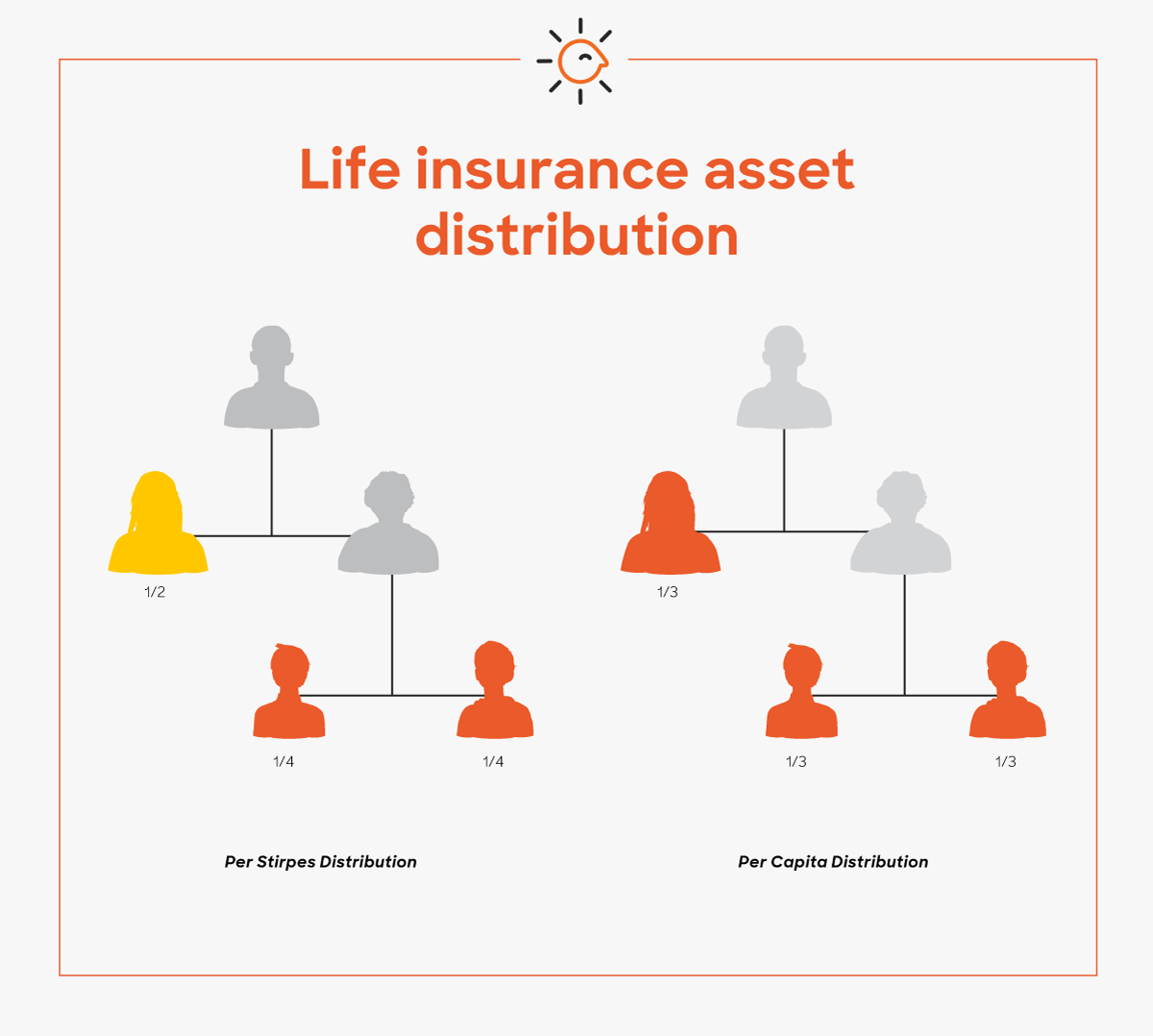
Distribution Methods: Per Stirpes vs. Per Capita
When naming multiple beneficiaries, such as children or grandchildren, the policyholder must choose a distribution method. These Latin terms define how the money is split if one of the beneficiaries dies before the insured.
- Per Capita (By Head): If you name your three children as beneficiaries and one dies before you, the death benefit is split equally between the two surviving children. The children of the deceased child receive nothing.
- Per Stirpes (By Branch): If you name your three children "per stirpes" and one dies before you, that child's share passes down to their own heirs (your grandchildren). This ensures that each branch of the family receives its intended portion.
| Feature | Per Capita | Per Stirpes |
|---|---|---|
| Logic | Divided among survivors of the same class. | Divided among branches of the family tree. |
| If a child dies first | Their share is absorbed by their siblings. | Their share passes to their own children. |
| Common Use | Simpler family structures. | Ensuring grandchildren are protected. |
| Complexity | Low | Moderate to High |
The Legal Rights of a Beneficiary
Being named as a beneficiary does not grant immediate rights while the policyholder is still alive, except in the case of an irrevocable designation.
Expectancy vs. Vested Interest
A revocable beneficiary has what the law calls a "mere expectancy." They have no right to know the policy's value, the premium status, or even if they remain a beneficiary. The policyholder can remove them at any moment. Once the insured passes away, however, the beneficiary’s interest "vests," and they have a legal right to the proceeds according to the terms of the contract.
Community Property States
In community property states—such as California, Texas, Arizona, and Washington—legal rights can become complicated. If a policyholder uses "community funds" (income earned during the marriage) to pay life insurance premiums, the spouse may be entitled to 50% of the death benefit even if someone else is named as the beneficiary. This often leads to legal disputes if the policyholder names a child from a previous marriage or a sibling as the sole beneficiary without the spouse's written waiver.
How to Claim the Death Benefit in 2026
The burden of initiating a life insurance claim usually falls on the beneficiary. Insurance companies do not constantly monitor death records, although some do periodic sweeps of the Social Security Administration’s Death Master File.
Step 1: Obtain the Death Certificate
You will need a certified copy of the death certificate. It is often wise to request multiple copies from the funeral director or the county clerk, as other financial institutions will also require them.
Step 2: Identify the Policy
Locate the policy document. If you cannot find it, look through the deceased’s bank statements for premium payments or check with their employer for group life insurance. The National Association of Insurance Commissioners (NAIC) offers a Life Insurance Policy Locator Service to help beneficiaries find lost policies.
Step 3: Contact the Insurance Company
Notify the insurance company's claims department. They will provide a "Request for Benefits" form (also called a claimant statement). You will need to provide your Social Security number, your relationship to the deceased, and your chosen payout method.
Step 4: Choose a Payout Option
Beneficiaries typically have several choices regarding how they receive the money:
- Lump Sum: The most common option. The full death benefit is paid in one tax-free check or electronic transfer.
- Installments/Annuity: The company pays the benefit over a set period (e.g., 10 or 20 years) or for the remainder of the beneficiary’s life.
- Retained Asset Account: The insurer keeps the money in an interest-bearing account, and the beneficiary can write checks against it.
Tax Implications for Beneficiaries
Under Internal Revenue Code Section 101(a), life insurance death benefits are generally not subject to federal income tax. Whether the benefit is $50,000 or $5,000,000, the beneficiary does not report the principal amount as income.
However, there are two important exceptions:
- Interest Income: If the insurance company delays payment and pays interest on the death benefit, or if you choose an installment payout, the interest portion is taxable as ordinary income.
- Estate Taxes: If the deceased owned the policy at the time of death, the value of the death benefit is included in their gross estate. If the estate exceeds the federal exemption limit—which has seen significant adjustments leading into 2026—the estate may owe taxes, even if the beneficiary does not.
Common Pitfalls to Avoid
Errors in beneficiary designations are a leading cause of insurance litigation and delayed payouts.
- Failure to Update: Divorce is a common trigger for legal battles. In many states, a divorce automatically revokes a spouse’s beneficiary status by law, but this is not universal. It is critical to manually update designations after any major life event.
- Naming "My Children": This is known as a class designation. While it sounds simple, it can be ambiguous if there are stepchildren, adopted children, or children born after the policy was written. Using full legal names and Social Security numbers is much safer.
- Special Needs Beneficiaries: If you name a person who receives government disability benefits (like SSI or Medicaid) as a beneficiary, the influx of cash could disqualify them from those essential programs. In these cases, it is vital to name a Special Needs Trust as the beneficiary instead.
- The "Three-Year Rule": If a policyholder transfers ownership of a life insurance policy to another person or a trust and then dies within three years, the IRS may still include the proceeds in the decedent's estate for tax purposes (IRC Section 2035).
FAQs About Life Insurance Beneficiaries
Can a policyholder change a beneficiary without telling them?
Yes, if the beneficiary is revocable, the policyholder can change the designation at any time through the insurance company's portal or by submitting a paper form. They are under no legal obligation to notify the former or new beneficiary.
What happens if the beneficiary and the insured die at the same time?
Most policies have a "Common Disaster Clause." If it cannot be determined who died first, or if the beneficiary dies within a short window (usually 30 to 90 days) of the insured, the company treats the situation as if the beneficiary died first. The benefit then goes to the contingent beneficiary or the estate.
Can creditors take a life insurance death benefit from a beneficiary?
In most jurisdictions, once the death benefit is paid to a named beneficiary (other than the estate), it is protected from the deceased's creditors. However, the money is not protected from the beneficiary's own creditors once it is in their possession, unless it is held within a specific type of asset-protection trust.
How long does it take for a beneficiary to receive the money?
Once the insurance company receives the death certificate and the completed claim forms, payouts are usually processed quickly—often within 30 to 60 days. Delays may occur if the death happens within the "contestability period" (the first two years of the policy) or if the cause of death is suspicious.
Is there a limit to how many beneficiaries I can name?
Technically, no. Most insurance companies allow you to name as many beneficiaries as you like, provided the total distribution equals exactly 100%. However, naming dozens of people can complicate the claims process, as the insurer may wait to receive paperwork from everyone before finalizing the distribution.
Final Recommendations
If you are a policyholder, review your beneficiary designations annually. Ensure that contact information is current and that your choices still reflect your financial goals. If you are naming a minor or a person with special needs, consult with an estate planning attorney to set up a trust.
If you are a beneficiary, your first step is to secure multiple copies of the death certificate and contact the insurance carrier as soon as you feel emotionally ready. Understanding your payout options—and the tax implications of those options—will help you make the best decision for your long-term financial health.