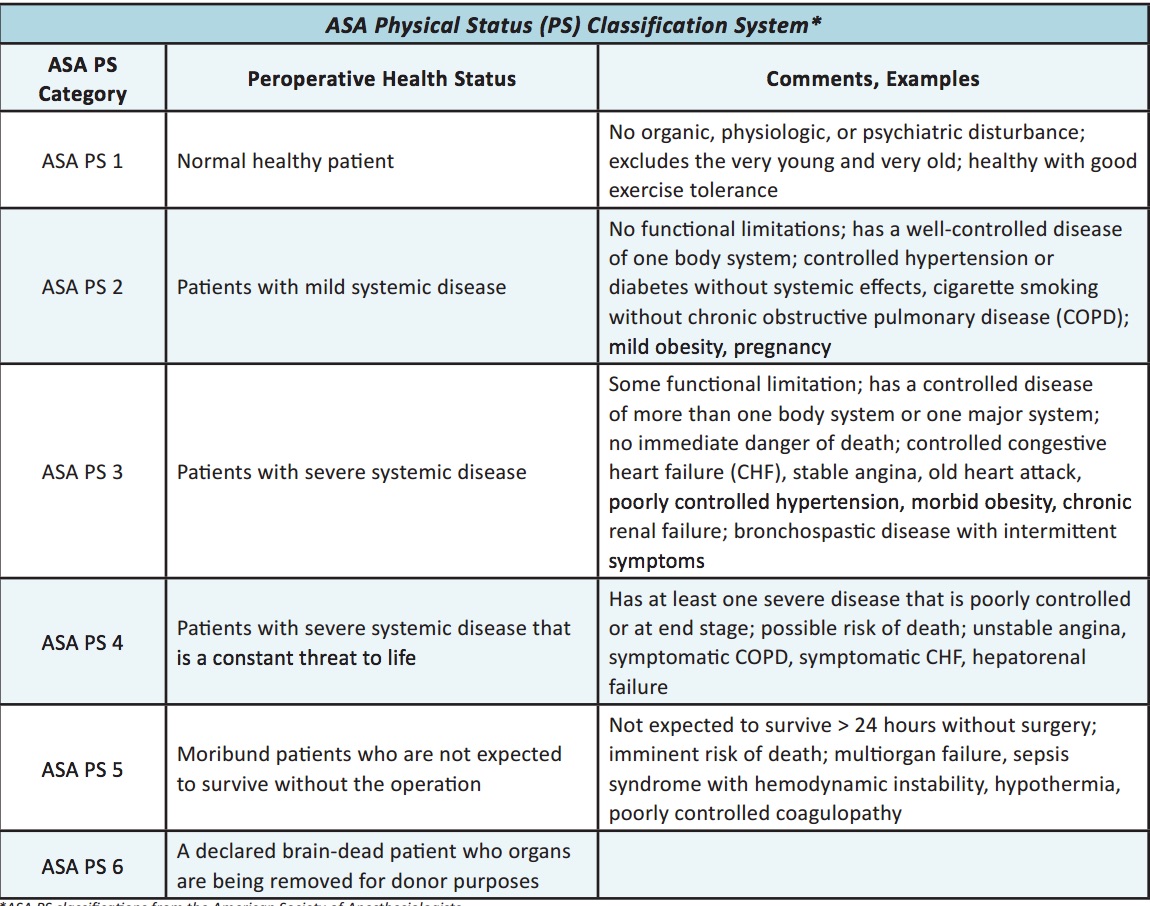
ASA status typically refers to the American Society of Anesthesiologists (ASA) Physical Status Classification System, a fundamental clinical tool used by healthcare providers to assess a patient's physiological fitness before surgery. It is a standardized method for estimating the risk of anesthesia and surgical procedures by categorizing patients based on their overall health, comorbidities, and baseline functional capacity.
The Origin and Purpose of the ASA Classification
The ASA Physical Status Classification System originated in 1941 to provide a common language for anesthesiologists to describe a patient's physical state. Over the decades, it has evolved into a global standard for perioperative medicine. The primary goal of the system is not to predict a specific outcome for an individual patient, but rather to provide a high-level summary of the patient's preoperative health status.
This information is critical for surgical planning. By establishing a patient’s ASA status, the surgical team can better anticipate the level of monitoring required, the potential need for specialized equipment, and the necessity for postoperative care in a high-dependency unit or intensive care unit (ICU). It also serves as a vital tool for institutional data collection, allowing hospitals to benchmark their outcomes against national averages and adjust for patient-related risk factors in clinical studies.
Defining the ASA Status Levels
The classification system is currently defined by six levels, ranging from a healthy individual to a brain-dead organ donor. It is important to note that these statuses are assigned by a clinician after a thorough evaluation of the patient’s medical history, physical examination, and diagnostic results.
- ASA I: Normal Healthy Patient These individuals are healthy, non-smoking patients with no significant medical history. They possess good functional capacity and typically do not require chronic medication.
- ASA II: Patient with Mild Systemic Disease This category includes patients with mild systemic disease or significant health factors that do not cause functional limitations. Examples include well-controlled hypertension, obesity (with a BMI between 30 and 40), smoking, or mild asthma.
- ASA III: Patient with Severe Systemic Disease Patients in this group have severe systemic disease that causes definite functional limitations. Examples include poorly controlled diabetes, chronic obstructive pulmonary disease (COPD), morbid obesity, stable angina, or a history of myocardial infarction occurring more than three months prior to the evaluation.
- ASA IV: Patient with Severe Systemic Disease that is a Constant Threat to Life This status is reserved for patients whose systemic disease is a constant threat to life. These patients have severe functional limitations. Examples include unstable angina, symptomatic COPD, or recent myocardial infarction (less than three months prior).
- ASA V: Moribund Patient who is not expected to survive without the operation This designation is for patients who are not expected to survive beyond the next 24 hours without the surgical intervention. Their condition is extremely critical, often involving multi-organ failure or massive trauma.
- ASA VI: Declared Brain-Dead Patient This status is assigned to patients who have been declared brain-dead and whose organs are being removed for donation purposes.
The Role of Modifiers
In 2014, the American Society of Anesthesiologists officially added an "E" suffix to the classification system to denote an emergency procedure. The addition of "E" serves as a crucial modifier because the urgency of surgery significantly alters the risk profile. For example, a patient who would be an ASA II under elective circumstances might face substantially higher risks if they require emergency surgery for a ruptured appendix. The "E" modifier ensures that the classification accurately reflects the physiological strain and the urgency of the intervention.
Clinical Interpretation and Limitations
While the ASA status is a universal shorthand in hospitals, it is not a standalone risk-prediction tool. It does not account for the nature of the surgery itself, the expertise of the surgical team, the length of the procedure, or the complexity of the specific anesthetic techniques employed.
For instance, a patient with an ASA status of II may be undergoing a low-risk, superficial skin excision, while another ASA II patient may be scheduled for a high-risk cardiac procedure. The ASA status describes the patient; it does not describe the risk of the specific surgical intervention. Therefore, it is often used in conjunction with other scoring systems, such as the Revised Cardiac Risk Index (RCRI) or the Surgical Apgar Score, to provide a more comprehensive risk assessment.
Comparing Preoperative Risk Assessment Tools
| Assessment Tool | Focus | Primary Use Case |
|---|---|---|
| ASA Physical Status | Patient's baseline health | Broad perioperative communication |
| Revised Cardiac Risk Index | Cardiac complications | Non-cardiac surgery risk stratification |
| Surgical Apgar Score | Intraoperative events | Postoperative morbidity/mortality estimation |
| Frailty Index | Physiological reserves | Assessing elderly patients for recovery potential |
Preparing for Your Assessment: What Patients Should Know
If you are informed that you have been assigned a specific ASA status, you may want to discuss what this means for your anesthesia plan with your provider. Your status is determined during the pre-anesthesia evaluation. To ensure the most accurate assessment:
- Bring a Complete Medication List: Include all prescription drugs, over-the-counter supplements, and herbal products. Some supplements can interact negatively with anesthetic agents.
- Disclose All Medical Conditions: Even conditions you consider "managed" or "minor," such as seasonal allergies or mild acid reflux, can be relevant to your airway management.
- Report Recent Changes: If you have experienced a change in your ability to perform daily activities, such as becoming short of breath while walking, report this immediately.
- Confirm Smoking and Alcohol History: Honesty regarding substance use is vital, as these factors significantly influence how your body metabolizes medications.
Frequently Asked Questions
Does a high ASA status mean I cannot have surgery? No, a high ASA status does not automatically disqualify you from surgery. It indicates that you have significant health challenges that require more intensive preoperative optimization, specialized monitoring during the surgery, and a higher level of care after the procedure. The surgical and anesthesia teams perform a benefit-versus-risk analysis to determine if the surgery is viable.
Is my ASA status permanent? Your ASA status is not a permanent label. It is a snapshot of your physical health at the time of your surgical assessment. If your medical condition improves—for example, if you manage your hypertension effectively or lose weight—your ASA status may be upgraded for a future, unrelated procedure.
Who assigns the ASA status? The status is determined by your anesthesia provider (an anesthesiologist or a certified registered nurse anesthetist) based on your medical history, physical assessment, and the information provided by your surgeon and primary care physician. It is a clinical decision based on established professional guidelines.
How is the "E" modifier applied to the status? The "E" is appended to your numerical status. For example, if you are an ASA III and you require an emergency procedure, your status for that specific event is recorded as "ASA III-E." This notifies all members of the medical team that the clinical management must account for both your chronic health issues and the acute emergency nature of the intervention.
Does insurance coverage depend on my ASA status? While ASA status is primarily a clinical tool for patient safety, it is sometimes used by healthcare institutions and insurers to track the complexity of care. Higher ASA statuses are often associated with longer operative times, higher acuity in the recovery room, and increased resource utilization, which can influence how a hospital captures data regarding the complexity of the surgical case.
Next Steps for Patients and Caregivers
If you are approaching a scheduled surgery, use your ASA classification as an opening for a conversation. Ask your anesthesiologist: "Given my ASA status, what specific precautions are you taking to monitor my health?" Understanding your classification allows you to be an active participant in your perioperative care, ensuring that you and your medical team are aligned on the risks and the mitigation strategies in place for your upcoming procedure.