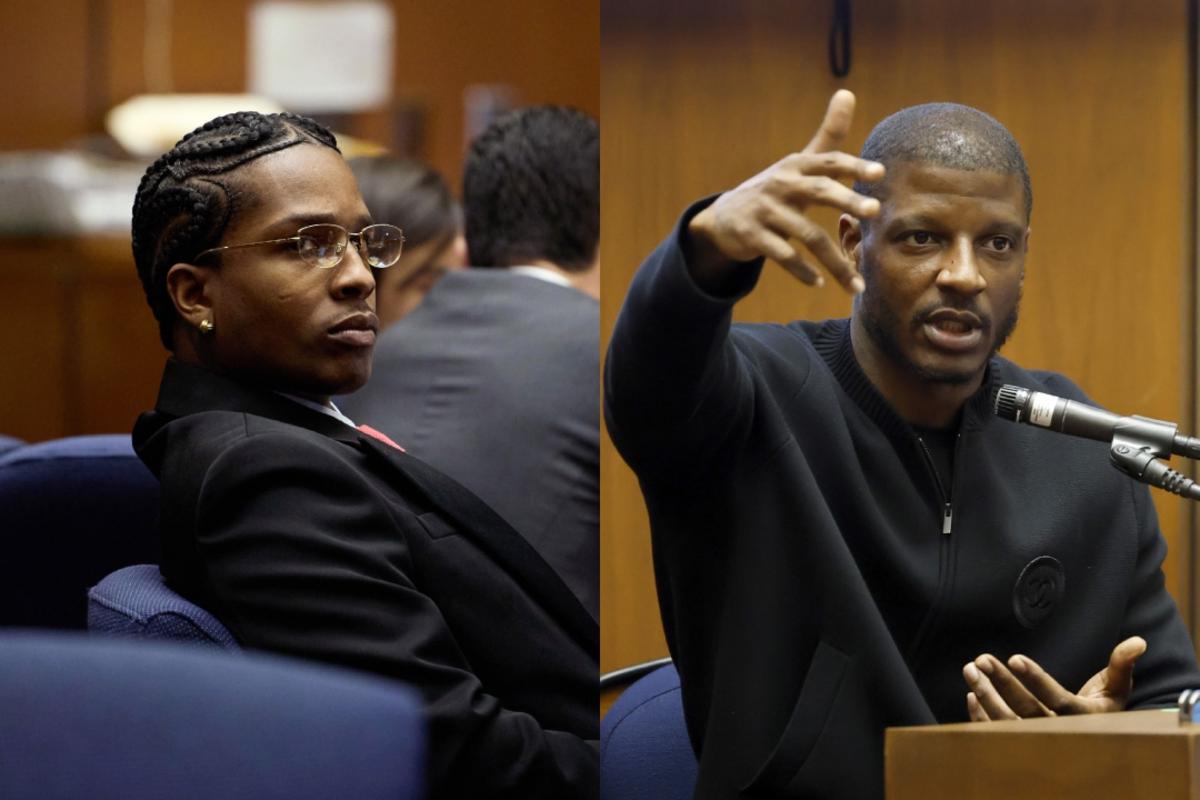
The legal challenges involving rapper A$AP Rocky, born Rakim Mayers, have centered primarily on allegations of assault involving a 2021 incident in Hollywood. These proceedings have navigated complex questions of self-defense, witness credibility, and the California judicial system. As of 2026, these cases serve as a notable study on the intersection of celebrity, high-stakes defense litigation, and the burden of proof in criminal assault charges.
Understanding the Core Allegations
The primary legal scrutiny surrounding A$AP Rocky stems from an incident that occurred in November 2021 in Hollywood, California. Terell Ephron, a former associate of the rapper, alleged that Mayers fired a handgun at him during an altercation.
Ephron—professionally known as A$AP Relli—brought a civil suit against Mayers, while the Los Angeles District Attorney’s office pursued criminal charges. Specifically, Mayers was charged with two counts of assault with a semiautomatic firearm. The prosecution’s case hinges on the testimony provided by Ephron and the forensic evidence retrieved by law enforcement during their investigation.
For the public and observers of the legal process, the distinction between the civil lawsuit and the criminal charges is critical. While a criminal conviction requires proof "beyond a reasonable doubt," a civil case operates on the "preponderance of the evidence" standard. This disparity means the outcomes of these two legal avenues can differ significantly, as the evidentiary requirements and the potential penalties—ranging from incarceration to monetary damages—are governed by entirely different legal frameworks.
The Framework of California Assault Laws
In California, the charges filed against Mayers fall under California Penal Code Section 245(a)(2). This statute pertains to assault with a firearm. Under state law, this is considered a "wobbler" offense, meaning it can be charged as either a misdemeanor or a felony, depending on the circumstances, the nature of the weapon, and the defendant's prior criminal history.
The legal implications of such a charge are significant:
- Incarceration: A felony conviction for assault with a firearm in California can lead to substantial prison time in state facilities.
- Sentencing Enhancements: California law includes strict "gun enhancements" (Penal Code 12022.5), which can add years to a sentence if the prosecution proves the firearm was used in the commission of a felony.
- Civil Liability: If a defendant is found liable in a civil court, they may be ordered to pay compensatory and punitive damages to the victim, which can reach into the millions depending on the documented harm.
The defense strategy, led by high-profile legal counsel, has consistently focused on the concept of self-defense. Under California’s "stand your ground" principles and broader self-defense statutes, an individual may use force if they have a reasonable belief that they are in imminent danger of bodily harm. The legal challenge for the defense is to convince a jury that the encounter was not an unprovoked act of violence, but a response to an perceived threat.
Analysis of Procedural Milestones
The trajectory of the A$AP Rocky legal proceedings has been marked by several key procedural milestones that highlight the complexity of modern criminal litigation:
- Preliminary Hearings: These are essential for the court to determine if there is enough evidence to move to a full trial. During these sessions, the defense has the opportunity to challenge the prosecution’s witness statements and forensic findings.
- Discovery Phase: Both sides exchanged evidence, including surveillance footage, text communications, and medical records. In high-profile cases, the discovery phase is often contentious, involving arguments over the admissibility of certain digital evidence.
- Pre-Trial Motions: Defense counsel often files motions to dismiss or motions to suppress evidence. If a piece of evidence—such as a specific video clip or a witness statement—is deemed unreliable or gathered improperly, the judge may exclude it from the trial, which can fundamentally weaken the prosecution’s position.
Comparative Overview: Criminal vs. Civil Litigation
| Feature | Criminal Prosecution | Civil Lawsuit |
|---|---|---|
| Primary Goal | Punitive (Justice/State interest) | Restorative (Damages for the plaintiff) |
| Standard of Proof | Beyond a reasonable doubt | Preponderance of the evidence |
| Parties Involved | The People of CA vs. Rakim Mayers | Terell Ephron vs. Rakim Mayers |
| Outcome | Jail time, probation, fines | Monetary damages, settlements |
| Jury Verdict | Usually requires unanimity | Often requires a majority or supermajority |
The Role of Evidence in High-Profile Assault Cases
In cases involving claims of firearms usage, forensic evidence is often the cornerstone of the trial. Prosecutors typically rely on ballistics, gunshot residue (GSR) analysis, and digital forensics to place the defendant at the scene and link them to the weapon.
However, in the era of 2026 surveillance, video evidence has become the primary battleground. Counsel for both sides often employ "expert witnesses"—professionals in video enhancement, ballistics, and biomechanics—to interpret blurry footage or analyze the trajectory of events. These experts are tasked with clarifying whether a movement constitutes an offensive attack or a defensive maneuver. The legal implications for Mayers are heavily tied to how a jury perceives the footage versus how the experts characterize the movements depicted therein.
Potential Impacts on Career and Public Standing
The legal implications of these accusations extend beyond the courtroom. For a global public figure like A$AP Rocky, the fallout includes:
- Contractual Risks: Many high-value endorsement deals include "morality clauses" that allow companies to terminate contracts if the talent is involved in criminal conduct.
- Travel Restrictions: Pending criminal charges can complicate international travel, particularly if a judge imposes travel restrictions or if the defendant is required to be present for frequent court appearances.
- Reputational Management: The court of public opinion moves faster than the court of law. Legal teams often work alongside public relations firms to mitigate the narrative surrounding the accusations, ensuring that the legal defense remains the dominant story rather than sensationalized headlines.
Frequently Asked Questions
What is the current status of the legal case against A$AP Rocky?
As of 2026, the case remains a subject of judicial proceedings. The prosecution continues to pursue the assault charges, while the defense maintains a strategy of asserting innocence and challenging the credibility of the primary witness.
Can civil and criminal cases happen at the same time?
Yes. A criminal case and a civil case regarding the same incident can proceed simultaneously. They operate in different courts under different rules. A defendant may be acquitted in a criminal court but still be found liable in a civil court because the burden of proof is lower in civil proceedings.
What are the possible sentencing outcomes for assault with a firearm in California?
If convicted, the penalties are severe. Beyond standard prison sentencing, California law allows for "gun enhancements," which can significantly increase the duration of imprisonment depending on how the firearm was utilized during the incident.
How does "self-defense" apply to this case?
Self-defense is an affirmative defense. The defendant must show they reasonably believed they were in danger of imminent harm. In California, if the defense successfully demonstrates this, the act may be legally justified, even if a weapon was discharged.
What happens if the victim decides to drop the charges?
In a criminal case, the victim is a witness, not the person who decides if charges proceed. The District Attorney acts on behalf of "The People." Even if a victim expresses a desire to drop charges, the state may continue the prosecution if they believe they have sufficient evidence to secure a conviction.
Next Actions and Legal Considerations
Individuals observing this case or those interested in the broader mechanics of California law should note that legal outcomes are rarely binary. Cases often conclude through plea agreements, settlements, or dismissals that may not be fully publicized to the degree of the initial filings.
If you are personally involved in a legal matter regarding assault or firearm charges, the most critical step is to seek representation from a qualified criminal defense attorney who specializes in California penal codes. Public information regarding ongoing cases should be cross-referenced with official court dockets through the Superior Court of Los Angeles County to ensure the information is current and accurate.
Legal matters are fluid; keeping track of official court filings remains the most reliable way to understand the evolution of these proceedings.