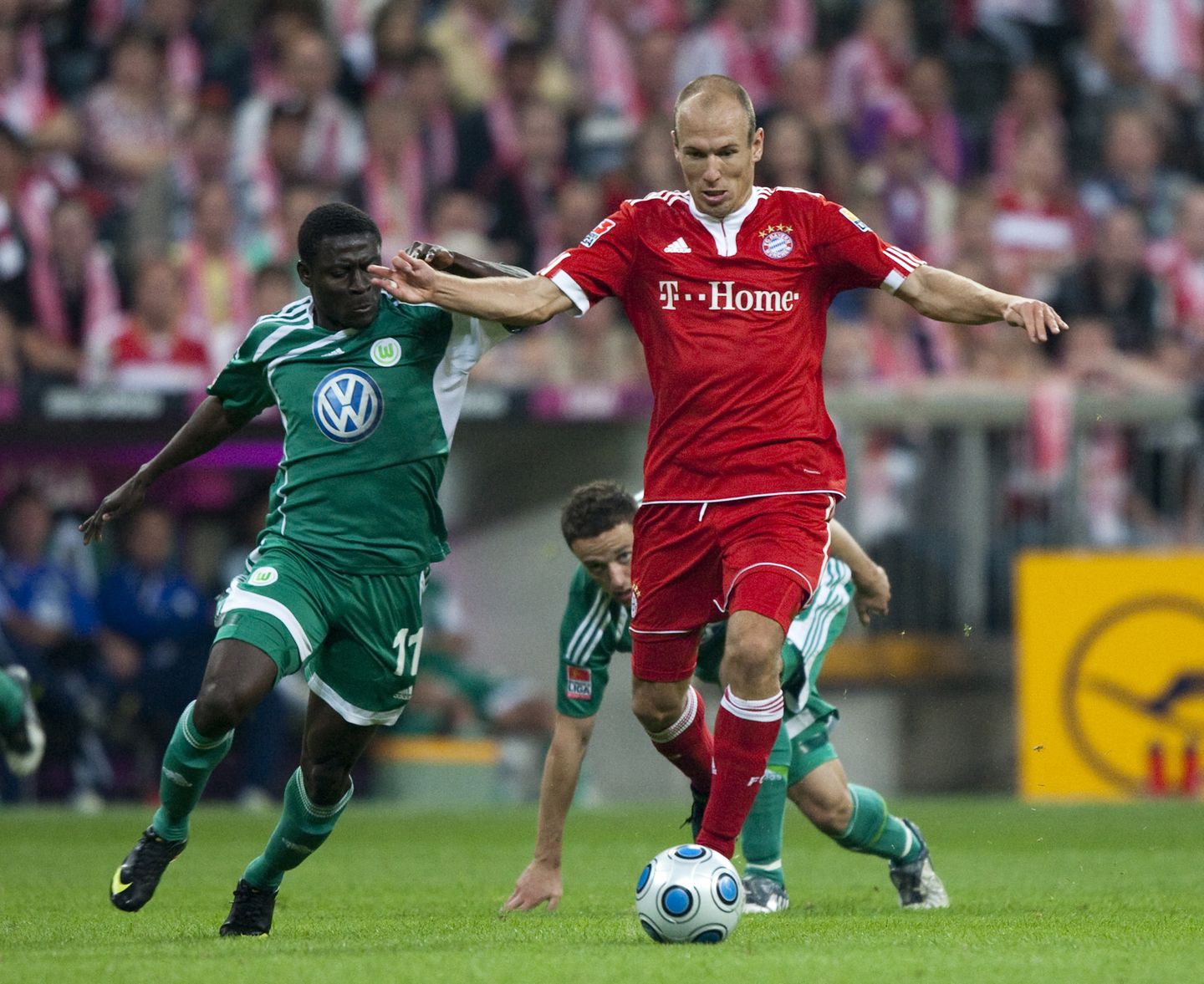
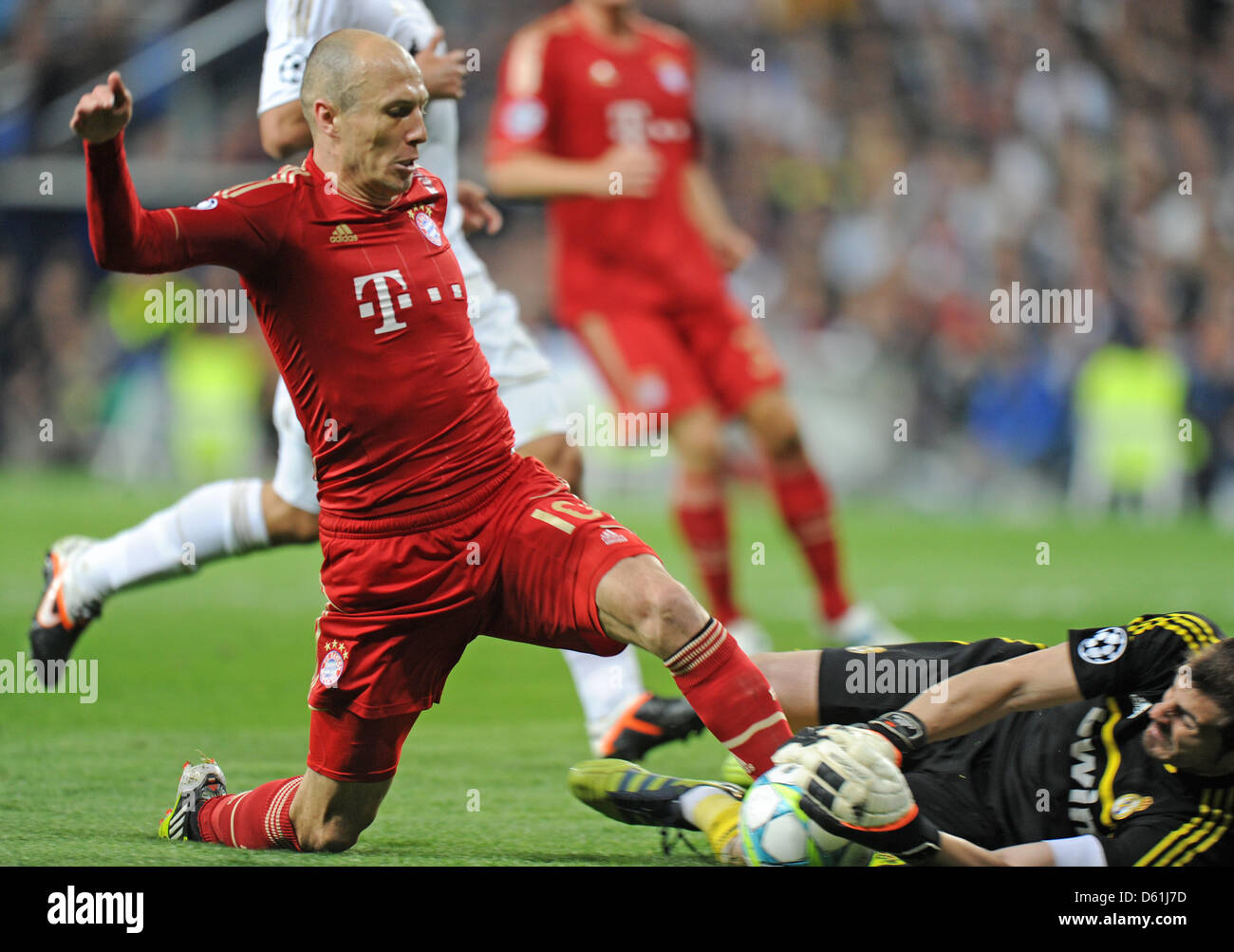
Arjen Robben played for Real Madrid between 2007 and 2009, recording 63 appearances and scoring 13 goals. Despite winning a La Liga title and a Supercopa de España, his tenure is defined by his explosive pace, recurring injury struggles, and his controversial departure during the 2009 "Galacticos" revolution under Florentino Pérez.
The Arrival: From Stamford Bridge to the Santiago Bernabéu
In the summer of 2007, Real Madrid was in a state of transition. Under the presidency of Ramón Calderón and the sporting direction of Predrag Mijatović, the club sought to move away from the "Galactico" era of the early 2000s and build a more balanced, tactically disciplined squad. Arjen Robben, then a 23-year-old winger at Chelsea, was the primary target to provide the team with natural width and verticality.
The negotiations were protracted. Chelsea, under José Mourinho, was reluctant to lose a player of Robben’s caliber, even though his relationship with the Portuguese manager had become strained due to Robben’s perceived fragility. Eventually, on August 22, 2007, Real Madrid secured his signature for a fee reported to be around €35 million (£24 million). This was a significant investment at the time, positioning Robben as one of the cornerstones of Bernd Schuster’s project.
Robben arrived at a time when the "Dutch connection" was beginning to flourish in Madrid. He joined fellow countrymen Wesley Sneijder and Ruud van Nistelrooy, creating a strong Netherlands-based core that would eventually grow to include Royston Drenthe, Rafael van der Vaart, and Klaas-Jan Huntelaar. This era of Real Madrid is often remembered as the "Oranje" period, where the technical proficiency of Dutch football was expected to harmonize with the flair of Madrid.
Tactical Integration and the 2007-08 La Liga Success
Robben’s first season in Spain was a mixture of individual frustration and collective triumph. He struggled with fitness issues early on, a theme that would unfortunately persist throughout his two-year stint. However, when he was on the pitch, he offered a dimension that no other player in the squad could replicate.
The Schuster System
Bernd Schuster’s Real Madrid utilized a flexible 4-3-3 or 4-2-3-1 formation. Robben was primarily deployed on the left wing, though he occasionally switched to the right. His ability to beat defenders in one-on-one situations was vital for stretching opposition defenses that tended to crowd the middle to stop Van Nistelrooy or Raúl.
The 2007-08 campaign was domestically dominant for Real Madrid. The season's pinnacle occurred on May 7, 2008, during the Clásico at the Bernabéu. Having already secured the league title, Madrid received a "Pasillo" (guard of honor) from Barcelona. Robben started that match and scored the second goal in a 4-1 demolition of their rivals, showcasing his clinical finishing and movement.
The "Glass Man" Reputation
Despite the title win, the Madrid media began to label Robben "El Hombre de Cristal" (The Glass Man). During his first season, he suffered five different injuries, which limited him to just 21 league appearances. This lack of continuity prevented him from fully establishing himself as the undisputed star of the team, even though his performance metrics per 90 minutes were among the highest in the squad.
The 2008-09 Season: Individual Peak Amidst Club Turmoil
The 2008-09 season was one of the most chaotic in Real Madrid's modern history, yet it was arguably the period where Robben played his best football for the club. Following a poor start to the season and friction with the board, Bernd Schuster was replaced by Juande Ramos in December 2008.
The Juande Ramos Era
Under Ramos, Real Madrid went on a remarkable winning streak in La Liga, winning 17 out of 18 matches between December and May. Robben was the undisputed protagonist of this run. Freed from some defensive duties, he was given the license to roam and drive at defenders. It was during this period that Robben truly mastered the "inverted winger" role on the right flank, cutting inside onto his preferred left foot—a move that would become his global trademark in later years.
His performance against Villarreal in January 2009 is often cited as his finest in a white shirt. He scored a spectacular solo goal and was virtually unplayable, leading many to believe he had finally overcome his physical issues. By mid-2009, he was widely considered Real Madrid’s most dangerous attacking threat, even outperforming club legends like Raúl and Gonzalo Higuaín in terms of pure impact.
The Champions League Disappointment
While domestic form was strong, the European stage told a different story. Real Madrid was eliminated in the Round of 16 by Liverpool, losing 5-0 on aggregate. Robben was unable to influence the tie significantly, as the tactical rigidity of Rafael Benítez's Liverpool successfully neutralized the wings. This failure in Europe catalyzed the political shift that would ultimately lead to Robben’s departure.
The 2009 Transfer Window: The Politics of Departure
By the summer of 2009, Florentino Pérez had returned to the presidency with a mandate to restore the "Galactico" policy. In a single window, the club signed Cristiano Ronaldo, Kaká, Karim Benzema, and Xabi Alonso. These signings required two things: massive financial liquidity and space in the squad.
The Forced Exit
Robben did not want to leave Real Madrid. In numerous interviews given in the years following his exit, he expressed his desire to stay and compete alongside Ronaldo and Kaká. Even the newly appointed manager, Manuel Pellegrini, reportedly wanted to keep Robben, viewing him as a vital tactical asset.
However, the board viewed Robben and his compatriot Wesley Sneijder as "saleable assets." Robben’s injury history was used as a justification to the fans, but the reality was purely economic and political. On August 28, 2009, it was announced that Robben would join Bayern Munich for a fee of approximately €25 million.
The departure was bitter. Robben famously stated, "I didn't want to go, but the club wanted to sell me. There were many lies told." His exit marked the end of the Dutch era at Madrid and remains one of the most debated "what-if" scenarios in the club’s history.
Performance Comparison and Statistical Summary
To understand Robben's impact at Madrid, it is useful to look at his productivity relative to his time on the pitch. While his total goal count seems low compared to his Bayern Munich years, his assist rate and successful dribbles per match were elite for La Liga at the time.
| Category | 2007-08 Season | 2008-09 Season | Total / Average |
|---|---|---|---|
| Appearances (All Comps) | 28 | 35 | 63 |
| Goals Scored | 5 | 8 | 13 |
| Assists | 4 | 9 | 13 |
| Minutes Played | 1,591 | 2,136 | 3,727 |
| Trophies Won | La Liga | Supercopa de España | 2 |
| Yellow Cards | 4 | 5 | 9 |
Note: Statistics reflect competitive first-team fixtures according to Transfermarkt records.
Legacy: The "What If" of the Bernabéu
Looking back from 2026, Robben’s tenure at Real Madrid is often viewed through the lens of irony. Less than a year after being sold to Bayern Munich, Robben returned to the Santiago Bernabéu to play in the 2010 UEFA Champions League Final. While Bayern lost to Inter Milan, Robben’s ascent to becoming one of the top three players in the world that season served as a sharp rebuke to the Madrid board's decision to sell him.
Technical Analysis of His Playstyle in Spain
In Madrid, Robben was less of a finished product than he was in Munich, but his raw attributes were terrifying.
- Dribbling: He averaged nearly 4.5 successful take-ons per 90 minutes during the 2008-09 season.
- Acceleration: His first three steps were arguably the fastest in the world at that time, allowing him to bypass the era's best full-backs, such as Eric Abidal and Joan Capdevila.
- The Inverted Winger Evolution: While he arrived as a traditional left-winger, his transition to the right wing under Juande Ramos changed his career trajectory. This move allowed him to threaten the goal directly rather than just providing crosses.
Frequently Asked Questions
Why did Real Madrid sell Arjen Robben?
The sale was primarily motivated by the return of Florentino Pérez in 2009. To fund the signings of Cristiano Ronaldo, Kaká, and Karim Benzema, the club needed to generate revenue and reduce the wage bill. Despite Robben’s high performance levels, his injury history and the fact that he was signed by the previous administration made him an easy target for transfer.
How many trophies did Robben win at Real Madrid?
Robben won two major trophies with the club. He won the La Liga title in his debut 2007-08 season and the Supercopa de España in 2008, where Madrid defeated Valencia in a memorable second-leg comeback.
Who was the manager that used Robben most effectively?
Juande Ramos is generally credited with getting the best out of Robben. By deploying him on the right wing and making him the focal point of the attack during the second half of the 2008-09 season, Ramos allowed Robben to showcase the goal-scoring potential that would later define his time at Bayern Munich.
How many injuries did Robben have at Real Madrid?
Robben suffered approximately 9 to 10 distinct injury layoffs during his two seasons, mostly involving muscle tears in his hamstrings and thighs. These injuries caused him to miss roughly 40% of the club's total matches during his stay.
Did Robben play with Cristiano Ronaldo at Real Madrid?
No. While they were both on the books during the 2009 pre-season, Robben was sold to Bayern Munich just before the competitive season began. They played together in a few summer friendlies but never in an official match.
Final Perspective
The story of Arjen Robben at Real Madrid is a tale of untapped potential and the cold reality of footballing politics. While his time in the Spanish capital was brief, he remains one of the most talented wingers to have graced the Bernabéu in the 21st century. For fans who watched him during the 2008-09 season, the sight of Robben cutting inside and unleashing a left-footed strike remains a vivid, albeit bittersweet, memory of what could have been had he stayed to join the "Galactico" era he helped fund.
If you are researching his career for historical or scouting purposes, Robben's Madrid years serve as the perfect case study of how a change in tactical positioning (moving from the left to the right wing) can elevate a world-class talent to a legendary one.