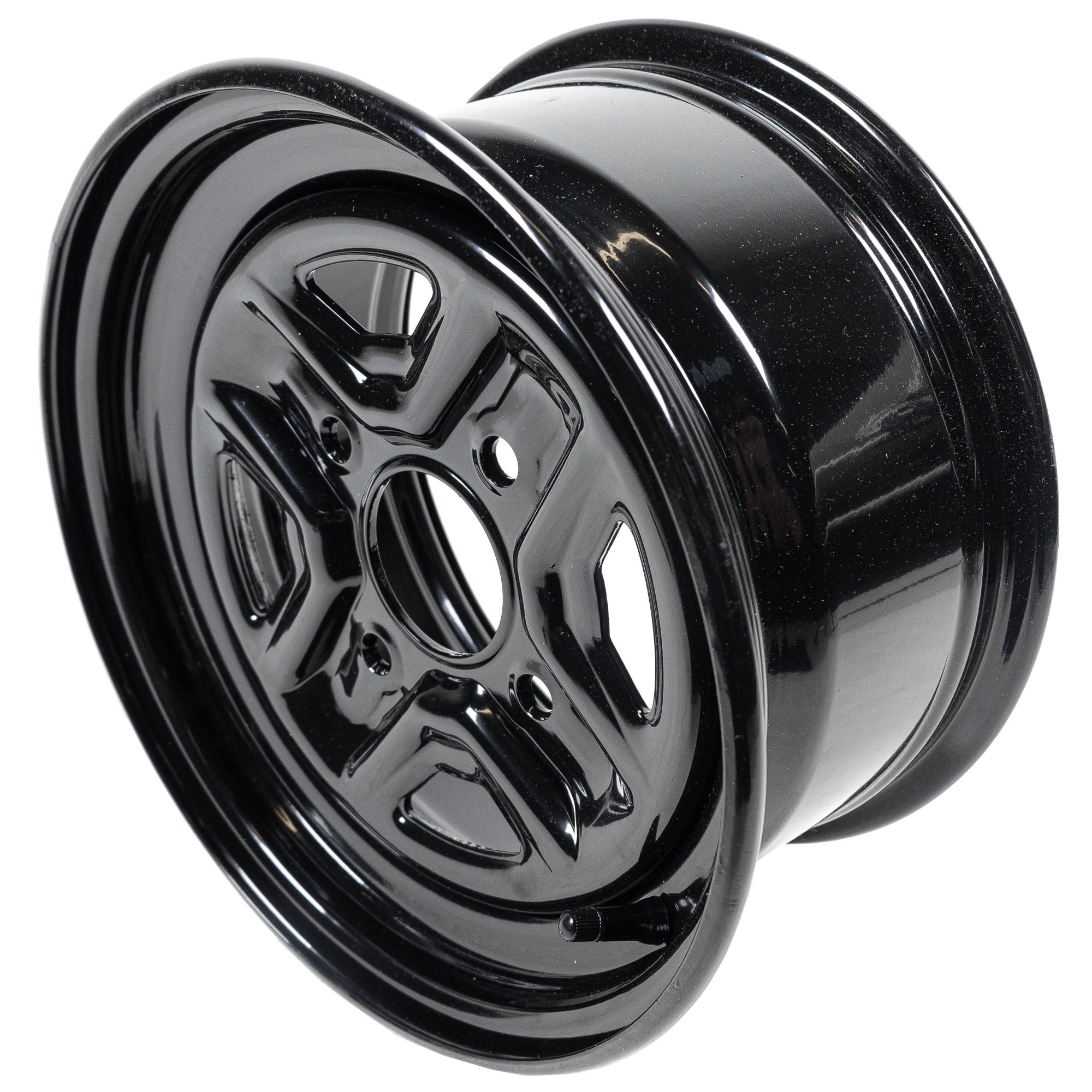
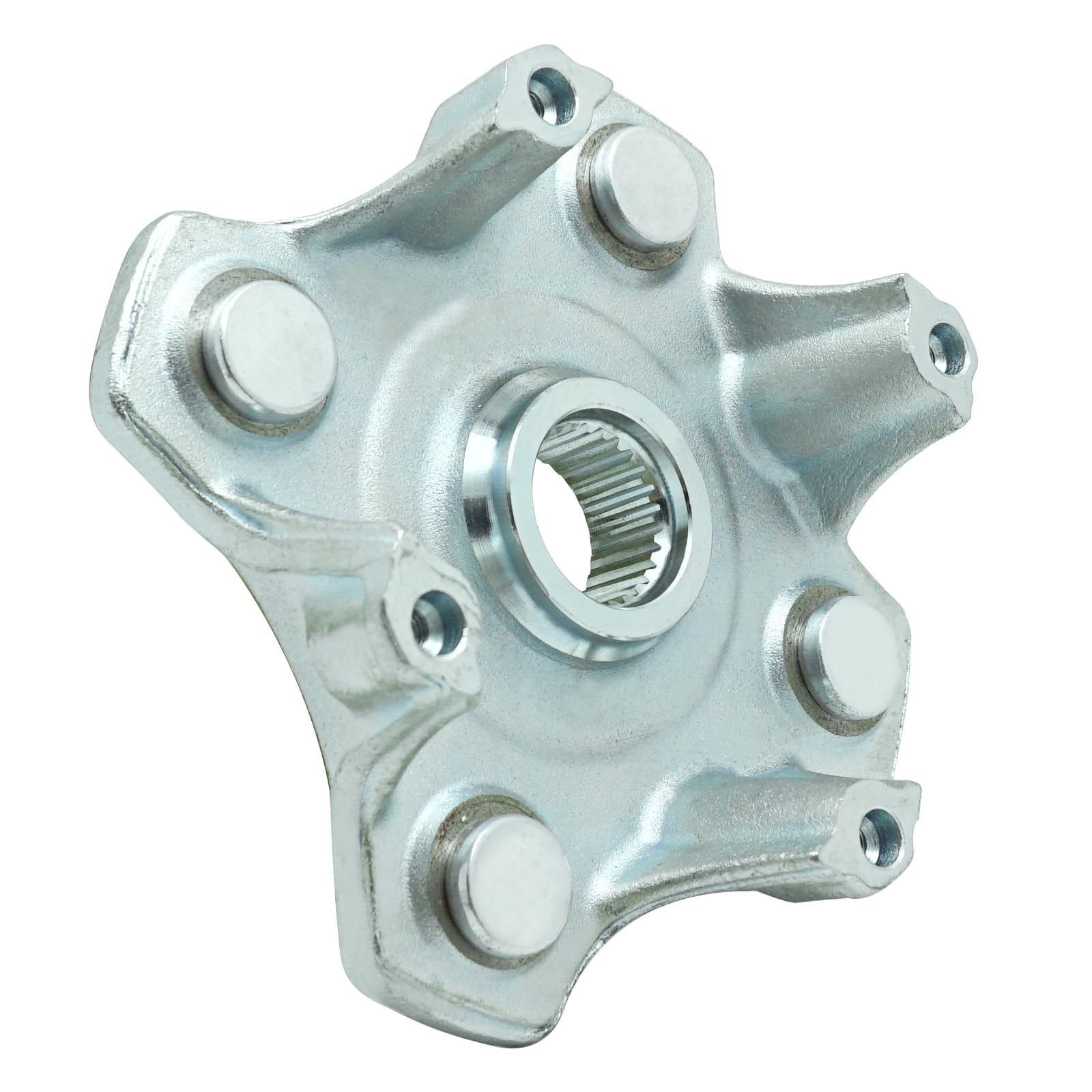
Most full-size Arctic Cat ATVs and UTVs, including the Alterra and Prowler series, utilize a 4/115 bolt pattern. This specification indicates that the wheel is secured by four lug bolts arranged in a circle with a diameter of 115 millimeters. However, high-performance models such as the Wildcat XX deviate from this standard by using a 4/156 pattern, emphasizing the importance of verifying your specific model year and sub-model before purchasing aftermarket wheels.
Understanding the 4/115 Bolt Pattern Standard
For decades, the 4/115 bolt pattern has been the hallmark of Arctic Cat’s off-road engineering. While many competitors like Honda, Yamaha, and Can-Am frequently employ the 4/110 or 4/137 patterns, Arctic Cat’s adherence to the 115mm Pitch Circle Diameter (PCD) has created a dedicated niche in the aftermarket wheel industry.
The "4" represents the number of lug nut holes, while the "115" represents the distance in millimeters across the circle formed by the centers of those holes. In the context of 2026 maintenance standards, ensuring an exact match is critical. Even a 1mm deviation (such as attempting to force a 4/114.3 automotive wheel) can lead to catastrophic stud failure, uneven tire wear, and compromised vehicle handling.
The 4/115 pattern was originally chosen to balance hub strength with weight distribution. Because the studs are spaced slightly further apart than the 110mm standard, it allows for a larger hub assembly, which historically helped Arctic Cat machines maintain durability in deep mud and rocky terrain. This legacy continues in the 2026 Alterra line, providing a stable platform for both utility and recreational riding.
The High-Performance Exception: Wildcat XX and 4/156
As UTV performance evolved, the mechanical demands on wheel hubs increased significantly. When the Wildcat XX was introduced, Arctic Cat (under the Textron Off Road umbrella) made a strategic pivot to the 4/156 bolt pattern.
The 4/156 pattern is widely regarded as the industry standard for high-horsepower, heavy-duty side-by-sides, famously utilized by Polaris for their RZR lineup. By adopting this pattern for the Wildcat XX, Arctic Cat provided owners with two major advantages:
- Increased Structural Integrity: A wider bolt circle allows for larger hubs and beefier studs (typically M12), which are necessary to handle the torque and impact forces of desert racing and high-speed trail riding.
- Aftermarket Availability: Because the 4/156 pattern is so common in the UTV world, Wildcat XX owners in 2026 have access to a massive variety of beadlock wheels and offset options that were previously unavailable for the traditional 4/115 Arctic Cat hub.
If you are operating a 2026 Wildcat XX, you must ensure your wheel search is filtered specifically for the 156mm PCD. Attempting to fit standard Arctic Cat wheels to an XX model—or vice versa—is physically impossible without the use of specialized (and often discouraged) conversion spacers.
How to Measure Your Arctic Cat Bolt Pattern
If you are dealing with an older model or a machine where the stickers have worn off, you can manually verify your bolt pattern using a simple metric ruler or a digital caliper.
For a 4-lug pattern, the measurement process is straightforward:
- Locate two studs that are directly across from each other (diagonal).
- Measure from the center of one stud to the center of the opposite stud.
- The measurement in millimeters will reveal your pattern. A reading of 115mm indicates the standard ATV/UTV pattern, while 156mm indicates the Wildcat XX or specialized heavy-duty hub.
If you are measuring the wheel itself (the holes) rather than the hub studs:
- Measure from the center of one hole to the center of the opposite hole.
- Ensure you are measuring across the exact center-point of the wheel's bore to maintain accuracy.
In 2026, many enthusiasts use mobile scanning apps that can estimate PCD via the camera, but for professional-grade fitment, a physical measurement with a caliper remains the gold standard.
Arctic Cat Model Fitment Table (Current through 2026)
The following table outlines the bolt patterns for the most common Arctic Cat models found in the field today.
| Model Category | Specific Models | Year Range | Bolt Pattern | Stud Size |
|---|---|---|---|---|
| Full-Size ATV | Alterra 450, 570, 600, 700 | 2016–2026 | 4/115 | M10 x 1.25 |
| Legacy ATV | 400, 500, 650, 700, 1000 | 2002–2015 | 4/115 | M10 x 1.25 |
| Sport UTV | Wildcat XX / Black Hills Edition | 2018–2026 | 4/156 | M12 x 1.25 |
| Trail UTV | Wildcat Trail, Wildcat Sport | 2014–2020 | 4/115 | M10 x 1.25 |
| Utility UTV | Prowler Pro, Prowler 500/800 | 2010–2026 | 4/115 | M10 x 1.25 |
| Youth ATV | Arctic Cat 90 / Alterra 90 | 2004–2026 | 4/110* | M8 or M10 |
*Note: Youth models are the most frequent exception to the 4/115 rule. Always measure the rear and front hubs separately on youth machines, as they occasionally use staggered patterns (e.g., 4/110 rear and 4/88 or 4/101 front).
The Role of Wheel Offset and Backspacing
Identifying the bolt pattern is only the first step in ensuring a proper wheel fit. You must also account for offset and backspacing, which determine how far the wheel sits in or out from the fender.
Offset
Offset is the distance from the mounting surface of the wheel to its true centerline.
- Positive Offset: The mounting surface is closer to the outside of the wheel, tucking the tire deeper into the wheel well. This is standard for most OEM Arctic Cat wheels to maintain a narrow trail width.
- Negative Offset: The mounting surface is closer to the inside, pushing the wheel outward. This increases the vehicle's track width, providing better stability on side-slopes but increasing the "scrub radius," which can make steering harder and accelerate wear on ball joints.
Backspacing
Backspacing is the distance from the inner edge of the wheel to the mounting surface. If you choose a wheel with too much backspacing, the inner rim or the tire sidewall may rub against the Arctic Cat's tie rods, shocks, or A-arms. Most Arctic Cat 700 and Alterra models perform best with a 5+2 offset (5 inches of backspacing, 2 inches of outward width) for aftermarket upgrades.
Hub-Centric vs. Lug-Centric Design
A critical technical detail often overlooked by DIYers is whether the wheel is hub-centric or lug-centric.
- Hub-Centric: The center hole of the wheel (the center bore) fits perfectly over the hub's center lip. The hub carries the weight of the vehicle, and the lugs simply hold the wheel against the hub.
- Lug-Centric: The center hole is larger than the hub lip, and the wheel is centered entirely by the tapered (conical) lug nuts.
Most aftermarket wheels for Arctic Cat are lug-centric. When installing these, it is imperative to tighten the lug nuts in a "star pattern" while the wheel is off the ground to ensure it centers perfectly on the studs. Failure to do so can result in a "wobble" even if the bolt pattern is correct.
Lug Nut Specifications and Torque Settings
The standard Arctic Cat 4/115 hub typically uses M10 x 1.25 threaded studs. The "M10" refers to a 10mm diameter, and "1.25" refers to the thread pitch. However, the Wildcat XX uses the larger M12 x 1.25 studs.
Using the correct lug nut seat is essential. Most OEM Arctic Cat steel wheels use a flat or flanged nut, whereas almost all aluminum aftermarket wheels require a 60-degree tapered (conical) seat nut. Using a flat nut on a tapered hole will cause the wheel to work loose, potentially shearing the studs.
2026 Recommended Torque Values:
- Steel Wheels (M10): 40–45 ft-lbs (54–61 Nm)
- Aluminum Wheels (M10): 60–70 ft-lbs (81–95 Nm)
- Wildcat XX (M12): 80–90 ft-lbs (108–122 Nm)
Always re-torque your lug nuts after the first 20 to 50 miles of riding following a wheel change, as the aluminum can compress slightly, leading to a loss of clamping force.
Common Pitfalls and Troubleshooting
When searching for "Arctic Cat wheel bolt patterns," many owners encounter confusing cross-references. Here are the most common issues to avoid:
- The "Close Enough" Fallacy: You may find automotive wheels with a 4/114.3 pattern (very common on older Japanese cars). While 114.3mm is incredibly close to 115mm, they are not interchangeable. Forcing a 114.3mm wheel onto a 115mm hub puts lateral tension on the studs, which will eventually lead to them snapping under the stress of off-road impacts.
- Brake Caliper Clearance: Just because the bolt pattern matches doesn't mean the wheel will fit. Some 12-inch aftermarket wheels do not have enough internal clearance for the brake calipers on larger Arctic Cat 700 or 1000cc models. Always check the "inner barrel" clearance.
- Staggered vs. Non-Staggered: Older Arctic Cat ATVs often came from the factory with narrower front wheels and wider rear wheels, though the bolt pattern was the same on all four corners. In 2026, the trend is toward "square setups" (the same wheel and tire size on all four corners), which allows for tire rotation. If you switch to a square setup, ensure the front wheels do not rub the plastics at full steering lock.
External Resources for Verification
For those requiring further technical documentation or specific part numbers, the following authoritative sources provide updated fitment data:
- Arctic Cat Official Parts Integration – The primary source for owner's manuals and factory specifications for every model year.
- SAE International – For engineering standards regarding lug nut torque and thread pitch durability.
- ITP Tires & Wheels Fitment Guide – A comprehensive industry database for matching aftermarket wheels to specific ATV/UTV bolt patterns.
Frequently Asked Questions
Can I use Polaris wheels on my Arctic Cat?
Generally, no. Most Polaris ATVs and UTVs use a 4/156 bolt pattern, while most Arctic Cats use 4/115. The only exception is the Arctic Cat Wildcat XX, which shares the 4/156 pattern with Polaris, making those wheels cross-compatible.
What happens if I use the wrong bolt pattern?
Using a bolt pattern that is even slightly off (like 4/110 on a 4/115 hub) will prevent the wheel from sitting flush. If you manage to force it on by over-tightening the nuts, you will bend the studs, cause extreme vibration, and likely lose the wheel entirely while riding.
Does the Alterra 600 use the same pattern as the older 700?
Yes. As of 2026, the Alterra 600 continues to use the standard 4/115 bolt pattern. Arctic Cat has maintained this consistency across their core ATV lineup to ensure parts commonality and ease of service for long-term owners.
Are wheel spacers safe for changing bolt patterns?
Wheel spacers/adapters can change a bolt pattern (e.g., from 4/115 to 4/110), but they come with risks. They increase the load on your wheel bearings and move the tire's centerline outward, which can drastically change the steering geometry. If you use them, choose high-quality billet aluminum adapters and check their torque frequently.
Why does my Arctic Cat have different sized tires but the same bolt pattern?
This is common in the ATV world. Manufacturers use the same hub and bolt pattern (4/115) for simplicity but install wider wheels/tires on the rear to provide better traction and narrower ones on the front for easier steering.
Final Recommendation
When upgrading or replacing wheels on your Arctic Cat in 2026, the most reliable path is to physically verify your PCD. If you own an Alterra, Prowler, or standard Wildcat, seek out the 4/115 pattern. If you own the Wildcat XX, prioritize the 4/156 pattern. Always pair your new wheels with the appropriate 60-degree tapered lug nuts and adhere to the specific torque requirements for your wheel material to ensure safety and longevity on the trail.