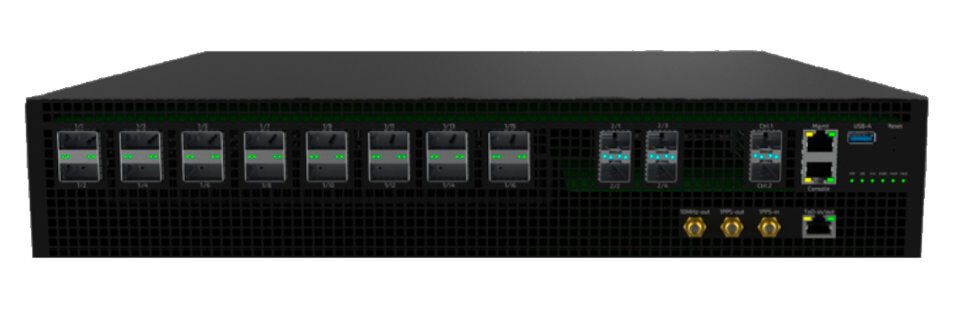
APS Networks launched its series of programmable switches designed specifically for the Telecom Infra Project (TIP) OpenBNG initiative to provide telecommunications service providers with a disaggregated, high-performance alternative to traditional, monolithic Broadband Network Gateways (BNG). By utilizing programmable silicon, such as the Intel Tofino series, these switches allow operators to deploy scalable, P4-programmable hardware that separates the control and user planes, drastically reducing capital expenditure and preventing vendor lock-in.
The Evolution of the Broadband Network Gateway (BNG)
To understand the significance of the APS Networks launch, one must first understand the role of a Broadband Network Gateway. In a traditional telecommunications architecture, the BNG is the critical access point that connects subscribers to the service provider's core network. It handles essential functions such as authentication, authorization, and accounting (AAA), IP address assignment, traffic management, and Quality of Service (QoS).
Historically, BNGs were proprietary, "black-box" appliances. A service provider would purchase both the hardware and the software from a single vendor. While reliable, this model created significant challenges:
- Vendor Lock-in: Operators were tied to a specific vendor's roadmap and pricing.
- Scalability Issues: Upgrading capacity often required replacing the entire chassis, even if only the software needed more features or the hardware needed more ports.
- High Cost: Proprietary hardware often carries a premium price tag compared to "white box" or commodity hardware.
The Telecom Infra Project (TIP) sought to solve these issues through the OpenBNG project group. By defining open specifications for hardware and software, TIP enabled a disaggregated ecosystem where hardware from one vendor (like APS Networks) could run software from another, allowing for a more flexible and cost-effective network edge.
APS Networks and the OpenBNG Initiative
APS Networks emerged as a pioneer in this space by being among the first to produce hardware that met the stringent requirements of the TIP OpenBNG specifications. Their launch focused on providing "Programmable Switches"—devices that do not have a fixed-function pipeline.
Traditional switches have their logic etched into the silicon (ASIC). If a new networking protocol is developed, the hardware must be replaced. APS Networks’ programmable switches utilize Intel Tofino (and later Tofino 2 and 3) Intelligent Fabric Processors (IFPs). These chips are programmed using P4 (Programming Protocol-independent Packet Processors). This language allows network engineers to define exactly how the switch processes packets at the hardware level, enabling the switch to act as a BNG, a router, or a load balancer through software updates alone.
The Significance of the Year 2026 context
As of 2026, the transition toward disaggregated networking has moved from the early-adopter phase to mainstream deployment. The APS Networks hardware launched during the initial OpenBNG waves has now been validated through years of field operations. Carriers have shifted from asking if open networking works to asking how quickly they can migrate their legacy BNG clusters to programmable, open-source-aligned architectures.
Technical Specifications of APS Networks Programmable Switches
The flagship models introduced by APS Networks, such as the APS2112D, were engineered to handle the high throughput and deep buffering required for broadband edge applications. Unlike standard data center switches, a BNG switch must manage thousands of subscriber sessions, each requiring unique queuing and rate-limiting.
Key Hardware Features
- Silicon Architecture: Powered by Intel Tofino/Tofino 2 ASICs. These provide a fully programmable pipeline, allowing the implementation of complex BNG features like PPPoE (Point-to-Point Protocol over Ethernet) and IPoE (IP over Ethernet) termination directly in the hardware.
- Port Density: Typically offering a mix of 10GbE, 25GbE, 100GbE, and 400GbE ports. For example, the high-end units support up to 32 x 100GbE or 12.8 Tbps of total switching capacity.
- Deep Buffering: Essential for managing traffic bursts in residential broadband, these switches incorporate advanced memory management to prevent packet loss during peak congestion.
- Time Synchronization: Support for IEEE 1588v2 Precision Time Protocol (PTP) and SyncE, which are vital for mobile backhaul and converged access networks where timing accuracy is non-negotiable.
The Power of P4 Programmability
The primary differentiator for APS Networks is the use of the P4 language. In a standard fixed-function switch, the "tables" that store MAC addresses or IP routes are of a fixed size. In a P4-programmable switch, the operator can reallocate memory resources. If a specific deployment requires more IPv6 routes and fewer MAC addresses, the hardware can be "recompiled" to reflect those needs.
This flexibility is what makes "OpenBNG" possible. The switch can be programmed to recognize and process specific broadband encapsulation headers (like QinQ or PPPoE) at line rate, something that previously required expensive, specialized Network Processors (NPUs).
Control and User Plane Separation (CUPS)
A cornerstone of the APS Networks OpenBNG solution is the implementation of CUPS (Control and User Plane Separation). In the old model, the brain (Control Plane) and the brawn (User Plane) lived in the same box. With APS Networks switches acting as the User Plane (UP), the Control Plane (CP) can be moved to a virtual machine in a local data center or the cloud.
How CUPS Functions in OpenBNG
- The User Plane (APS Networks Switch): Handles the high-speed data packets. It performs the actual encapsulation, decapsulation, and rate-limiting based on instructions from the CP.
- The Control Plane (Software): Manages subscriber logins, billing, and routing protocols. It communicates with the APS switch via standardized protocols like PFCP (Packet Forwarding Control Protocol) or gRPC.
- Benefits: If a service provider experiences a surge in subscriber logins, they can simply scale up the Control Plane (virtual CPUs) without needing to touch the physical switches in the field.
Comparison: APS Networks vs. Traditional Legacy BNGs
The following table compares the operational characteristics of APS Networks' OpenBNG programmable switches against traditional monolithic BNG systems.
| Feature | APS Networks OpenBNG (Programmable) | Traditional Legacy BNG |
|---|---|---|
| Hardware | Open "White Box" (Intel Tofino Based) | Proprietary, Vendor-Specific Chassis |
| Software | Disaggregated (Choice of NOS) | Integrated/Locked Software |
| Scalability | Independent scaling of CP and UP (CUPS) | Vertical scaling (Buy a bigger box) |
| Programmability | Fully Programmable via P4 | Fixed-function (Defined by Vendor) |
| Typical CAPEX | 30% - 50% Lower | High (Premium Hardware/Licensing) |
| Protocol Support | Upgradable via Software Updates | Often requires Hardware Refresh |
| Ecosystem | TIP OpenBNG Validated | Closed Ecosystem |
Implementation and Deployment Requirements
Deploying APS Networks programmable switches requires a shift in how network engineering teams approach their architecture. It is not a "plug-and-play" replacement in the traditional sense; rather, it is a modular integration.
Prerequisites for Deployment
- Network Operating System (NOS): You must select a NOS that is compatible with the APS hardware and supports the OpenBNG feature set. Common choices include RtBrick, Benu Networks, or IP Infusion.
- P4 Expertise: While many NOS providers include pre-written P4 programs, having internal knowledge of P4 allows a provider to customize their packet processing for unique service offerings.
- Orchestration Layer: Because the hardware and software are separate, an orchestration tool (like ONAP or a custom SDN controller) is often used to manage the lifecycle of the disaggregated components.
Steps for Integration
- Hardware Validation: Ensure the APS switch models meet the specific port requirements for your access nodes (GPON, XGS-PON, etc.).
- Software Selection: Choose a Control Plane software that integrates with your existing AAA (Radius/Diameter) and billing systems.
- Lab Testing (PoC): Most providers begin with a Proof of Concept (PoC) within the TIP Community Labs to verify interoperability between the APS User Plane and the chosen Control Plane software.
- Field Trial: Deploying the OpenBNG solution in a limited geographic area to monitor real-world subscriber traffic and latency.
Potential Challenges and Mitigations
While the benefits of the APS Networks launch are clear, the transition to disaggregated OpenBNG is not without hurdles.
- Integration Complexity: Managing components from different vendors (Hardware from APS, Software from a third party) requires a higher level of systems integration expertise. Mitigation: Rely on TIP-validated solutions and "Solution Blueprints" provided by APS Networks.
- Support Models: In a traditional setup, you have "one throat to choke." In a disaggregated setup, you must determine if a fault lies in the hardware, the NOS, or the Control Plane software. Mitigation: Most operators use a "Lead System Integrator" or purchase a bundled support contract that covers the entire stack.
- Power and Cooling: While more efficient than legacy chassis, high-density 400G switches generate significant heat. Mitigation: APS Networks designs their chassis with redundant, hot-swappable fans and power supplies optimized for telco environments (NEBS compliance).
Frequently Asked Questions
What exactly is "OpenBNG"?
OpenBNG is a set of hardware and software specifications developed by the Telecom Infra Project (TIP). It aims to break down the traditional Broadband Network Gateway into smaller, interoperable pieces. This allows service providers to use hardware from one company and software from another, fostering competition and innovation.
Why is Intel Tofino used in APS Networks switches?
Intel Tofino is a programmable Ethernet switch ASIC. Unlike traditional chips that have fixed logic, Tofino can be programmed using the P4 language. This is essential for OpenBNG because the "logic" of a BNG (how it handles subscriber sessions) is complex and changes over time. Tofino allows APS Networks to support these complex functions at line rate without specialized, expensive hardware.
Can I run any software on APS Networks programmable switches?
These switches are "Open Networking" devices, meaning they support the Open Network Install Environment (ONIE). This allows you to install various Network Operating Systems (NOS). However, for BNG functionality, the NOS must specifically support the P4 programs designed for BNG features and the Intel Tofino ASIC.
How does this reduce costs for ISPs?
Cost reduction comes from three areas: lower initial hardware costs (white-box vs. proprietary), reduced software licensing fees through competition, and "pay-as-you-grow" scalability. By separating the control plane, ISPs can run the "brains" of the network on standard servers rather than buying expensive, specialized control cards for every BNG.
Is APS Networks' hardware suitable for small ISPs?
Yes. One of the advantages of the OpenBNG approach is that it is highly modular. Small ISPs can start with a single APS Networks switch and a virtualized control plane, scaling up as their subscriber base grows, rather than having to invest in a massive, half-empty legacy chassis.
Does APS Networks provide the software for the BNG?
APS Networks primarily focuses on the high-performance hardware and the P4-based user plane. While they work closely with software partners (like Benu Networks or RtBrick), the customer typically chooses the Network Operating System that best fits their operational environment.
Final Recommendation
For service providers looking to modernize their edge network in 2026, the APS Networks OpenBNG programmable switches represent a mature, validated path toward disaggregation. The transition should begin with a clear assessment of current subscriber density and a strategic selection of a software partner that aligns with existing back-office systems.
Providers should prioritize the APS2112D or its 2026 successors for high-density urban environments where 100G/400G handoffs are required. For smaller deployments, the focus should be on the flexibility of the P4 pipeline to ensure that the hardware remains relevant for the next 7-10 years, regardless of how broadband protocols evolve.