The history of Apple’s leadership is defined by a transition from garage-based innovation and tumultuous corporate restructuring to its current status as a global technology titan. Throughout its existence, the company has been steered by a sequence of chief executive officers who each navigated vastly different market landscapes, internal technical challenges, and varying levels of commercial success. Understanding the Apple past CEO timeline provides essential context for the company’s product evolution, strategic shifts, and the long-term vision that continues to shape its hardware, software, and services ecosystem in 2026.
The Foundation and Early Years: The Jobs and Scott Era (1977–1981)
Apple was incorporated on April 1, 1976, by Steve Jobs, Steve Wozniak, and Ronald Wayne. However, the formal structure of the CEO role did not exist at the company’s inception. The need for professional management became apparent as the popularity of the Apple II surged.
Michael Scott, often referred to as "Scotty," was appointed as the company’s first president and CEO in 1977. His tenure was defined by the transition of Apple from a hobbyist project into a legitimate business entity. Scott was instrumental in managing the company’s initial public offering in 1980 and implementing rigorous operational standards that allowed Apple to scale its manufacturing capabilities to meet international demand. His leadership concluded in 1981 following a restructuring event known as "Black Wednesday," where a significant portion of the workforce was laid off, leading to internal friction and his eventual departure.
The Mike Markkula Interregnum (1981–1983)
Following Scott, Mike Markkula, who was the first major investor and a crucial mentor to Jobs, stepped into the role of president and CEO. Markkula’s approach was focused on long-term stability and defining the company’s core business philosophy. During his tenure, he played a critical role in mediating the relationship between the engineering-heavy culture championed by Wozniak and the marketing-driven vision favored by Jobs. Markkula’s leadership provided the foundational business structure that allowed Apple to evolve from an engineering firm into a consumer-facing powerhouse. By 1983, however, Markkula sought to return to retirement, which prompted the search for a leader with experience in scaling large consumer brands.
The Pepsi Challenge: John Sculley (1983–1993)
The recruitment of John Sculley from Pepsi-Cola is one of the most famous executive transitions in technology history. Brought on board by Steve Jobs with the legendary pitch, "Do you want to sell sugar water for the rest of your life, or do you want to come with me and change the world?", Sculley served as CEO for a decade.
Sculley’s tenure was marked by both massive commercial success and significant strategic volatility. He oversaw the launch of the original Macintosh in 1984, which introduced the graphical user interface to the mass market. However, his tenure was eventually overshadowed by internal power struggles with Steve Jobs, leading to the latter’s resignation in 1985. Under Sculley, Apple saw the rise of the desktop publishing market, which fueled massive revenue growth in the late 1980s. Despite this, he struggled to adapt the company to the rapid shift toward commoditized PCs in the early 1990s, leading to declining margins and market share.
The Stagnation Era: Michael Spindler and Gil Amelio (1993–1997)
Following the removal of Sculley in 1993, Apple entered a period of internal struggle often described as the "lost years." Michael Spindler, a long-time Apple executive, took the helm. Spindler focused on international expansion and cost-cutting, yet he faced immense pressure as the company struggled to transition its operating system to new hardware architectures.
In 1996, Spindler was replaced by Gil Amelio, who had earned a reputation as a turnaround specialist at National Semiconductor. Amelio’s tenure was remarkably short. He focused on cleaning up the company’s bloated product line and exploring acquisition options to save the failing Mac operating system. His decision to acquire NeXT, the company founded by Steve Jobs, inadvertently paved the way for the return of Apple’s co-founder and the eventual transformation of the company.
The Renaissance: Steve Jobs (1997–2011)
Steve Jobs returned to Apple as an advisor in 1997 following the NeXT acquisition and was named interim CEO (iCEO) shortly thereafter. In 2000, he dropped the "interim" title. This era marks the most significant period of growth and innovation in the company’s history.
Jobs completely overhauled the product lineup, canceling dozens of projects to focus on a "four-quadrant" strategy: Consumer Desktop, Pro Desktop, Consumer Portable, and Pro Portable. This discipline resulted in the iMac G3, which saved the company from bankruptcy. Following this, Jobs spearheaded a series of category-defining product launches:
- 2001: The iPod, which fundamentally changed the music industry.
- 2007: The iPhone, which pioneered the modern smartphone era.
- 2010: The iPad, which created the tablet market.
Jobs’s leadership was characterized by a meticulous obsession with design, user experience, and supply chain integration. By the time of his passing in 2011, Apple had become the most valuable company in the world, having successfully pivoted from a struggling niche computer maker to the primary architect of the mobile lifestyle.
The Operational Era: Tim Cook (2011–Present)
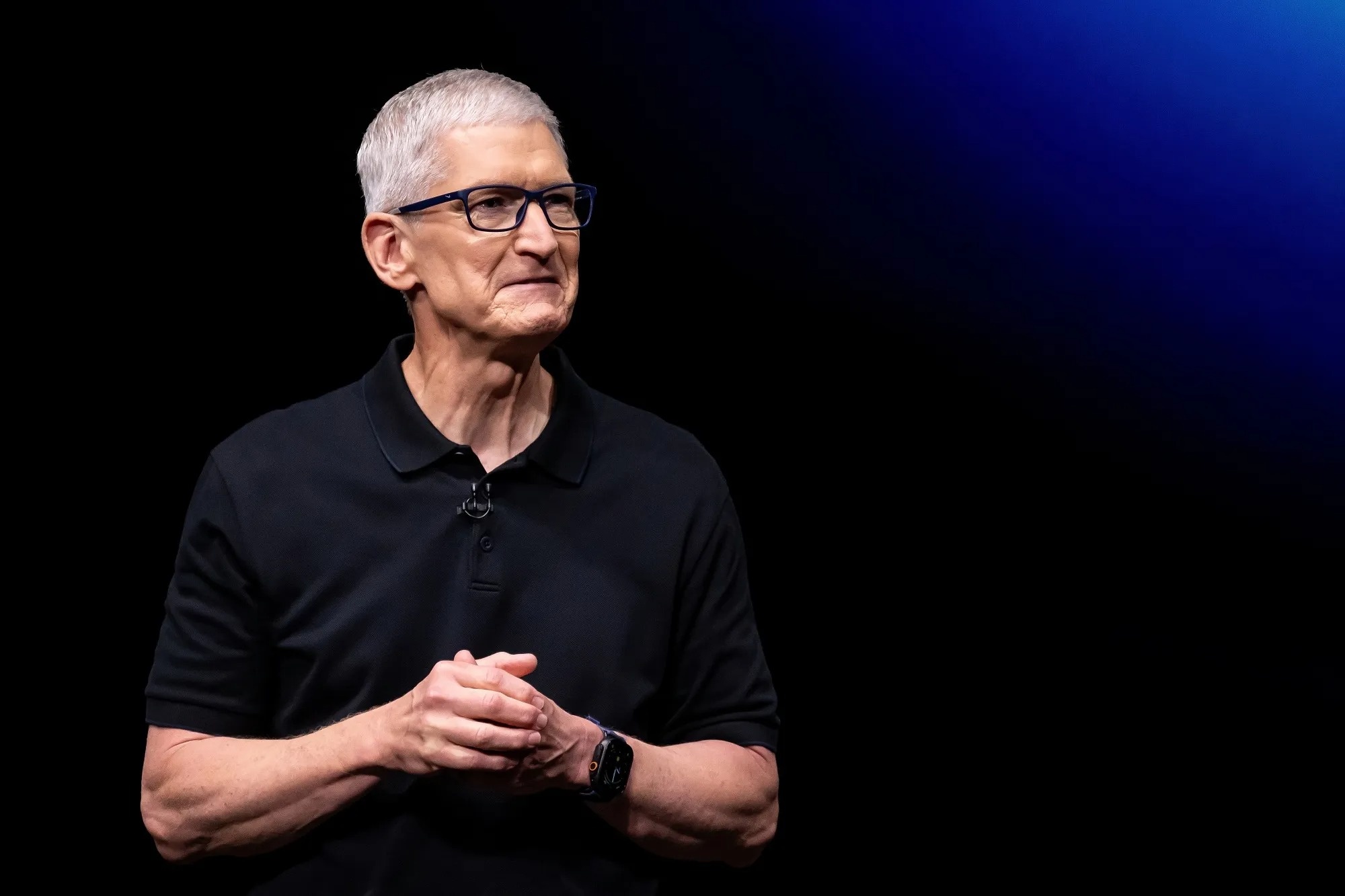
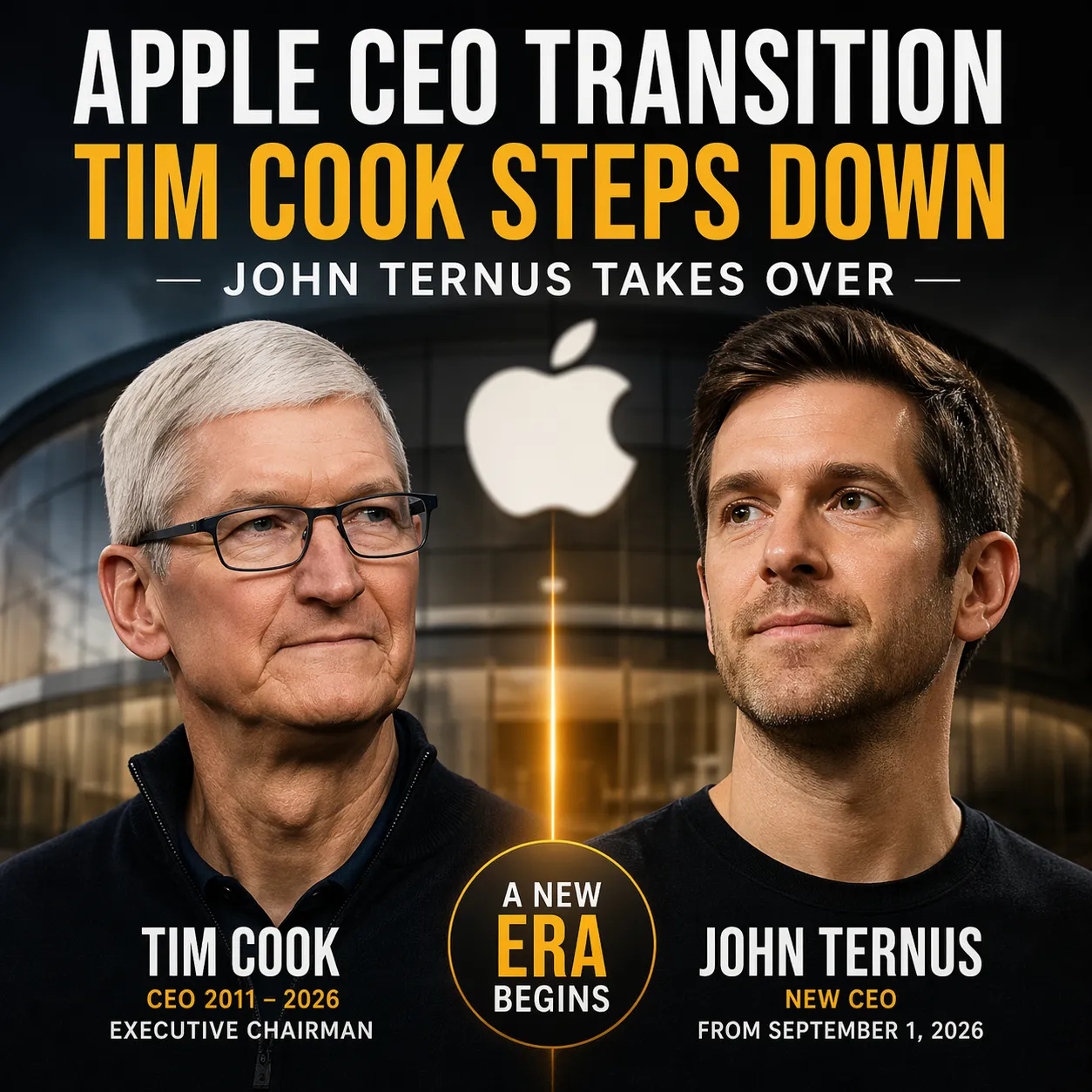
Tim Cook succeeded Steve Jobs as CEO in August 2011. While some analysts initially questioned whether Apple could sustain its innovation pace without Jobs’s singular vision, Cook’s tenure has demonstrated the power of operational excellence and strategic ecosystem expansion.
Cook transitioned Apple toward a model defined by services, wearables, and enterprise-grade hardware. Under his guidance, the company launched the Apple Watch in 2015 and the AirPods in 2016, both of which became leaders in their respective segments. His stewardship has also seen the maturation of the Apple Silicon transition, which brought high-performance, power-efficient ARM-based chips to the Mac lineup, significantly distancing the company from Intel-based architectures. As of 2026, Cook remains the CEO, having solidified Apple's position as a core infrastructure provider for digital identity, payments, health tracking, and professional creative workflows.
Comparative Overview of Apple CEO Tenures
| CEO | Term | Key Contributions |
|---|---|---|
| Michael Scott | 1977–1981 | Standardized business operations, managed IPO. |
| Mike Markkula | 1981–1983 | Strategic stability and early corporate philosophy. |
| John Sculley | 1983–1993 | Launched Macintosh, led rapid growth in 1980s. |
| Michael Spindler | 1993–1996 | Focus on international markets and cost-cutting. |
| Gil Amelio | 1996–1997 | Acquired NeXT, initiated product line simplification. |
| Steve Jobs | 1997–2011 | Created modern Apple, iPod, iPhone, iPad, macOS. |
| Tim Cook | 2011–Present | Services growth, Apple Silicon, wearables, operations. |
Why Understanding These Transitions Matters
The progression of Apple’s CEOs is not merely a list of names but a reflection of the company’s evolving survival strategies. In the early years, the company required manufacturing discipline (Scott) and business structure (Markkula). During the 80s and 90s, the company struggled with identity, transitioning through phases of high-growth marketing (Sculley) and desperate attempts at corporate optimization (Spindler and Amelio).
The return of Steve Jobs represented a pivot back to a "product-first" culture that prioritized design and user experience above all else. Finally, Tim Cook’s era represents the "platform-first" phase, where the focus shifted to locking users into an ecosystem of services and accessories that work seamlessly together. For users and investors in 2026, recognizing this timeline helps explain why the company operates the way it does today: by combining the design discipline established by Jobs with the massive, frictionless logistics machine built by Cook.
Frequently Asked Questions
Did Steve Jobs start Apple alone?
No, Steve Jobs co-founded Apple with Steve Wozniak and Ronald Wayne. While Jobs is the most famous figure, Wozniak was the primary engineer behind the Apple I and II, and Wayne contributed early administrative and conceptual support.
Was Steve Jobs fired from Apple?
Yes. In 1985, after a series of management disputes and a power struggle with CEO John Sculley, Jobs was stripped of his operational duties and subsequently resigned from the company he co-founded. He did not return until 1997.
What is the significance of the "iCEO" title used by Steve Jobs?
When Jobs returned in 1997, he was named "interim CEO." This title was used because he was still focused on his other venture, Pixar. He eventually dropped the "interim" in 2000 to commit fully to the turnaround of Apple.
How has Apple's focus changed under Tim Cook?
Under Tim Cook, Apple has successfully moved from being a product-centric company to an ecosystem-centric company. While hardware remains the core, there is a massive emphasis on services like Apple Pay, iCloud, Apple Music, and the integration of health and fitness data through Apple Watch.
What is the most critical event in Apple's leadership history?
The acquisition of NeXT in 1997 is widely considered the most critical turning point. It brought Steve Jobs back to the company and provided the NeXTSTEP operating system, which served as the foundation for macOS and eventually iOS.
Is Apple still innovation-driven in 2026?
Apple remains highly innovation-driven, but the focus has shifted toward refining the ecosystem and proprietary silicon. Rather than just hardware, the current innovation cycle emphasizes deep integration between specialized hardware, software features, and privacy-focused service layers.
Moving Forward
For those analyzing the current trajectory of the company in 2026, it is clear that Apple has reached a state of operational maturity that was previously impossible. The current leadership continues to build upon the infrastructure established during the transition to Apple Silicon. When evaluating any new product announcement or strategic move from the company, keep in mind that the current strategy is a direct evolution of the platform-oriented model that has defined the last decade of leadership. The next evolution of the firm will likely be determined by how it balances its massive, entrenched services revenue with the introduction of new computing paradigms in the post-smartphone era.