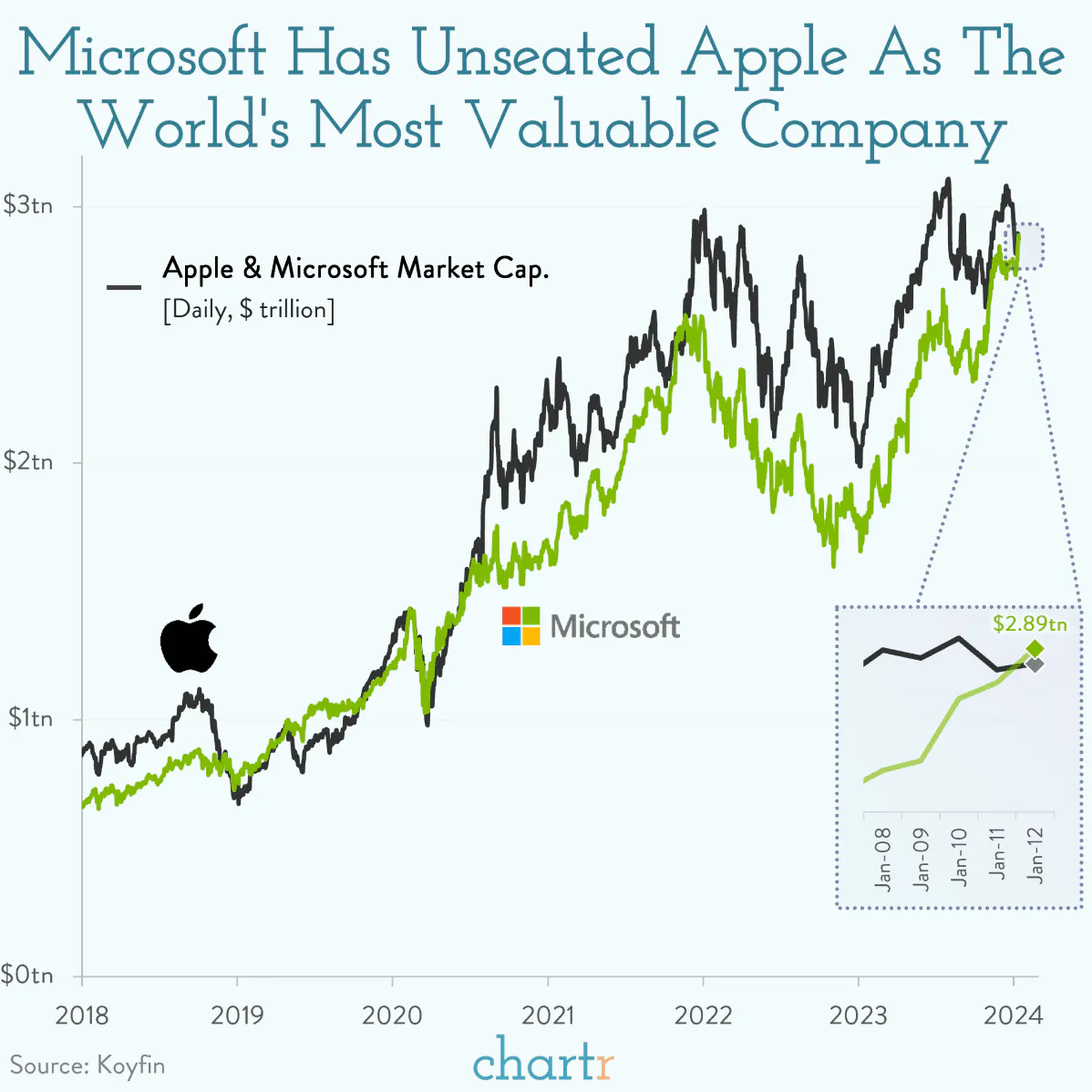
As of 2026, Apple Inc. maintains its status as the most valuable company in history, consistently holding the highest market capitalization among publicly traded entities globally. This valuation reflects its unique business model, massive cash reserves, deep vertical integration, and a consumer ecosystem that drives recurring revenue through both hardware sales and high-margin services.
The Mechanics of Market Capitalization
Market capitalization, or market cap, is the primary metric used to determine the total value of a publicly traded company. It is calculated by multiplying the current share price by the total number of outstanding shares. When experts describe Apple as the "most valuable company ever," they are referring to its ability to sustain an unprecedented, multi-trillion-dollar market cap—a threshold it was the first to cross in August 2020.
The significance of this milestone lies not just in the numerical value, but in the consistency of the growth. Unlike companies that experience brief spikes in valuation due to speculative market behavior, Apple’s valuation has been anchored by foundational financial performance. The company’s ability to generate significant free cash flow allows it to engage in massive share repurchase programs, which reduces the supply of outstanding shares and often supports the share price, thereby reinforcing its market valuation over time.
The Ecosystem Effect and Vertical Integration
A core driver of Apple’s enduring valuation is its "walled garden" ecosystem. By controlling both the hardware (the iPhone, Mac, iPad, and Apple Watch) and the software (iOS, macOS, and visionOS), Apple creates an experience that is difficult for competitors to replicate. This vertical integration ensures that hardware upgrades feel seamless for the user, fostering long-term loyalty and high switching costs.
This ecosystem also serves as a gateway to the Services segment, which has become a primary pillar of the company’s financial success. As of 2026, the services portfolio—which includes the App Store, iCloud, Apple Music, Apple TV+, and Apple Pay—generates recurring revenue that is less sensitive to the cyclical nature of hardware manufacturing. When a user buys an iPhone, they are not just making a one-time purchase; they are entering a subscription-based environment that provides the company with consistent revenue streams.
Historical Context and Growth Trajectory
Apple’s rise to become the most valuable company ever is a multi-decade transformation. Founded in 1976 and nearly bankrupt in the late 1990s, the company’s trajectory shifted dramatically with the return of Steve Jobs and the subsequent launch of iconic products like the iPod, and eventually, the iPhone in 2007.
The 2007 launch changed the nature of global communications and mobile computing, essentially creating the market for modern smartphones. This event marked the beginning of a rapid growth phase that persisted through the 2010s. By 2022, Apple had reached a market cap of $3 trillion, a feat never before achieved in the history of the stock market. Throughout the early 2020s, the company demonstrated an ability to navigate supply chain disruptions, semiconductor shortages, and shifts in global economic conditions, maintaining its pole position relative to other tech giants.
Comparative Metrics of Corporate Giants
Understanding Apple’s position requires comparing it to other major entities. While companies like Microsoft, NVIDIA, and Alphabet often challenge Apple for the title of "most valuable," Apple’s structural advantages—specifically its consumer brand equity and cash generation—have historically acted as a stabilizer.
| Feature | Apple Inc. | Peer Characteristics |
|---|---|---|
| Primary Revenue | Hardware + Services | Cloud/Software/Ad-focused |
| Brand Equity | Extremely High (Consumer) | High (B2B/Enterprise) |
| Cash Reserves | Exceptionally Large | Variable / R&D Focused |
| Vertical Control | High (Chip to Cloud) | Moderate (OS/Platform layer) |
The table above illustrates why Apple remains in a category of its own. While competitors may focus on enterprise cloud infrastructure or generative AI model licensing, Apple focuses on the end-user device interface, which commands a premium price point that maintains profit margins that are historically difficult to sustain at scale.
The Role of Research and Development
Apple’s valuation is also a reflection of its massive investment in Research and Development (R&D). By keeping hardware design, custom silicon (Apple Silicon), and software development in-house, the company avoids the performance limitations that third-party integrations can impose. The development of the M-series chips for Macs, for instance, allowed the company to regain control over the performance and battery life of its computers, leading to significant market share growth in the laptop and desktop sectors.
This strategy of internalizing critical technologies reduces reliance on third-party suppliers for core components, providing Apple with a competitive advantage in pricing and product launch timelines. This, in turn, helps maintain the high profit margins necessary to justify its valuation to investors.
Challenges and Market Risks
Despite its success, being the most valuable company is not without risks. Antitrust scrutiny in the United States, the European Union, and other jurisdictions represents a significant hurdle. Regulators have expressed concern over the App Store's commission structure and the lack of interoperability between Apple’s devices and competing services.
Furthermore, market saturation in the smartphone sector poses a long-term challenge. As global smartphone ownership reaches maturity, growth in the iPhone segment must come from service upselling rather than just new device acquisitions. Any change in the regulatory landscape that forces Apple to open its ecosystem could theoretically erode some of the "walled garden" protections that contribute to its high valuation.
Investment Perspective and Shareholder Value
For investors, the attraction to Apple has shifted over the years. It was once seen as a high-growth tech stock; today, it is often viewed as a value-oriented compounding machine. The company’s policy of returning capital to shareholders through dividends and aggressive share buybacks has made it a staple in institutional portfolios, including pension funds and index funds.
Because of its massive market capitalization, Apple is a major component of nearly every significant stock index, such as the S&P 500 and the Nasdaq-100. This means that a large portion of global retirement and investment accounts are directly tied to Apple’s performance, creating a self-reinforcing cycle where the company’s success is synonymous with the health of the broader equity market.
Frequently Asked Questions
What does it mean for a company to be the most valuable in the world? It means the company has the highest total market capitalization, calculated by multiplying the number of outstanding shares by the current price per share. It signifies that investors collectively believe the company has the greatest future earnings potential or the most secure financial foundation of any publicly traded business.
Has any other company ever been more valuable than Apple? While other companies like Microsoft and Saudi Aramco have challenged Apple for the top spot at various times, Apple has held the position for the longest cumulative duration among modern companies. Valuation rankings fluctuate daily based on market trading, but Apple’s consistent presence at the peak is historically unprecedented.
Is Apple’s valuation based solely on physical products? No. While physical products like the iPhone, Mac, and wearable devices form the hardware foundation, Apple’s valuation is heavily bolstered by its high-margin services division. This segment provides recurring revenue, which is more attractive to investors because it is predictable and less dependent on new product cycles.
Why does the company buy back so much of its own stock? Share buybacks reduce the total number of shares available on the open market. By shrinking the supply of shares, Apple can increase its earnings per share (EPS), which often supports the share price. This is a common practice for highly profitable, mature companies with significant excess cash reserves.
How does antitrust regulation affect Apple’s value? Regulatory challenges threaten the current business model of the App Store and the exclusivity of the Apple ecosystem. If courts force Apple to allow third-party app stores or alternative payment systems, it could lead to a decrease in service-related revenue, which would force investors to re-evaluate the company’s profit growth potential.
Final Recommendation
For those observing the financial trajectory of Apple, the most critical indicators remain its "Services" growth percentage and its ability to maintain profit margins amid global regulatory shifts. Unlike speculative investments, Apple’s status as the most valuable company is tied to its operational efficiency and its ability to keep consumers within its ecosystem. Future growth is likely to be found in the expansion of wearables and spatial computing, such as the Vision series, as the company attempts to identify the "next" iPhone-level disruptor. Monitoring quarterly SEC filings for changes in hardware adoption rates and services revenue will provide the most accurate insight into the company’s ability to defend its historic valuation.