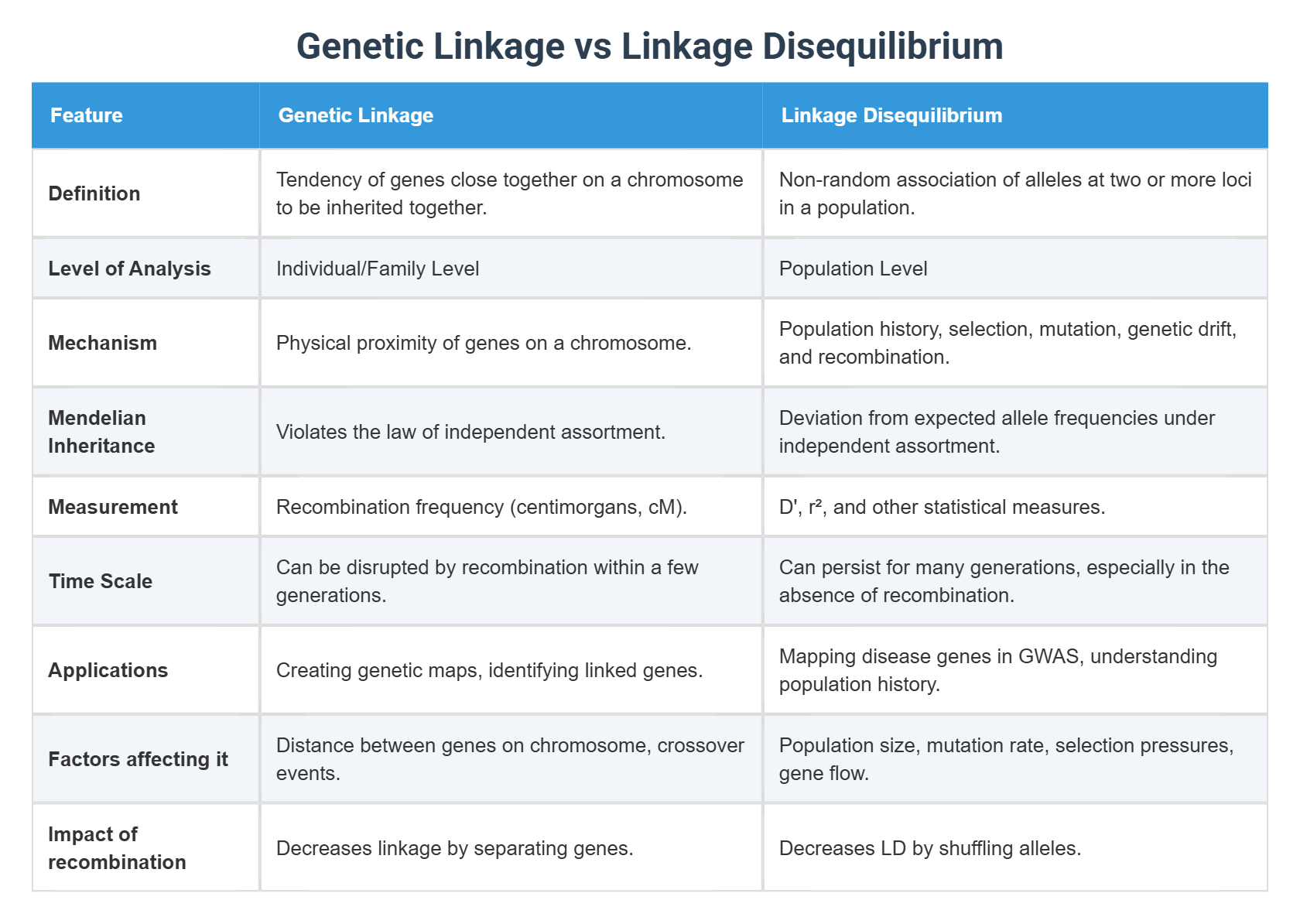
Alpha and beta linkages are the two primary types of glycosidic bonds that connect monosaccharides into complex carbohydrates. The distinction is defined by the spatial orientation of the hydroxyl group on the first carbon (anomeric carbon): in alpha linkages, the group points downward (trans), while in beta linkages, it points upward (cis).
In the field of biochemistry, the arrangement of atoms is rarely a matter of aesthetic symmetry. Instead, the geometry of molecular bonds dictates the fundamental properties of life, from the structural rigidity of ancient trees to the immediate energy available in a grain of rice. At the heart of this functional diversity lies the glycosidic bond, specifically the distinction between alpha ($\alpha$) and beta ($\beta$) linkages.
While these two bonds involve the same atoms, their three-dimensional configurations create vastly different biological outcomes. Understanding the mechanics of these linkages is essential for students of organic chemistry, nutritionists analyzing dietary fiber, and bioengineers developing the next generation of sustainable materials.
The Chemical Foundation of Glycosidic Bonds
To understand the difference between alpha and beta linkages, one must first look at the structure of a monosaccharide, such as glucose. In its aqueous environment, glucose exists primarily in a cyclic (ring) form rather than a straight chain. When the ring closes, the carbonyl carbon (Carbon-1 in glucose) becomes a new chiral center, known as the anomeric carbon.
The orientation of the hydroxyl (-OH) group attached to this anomeric carbon is what defines the "anomer" as either alpha or beta. This process is known as mutarotation, where the ring can open and close, switching between the two forms until it reacts with another molecule to form a stable bond.
The Alpha ($\alpha$) Configuration
In the alpha configuration, the hydroxyl group on the anomeric carbon is positioned on the opposite side of the ring from the $CH_2OH$ group (Carbon-6). In a standard Haworth projection of D-glucose, this means the -OH group points downward. When this glucose molecule reacts with another sugar to form a bond, it creates an alpha-glycosidic linkage.
The Beta ($\beta$) Configuration
Conversely, the beta configuration occurs when the hydroxyl group on the anomeric carbon is on the same side of the ring as the $CH_2OH$ group. In the Haworth projection, the -OH group points upward. This seemingly minor shift in position—often described as "cis" relative to the reference group—is responsible for the structural integrity of the most abundant organic polymer on Earth: cellulose.
Alpha Linkages: Energy Storage and Accessibility
Alpha linkages are the characteristic bonds found in energy-storage polysaccharides. Because of the "downward" orientation of the bond, alpha-linked polymers tend to adopt a coiled, helical shape. This geometry is less about structural strength and more about density and ease of access for metabolic processes.
Starch: Amylose and Amylopectin
In plants, energy is stored as starch, which consists of two types of alpha-linked glucose polymers. Amylose is a linear chain of glucose molecules joined by $\alpha(1\rightarrow4)$ glycosidic bonds. The natural "kink" or curve created by the alpha linkage causes the chain to twist into a helix.
Amylopectin, the branched version of starch, contains both $\alpha(1\rightarrow4)$ linkages in its main chains and $\alpha(1\rightarrow6)$ linkages at its branch points. This branching increases the surface area for enzymes, allowing plants (and the animals that eat them) to mobilize glucose rapidly when energy is needed.
Glycogen: The Animal Analog
Humans and other vertebrates store glucose in the liver and muscles as glycogen. Glycogen is structurally similar to amylopectin but is even more highly branched with $\alpha(1\rightarrow6)$ bonds occurring every 8 to 12 glucose units. This extreme branching is a biological adaptation for "fight or flight" scenarios, ensuring that a massive amount of glucose can be released into the bloodstream almost instantaneously through the action of glycogen phosphorylase.
Enzymatic Specificity: Amylase
The reason humans can derive energy from starch but not from wood lies in enzymatic specificity. Our digestive systems produce $\alpha$-amylase, an enzyme specifically "keyed" to fit the geometry of the alpha linkage. Amylase can easily nestle into the helical structure of starch and hydrolyze the $\alpha(1\rightarrow4)$ bonds, breaking the polymer down into maltose and eventually glucose.
Beta Linkages: Structural Integrity and Resistance
Beta linkages serve a very different purpose in nature. Because the bond is oriented "upward," beta-linked glucose chains remain straight and extended rather than coiling into helices. This allows the chains to align side-by-side and form incredibly strong inter-chain relationships.
Cellulose: The Backbone of Plants
Cellulose is the primary component of plant cell walls and is composed of glucose units joined by $\beta(1\rightarrow4)$ glycosidic bonds. Because the beta bond flips every second glucose unit 180 degrees relative to its neighbor, the resulting chain is a straight, rigid ribbon.
These ribbons can pack tightly together, held in place by a vast network of hydrogen bonds. This arrangement creates microfibrils with high tensile strength, providing the structural support necessary for trees to grow hundreds of feet tall.
Lactose: The Disaccharide Exception
While most beta linkages are associated with structural polysaccharides, they also appear in smaller sugars. Lactose, the sugar found in milk, consists of a galactose and a glucose molecule joined by a $\beta(1\rightarrow4)$ linkage. Unlike cellulose, lactose is digestible by many humans, provided they produce the enzyme lactase. However, the prevalence of lactose intolerance globally highlights how sensitive the human body is to the specific orientation of these bonds; without the specific beta-configured enzyme, the bond remains unbroken, leading to gastrointestinal distress.
The Challenge of Digestion
Most animals, including humans, lack the enzymes (cellulases) required to break $\beta(1\rightarrow4)$ bonds in cellulose. This is why cellulose is classified as dietary fiber. It passes through the digestive tract largely intact, providing bulk but no caloric energy. Ruminants like cows and termites can "digest" cellulose only because they host symbiotic bacteria in their guts that produce the necessary cellulase enzymes to tackle the beta linkage.
Technical Comparison of Alpha and Beta Linkages
The following table summarizes the key physical and biological differences between these two linkage types as of 2026.
| Feature | Alpha ($\alpha$) Linkage | Beta ($\beta$) Linkage |
|---|---|---|
| Anomeric OH Position | Points Down (Trans to C6) | Points Up (Cis to C6) |
| Molecular Shape | Helical / Coiled | Linear / Ribbon-like |
| Primary Function | Energy Storage | Structural Support |
| Common Examples | Starch (Amylose), Glycogen | Cellulose, Chitin, Lactose |
| Human Digestibility | Generally Digestible (Amylase) | Generally Indigestible (Fiber) |
| Inter-chain Bonding | Minimal (allows for hydration) | Extensive (Hydrogen bonding) |
| Solubility in Water | Often more soluble/dispersible | Usually insoluble |
The Impact of Linkage Geometry on Physical Properties
The macroscopic properties of materials are a direct consequence of these microscopic linkages. If we look at the difference between a potato (high in alpha-linked starch) and a piece of wood (high in beta-linked cellulose), the impact is obvious.
Solubility and Hydration
Alpha-linked polymers like starch are relatively easy to hydrate. When heated in water, starch granules swell and eventually burst (gelatinization), a process essential for cooking. The helical structure of alpha-linked chains leaves "gaps" where water molecules can penetrate and form bonds.
Beta-linked polymers like cellulose are notoriously insoluble. The tight packing of linear chains and the strength of the hydrogen bonds between them exclude water molecules. This is why cotton (which is nearly 90% cellulose) does not dissolve when you wash it, but starch will wash away from a surface with hot water.
Stability and Reactivity
In industrial chemistry and 2026 material science, the stability of the beta linkage is highly valued. Cellulose-based materials are used to create biodegradable plastics, films, and textiles that are durable yet environmentally friendly. The beta linkage provides a chemical "sturdiness" that resists environmental degradation better than the more "open" alpha linkage found in starch-based bioplastics.
How to Identify Alpha vs. Beta Linkages in the Lab
For researchers and students, identifying the type of linkage in an unknown carbohydrate sample requires specific analytical techniques.
- Nuclear Magnetic Resonance (NMR) Spectroscopy: This is the gold standard for determination. The proton attached to the anomeric carbon (H1) appears at a different chemical shift and has a different coupling constant depending on whether it is in the alpha or beta position. In glucose, the alpha-anomeric proton typically has a smaller coupling constant (around 3-4 Hz), while the beta-anomeric proton has a larger one (around 7-8 Hz).
- Enzymatic Assays: By exposing a carbohydrate sample to a highly specific enzyme, such as $\alpha$-glucosidase or $\beta$-glucosidase, and measuring the release of monosaccharides, scientists can determine which linkage is present. If the alpha-specific enzyme breaks the bond but the beta-specific one does not, the linkage is confirmed as alpha.
- X-ray Crystallography: For complex polysaccharides, X-ray diffraction can reveal the three-dimensional crystalline structure. The helical patterns of starch vs. the crystalline sheets of cellulose are unmistakable at the atomic level.
Frequently Asked Questions
Which linkage is stronger, alpha or beta?
The individual covalent bond energy of an alpha vs. beta glycosidic linkage is quite similar. However, the beta linkage is considered "stronger" in a functional sense because it allows for extensive inter-chain hydrogen bonding. This results in the formation of rigid, crystalline structures like cellulose, which are much harder to break down physically and chemically than the helical structures formed by alpha linkages.
Can a single molecule have both alpha and beta linkages?
Yes, many complex carbohydrates contain both. For example, some branched polysaccharides or heteropolysaccharides (containing different types of sugars) may utilize alpha linkages for the main chain and beta linkages for the side chains, or vice versa. In the context of 2026 synthetic biology, researchers often engineer "hybrid" carbohydrates to achieve specific textures or nutritional profiles.
Why can't humans digest the beta linkage in cellulose?
The human body does not produce the gene for the enzyme cellulase. Enzymes work like a lock and key; the $\alpha$-amylase in our saliva and pancreas has an active site shaped specifically to fit the curved "alpha" bond. The straight "beta" bond of cellulose cannot fit into this active site, meaning the enzyme cannot catalyze the hydrolysis reaction required to break the bond.
Are all beta linkages indigestible?
No. The $\beta(1\rightarrow4)$ linkage in lactose is digestible by humans who produce the enzyme lactase. The indigestibility of cellulose is due to both the specific $\beta(1\rightarrow4)$ glucose-glucose bond and the way those chains are packed into crystalline microfibrils, which are physically difficult for enzymes to access.
How does the linkage affect the glycemic index of food?
Foods dominated by alpha linkages, particularly highly branched ones like amylopectin, tend to have a higher glycemic index. This is because enzymes can quickly strip glucose units from the many "ends" of the branched alpha-linked chain. Beta-linked fibers have a negligible glycemic index as they are not converted to glucose during digestion.
Final Recommendations for Study and Application
When distinguishing between alpha and beta linkages, always start by identifying the anomeric carbon (usually the carbon attached to two oxygen atoms in the ring). Look at the orientation of the -OH group (or the bond itself if it is already connected to another sugar) relative to the $CH_2OH$ group on Carbon-6.
For those in the nutritional sciences, remember that "alpha" generally equals "energy" while "beta" generally equals "structure/fiber." For those in chemistry, focus on the chair conformation of the sugar ring; in D-glucose, the beta-glycosidic bond is in the equatorial position, which is sterically more stable than the axial alpha position. This subtle difference in thermodynamic stability explains why the beta anomer is slightly more prevalent in a solution of pure glucose at equilibrium.