For 2026, the average yearly auto insurance premium for an Allstate full-coverage policy typically ranges between $2,450 and $2,950. While often higher than budget carriers, this rate includes access to a dedicated local agent network and robust claims support. Actual costs fluctuate significantly based on your driving history, location, and chosen deductibles.
Understanding the Allstate Pricing Model in 2026
Allstate is positioned as a "captive agent" carrier, which means they employ a massive network of dedicated agents who provide personalized service. This business model inherently carries higher overhead than direct-to-consumer digital insurers, often resulting in premiums that sit slightly above the national average. However, the value proposition lies in the expert guidance and the breadth of specialized coverage options available.
In the current 2026 insurance landscape, premium volatility remains a primary concern for motorists. Allstate’s pricing reflects broader economic trends, including the rising cost of vehicle parts, the complexity of modern Advanced Driver Assistance Systems (ADAS), and the increased frequency of severe weather events. When you receive a quote from Allstate, you are not just paying for a policy; you are paying for a financial safety net backed by one of the strongest balance sheets in the industry.
To understand the average yearly premium, one must look at the two primary types of coverage Allstate offers: Liability-only and Full Coverage. Liability-only policies, which meet state minimum requirements, may average closer to $800–$1,100 per year, whereas full coverage—including collision and comprehensive—commands the higher $2,450+ range.
Key Factors Influencing Allstate Average Premiums
No two drivers pay the same rate because insurance is a highly individualized product. Allstate uses proprietary algorithms to assess risk across hundreds of variables. Understanding these variables can help you decipher why your premium might deviate from the reported national averages.
Geographic Location and Territory Ratings
Your ZIP code is perhaps the most significant factor in your premium calculation. Allstate analyzes "territory ratings," which account for local litigation environments, the frequency of accidents in your area, and the likelihood of vehicle theft or vandalism. For example, a driver in a rural part of Ohio will likely pay 40% less than a driver in a high-density area of Miami or Los Angeles, where the risk of a claim is statistically much higher.
Credit-Based Insurance Scores
In states where it is legally permitted, Allstate utilizes credit-based insurance scores to help determine premiums. Actuarial data suggests a strong correlation between financial responsibility and driving safety. Drivers with "Excellent" credit often see premiums that are 20% to 30% lower than those with "Fair" or "Poor" credit. As of 2026, this remains a cornerstone of Allstate's underwriting process in the majority of US jurisdictions.
Vehicle Complexity and Repair Costs
The type of car you drive heavily influences the "Comprehensive" and "Collision" portions of your premium. Allstate’s 2026 data shows that Electric Vehicles (EVs) and high-end luxury sedans often carry higher premiums due to the specialized labor and expensive components required for repairs. If your vehicle features high-tech sensors in the bumpers or windshields, even a minor fender-bender can lead to a multi-thousand-dollar claim, which is reflected in your yearly average.
Allstate Premium Comparison: 2026 Market Context
To help visualize where Allstate stands in the current market, the following table compares Allstate’s estimated average annual premiums against other major national carriers for a standard driver (35 years old, clean record, 2023 model-year sedan).
| Insurance Provider | Average Annual Premium (Full Coverage) | Primary Market Strength |
|---|---|---|
| Allstate | $2,680 | Local Agent Support & New Car Replacement |
| State Farm | $2,420 | Largest Market Share & Multi-Policy Discounts |
| Progressive | $2,350 | Competitive Rates for Drivers with Prior Incidents |
| GEICO | $2,100 | Low-Cost Digital-First Experience |
| Travelers | $2,550 | Highly Customizable Coverage Options |
Note: These figures are estimates based on aggregated 2026 market data and represent national averages. Individual rates vary by state.
Telematics and the "Drivewise" Impact on Pricing
One of the most effective ways Allstate customers influence their average yearly premium is through Drivewise, Allstate’s telematics program. By using a smartphone app or a plug-in device, drivers share their real-time driving data with the insurer.
Drivewise tracks specific behaviors, including:
- Safe Speeds: Staying below 80 mph.
- Safe Braking: Avoiding hard stops that indicate tailgating or lack of attention.
- Driving Hours: Limiting late-night driving (between 11 PM and 4 AM), when accidents are statistically more likely.
For drivers who consistently demonstrate safe habits, Allstate offers significant "performance-based" discounts that can lower the average yearly premium by up to 40%. This shift toward personalized, behavior-based pricing is a defining feature of the 2026 insurance market, allowing low-risk drivers to decouple their rates from the higher-risk general pool.
The Role of Deductibles in Premium Reduction
Your choice of deductible is a direct lever you can pull to change your yearly cost. A deductible is the amount you pay out-of-pocket before Allstate covers a claim. In 2026, the standard deductible has shifted toward $1,000, up from the traditional $500, as drivers seek to offset rising premium costs.
Increasing your deductible from $500 to $1,000 can often reduce your comprehensive and collision premium by 15% to 25%. However, Allstate advisors typically recommend ensuring you have that deductible amount readily available in a savings account. For high-net-worth clients or those with older vehicles, opting for an even higher deductible—or dropping collision coverage entirely—can drastically lower the average yearly premium, though it increases personal financial exposure.
Specialized Allstate Programs: Milewise and Deductible Rewards
Allstate offers unique programs that can either lower the premium or provide "back-end" value that justifies a higher initial cost.
Milewise (Pay-Per-Mile Insurance)
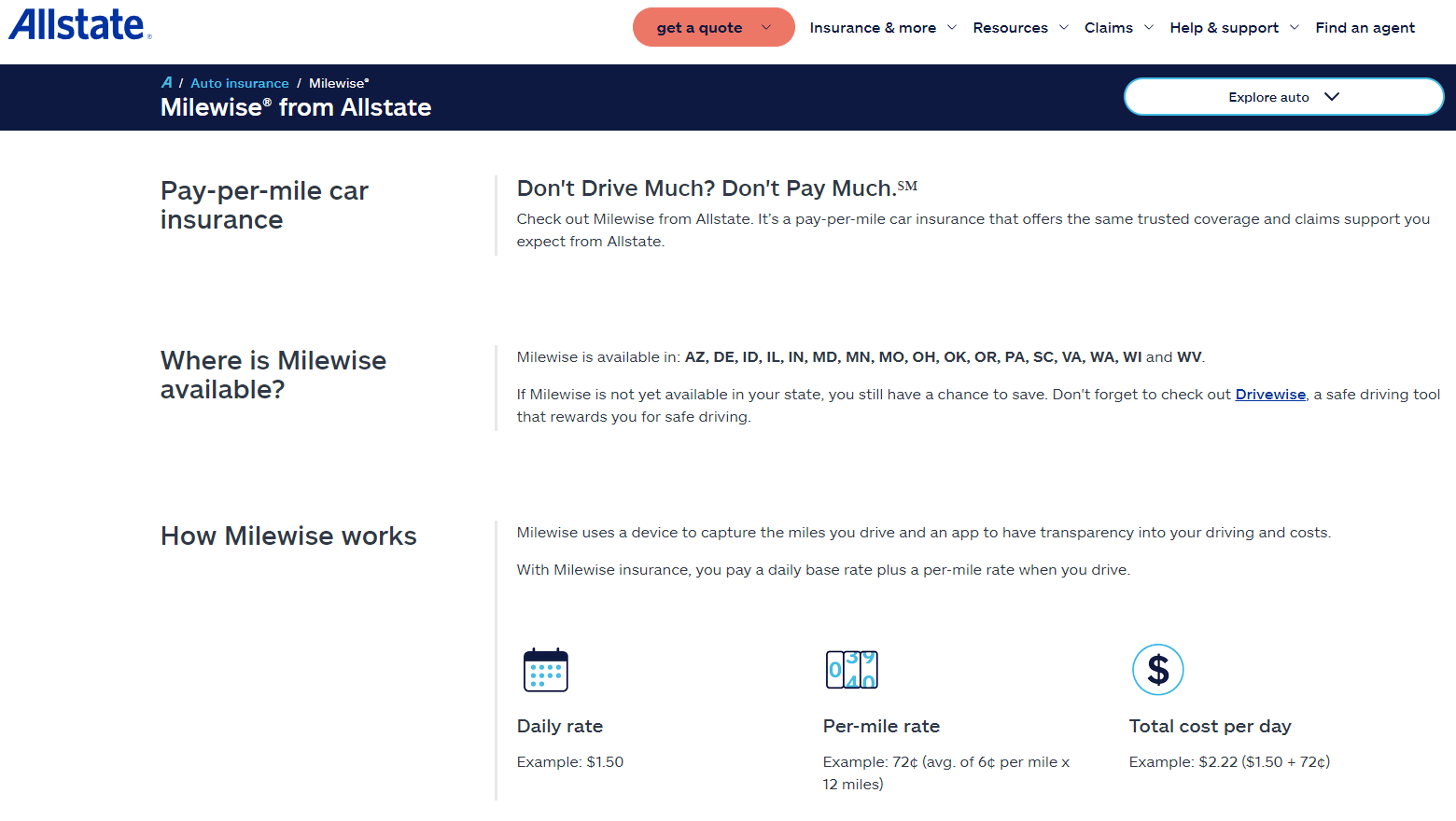
For individuals who work from home or use public transit, the Milewise program can be far more affordable than a standard policy. You pay a low daily base rate plus a few cents per mile driven. In 2026, as remote work remains a permanent fixture for many, Milewise has become a primary way for Allstate customers to keep their yearly premium well below the $2,000 mark.
Deductible Rewards
This feature, often included in Allstate’s "Gold" or "Platinum" protection packages, gives you $100 off your collision deductible the day you sign up, plus an additional $100 off for every year you drive accident-free (up to $500). While this doesn’t lower the premium itself, it significantly reduces the "total cost of ownership" for the insurance policy in the event of an accident.
Common Mistakes When Evaluating Allstate Quotes
When researching "Allstate average yearly auto insurance premium explained," many consumers fall into traps that lead to inaccurate expectations.
- Ignoring Regional Taxes and Fees: States like Michigan or New Jersey have unique statutory fees and PIP (Personal Injury Protection) requirements that can add hundreds of dollars to a policy, making "average" numbers irrelevant.
- Overlooking the Multi-Policy Discount: Allstate is a leader in "bundling." If you only look at an auto quote in isolation, you are likely seeing a price 10% to 20% higher than what you would pay if you also insured your home or apartment through them.
- Underestimating the Impact of a Single Ticket: Allstate’s underwriting is relatively strict regarding recent moving violations. A single speeding ticket in the last three years can spike your premium by 15% or more, pushing you well above the average.
How to Verify Your Allstate Premium Accuracy
To ensure you are getting a fair rate in 2026, it is recommended to review your Declarations Page annually. This document outlines every coverage limit and every discount applied to your policy. You should verify that your annual mileage is estimated correctly; if you are retired or working locally but Allstate has you rated for a 30-mile commute, you are overpaying.
Additionally, check for the "Early Sign-on" discount if you are switching to Allstate. By securing your policy at least seven days before it becomes effective, Allstate often applies a significant discount that lasts for the first term of the policy.
Frequently Asked Questions
Why is Allstate more expensive than some other carriers in 2026?
Allstate focuses on a high-touch service model. The cost of maintaining a local agent network and providing 24/7 personalized claims support is reflected in the premium. Furthermore, Allstate often includes features like "Accident Forgiveness" and "New Car Replacement" that budget carriers may charge extra for or not offer at all.
How much does an accident increase the Allstate yearly average?
On average, a single at-fault accident can increase an Allstate premium by 30% to 45%. However, if you have purchased the Accident Forgiveness rider, your rates will not go up just because of an accident, even if you are at fault. This protection is a key reason many drivers choose Allstate despite a higher base premium.
Does Allstate offer discounts for electric vehicles in 2026?
Yes, Allstate provides an "alternative fuel" discount for hybrids and EVs. While the base cost to insure an EV may be higher due to repair complexity, this discount helps mitigate the increase. They also offer specialized coverage for home charging stations under certain homeowners' endorsements.
Can I get a lower premium by using the Allstate mobile app?
Using the Allstate app for policy management doesn't directly lower your rate, but enrolling in Drivewise through the app does. Additionally, the app allows you to quickly update your mileage or change coverages, which can result in immediate premium adjustments.
What is the average Allstate premium for a teen driver?
Insuring a teenager is universally expensive. For an Allstate policy including a teen driver, the average yearly premium can jump to $5,000 or more. Allstate offers "Smart Student" discounts for those with a B-average or higher and "Resident Student" discounts for teens away at college without a car, which are essential for managing these costs.
Final Recommendation: Taking Action
To find your specific Allstate average yearly premium, the most effective step is to utilize their online quote tool while having your current "Declarations Page" handy for coverage matching. Because 2026 rates are heavily influenced by telematics, consider enrolling in Drivewise for a 10% introductory discount and the potential for much larger savings over time. Always ask your agent to "scrub" your policy for any missing discounts, such as those for anti-theft devices, paperless billing, or full-payment upfront.