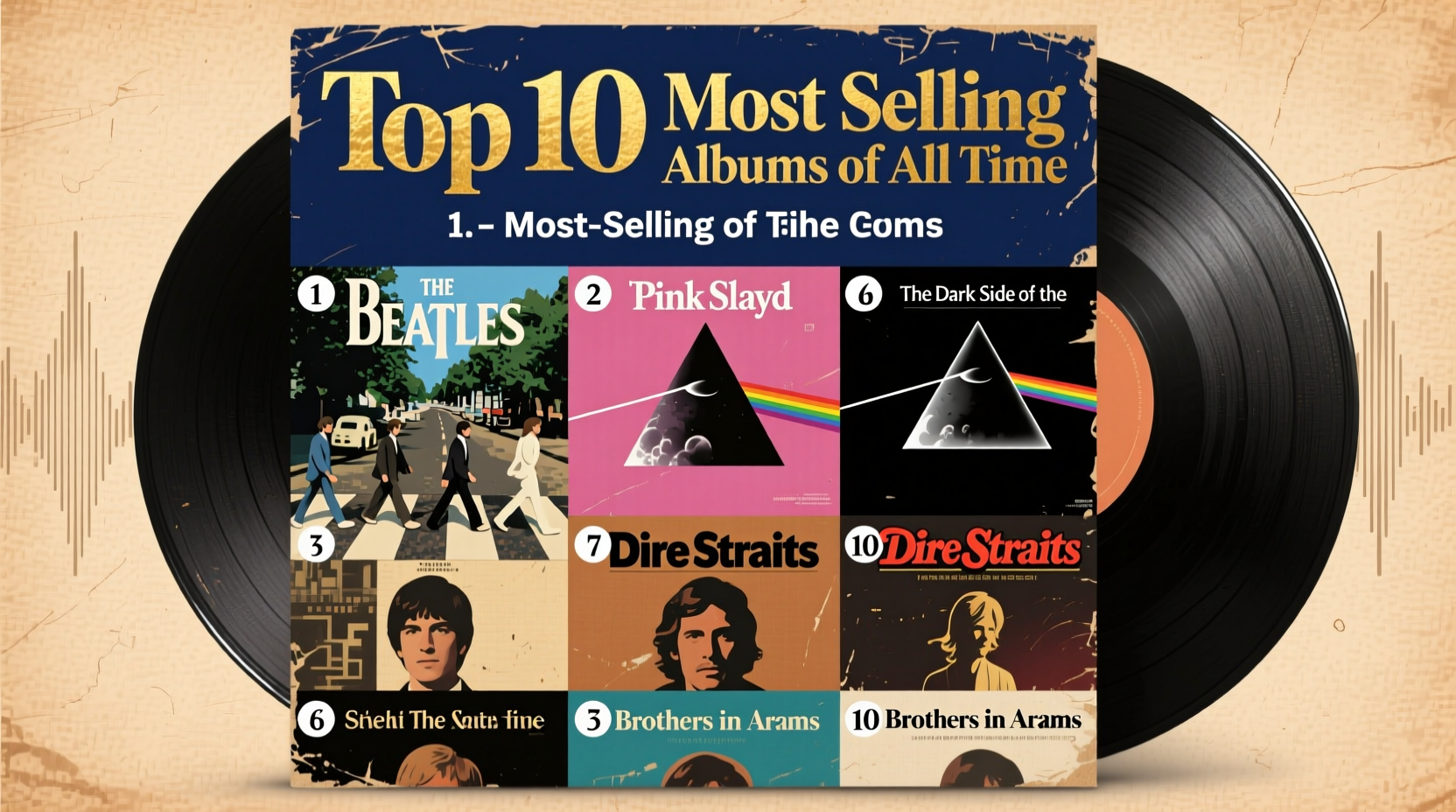
As of 2026, the list of the best-selling albums of all time remains a prestigious record of cultural dominance, led by Michael Jackson’s Thriller and the Eagles’ Their Greatest Hits (1971–1975). While streaming metrics have fundamentally altered how we measure success, these legacy recordings maintain their positions through a combination of physical sales, digital downloads, and converted streaming units.
Understanding the Landscape of Global Record Sales
The quest to identify the "best-selling" album is more complex than a simple tally of receipts. In the music industry of 2026, success is measured through a hybrid lens of historical physical shipments and modern consumption patterns. To understand these rankings, one must distinguish between certified units and claimed sales.
Certified units are those audited by official industry bodies, such as the Recording Industry Association of America (RIAA) or the International Federation of the Phonographic Industry (IFPI). These organizations require rigorous proof of shipment and sale before awarding Gold, Platinum, or Diamond status. Claimed sales, often cited by record labels or media outlets, represent the estimated total global reach, including markets where official auditing is less stringent.
The discrepancy between these two numbers is often significant. For example, while an album might have 30 million certified sales across major audited markets like the US, UK, and Germany, its global "claimed" total might exceed 50 million due to estimated sales in smaller or emerging markets throughout the 20th century.
The Methodology: How Sales are Counted in 2026
The methodology for tracking the all-time selling albums has evolved significantly since the early 2000s. The industry now relies on a "consumption-based" model to ensure that legacy artists are not disadvantaged by the shift away from physical media.
The Role of the RIAA and IFPI
The RIAA handles certifications for the United States, which remains the world’s largest music market. For an album to be certified Diamond in the US, it must move 10 million units. Globally, the IFPI tracks data across dozens of international territories, providing a more holistic view of an artist's reach.
By 2026, these organizations have fully integrated multi-platform tracking. This means that a sale in 1982 is weighted the same as a specific number of streams in 2026, allowing the "all-time" list to remain a living document rather than a historical artifact.
The Streaming Revolution: SEA and TEA Metrics
To keep the charts accurate, the industry uses two primary conversion metrics:
- SEA (Streaming Equivalent Albums): Generally, 1,500 on-demand audio or video streams from an album count as one "sale."
- TEA (Track Equivalent Albums): The sale of 10 individual digital tracks from an album is counted as one album sale.
This evolution has allowed albums like Fleetwood Mac’s Rumours or Queen’s Greatest Hits to continue climbing the all-time charts decades after their release. As younger generations discover these classics via curated playlists, their "all-time sales" figures continue to swell.
Top 5 Best-Selling Albums in Music History
The following albums represent the pinnacle of commercial achievement. These records did not just sell well; they defined eras and shifted the trajectory of popular culture.
1. Michael Jackson – Thriller (1982)
Michael Jackson’s Thriller remains the undisputed champion of global sales. Produced by Quincy Jones, the album was a perfect storm of pop, rock, and R&B. Its success was bolstered by the dawn of the music video era, with the title track’s short film becoming a cultural phenomenon.
In 2026, Thriller continues to lead due to its massive international appeal. While other albums may challenge it in the United States, Jackson’s reach in Asia, Europe, and South America remains unparalleled. The album features seven Top 10 singles, a feat that was virtually unheard of in 1982 and remains a benchmark for pop stars today.
2. Eagles – Their Greatest Hits (1971–1975) (1976)
In the United States, the Eagles’ first greatest hits compilation is often cited as the highest-certified album by the RIAA. This collection captures the "California Sound" of the early 1970s, featuring hits like "Take It Easy" and "Desperado."
Its dominance is a testament to the longevity of the "Greatest Hits" format in the 20th century. Before streaming made individual songs instantly accessible, these compilations were the primary way for casual fans to own an artist's best work. The Eagles benefited from being a staple of classic rock radio, ensuring that new generations of listeners bought the album year after year.
3. AC/DC – Back in Black (1980)
Back in Black is the highest-selling hard rock album of all time. Released as a tribute to their late singer Bon Scott, the album featured Brian Johnson on vocals and a stripped-back, high-voltage production style that has never gone out of fashion.
The album’s sales are driven by its status as the "gold standard" for rock production. Songs like "You Shook Me All Night Long" and the title track are ubiquitous in sporting events, movies, and commercials, providing a constant stream of new listeners and "equivalent sales" through the mid-2020s.
4. Whitney Houston / Various – The Bodyguard (1992)
As the best-selling soundtrack of all time, The Bodyguard demonstrated the massive commercial power of the power ballad. Driven by Whitney Houston’s cover of Dolly Parton’s "I Will Always Love You," the album dominated the charts for nearly a year.
Soundtracks occupy a unique space in sales history because they often appeal to moviegoers who might not otherwise buy a pop record. Houston’s vocal performance on this album set a standard for the "diva" era of the 1990s, influencing a generation of vocalists and ensuring the album's place in the top five.
5. Pink Floyd – The Dark Side of the Moon (1973)
Pink Floyd’s progressive rock masterpiece is famous not just for its total sales, but for its incredible endurance. The album spent 962 weeks on the Billboard 200 chart—a record that remained legendary well into 2026.
The Dark Side of the Moon is a "perennial seller." It is frequently used to demonstrate high-end audio equipment, and its iconic prism cover art has made it a permanent fixture in youth culture fashion. This "lifestyle" aspect of the album ensures that it moves hundreds of thousands of units every year, regardless of current musical trends.
Notable Genre Leaders and Cultural Milestones
Beyond the top five, several albums have achieved massive sales by dominating specific niches or breaking demographic barriers.
Shania Twain – Come On Over: The Crossover Queen
Released in 1997, Shania Twain’s Come On Over is the best-selling studio album by a female solo artist. It represents the peak of the country-pop crossover movement. By working with producer Mutt Lange, Twain created a sound that was country enough for Nashville but polished enough for international pop radio. The album produced a staggering 12 singles, keeping it in the public eye for over two years.
Fleetwood Mac – Rumours: The Perfection of Soft Rock
Rumours (1977) is often cited as the ultimate "breakup album." Recorded amidst intense personal turmoil between all five band members, its internal friction resulted in some of the most enduring pop-rock songs ever written. In the 2020s, Rumours experienced a massive resurgence on social media platforms, introducing "Dreams" and "The Chain" to Gen Z and Alpha, which pushed its certified units significantly higher in the 2026 tallies.
Led Zeppelin – Led Zeppelin IV: The Hard Rock Blueprint
Without a formal title, the band's fourth album (often called Untitled or Runes) became their commercial peak. Featuring "Stairway to Heaven," the album is a cornerstone of the rock genre. Its sales are particularly impressive given that the band famously refused to release "Stairway to Heaven" as a single, forcing fans to buy the full album to own the track.
Comparison of All-Time Sales Leaders
The table below outlines the standing of these albums as of 2026, comparing their original release years with their estimated global impact.
| Album Title | Artist | Year | Genre | Est. Claimed Sales |
|---|---|---|---|---|
| Thriller | Michael Jackson | 1982 | Pop / R&B | 70M+ |
| Back in Black | AC/DC | 1980 | Hard Rock | 50M+ |
| The Bodyguard | Whitney Houston | 1992 | Soundtrack | 45M+ |
| The Dark Side of the Moon | Pink Floyd | 1973 | Prog Rock | 45M+ |
| Their Greatest Hits | Eagles | 1976 | Classic Rock | 44M+ |
| Bat Out of Hell | Meat Loaf | 1977 | Rock | 43M+ |
| Come On Over | Shania Twain | 1997 | Country Pop | 40M+ |
| Rumours | Fleetwood Mac | 1977 | Soft Rock | 40M+ |
Note: Claimed sales figures are based on aggregated data from Billboard and various international auditing bodies as of early 2026.
Why Modern Albums Struggle to Break the Top 10
In 2026, a common question among music fans is why modern superstars like Taylor Swift, Drake, or Adele—despite their massive popularity—struggle to displace the titans of the 70s and 80s. Several structural factors contribute to this:
- Fragmentation of Choice: In the 1980s, consumers had fewer entertainment options. A "blockbuster" album like Thriller could capture a massive percentage of the global population's attention. Today, the market is hyper-fragmented.
- The Death of the Physical "Must-Own": In the 20th century, if you wanted to hear a song, you had to buy the album or wait for the radio. Streaming has removed this necessity. While Taylor Swift’s Midnights or The Tortured Poets Department see massive "units" moved, they are competing against a 40-year head start held by legacy albums.
- The "A La Carte" Era: Most modern "sales" come from individual song streams. To reach the 40-50 million mark, an album needs every single track to be a hit, whereas legacy albums have had decades to accumulate sales across multiple formats (Vinyl, 8-track, Cassette, CD, Digital, and Streaming).
However, Adele’s 21 (2011) stands as the most recent entry into the upper echelons of the all-time list, proving that a "traditional" blockbuster is still possible if the cultural impact is strong enough.
Frequently Asked Questions
Which album has sold the most copies in a single year?
While Thriller holds the all-time record, the record for the fastest-selling album in a single week is often held by Adele’s 25 (in the US) or Taylor Swift’s 2020s releases. However, in terms of sustained dominance over a 12-month period, Thriller and the Saturday Night Fever soundtrack are historically the most dominant.
How does the RIAA count double albums?
The RIAA has a specific rule for double albums (like The Beatles’ White Album or Billy Joel’s Greatest Hits Volume I & II). Each disc in the set counts as one unit toward certification if the total running time exceeds 100 minutes. This is why some double albums appear to have higher certifications than their actual "customer" sales might suggest.
Is Michael Jackson still the best-selling artist?
While Michael Jackson has the best-selling album, the title of best-selling artist overall is a three-way battle between The Beatles, Elvis Presley, and Michael Jackson. The Beatles generally lead in total certified units across their entire catalog.
Are soundtracks still capable of reaching these heights?
It is increasingly difficult. Soundtracks like Frozen or Hamilton have seen massive success in the 21st century, but they rarely reach the 40-million-unit mark. The peak of the "soundtrack era" was the 1990s, with The Bodyguard, Titanic, and The Lion King.
Does vinyl help these numbers in 2026?
Yes. The vinyl resurgence that began in the 2010s has accelerated through the mid-2020s. For albums like Rumours or Abbey Road, vinyl sales now account for a significant portion of their annual "new" physical sales, helping them maintain their positions on the all-time list.
Final Recommendation
To truly understand the "best-selling" nature of an album, one should look beyond the raw numbers and examine the RIAA Diamond Awards list. If you are a collector or a student of music history, the most accurate way to track these changes is through official database portals. For the most up-to-date, audited figures in 2026, we recommend consulting the Guinness World Records music section, which reconciles certified units with global claimed sales to provide a definitive "World's Best Seller" status.