AI based resume screening represents the automation of candidate evaluation, using machine learning algorithms to parse, rank, and filter job applications against specific role requirements. By digitizing and standardizing the initial review process, these systems aim to reduce manual labor for recruiters, accelerate time-to-hire, and identify high-potential candidates who might otherwise be overlooked in high-volume hiring environments.
The Evolution of Automated Recruitment
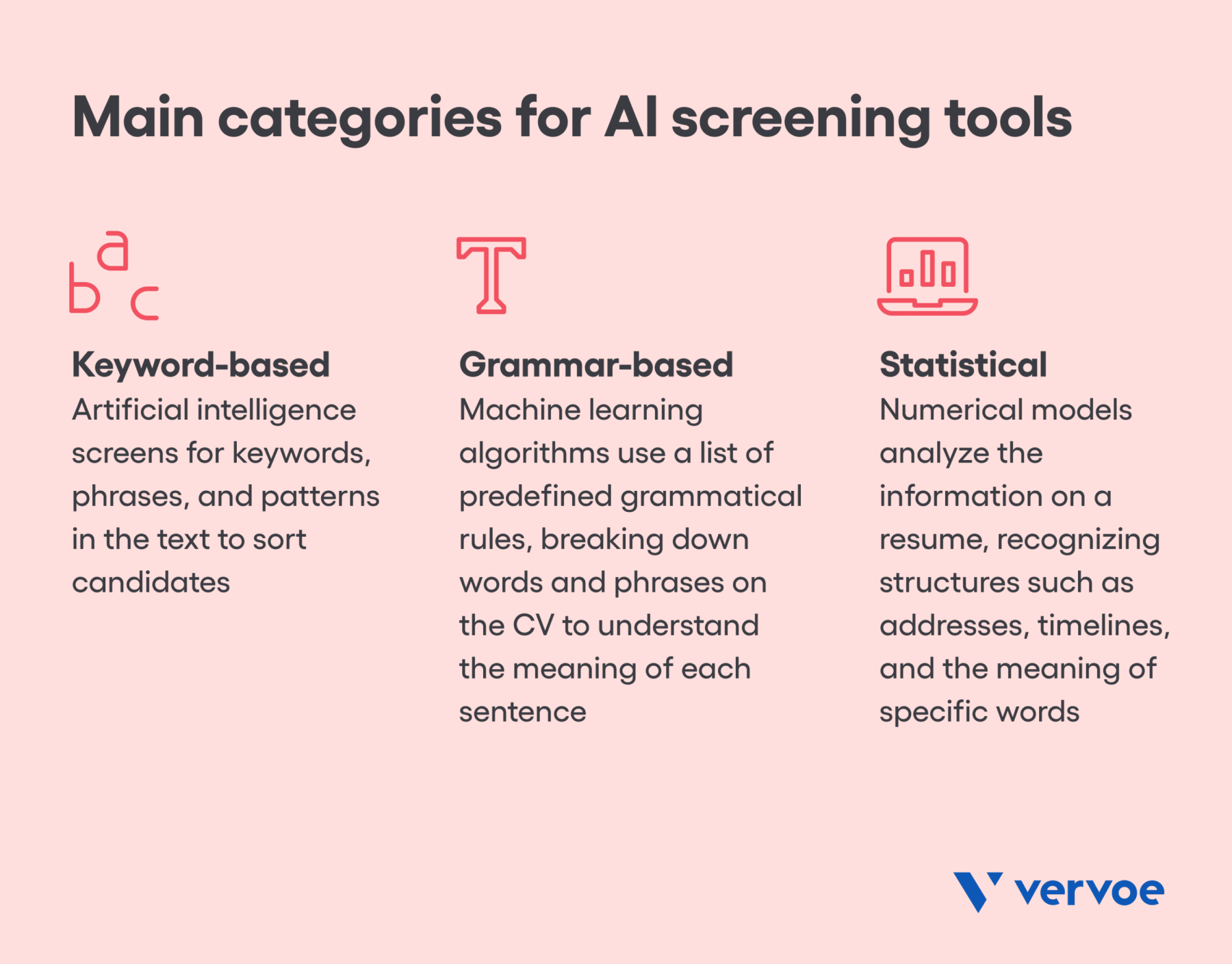
The transition toward AI based resume screening began as a response to the "resume flood" created by online job boards. In the early 2010s, Applicant Tracking Systems (ATS) relied on basic keyword matching—searching for exact matches of terms provided in a job description. However, this method proved rigid; candidates could "game" the system by stuffing keywords into their documents, often rendering the results inaccurate.
By 2026, the technology has shifted from simple keyword frequency counts to Natural Language Processing (NLP) and contextual analysis. Modern AI screening tools now analyze the semantic relationship between a candidate’s skills, the seniority of their past roles, and the specific requirements of the vacancy. Instead of looking for the word "Java," an advanced model understands that a candidate proficient in "Spring Boot" and "Microservices" possesses the technical underlying competence relevant to the role.
How AI Screening Works: The Technical Core
At its simplest, AI based resume screening involves four distinct stages that transform a raw PDF or Word document into a structured data point for a recruiter.
- Parsing: The AI extracts raw text from varied document formats, normalizing the data into a machine-readable JSON or XML structure. This step identifies critical entities such as contact info, job titles, companies, and education dates.
- Normalization: The system maps synonymous terms. For example, it recognizes that "Software Engineer," "Developer," and "Programmer" may refer to the same job function, allowing for broader yet accurate sourcing.
- Vectorization: The text is converted into numerical vectors—mathematical representations of meaning. This allows the AI to calculate the "distance" (similarity) between a candidate's profile and the ideal profile.
- Ranking: The system produces a score, often visualized as a "match percentage," which serves as the basis for prioritization in the recruiter’s dashboard.
Operational Prerequisites for Implementation
Before adopting AI screening tools, organizations must ensure they have high-quality input data. AI is only as effective as the criteria it is trained to look for. If the job description is vague or poorly defined, the resulting "match" scores will be equally unhelpful.
- Standardized Job Profiles: Clearly defined competencies and required experience levels are essential.
- Data Privacy Compliance: In 2026, regulatory environments—such as those dictated by the EU’s AI Act or local equivalents—require transparency in how algorithms make decisions. Ensure your vendor provides an "Explainability Report," which details why a candidate was ranked a certain way.
- Bias Mitigation Audits: AI models can inherit historical human bias. Organizations must periodically audit their tools to ensure that factors like university name, zip code, or gendered language do not unfairly penalize qualified applicants.
Comparative Overview of Screening Approaches
| Screening Method | Accuracy Level | Speed | Bias Risk | Cost |
|---|---|---|---|---|
| Manual Review | High (Contextual) | Slow | Moderate (Human) | High (Labor) |
| Keyword-Only ATS | Low | Fast | High (Rigid) | Low |
| AI-Based Screening | High (Systemic) | Instantaneous | Low (If Managed) | Moderate |
Addressing Common Implementation Pitfalls
One common mistake is treating AI screening as a "set it and forget it" solution. Organizations that rely entirely on a top-down automation approach often find that their talent pipeline becomes homogenous or that they experience "false negatives," where qualified, non-traditional candidates are rejected because their career path does not align with the model's training data.
To mitigate this, successful teams implement a "Human-in-the-Loop" workflow. In this model, the AI performs the heavy lifting by identifying the top 20% of applicants, but the recruiter maintains the authority to review the "rejected" pile periodically. This allows for the discovery of outliers and keeps the recruiter’s intuition sharper than the algorithm's pattern-matching capabilities.
Strategic Advantages in the 2026 Talent Market
For organizations managing thousands of applications per role, the primary benefit is the reduction of "time-to-first-screen." When a recruiter can access an AI-curated list of the top 50 candidates within minutes of a job posting closing, they can initiate outreach before competitors have finished parsing their initial intake.
Furthermore, AI-driven insights can help refine job descriptions. If the system consistently flags that candidates with a specific niche certification are the best performers, HR can update the JD to attract more candidates with that credential, effectively shortening the hiring cycle for future vacancies.
Frequently Asked Questions
Can AI screening replace human recruiters entirely? No. AI is designed to assist, not replace. While it excels at pattern matching and ranking, it lacks the ability to judge cultural fit, long-term potential, or soft skills that are best assessed through direct human interaction.
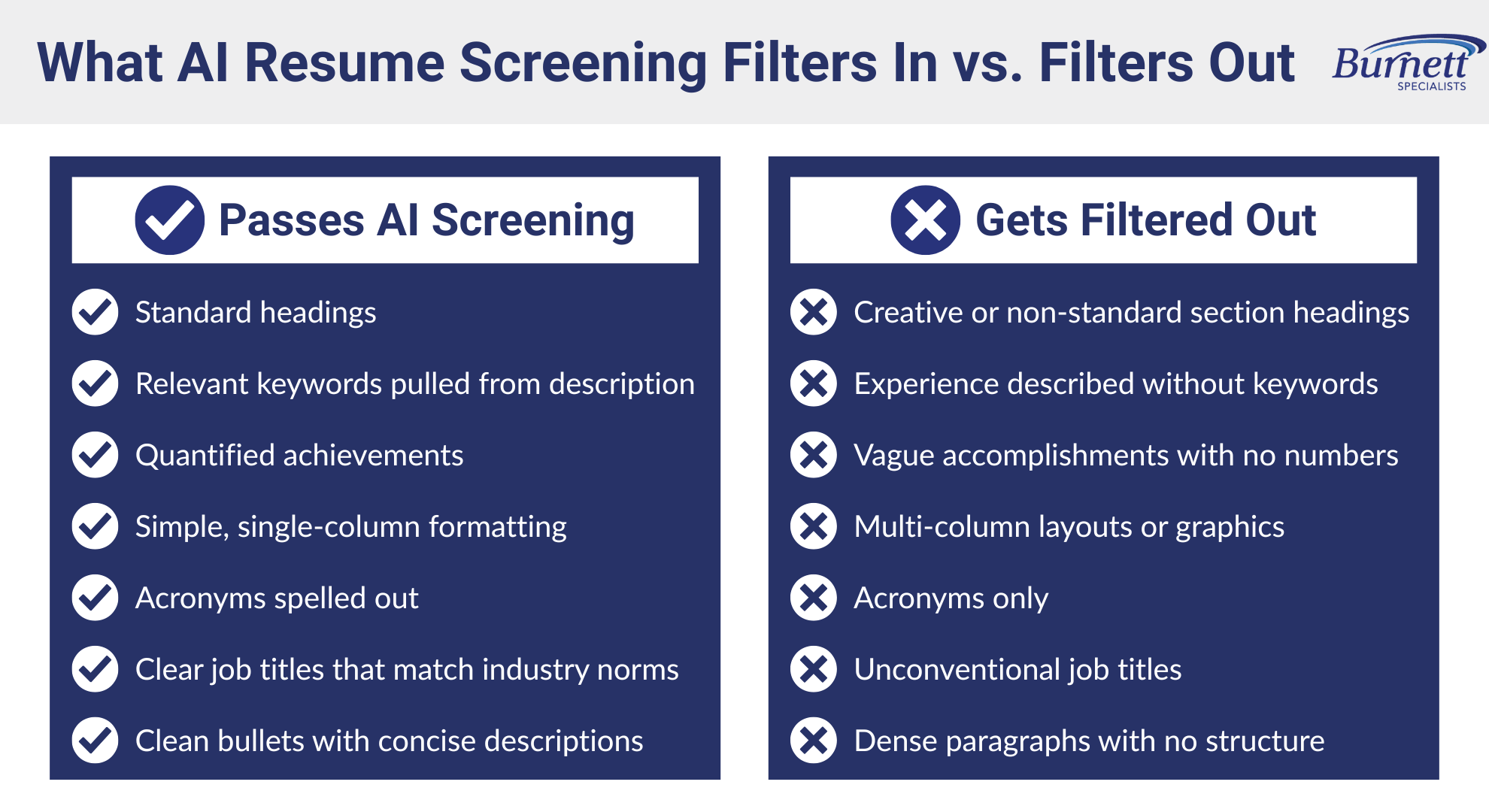
How do candidates ensure their resumes pass AI filters? Candidates should prioritize clarity and standard formatting. Using standard headings like "Work Experience" and "Education" helps the parser. Avoiding complex graphics, tables, or non-standard fonts is essential, as these often break the AI’s ability to read the text correctly.
Is AI screening legally risky? It can be, if left unchecked. Many jurisdictions now mandate that candidates be notified if AI is used in the screening process. You must work with legal counsel to ensure that your tool adheres to local labor laws and provides an audit trail for adverse action decisions.
Does AI screening favor big-name companies and universities? Historically, yes. If the training data contains a bias toward candidates from elite universities, the AI will learn that these candidates are "better." It is vital to use vendors that offer "de-biasing" features, which intentionally ignore school or company brand prestige in favor of skills and task performance.
Next Steps for Implementation
To start integrating AI based resume screening, begin with a pilot program. Select a role with high application volume and low complexity. Run your current manual process in parallel with the AI screening tool for two weeks. Compare the top candidates selected by both methods. If the AI consistently identifies high-quality candidates that your human team would have also selected, you have a baseline for scaling the solution across your organization. Always ensure that your vendor provides an onboarding process that includes training for your recruitment staff on how to interpret and challenge the AI’s rankings.