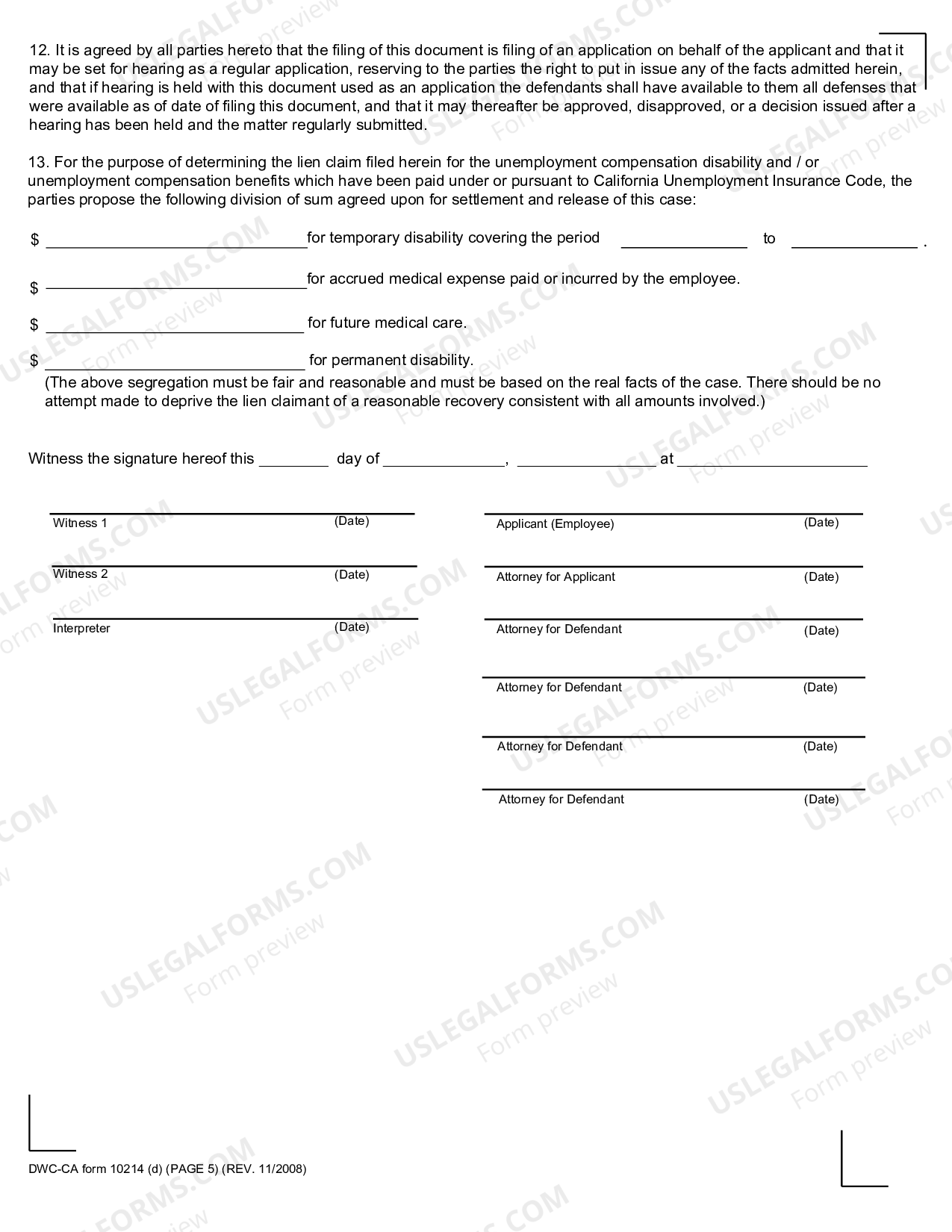
An agreement to release a workers' compensation claim is a legally binding contract where an injured employee agrees to waive their right to future benefits—such as medical care and indemnity payments—in exchange for a negotiated settlement. Once approved by a judge or state board, this agreement typically marks the permanent closure of the case, preventing the worker from seeking additional compensation for the same injury.
In the landscape of 2026 labor law, the workers’ compensation system continues to serve as the primary mechanism for resolving workplace injuries without the need for traditional civil litigation. However, the path to a final resolution often culminates in a formal document known as an "Agreement to Release Workers' Compensation Claim" or a "Compromise and Release" (C&R). This document is more than just a receipt for payment; it is a complex legal instrument that shifts the long-term risk of an injury from the insurance carrier to the individual worker.
Understanding the nuances of these agreements is critical for any claimant, as the decision to sign carries lifelong implications for medical financial security and future disability rights.
The Core Structure of a Settlement Release
When an insurance company or self-insured employer proposes a settlement, they are essentially buying the "release" of their future liability. In most jurisdictions, these agreements fall into two primary categories, though the release language remains the central focus of both.
Compromise and Release (C&R)
The Compromise and Release is the most common form of a final agreement. By signing this, the injured worker accepts a lump-sum payment in exchange for closing out the entirety of their claim. This includes "indemnity" (lost wages) and, most significantly, "future medical care." Once the funds are distributed and the order is signed by a Workers’ Compensation Administrative Law Judge (WCJ), the insurance carrier is no longer responsible for paying for doctors, surgeries, or prescriptions related to that specific injury.
Stipulated Findings and Awards
Unlike a full release, a "stipulation" (often called "Stips") typically keeps the medical portion of the claim open. The parties agree on a permanent disability rating and a payment schedule, but the worker retains the right to have their medical bills paid by the insurance company for the duration of their life, provided the treatment is related to the industrial injury. While this does not "release" the medical liability, it does release the dispute over the degree of disability and the amount of back pay owed.
Mandatory Components of the Release Agreement
As of 2026, state boards require these agreements to be highly standardized to prevent predatory settlement practices. A valid agreement to release a workers’ compensation claim must contain several specific elements to be considered legally enforceable:
- Identity of the Parties: Clear identification of the injured worker, the employer at the time of injury, and the insurance carrier or third-party administrator (TPA).
- Description of the Injury: A precise listing of the body parts or systems involved (e.g., "lumbar spine, radiculopathy to the left leg, and secondary psychological overlay").
- Maximum Medical Improvement (MMI) Status: Most jurisdictions require a medical report stating the worker has reached MMI (or "Permanent and Stationary" status), meaning their condition is not expected to improve significantly with further treatment.
- The Settlement Amount: A breakdown of the total sum, including any "advances" already paid, permanent disability payments, and the "new money" being offered to close medical rights.
- Attorney Fee Disclosure: A clear statement of the percentage and dollar amount being deducted from the settlement to pay for legal representation.
- The Release Clause: Language explicitly stating that the employee is forever waiving their right to reopen the claim, even if their medical condition worsens in the future.
The Role of the Workers' Compensation Board and Judicial Review
One of the unique aspects of workers' compensation law is that a worker cannot simply sign a contract and end the case in a vacuum. Because these claims involve public policy and the prevention of workers becoming "public charges" due to disability, a judge must review the agreement.
The judge’s primary responsibility is to determine if the settlement is "fair and adequate." In 2026, this review process involves an analysis of the medical evidence compared to the settlement amount. If a worker has a catastrophic back injury requiring lifelong surgery and the insurer offers a mere $10,000 to release all medical rights, a judge is likely to reject the agreement as inadequate.
Furthermore, if the worker is "unrepresented" (not having an attorney), the judge will often hold a short hearing to ensure the individual understands that they are giving up their right to free medical care for the rest of their life. This "pro per" review is a safeguard against insurance companies taking advantage of claimants who may not understand the long-term costs of their injuries.
Medicare Set-Asides (MSA) and Federal Compliance
A critical component of any release agreement involving a significant settlement or an older claimant is the Medicare Set-Aside. Under the Medicare Secondary Payer (MSP) Act, Medicare cannot pay for medical services that should have been covered by a workers' compensation settlement.
If a claimant is currently on Medicare or has a "reasonable expectation" of being on Medicare within 30 months, the parties must often perform an MSA analysis. This involves:
- Calculating the projected cost of all injury-related medical care that would otherwise be covered by Medicare over the worker's life expectancy.
- Carving out a specific portion of the settlement funds to be used only for those medical expenses.
- Reporting the exhaustion of those funds to the Centers for Medicare & Medicaid Services (CMS).
If the release agreement fails to account for Medicare’s interests, the worker may find themselves barred from Medicare benefits for their injury-related care later in life.
Comparison: Settlement Types and Their Finality
| Feature | Compromise and Release (C&R) | Stipulated Findings & Award |
|---|---|---|
| Payment Structure | Typically a one-time lump sum. | Periodic payments (weekly/bi-weekly). |
| Future Medical Care | Closed; worker pays for own care. | Open; insurance pays for related care. |
| Ability to Reopen | None; the case is permanently closed. | Possible if condition "newly worsens." |
| Attorney Fees | Deducted from the lump sum. | Deducted from periodic payments. |
| Medicare Involvement | High; requires MSA in many cases. | Low; medical remains the insurer's duty. |
| Best For | Workers wanting a "fresh start" or moving. | Workers needing ongoing, expensive care. |
The "Release" Language: What Are You Actually Giving Up?
When you sign the release, you are not just saying the case is over; you are specifically waiving several distinct legal rights. In 2026, most standardized forms include a "Section 1542" waiver (or the state equivalent) which specifies that the release covers all known and unknown claims.
- Vocational Rehabilitation: You are generally waiving any right to job retraining or education vouchers.
- Death Benefits: If you settle your claim and later die from complications of the injury, your dependents may be barred from seeking death benefits because the claim was fully "released."
- Penalties and Interest: You waive any claim that the insurance company was late on previous payments or acted in bad faith during the life of the claim.
- The Right to Reopen for New and Further Disability: In many states, you normally have five years from the date of injury to reopen a claim if your condition gets worse. A C&R release specifically waives this five-year window.
Strategic Considerations Before Signing
Before agreeing to a release, a claimant must perform a "cost-benefit analysis" of their future medical needs. If the injury involves a chronic condition, such as CRPS (Complex Regional Pain Syndrome) or a failed spinal fusion, the cost of future prescriptions and surgeries can easily exceed hundreds of thousands of dollars.
Insurance companies are often willing to pay a premium to "get the case off their books." This is because an open medical file requires the insurer to maintain financial reserves, pay for administrative oversight, and risk future medical inflation. The settlement amount in a release agreement should reflect not just what is owed now, but a "buyout" of that future administrative headache and medical risk.
Step-by-Step Process to Finalize the Release
- Reach MMI: The doctor must declare that the condition is stable.
- Demand and Negotiation: The worker or their attorney sends a settlement demand based on the value of permanent disability and future medical projections.
- Drafting the Document: The insurance carrier’s attorney usually drafts the "Compromise and Release" form.
- Review and Signature: The worker reviews the terms, specifically checking the "Body Parts" and "Settlement Amount" sections.
- Submission for Approval: The signed document is filed electronically with the state's workers' compensation board.
- The Order Approving: A judge reviews the file. If satisfied, they issue an "Order Approving Compromise and Release."
- Payment: In most jurisdictions, the insurer has 25 to 30 days from the date the judge signs the order to issue the check. Failure to do so may result in penalties.
Common Pitfalls and Risks
The most significant risk in signing a release is the "underestimation of future medical costs." In 2026, with the rising costs of specialized biologics and advanced physical therapy, what seems like a large sum today may be depleted within a few years.
Another pitfall involves "Social Security Disability Insurance (SSDI) offsets." If a worker receives SSDI, a lump-sum workers' compensation settlement can reduce their monthly SSDI check. To prevent this, the release agreement must include "Sciarotta" or "Hartman" language (named after landmark cases) that spreads the lump sum over the worker’s remaining life expectancy for tax and offset purposes. Without this specific legal phrasing, the worker could lose thousands of dollars in federal benefits.
Frequently Asked Questions
Can I reopen my workers' compensation claim after signing a release?
Generally, no. Once a judge has approved a Compromise and Release, the case is considered legally dead. The only very rare exceptions involve proving the settlement was obtained through actual fraud or if there was a mutual mistake of fact (such as a clerical error in the settlement amount). A "change in medical condition" is not a valid reason to reopen a released claim.
Do I have to pay taxes on the settlement money?
No. Under current federal law (Internal Revenue Code Section 104), workers' compensation settlements for physical injuries are tax-exempt. This applies to both the portion for lost wages and the portion for future medical care. However, any interest earned on that money once it is in your bank account is taxable.
What happens if I spend my Medicare Set-Aside money on things other than my injury?
If you mismanage your MSA funds, Medicare may refuse to pay for your injury-related treatments until you can prove that you spent an amount equal to the MSA on valid medical care. It is highly recommended to keep MSA funds in a separate, interest-bearing bank account and keep every receipt for medical expenses.
Will signing a release affect my ability to return to work?
A workers' compensation release is separate from your employment status. However, many insurance companies include a "voluntary resignation" clause as a condition of a large settlement. This means you may have to quit your job to get the settlement. You should check the "Addendum" of the agreement for any language regarding your employment rights.
How long does it take to get the check after I sign?
Signing is only the first step. The document must be approved by a judge. From the moment the judge signs the "Order Approving," most states allow the insurance carrier 30 days to get the check to you. If the check is late, you may be entitled to a 10% to 25% penalty on the settlement amount.
Final Recommendations
An agreement to release a workers’ compensation claim is a powerful tool for closure, but it is not without peril. Before signing, ensure that you have a comprehensive medical report that accurately reflects your future needs. If your injury is severe enough to require lifelong medication or potential future surgery, consider whether the immediate liquidity of a lump sum outweighs the security of an "open medical" stipulation.
If you are unrepresented, it is strongly advised to consult with a qualified workers' compensation attorney to review the release language. A simple mistake in how the "body parts" are described or the omission of Social Security offset language can result in significant financial loss. In 2026, as the legal environment continues to favor complex settlements, professional verification of any release agreement is the most effective way to protect your long-term interests.