The AARP organization does not offer a free life insurance policy to its members. While AARP provides access to life insurance programs through a partnership with the New York Life Insurance Company, these are premium-based products. Members may be eligible for specific discounts, educational resources, or specialized coverage plans, but all active insurance policies require the payment of regular premiums to maintain coverage.
The Reality of Membership Benefits and Insurance
It is common for individuals to encounter marketing materials or online discussions suggesting that AARP provides free life insurance. This confusion often stems from the distinction between "membership benefits" and "insurance products." As an organization, AARP (formerly the American Association of Retired Persons) offers members access to a wide array of discounts on services such as travel, car rentals, and health-related products.
However, life insurance operates under a strictly regulated financial model. Life insurance companies—including the New York Life Insurance Company, which serves as the carrier for AARP-branded products—must collect premiums to manage the risk pool and ensure the ability to pay death benefits to beneficiaries. There is no mechanism within the current AARP member benefit structure that facilitates a standard, no-cost life insurance policy. If you see advertisements claiming a "free" policy, these are typically misleading marketing hooks for life insurance products that require monthly or annual payments.
Relationship Between AARP and New York Life
AARP acts as a sponsor and a facilitator rather than an insurance underwriter. The programs marketed as "AARP Life Insurance" are fully underwritten, issued, and administered by the New York Life Insurance Company.
This partnership is designed to provide members with access to group-rate insurance products that are often tailored for older adults. Because these products are group-negotiated, they may offer specific features that are not always available on the open market, such as simplified underwriting or guaranteed acceptance options. Nevertheless, the legal contract for any policy is between the individual member and New York Life, not between the member and AARP itself. When evaluating these products, you are entering a financial agreement with an insurance company, which mandates strict adherence to premium payment schedules.
Types of Coverage Available Through AARP
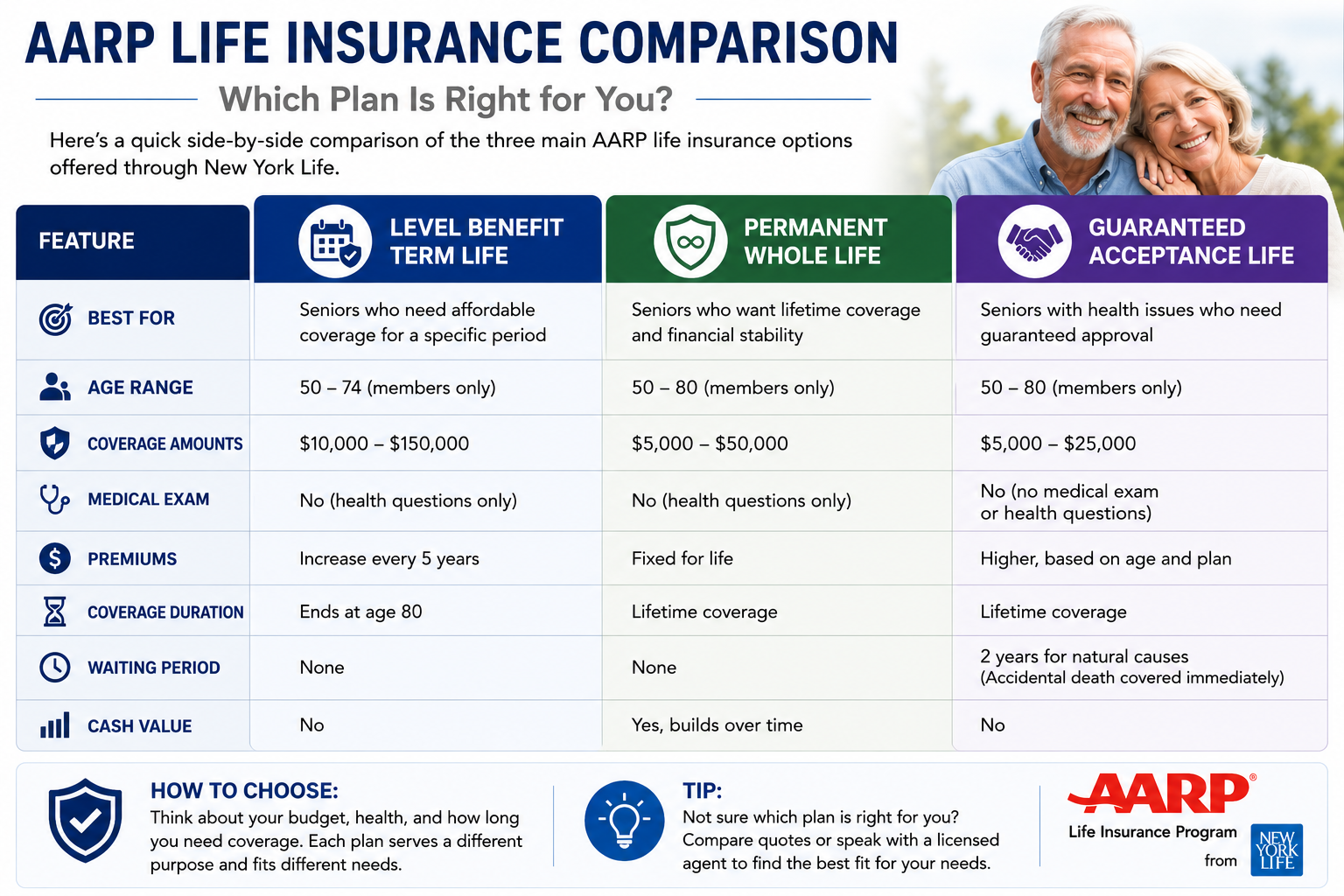
While "free" policies do not exist, the AARP-branded programs offer several distinct types of life insurance. Understanding these categories is essential for determining which product, if any, aligns with your financial planning goals.
1. Term Life Insurance
Term life insurance provides coverage for a specific period, such as 10 or 20 years. If the policyholder passes away during this "term," the beneficiaries receive a death benefit. These policies are generally the most affordable way to secure a high death benefit for a fixed period. They do not accumulate cash value and expire if the policyholder outlives the term.
2. Permanent Life Insurance (Whole Life)
Whole life insurance is designed to provide coverage for the remainder of the policyholder’s life, provided premiums are paid. These policies often include a cash value component that grows over time. Because these policies offer lifelong coverage and a savings element, the premiums are significantly higher than those of term policies.
3. Guaranteed Acceptance Life Insurance
This is a specific type of permanent life insurance intended for individuals who might not qualify for standard coverage due to health conditions. Because it often requires no medical exam and has limited health questions, the premiums can be higher, and there are often "graded death benefit" clauses, where the full death benefit is only paid out if the policyholder survives for a set period after the policy issuance (typically two years).
Financial Considerations and Premiums
Because life insurance is a financial product, your costs will be determined by several personal factors. It is critical to perform a cost-benefit analysis before committing to any policy.
- Age at Enrollment: As with most insurance, your age at the time of application significantly impacts the premium. Applying earlier in life generally results in lower monthly costs.
- Coverage Amount: The death benefit, or the total amount paid to your beneficiaries, directly influences the premium. A larger benefit requires a higher premium.
- Policy Type: Whole life insurance, which builds cash value and lasts a lifetime, will always cost more than term insurance for the same death benefit amount.
- Health and Lifestyle: While some AARP-branded products are designed to be "simplified issue," other products may require a health questionnaire or medical history review. Smokers or those with significant pre-existing conditions may face higher premiums compared to healthier applicants.
Comparison of AARP-Branded Product Characteristics
| Feature | Term Life | Whole Life | Guaranteed Acceptance |
|---|---|---|---|
| Duration | Fixed Term | Lifetime | Lifetime |
| Cash Value | No | Yes | Usually Limited |
| Medical Exam | Sometimes Required | Varies | Not Required |
| Premium Status | Fixed during term | Fixed | Fixed |
| Best For | Temporary needs | Permanent estate planning | Difficult health profiles |
How to Verify Information and Avoid Scams
The insurance industry is often a target for bad actors. Because of the prestige of the AARP brand, scammers sometimes create websites that mimic legitimate portals to harvest personal or financial information under the guise of offering "free" insurance.
To ensure you are interacting with a legitimate policy provider:
- Access the official website directly: Always type the AARP or the New York Life Insurance Company URL directly into your browser. Never click links in unsolicited emails or text messages.
- Verify the carrier: Confirm that the policy information you are viewing leads to the official New York Life portal for AARP-branded products.
- Check for licensing: Insurance agents and companies must be licensed by the state in which you reside. You can verify a company’s status through your state’s Department of Insurance.
- Avoid pressure tactics: Legitimate insurance providers will provide documents for your review and will not pressure you into signing up for a "free" trial or an instant-approval policy without proper documentation.
The Role of Life Insurance in Estate Planning
When considering whether to purchase life insurance through AARP, it is helpful to step back and assess your overall financial picture. Life insurance is not a one-size-fits-all solution; it is a tool meant to address specific financial vulnerabilities.
For many older adults, life insurance is used to cover final expenses, such as funeral costs, burial, or cremation. For others, it is used to provide liquidity for heirs to pay off a mortgage or cover estate taxes. Before purchasing, calculate your potential final expenses and evaluate if your existing assets—such as savings, investments, or pension benefits—are sufficient to cover your needs. If your existing coverage or savings are adequate, you may not need to add the monthly expense of a new life insurance policy.
Next Steps for Interested Members
If you are an AARP member and wish to explore your insurance options, follow these professional steps to ensure you are making an informed decision:
- Evaluate Current Coverage: Review any existing life insurance policies you may have through a former employer or private purchase. Determine if they are sufficient for your current financial situation.
- Request a Quote: Visit the official AARP life insurance page to use their calculator or request a quote for your specific age and profile. This will give you a clear view of the actual monthly premium, not a theoretical estimate.
- Consult with a Financial Advisor: If you are unsure about the role of a permanent life insurance policy in your portfolio, consult a fee-only financial planner. They can help you determine if the premiums are a wise use of your discretionary income.
- Read the Policy Exclusions: Before signing any contract, ask for a "specimen policy." Read the exclusions section carefully to understand the circumstances under which the death benefit would not be paid.
Ultimately, while the idea of a free policy is appealing, AARP's life insurance offerings are standard financial products. They provide members with access to reputable carriers, but they function exactly like any other insurance policy: as a contractual agreement requiring regular payment in exchange for a death benefit.
Frequently Asked Questions
Does AARP offer a free life insurance policy for its members?
No. There is no program that provides free life insurance to AARP members. All insurance products made available through the AARP program require the payment of premiums.
Why do some advertisements say AARP offers free insurance?
These are typically deceptive marketing tactics used by lead-generation websites. They use the AARP name to gain credibility, but they are not affiliated with the official AARP insurance programs and often lead to high-pressure sales calls.
Can I get life insurance through AARP if I have a pre-existing medical condition?
Yes. The partnership includes "Guaranteed Acceptance" life insurance options. These products are specifically designed for those who might not qualify for standard plans, though they often come with higher premiums and specific benefit limitations.
Is the insurance underwritten by AARP?
No. AARP is not an insurance company. The policies are underwritten and issued by the New York Life Insurance Company. You should direct all questions regarding claims, underwriting, and policy status to New York Life.
Can I cancel my AARP-branded life insurance policy?
Yes. Like most standard life insurance policies, you can cancel your coverage at any time. However, you should review your policy documents to understand the impact on any accumulated cash value or potential surrender charges before cancelling.