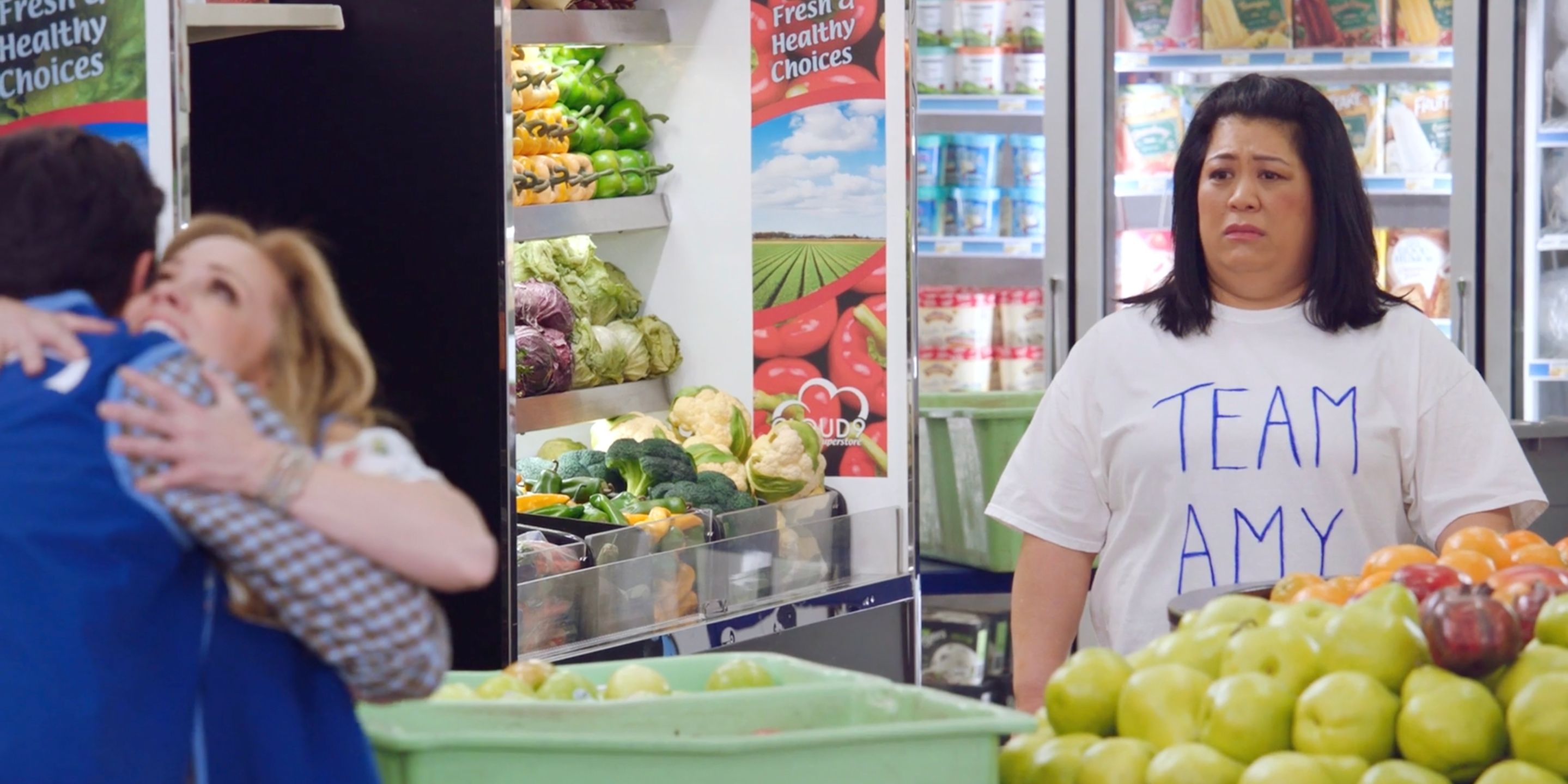
America Ferrera is the acclaimed actress and producer who portrayed Amy Sosa, the central protagonist of the NBC workplace comedy Superstore. Throughout the series' six-season run from 2015 to 2021, Ferrera’s performance and behind-the-scenes influence as an executive producer defined the show’s grounded exploration of American working-class life and corporate satire.
For fans and media scholars alike, "Amy from Superstore" represents more than just a sitcom lead; she is a case study in the evolution of the modern television protagonist. To understand America Ferrera in the context of Superstore, one must examine her dual role as the show’s emotional anchor and a creative architect who insisted on a realistic portrayal of socio-economic struggles. By 2026, her tenure on the show is viewed as a pivotal bridge between her early breakout success in Ugly Betty and her later status as an Academy Award-nominated film actress and influential director.
The Character of Amy Sosa: From Cynicism to Leadership
Amy Sosa (initially Amy Dubanowski) began the series as a floor supervisor at the fictional Cloud 9 big-box store in St. Louis, Missouri. Unlike many sitcom characters who are defined by their quirks, Amy was defined by her competence and her weariness. Having started at the store as a teenager while pregnant, her identity was deeply tied to the "grind" of retail survival.
Pragmatism vs. Idealism
The core narrative engine of Superstore was the friction between Amy’s pragmatism and the wide-eyed idealism of Jonah Simms (Ben Feldman). While Jonah viewed the store through the lens of social theory and potential reform, Amy viewed it as a place where she had to survive to provide for her daughter, Emma. This context is essential because it moved the show away from "zany" workplace tropes and into the realm of social commentary. Ferrera played Amy with a restrained intensity, making her occasional outbursts of frustration or joy feel earned.
The Career Arc: Breaking the Retail Ceiling
One of the most significant aspects of Amy’s character arc was her transition from the floor to management, and eventually to a corporate position at Zephra (the company that acquired Cloud 9). This transition was controversial among the show's fan base because it placed Amy in the position of the "oppressor" she once mocked. However, in the context of the series' commitment to realism, it highlighted the complex choices working-class individuals must make when offered a path to financial stability at the cost of their perceived solidarity with coworkers.
America Ferrera’s Influence as Executive Producer
It is impossible to discuss Ferrera’s role in Superstore without acknowledging her work behind the camera. As an executive producer, she had a significant hand in the show's casting, tone, and thematic direction.
Authenticity in Diversity
Ferrera was vocal about ensuring that the diversity of the Superstore cast did not feel like a "diversity initiative" but rather a reflection of the actual workforce in a Midwestern city. The show featured a diverse array of characters—including Mateo Liwanag (an undocumented immigrant), Garrett McNeill (a Black man in a wheelchair), and Cheyenne Thompson (a young mother)—whose stories were handled with nuance rather than stereotypes.
Addressing Systemic Issues
Under Ferrera’s leadership, Superstore tackled subjects that were often considered "too heavy" for half-hour comedies:
- Immigration and ICE: The storyline involving Mateo’s detention by ICE remains one of the most harrowing and discussed arcs in modern sitcom history.
- Labor Rights and Unionization: The show dedicated multiple seasons to the characters' attempts to organize, illustrating the brutal tactics used by corporations to suppress unions.
- Healthcare and Parental Leave: The episode where Amy is forced to return to work just two days after giving birth because she cannot afford to lose her job is a stark critique of American labor laws.
The Context of Ferrera’s Career Trajectory
In 2026, looking back at Ferrera's career, Superstore serves as the centerpiece of a "middle period" where she transitioned from a teen icon to a powerhouse industry leader.
From "Ugly Betty" to Cloud 9
Before Superstore, Ferrera was primarily known for Ugly Betty (2006–2010), a role that won her an Emmy. While Betty Suarez was an underdog trying to break into the world of high fashion, Amy Sosa was an underdog simply trying to survive the mundane. The shift from the heightened, colorful world of Ugly Betty to the fluorescent, drab reality of Superstore demonstrated Ferrera's range and her desire to tell stories rooted in the lived experience of everyday people.
The "Barbie" Shift and Post-Superstore Success
Ferrera's departure from Superstore in Season 6 was a turning point. She left to pursue other creative ventures, including her directorial debut and her iconic role in the 2023 Barbie movie. Her "monologue" in Barbie—which addressed the impossible contradictions of being a woman—echoed many of the themes she explored as Amy Sosa. By 2026, her work is recognized for a consistent thread: advocating for the dignity of women and marginalized communities in spaces that often deny them that dignity.
Comparative Analysis: Amy Sosa vs. Other Notable Roles
To fully understand the "actress in context," it is helpful to compare her performance in Superstore with her other era-defining roles.
| Feature | Amy Sosa (Superstore) | Betty Suarez (Ugly Betty) | Gloria (Barbie) |
|---|---|---|---|
| Primary Motivation | Economic stability and family | Career ambition and self-worth | Maternal connection and societal truth |
| Tone of Performance | Grounded, cynical, weary | Earnest, optimistic, comedic | Relatable, intellectual, soulful |
| Social Context | Working-class retail struggle | High-fashion elitism | Modern patriarchal pressures |
| Outcome | Becomes a corporate executive | Becomes a successful editor | Sparks a revolution in "Barbieland" |
| Key Relationship | Jonah Simms (Equal/Partner) | Daniel Meade (Mentor/Friend) | Sasha (Mother/Daughter) |
The Impact of Ferrera’s Departure and Return
America Ferrera’s exit in the second episode of Season 6 was a major disruption for the series. The "context" of her absence allowed the show to explore how the store functioned without its moral center, but it also highlighted how much of the show’s DNA was tied to her presence.
The writers handled her exit by having Amy take a high-level corporate job in California. This was a logical conclusion to her character’s desire for "something more," but it left a void in the store's social ecosystem. Her return for the series finale in 2021 provided the closure fans needed, reconciling her relationship with Jonah and reaffirming that while she had "made it out," her heart remained with the community she left behind.
Why "Superstore" Remains Relevant in 2026
Five years after its conclusion, Superstore continues to find new audiences through streaming. The context of America Ferrera’s performance has only gained weight as global conversations about "essential workers," wage gaps, and automation have intensified.
Amy Sosa was the quintessential essential worker before the term entered the common lexicon. Ferrera’s ability to portray the exhaustion of a double shift, the frustration of a "customer is always right" policy, and the small joys found in the breakroom has made the show a timeless piece of labor-themed media.
Technical Specifications of Ferrera's Involvement
For those analyzing the show from a production standpoint, Ferrera's involvement was comprehensive:
- Episodes Credited: She appeared in 103 of the 113 episodes.
- Directorial Credits: She directed several key episodes, including "Mateo's Last Day" and "Video Game Release," showing her early aptitude for the director's chair.
- Executive Producer Status: Unlike some "vanity" credits, Ferrera was actively involved in script notes and casting decisions from the pilot onward.
Frequently Asked Questions
Why did America Ferrera leave Superstore?
America Ferrera left Superstore at the beginning of Season 6 to pursue new creative challenges and spend more time with her family. Her departure was amicable, and she remained an executive producer for the remainder of the series. She famously returned for the final two episodes to ensure the series had a proper emotional conclusion.
Is Amy Sosa based on a real person?
While Amy Sosa is a fictional character, she was designed to represent the millions of retail workers in America. The show’s writers, including creator Justin Spitzer, conducted extensive research and hired consultants with retail experience to ensure Amy’s daily struggles with scheduling, benefits, and corporate "compliance" were as accurate as possible.
How did America Ferrera’s role in "Barbie" relate to "Superstore"?
Many critics noted that Gloria in Barbie felt like an evolution of Amy Sosa. Both characters are grounded women dealing with the frustrations of living in systems (corporate retail vs. patriarchal society) that don't always value them. The "real-world" exhaustion Ferrera perfected as Amy provided the perfect foundation for her role in the Barbie universe.
What is America Ferrera's net worth in 2026?
While exact figures are private, financial analysts in 2026 estimate Ferrera’s net worth to be significant, stemming from her long-running TV lead roles, her executive production deals, and her high-profile film work. However, she is equally known for her "human capital"—her influence as a founder of organizations like "Harness," which focuses on social justice and civic engagement.
Will there be a Superstore reboot or spin-off?
As of 2026, there have been no official confirmations of a Superstore reboot. While a spin-off titled Bo & Cheyenne was in development shortly after the show ended, it did not move forward. Ferrera has expressed pride in the way the series ended, suggesting that a revival might only happen if there is a compelling new story to tell about the state of labor.
Practical Recommendation for Viewers
To fully appreciate America Ferrera’s performance, it is recommended to watch the series chronologically rather than as a "background show." Pay close attention to her non-verbal reactions during store meetings; Ferrera often uses small facial cues to communicate Amy's internal conflict between her role as a supervisor and her loyalty to her friends.
Furthermore, for those interested in the industry side, watching the episodes Ferrera directed provides insight into her visual storytelling style, which often focuses on the "human scale" amidst the overwhelming environment of a warehouse-style store.