AARP life insurance products are exclusively underwritten by the New York Life Insurance Company, which currently maintains some of the highest financial strength ratings in the industry. As of 2026, New York Life holds an A++ (Superior) rating from A.M. Best, reflecting a "platinum-level" ability to meet ongoing insurance obligations and pay death benefits to policyholders.
Understanding the ratings associated with AARP life insurance requires a dual perspective: evaluating the financial stability of the insurer, New York Life, and examining the consumer satisfaction metrics specifically tied to the AARP program. Because AARP is a non-profit advocacy group and not an insurance carrier, it partners with New York Life to provide its members with specialized products. For a consumer, these ratings serve as a proxy for the security of their investment and the reliability of the claims process during a difficult time.
The Relationship Between AARP and New York Life
To accurately interpret ratings for "AARP Life Insurance," one must first recognize the structural relationship between the entities. The AARP Life Insurance Program is a branded service provided through the AARP Life Insurance Trust. However, the actual insurance contract is a legal agreement between the policyholder and the New York Life Insurance Company.
New York Life is one of the largest mutual life insurance companies in the United States. This "mutual" status is significant because the company is owned by its policyholders rather than outside shareholders. From a ratings perspective, this often correlates with a more conservative investment strategy and a long-term focus on solvency, which rating agencies favor. For AARP members, this partnership means their policies are backed by one of the most financially sound institutions in the global financial sector.
Financial Strength Ratings: The Core Indicators
Financial strength ratings (FSRs) are opinions provided by independent agencies regarding an insurer's ability to pay back its debts and meet its policy obligations. For life insurance, where a policy might remain active for 30 or 40 years, these ratings are the most critical metric for long-term planning.
A.M. Best: The Gold Standard for Insurance
A.M. Best specializes specifically in the insurance industry. As of 2026, New York Life continues to hold the A++ (Superior) rating. This is the highest possible grade on a scale of 13. It indicates that the company has an excellent balance sheet, a strong operating performance, and a very favorable business profile. When you see an A++ rating, it signifies that the insurer is exceptionally well-positioned to weather economic downturns without compromising its ability to pay death benefits.
Standard & Poor’s (S&P) Global
S&P Global Ratings provide an assessment of the general creditworthiness of an obligor. New York Life currently carries an AA+ (Very Strong) rating from S&P. In the context of 2026 market conditions, this rating highlights New York Life's robust capitalization. Only a handful of life insurers in the United States maintain a rating this high, placing the AARP-branded products in the top tier of financial security.
Moody’s Investors Service
Moody’s focuses on the long-term credit risk of the company’s debt securities. For 2026, New York Life holds an Aaa rating from Moody’s, which is the highest "investment grade" rating available. Moody’s emphasizes the company's "extraordinary" financial flexibility and its dominant position in the individual life insurance market. For AARP members, this means the risk of the company defaulting on its promises is considered minimal to non-existent.
Fitch Ratings
Fitch Ratings evaluates the "Insurer Financial Strength" (IFS). New York Life maintains an AAA rating from Fitch. This denotes the lowest expectation of ceased or interrupted payments. Fitch often points to the company’s diverse product lines and its massive distribution network as key factors in its stability.
| Agency | 2026 Rating | Rating Category |
|---|---|---|
| A.M. Best | A++ | Superior |
| S&P Global | AA+ | Very Strong |
| Moody's | Aaa | Exceptional |
| Fitch Ratings | AAA | Exceptionally Strong |
Consumer Satisfaction and Complaint Indices
While financial ratings tell you if the company can pay, consumer satisfaction ratings tell you if the company wants to make the process easy for you. These metrics are gathered from third-party surveys and regulatory filings.
J.D. Power Rankings
The J.D. Power U.S. Individual Life Insurance Study is a primary benchmark for customer experience. In the 2025 and 2026 reporting cycles, New York Life (and by extension, the AARP program) consistently ranks in the top quartile. Key areas of high performance include the application process and clarity of communication. Because many AARP products offer "simplified issue" or "guaranteed acceptance" (meaning no medical exam), the speed of approval is a significant contributor to these high scores.
NAIC Complaint Index
The National Association of Insurance Commissioners (NAIC) tracks consumer complaints filed with state insurance departments. A "1.00" score represents the national average. If a company has a score of 0.50, it has half as many complaints as the average company of its size.
- New York Life’s Individual Life Index: Historically, New York Life maintains an index significantly lower than 1.00 (often ranging between 0.10 and 0.25).
- AARP Program Specifics: Complaints specific to the AARP program often revolve around the escalating costs of "term" policies as members age, rather than the denial of valid claims.
Better Business Bureau (BBB)
New York Life is an accredited business with the BBB and maintains an A+ rating. While the BBB is often a venue for grievances, the volume of complaints against New York Life is remarkably low relative to its millions of active policies. Most resolved issues involve administrative delays or misunderstandings regarding the "graded death benefit" period common in guaranteed-issue policies.
Evaluating Product-Specific Ratings
The "rating" of the AARP program can also be viewed through the lens of the products offered. Not all AARP policies are rated equally in terms of consumer value, even if the financial backing is identical.
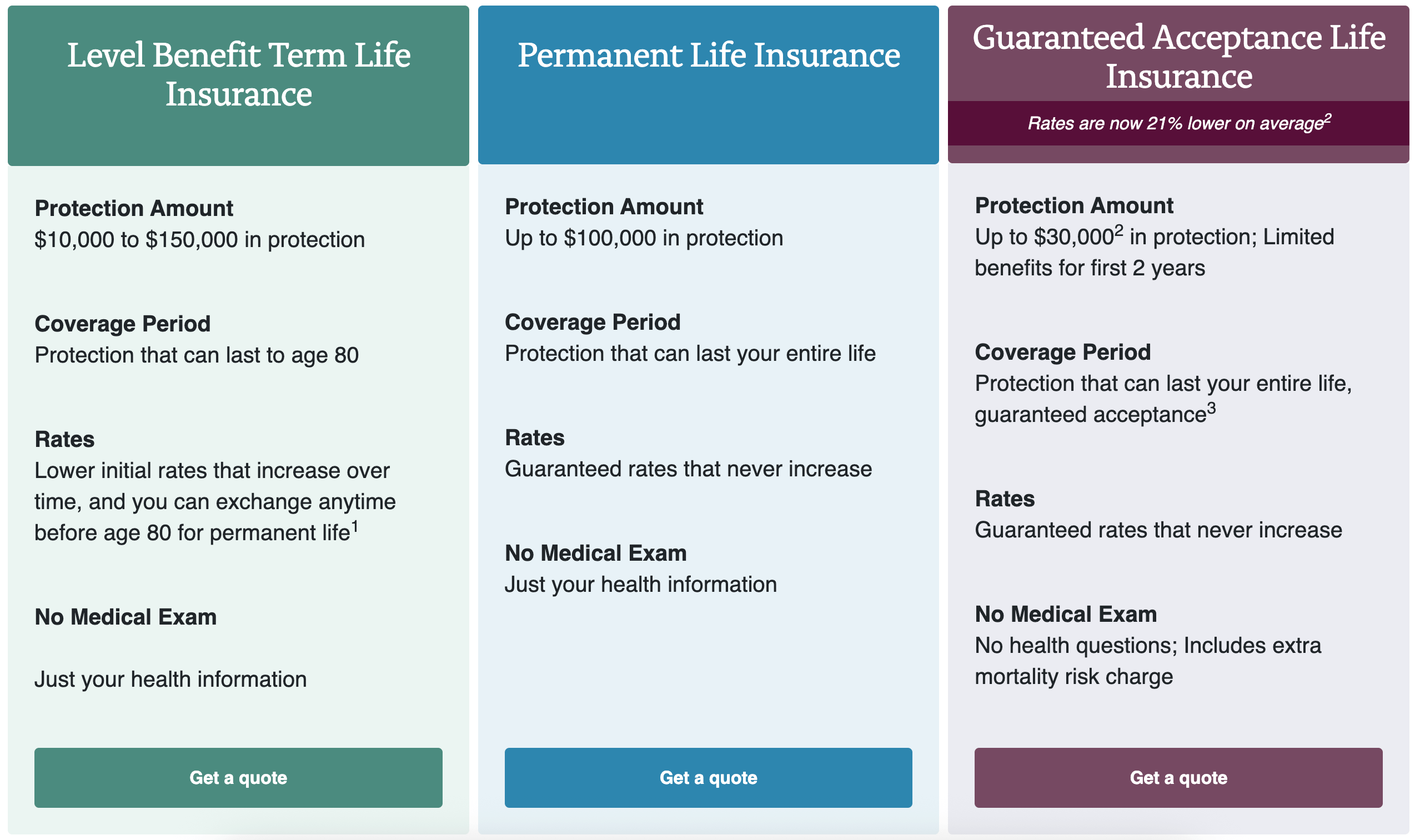
AARP Level Benefit Term Life
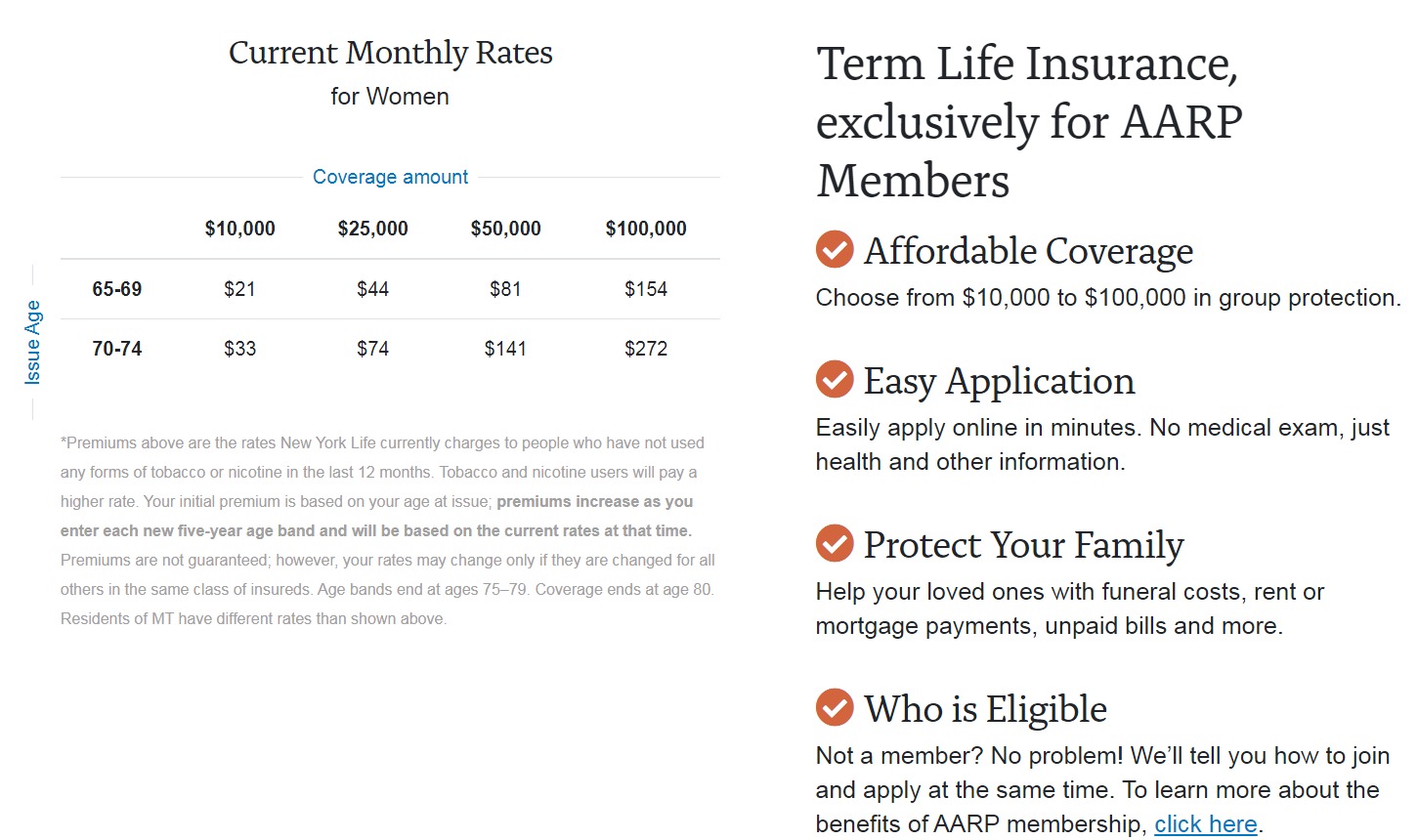
This is the most popular product among younger AARP members (ages 50–74). While backed by New York Life’s A++ financial strength, consumer advocates often rate this product lower in terms of "long-term value." The premiums increase every five years as the policyholder enters a new age bracket. For a 50-year-old, the rating for affordability is high; for a 75-year-old, it decreases significantly.
AARP Permanent Life Insurance
This product offers a fixed premium and builds cash value. In terms of "product stability," it receives high marks. Because the premium never changes, it provides a level of certainty that term products lack. From a technical standpoint, the cash value accumulation is backed by New York Life's general account, which is subject to the same high financial ratings mentioned previously.
AARP Guaranteed Acceptance Life Insurance
Designed for those with health issues, this policy requires no medical exam and asks no health questions. While the financial rating of the insurer remains A++, the "value rating" for this product is nuanced. It includes a two-year waiting period (graded death benefit). If the insured dies within the first two years of natural causes, the beneficiaries receive only the premiums paid plus interest.
Why High Ratings Matter for Seniors in 2026
In the current economic climate of 2026, where market volatility and inflation remain concerns for those on fixed incomes, the ratings of an insurance provider are more than just letters on a page.
- Claims-Paying Ability: For seniors, life insurance is often the primary vehicle for covering final expenses (funeral costs, small debts). A company with a "Superior" rating ensures that these funds are liquid and available exactly when the family needs them, without the risk of the insurer being tied up in insolvency proceedings.
- Policy Dividends: As a mutual company, New York Life may pay dividends to its whole-life policyholders. High financial ratings are a leading indicator of the company’s ability to generate a surplus that can be shared with policyholders. While not guaranteed, New York Life has a long history of annual dividend payments.
- Inflation Protection: Strong insurers are better equipped to offer riders or policy increases that help death benefits keep pace with the rising cost of living. A poorly rated company may lack the capital reserves to offer such features competitively.
Limitations and Considerations
Despite the top-tier ratings, the AARP Life Insurance program is not a "one-size-fits-all" solution. It is important to distinguish between the financial strength of the company and the competitiveness of the price.
- Group Pricing vs. Individual Underwriting: AARP policies are a form of group insurance. Healthy individuals who are willing to undergo a medical exam can often find lower premiums through a fully underwritten individual policy from a company with equally high ratings (like Northwestern Mutual or MassMutual).
- Age Caps: AARP term coverage typically ends at age 80. A high rating does not help if the coverage expires before the policyholder does. Users should verify that the term length aligns with their life expectancy.
- The "AARP Brand" Premium: Some of the premium cost goes toward AARP’s marketing and administrative fees. While you are paying for the convenience and the "trusted" name, you are occasionally paying a higher price than you would for a non-branded New York Life policy.
Verification of Ratings
Ratings are not static. To verify the most current status of AARP/New York Life ratings in 2026, consumers should consult the following authoritative sources:
- A.M. Best Consumer Center: Search for "New York Life Insurance Company" to see the latest credit reports.
- NAIC Consumer Insurance Search Tool: Use this to check the complaint index for the previous three years.
- New York Life Investor Relations: The company publishes its latest agency reports and financial statements here.
FAQ
What is the current A.M. Best rating for New York Life?
As of 2026, New York Life holds an A++ (Superior) rating from A.M. Best. This is the highest possible rating, indicating an exceptional ability to meet ongoing insurance obligations. This rating applies to all life insurance products sold through the AARP Life Insurance Program.
How does AARP life insurance compare to other senior-focused providers?
Compared to other providers like Colonial Penn or Globe Life, AARP (New York Life) generally holds higher financial strength ratings. While Colonial Penn often holds an "A" or "A-" rating, the "A++" of New York Life offers a higher level of institutional security. However, AARP may have stricter age limits on certain term products compared to competitors.
Does AARP offer the best rates based on these ratings?
Not necessarily. High financial ratings indicate safety, not necessarily the lowest price. Because AARP products often skip the medical exam, they carry "simplified" pricing, which is usually more expensive than a policy for someone who can prove they are in excellent health through a medical exam.
Where can I find the NAIC complaint ratio for AARP life insurance?
The NAIC complaint ratio is listed under New York Life Insurance Company (NAIC Group Code 0826). You can find this on the NAIC’s official website. A ratio below 1.00 indicates fewer complaints than the industry average, which New York Life consistently maintains.
Are these ratings updated annually?
Yes, major agencies like A.M. Best and S&P Global typically review an insurer's financial performance once per year. However, they can issue "rating actions" (upgrades, downgrades, or outlook changes) at any time if a significant financial event occurs.
What happens if New York Life’s rating drops?
A minor drop (e.g., from A++ to A+) would have little to no impact on your current policy. However, if a rating drops into the "B" category (vulnerable), it may be a sign of financial instability. Because New York Life is a massive, highly capitalized mutual company, such a drastic drop is considered highly unlikely by market analysts in 2026.
Summary and Next Actions
The ratings for AARP life insurance are among the best in the industry, primarily because the policies are issued by New York Life. With A++ ratings from A.M. Best and Aaa ratings from Moody’s, policyholders can have high confidence that their death benefits will be paid.
Recommended Next Actions:
- Assess Your Health: If you are in excellent health, compare AARP’s "no-exam" rates with a fully underwritten policy from another A-rated carrier to ensure you aren't overpaying for the convenience.
- Review the Term Limits: If you are considering the Level Benefit Term Life, check the premium increases at ages 60, 65, 70, and 75 to ensure the policy remains affordable as you age.
- Confirm Membership: Remember that you must be an active AARP member to apply and maintain these specific policies. Ensure your membership is current before beginning the application process.