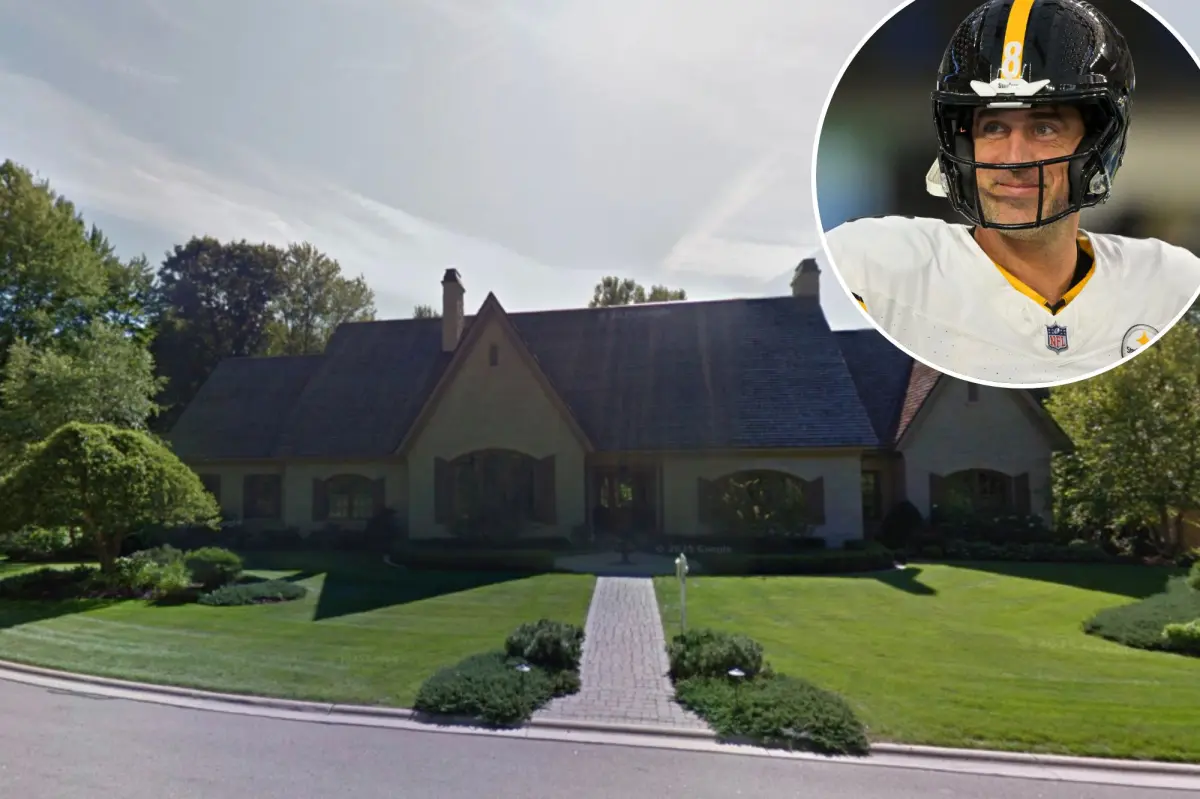
The search for "Aaron Rodgers Hobart house details" typically stems from public interest in the off-season living arrangements of the veteran NFL quarterback. While Rodgers has been associated with various high-profile properties throughout his career in Green Bay, New York, and beyond, the inquiry regarding a "Hobart house" refers to a specific property in the village of Hobart, Wisconsin, located just outside the Green Bay area. This property gained public attention due to its proximity to his former team’s facilities and the broader conversation surrounding his real estate portfolio during his tenure with the Green Bay Packers.
Geographic and Regional Context of Hobart, Wisconsin
To understand the relevance of a residence in Hobart, one must first look at the geography of the Green Bay metropolitan area. Hobart is a village situated in Brown County, Wisconsin, immediately adjacent to the village of Ashwaubenon, where Lambeau Field—the home stadium of the Green Bay Packers—is located.
For professional athletes playing in Green Bay, finding real estate in the surrounding municipalities is a common practice. Unlike players in larger coastal markets who might reside in high-rise condominiums or dense urban centers, NFL players in Wisconsin often opt for properties in these peripheral villages. These locations offer a blend of privacy, access to expansive acreage, and relatively quick transit to team practice facilities. The interest in a "Hobart house" reflects this trend of athletes seeking semi-rural or suburban comfort within the specific logistical constraints of their team’s headquarters.
Historical Significance of the Property
The property in Hobart associated with Aaron Rodgers was often cited by local reporting and real estate news during his extended tenure with the Packers. It served as a primary residence for several years, distinguishing itself from other temporary or secondary housing options.
While public records in Wisconsin are generally accessible, the specific details regarding the interior layout, square footage, and architectural features of high-profile residences are often maintained as private matters. However, public interest often centers on the lifestyle implications of such properties: the ability to host teammates, the presence of specific amenities like fitness facilities or custom training spaces, and the degree of insulation from the surrounding community. For a professional quarterback, a home in a location like Hobart provided the necessary environment to focus on recovery and film study during the demanding NFL season.
Real Estate Trends for NFL Athletes
The inquiry into a player’s residence often highlights a broader curiosity regarding how professional athletes manage their wealth and lifestyle through real estate. When looking at the characteristics of a high-end property in a market like Wisconsin, several factors typically define the "details" that fans and analysts find compelling:
- Accessibility and Logistics: The primary requirement for a home near a professional facility is travel time. Being within a 15-to-20-minute drive of the training complex is a standard benchmark for most players to manage the early-morning and late-evening demands of the NFL schedule.
- Privacy and Security: High-profile individuals require homes that offer significant set-backs from main roads, long driveways, and natural landscaping that acts as a visual barrier. In rural-suburban areas like Hobart, this is more easily achieved than in dense city blocks.
- Customization for Performance: Professional athletes often commission or purchase homes with specific "athlete-centric" features. This includes professional-grade gymnasiums, hydrotherapy tubs, specialized nutrition kitchens, and media rooms for game film analysis.
- Long-term Asset Management: Athletes often view their residential properties as long-term investments. Managing a portfolio of homes across different states allows them to maintain stability despite the inherent mobility of a professional sports career.
Comparative Overview of Residential Requirements
To understand the scale and nature of the Hobart property, it is useful to compare it against the typical requirements of an NFL athlete's living space. The following table outlines how location, size, and amenities generally factor into a professional player's decision-making process.
| Feature | Importance for NFL Athletes | Typical Considerations in Wisconsin |
|---|---|---|
| Proximity | High | 10–20 minute drive to practice facility |
| Privacy | Extreme | Acreage, gated entries, heavy tree lines |
| Utility | High | Backup power, high-speed fiber internet |
| Training Space | Moderate | Dedicated home gym or recovery room |
| Resale Value | Moderate | Resale potential to other athletes/coaches |
Navigating Public Interest and Privacy
It is important to address why specific details about properties like the Hobart house are frequently sought but rarely detailed in official biographies. The intersection of public celebrity and private residency creates a boundary that most professional athletes protect with significant rigor.
When searching for "details" regarding a player's home, readers often encounter a mix of architectural speculation, tax assessment data, and anecdotal reports from neighbors. While tax records in Wisconsin provide information on the valuation of a property and its parcel size, they do not provide an intimate look at the interior design or personal modifications. Consequently, much of the public discourse relies on speculative reporting rather than verified floor plans or interior design profiles.
The Evolution of the Athlete’s "Home Base"
For a player like Aaron Rodgers, the definition of "home" shifted as his career progressed from a single-city focus in Green Bay to his subsequent moves. The Hobart property represents a specific chapter in a larger narrative of career longevity. During his time in Wisconsin, the Hobart residence functioned as a hub for both his professional performance and his private life.
As athletes age, their home preferences often shift from proximity-first locations to locations that favor climate control, proximity to family, or retirement-friendly environments. The Hobart house is representative of the "active-career" phase of real estate acquisition—a property chosen for functionality and professional efficiency above all else.
Frequently Asked Questions
1. Is the Hobart property still owned by Aaron Rodgers? Public records and real estate transaction data indicate that players often sell or divest of their local properties after transitioning to a new team. Whether a specific property remains in an athlete's portfolio is a matter of public property records, which can be searched through the Brown County Register of Deeds if the specific parcel is known.
2. What made the Hobart location desirable for a Packers player? Hobart is uniquely positioned to offer larger, more secluded lots than the immediate vicinity of the Green Bay stadium. This allows for a higher level of privacy while maintaining a short commute, which is the primary logistical requirement for players during the season.
3. Why is there so much public interest in professional athletes' homes? Public interest is largely driven by a curiosity about the lifestyle of elite performers. Fans often look to a player’s residence as a window into how they manage their time, train off-field, and live when they are not in the public eye of the stadium.
4. Can I visit or view the house mentioned in reports? No. These properties are private residences. Even if a property was once owned by a high-profile individual, it remains a private home and is protected by laws regarding trespassing and privacy. Speculative tourism to private residences is discouraged and often prohibited by local law enforcement.
5. How do I verify property details for myself in Wisconsin? If you are interested in a property for real estate or historical purposes, you can access the Brown County, Wisconsin, online parcel search tools. These official government databases allow you to look up property taxes, lot sizes, and sale history, which provides the most accurate and legal information available.
Final Recommendation for Further Research
If you are researching the Hobart property for the purpose of understanding local real estate markets or the history of athletes in the Green Bay area, the most reliable path forward is to consult official municipal records. Tax assessment rolls and public transfer documents maintained by the Brown County authorities offer the only verified facts regarding a property’s status, size, and sale history. Avoiding reliance on speculative real estate blogs or social media gossip will ensure that your understanding of the property remains grounded in verified, objective data.