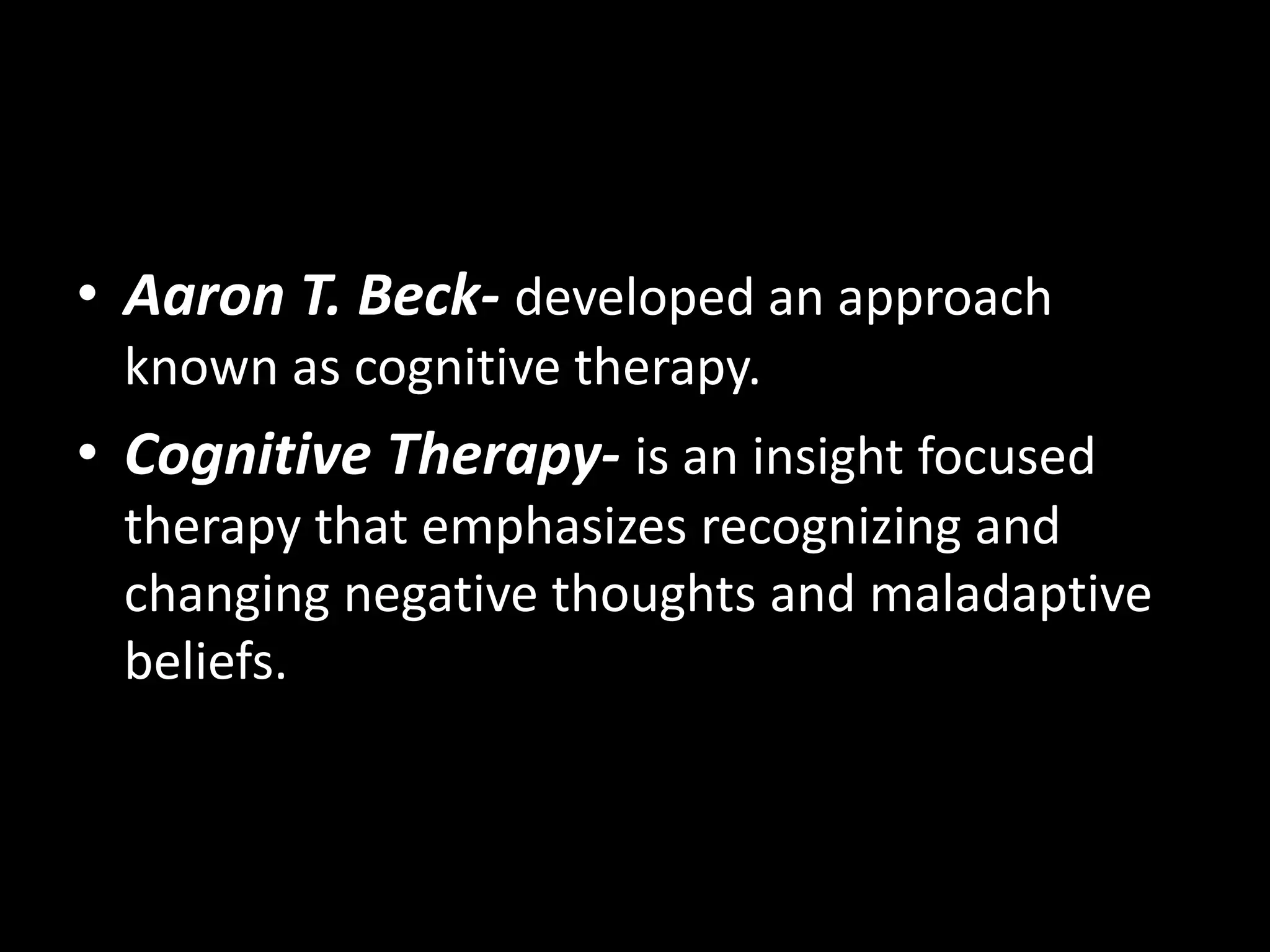
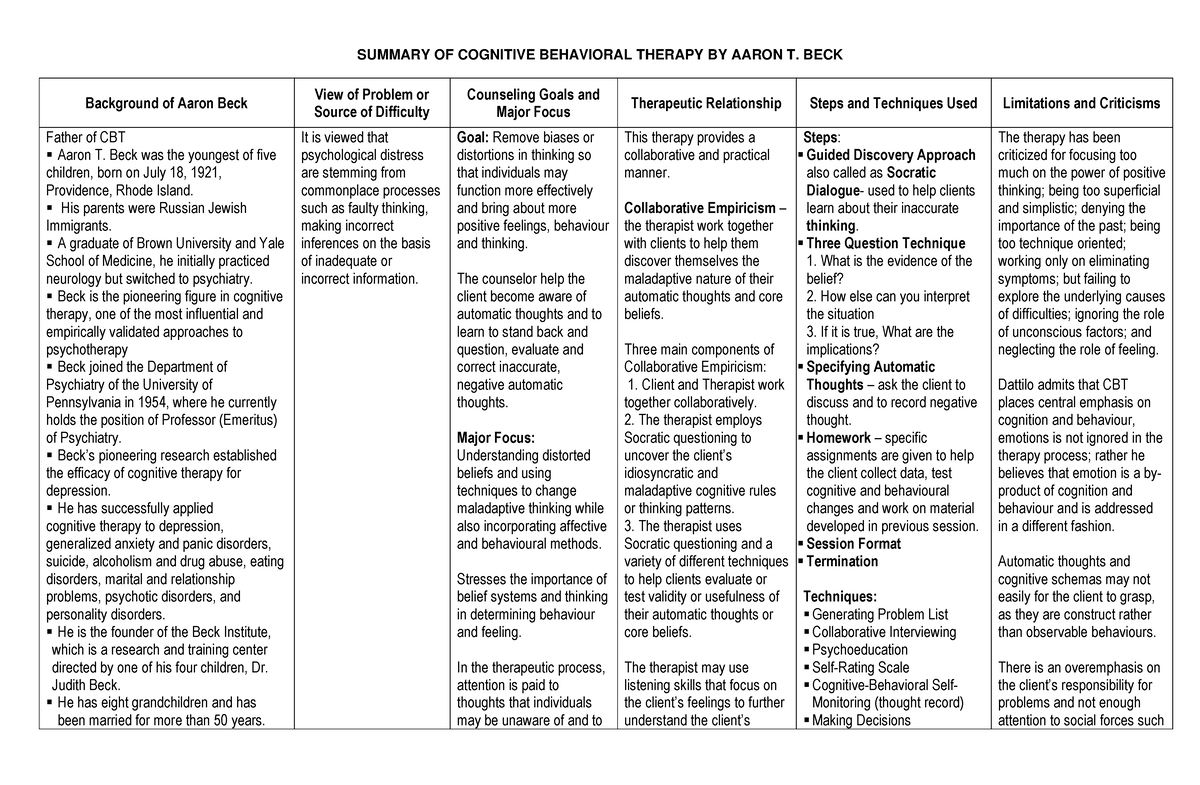
Aaron Beck’s Cognitive Therapy (CT) reduces student stress by identifying and restructuring negative automatic thoughts. By addressing cognitive distortions—such as "all-or-nothing" thinking regarding academic performance—students learn to reframe pressures into manageable challenges. This evidence-based approach improves emotional regulation and academic persistence by replacing irrational fears with realistic, actionable perspectives.
In the academic landscape of 2026, the pressures facing students have evolved, yet the foundational principles of Aaron Beck’s Cognitive Therapy remain the gold standard for psychological intervention. Aaron T. Beck, the father of Cognitive Therapy, revolutionized the treatment of clinical depression and anxiety by shifting the focus from unconscious desires to the conscious "automatic thoughts" that shape our reality. For students, these thoughts often manifest as a paralyzing fear of failure or an overwhelming sense of inadequacy. By applying Beck’s structured framework, students can dismantle the mental barriers that convert academic rigor into chronic stress.
The Foundation of Beck’s Cognitive Therapy in Education
Cognitive Therapy is built on the premise that our thoughts, rather than external events, determine our feelings and behaviors. In a student’s life, an external event like a difficult midterm exam is neutral until the student’s internal monologue interprets it. If the interpretation is, "I failed because I’m incompetent," the result is stress and withdrawal. If the interpretation is, "This was a difficult test that shows I need to adjust my study habits," the result is proactive planning.
Beck introduced the concept of the Cognitive Triad, which is particularly relevant to the student experience. This triad consists of three patterns of negative thinking:
- A negative view of the self: "I am not smart enough for this university."
- A negative view of the world/experience: "The professors here are trying to weed everyone out."
- A negative view of the future: "I will never get a degree or a good job."
When a student is trapped in this triad, stress becomes a self-fulfilling prophecy. Cognitive Therapy seeks to break this cycle through collaborative empiricism, a process where the student and therapist (or counselor) work together as "co-investigators" to test the validity of the student’s beliefs against real-world evidence.
Identifying and Challenging Cognitive Distortions
A central component of shifting student stress is identifying cognitive distortions. These are biased ways of thinking that reinforce negative emotions. In high-pressure academic environments, these distortions act as "mental filters" that amplify stress while screening out successes.
Common Cognitive Distortions in Academic Settings
| Distortion Type | Student Thought Pattern | Cognitive Shift (The "Beck" Approach) |
|---|---|---|
| All-or-Nothing Thinking | "If I don't get an A in this class, my entire GPA is ruined and I'm a failure." | "A lower grade is a setback, not a reflection of my worth or my entire academic career." |
| Catastrophizing | "I missed one deadline; now I'll be kicked out of the program and end up homeless." | "Missing a deadline is a problem I can solve by communicating with my professor." |
| Overgeneralization | "I struggled with this math problem, so I'm clearly bad at all STEM subjects." | "This specific concept is difficult for me, but it doesn't define my overall aptitude." |
| "Should" Statements | "I should be able to work 30 hours a week and maintain a 4.0 without feeling tired." | "I am human and have limits. I need to balance my expectations with my actual capacity." |
| Emotional Reasoning | "I feel overwhelmed, so the situation must be impossible." | "My feelings are intense right now, but they don't change the fact that I have the resources to finish this." |
The Mechanism of Change: Cognitive Restructuring
To shift student stress, Beck’s therapy utilizes cognitive restructuring. This is a disciplined process of monitoring thoughts and subjecting them to logical analysis. For a student in 2026, this often involves the use of "Thought Records," which can be maintained via digital wellness platforms or traditional journaling.
The Five-Step Thought Record for Students
- Situation: Describe the event (e.g., "Received a C- on a chemistry lab report").
- Automatic Thoughts: Identify the immediate reaction (e.g., "I'm too stupid for this major").
- Emotions: Rate the intensity of the feeling (e.g., "Anxiety: 90%, Sadness: 80%").
- Evidence For and Against: List facts that support the thought and facts that contradict it (e.g., "I passed the previous three labs with Bs").
- Alternative Thought: Develop a balanced perspective (e.g., "This lab was uniquely difficult, and I didn't spend enough time on the conclusion. I can improve next time").
By consistently practicing this, the "neural pathways" associated with stress are weakened. Students move from a reactive state to a reflective state. This shift is not about "positive thinking"—which can often feel fake or dismissive of real challenges—but rather about realistic thinking.
Behavioral Activation: Breaking the Procrastination Cycle
While Beck’s therapy is primarily "cognitive," it includes a vital behavioral component. Student stress is frequently exacerbated by procrastination. When a task feels overwhelming, the student avoids it to reduce immediate anxiety. However, this avoidance leads to increased long-term stress as deadlines approach, creating a "stress-avoidance-stress" loop.
Cognitive Therapy addresses this through behavioral activation. Students are encouraged to schedule small, manageable tasks that provide a sense of "mastery" or "pleasure." For example, instead of writing an entire 20-page thesis, the student is tasked with writing just the bibliography or a 200-word introduction. Achieving these micro-goals provides the evidence needed to challenge the thought "I can't do this," which in turn lowers the physiological stress response.
Implementing Cognitive Therapy Principles in Modern Schools
As of 2026, many educational institutions have moved toward "Tier 1" mental health interventions, which integrate Beck's principles into the general curriculum rather than reserving them only for clinical settings. This proactive approach ensures that all students have the tools to manage stress before it escalates into a crisis.
The Role of Socratic Questioning
Educators and counselors use Socratic Questioning to help students reach their own conclusions about their stress. Instead of telling a student, "Don't worry, you'll be fine," a practitioner might ask:
- "What is the worst-case scenario you are imagining?"
- "If that scenario happened, how would you cope with it?"
- "What would you tell a friend who was in this exact situation?"
This technique empowers the student. It shifts the locus of control from the external environment (the difficult exam) to the internal environment (the student's ability to reason and adapt).
Prerequisites and Requirements for Success
For Cognitive Therapy to effectively shift student stress, several conditions must be met:
- Willingness to Self-Monitor: The student must be willing to pay attention to their internal monologue and record their thoughts.
- Consistency: Cognitive restructuring is a skill, much like learning a language or a sport. It requires regular practice to become the default mode of thinking.
- Collaborative Environment: In a school setting, the student needs to feel safe expressing their fears without judgment from teachers or counselors.
- Digital Literacy: In the current 2026 landscape, many CT interventions are delivered through AI-assisted apps. Students must be comfortable using these tools as adjuncts to human counseling.
Limitations and Considerations
While Aaron Beck’s Cognitive Therapy is highly effective, it is not a panacea. It is important to distinguish between "stress caused by distorted thinking" and "stress caused by external reality." If a student is under genuine financial hardship, experiencing discrimination, or dealing with a family crisis, "restructuring thoughts" alone is insufficient. In these cases, CT must be paired with practical support and systemic advocacy.
Furthermore, CT requires a certain level of cognitive maturity and executive function. Students with severe ADHD or neurodivergent profiles may need modified versions of Beck’s techniques that rely more heavily on visual aids and external reminders rather than abstract thought analysis.
Summary of the "Beck Shift" in Student Stress
The ultimate goal of using Beck's methods is to move a student from a fixed mindset (where abilities and outcomes are seen as unchangeable) to a growth mindset (where challenges are seen as opportunities for learning). By systematically dismantling the "mental errors" that create unnecessary suffering, Cognitive Therapy allows students to focus their energy on learning rather than on managing the symptoms of anxiety.
In 2026, as academic demands continue to intensify, the ability to "think about one’s thinking" (metacognition) has become the most essential survival skill in higher education. Aaron Beck’s legacy provides the blueprint for this mental resilience.
Frequently Asked Questions
How long does it take for Cognitive Therapy to start reducing student stress? Many students report a noticeable shift in their anxiety levels within 4 to 8 sessions of focused Cognitive Therapy. However, the "cognitive shift"—the moment a student realizes their thoughts are not necessarily facts—can often happen in the first or second session. Long-term habit change usually requires several months of consistent practice with thought records and behavioral experiments.
Can students practice Beck’s Cognitive Therapy without a professional therapist? Yes, for mild to moderate stress, many "self-help" versions of CT are highly effective. Bibliotherapy (using workbooks based on Beck’s principles) and verified mental health apps can guide students through identifying distortions and reframing thoughts. However, for clinical depression or severe anxiety, working with a trained professional is recommended to ensure the techniques are applied correctly and safely.
Is Cognitive Therapy different from Mindfulness? They are distinct but complementary. Mindfulness focuses on observing thoughts without judgment and staying in the present moment. Beck’s Cognitive Therapy focuses on evaluating and changing the content of those thoughts. Many modern "Third Wave" CBT approaches combine both, teaching students to observe a stressful thought mindfully and then use cognitive restructuring to determine if the thought is accurate.
Why is Aaron Beck’s approach preferred over traditional talk therapy for students? Traditional psychoanalysis often focuses on the past and childhood origins of problems, which can take years to process. In contrast, Beck’s Cognitive Therapy is goal-oriented, time-limited, and focuses on the "here and now." Students generally prefer this because it provides them with immediate, practical tools to handle the specific stressors they are facing in their current semester.
Does Cognitive Therapy work for exam anxiety specifically? Yes, it is one of the most effective treatments for exam anxiety. By identifying the specific thoughts that occur right before or during a test (e.g., "If I blank on this question, I'm going to fail the whole thing"), students can use "coping cards" or "rehearsal techniques" to stay calm and focused during the actual assessment.
Practical Recommendation for Students
If you are currently experiencing high levels of academic stress, start by keeping a Thought Journal for three days. Whenever you feel your heart rate increase or a sense of dread occur, write down the exact sentence that went through your mind. At the end of the three days, review these notes and look for patterns. Are you catastrophizing? Are you using "should" statements? Identifying the pattern is 50% of the solution. Once identified, challenge those thoughts by asking, "What evidence do I have that this thought is 100% true?"