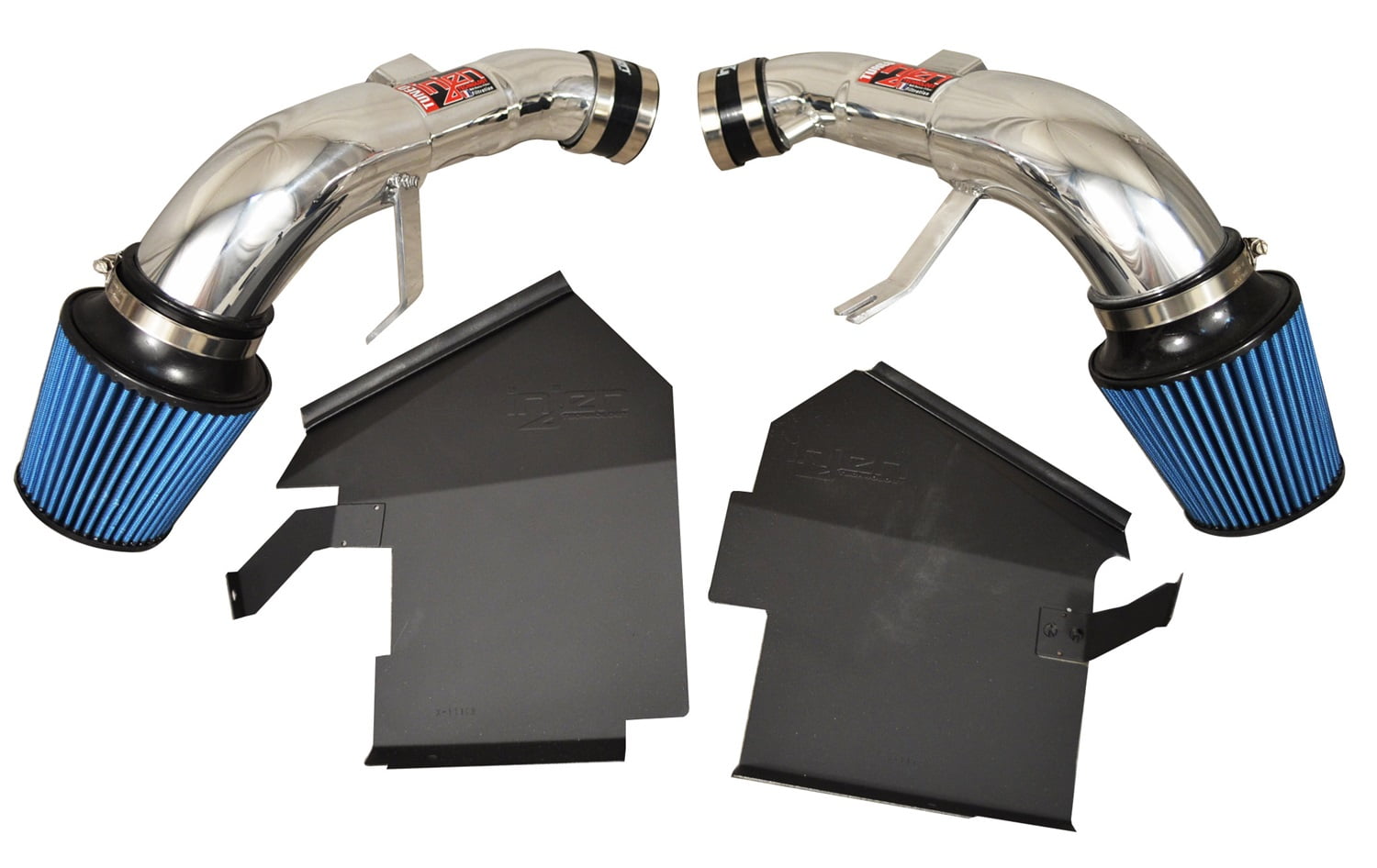
The 9th Generation Honda Civic Si (2012–2015) is a premier candidate for turbocharging because its 2.4-liter K24Z7 engine provides a high-displacement foundation that responds exceptionally well to forced induction. By installing a high-quality turbo kit, owners can reliably increase power from the factory 201 horsepower to between 350 and 450 wheel horsepower (whp) on stock internals.
Turbocharging a 9th Gen Si transforms the vehicle from a spirited naturally aspirated daily driver into a high-performance machine capable of competing with modern sports cars. However, due to the unique "headfold" design of the K24Z7 engine—where the exhaust manifold is integrated into the cylinder head—selecting the right turbo kit requires understanding specific hardware compatibility, fueling requirements, and tuning limitations. As of 2026, the aftermarket support for this platform has matured, offering refined solutions that balance raw power with long-term reliability.
Understanding the K24Z7 Engine Architecture
Before selecting a turbo kit, it is vital to understand the engine it will be bolted to. Unlike the 8th Gen Civic Si (K20Z3), which featured four individual exhaust ports, the 9th Gen's K24Z7 uses a "single port" exhaust layout. This means the exhaust gases from all four cylinders exit through one large opening in the cylinder head.
This design simplifies the turbo manifold significantly, as the manifold is essentially an adapter that transitions from the head's single port to the turbocharger's flange. While this makes the physical manifold smaller and easier to install, it also concentrates a massive amount of heat in one area. High-quality turbo kits for this platform must prioritize heat management and robust manifold construction to prevent cracking or heat soak.
The K24Z7 is known for its incredible mid-range torque. When paired with a turbocharger, this engine creates a "power under the curve" profile that feels much larger than its displacement suggests. However, the factory connecting rods are the primary weak point. Most tuners recommend staying under 400 lb-ft of torque on a stock block to prevent catastrophic engine failure.
Leading Turbo Kit Manufacturers for the 9th Gen Si
Several manufacturers have dominated the 9th Gen Si market. While some smaller shops have come and gone, a few names remain the gold standard for build quality and fitment.
Full-Race Motorsports
Full-Race is widely considered the top-tier option for the 9th Gen Si. Their kit is famous for its "EFR" (Engineered For Racing) turbocharger options from BorgWarner. These turbos feature internal wastegates and integrated blow-off valves, which simplify the engine bay layout and reduce the number of potential leak points. The Full-Race manifold is a thick-wall casting designed to handle the intense heat of the K24 headfold without warping.
PRL Motorsports
PRL Motorsports offered one of the most comprehensive kits during the platform's peak. While they shifted focus toward the 10th and 11th Gen platforms, their legacy 9th Gen kits are still highly sought after in the used market and through select distributors. PRL kits typically utilized Precision or Garrett turbochargers and were known for their high-quality intercooler piping and billet manifold adapters.
Custom and "Pieced" Kits
Many enthusiasts choose to build their own kits using a manifold adapter from brands like Spa Turbo or SpeedFactory Racing. This approach allows for total customization of the turbocharger, wastegate, and intercooler sizes. While often more cost-effective, it requires a higher level of technical knowledge to ensure all components—such as oil feed lines, coolant lines, and downpipes—interface correctly.
Essential Components of a Complete Turbo System
A "bolt-on" turbo kit is rarely truly complete for the 9th Gen Si without several supporting modifications. To successfully turbocharge this vehicle in 2026, you must account for the following categories:
1. The Turbocharger
The choice between a journal bearing and a ball bearing turbocharger will dictate the car's behavior. Ball bearing turbos (like the Garrett GT/G-Series or BorgWarner EFR) spool faster and are more resilient to high temperatures but come at a premium price. For a daily driver aiming for 350–400 whp, a 58mm to 62mm compressor wheel is usually the "sweet spot" for balancing lag and top-end power.
2. Management and Tuning (Hondata FlashPro)
You cannot turbocharge a 9th Gen Si without Hondata FlashPro. This is the industry-standard engine management tool that allows a tuner to recalibrate the ECU for boost. It plugs into the OBD-II port and enables control over fuel maps, ignition timing, and VTEC engagement points. Without a proper tune, the engine will likely fail within minutes of hitting boost.
3. Fuel System Upgrades
The factory fuel injectors and pump are designed for 200 hp and will reach their limit almost immediately under boost.
- Injectors: 1000cc injectors (such as Injector Dynamics or Fuel Injector Clinic) are standard for pump gas builds. If you plan to run E85, 1300cc or 1700cc injectors are required due to the higher volume of fuel needed.
- Fuel Pump: A high-flow drop-in pump like the DeatschWerks DW65c or the Walbro 255/450 is necessary to maintain rail pressure.
4. Clutch Upgrades
The OEM Honda clutch is designed for comfort and longevity at stock torque levels. It will slip the moment a turbocharger begins to spool. A Stage 2 or Stage 3 organic/ceramic clutch is mandatory. Brands like Competition Clutch or Action Clutch offer "full-face" designs that maintain relatively stock pedal feel while holding up to 450 lb-ft of torque.
Technical Specifications and Expectations
When planning a build, it is helpful to categorize your goals based on the limitations of the K24Z7 platform.
| Component | Stage 1 (Daily Driver) | Stage 2 (High Performance) | Stage 3 (Built Engine) |
|---|---|---|---|
| Target Power | 320 – 360 whp | 380 – 450 whp | 500+ whp |
| Turbo Size | 55mm - 58mm | 58mm - 62mm | 64mm+ |
| Fuel Type | 91/93 Octane | 93 Octane + Meth or E85 | E85 / Race Gas |
| Internal Mods | Stock | Stock (Riskier) | Forged Pistons/Rods |
| Clutch Req. | Stage 2 | Stage 3 or Twin Disc | Twin Disc |
| MAP Sensor | 4-Bar Hondata | 4-Bar Hondata | 4-Bar Hondata |
Installation and Heat Management Challenges
Installing a turbo kit on a 9th Gen Si is a labor-intensive process that usually takes 15 to 25 hours for a first-timer. One of the most significant hurdles is the lack of space behind the engine. Because the turbo sits between the engine and the firewall, heat management is critical.
Best Practices for Heat Management:
- Turbo Blanket: A high-quality basalt or ceramic turbo blanket is essential to keep heat away from the brake lines and firewall.
- Heat Wrap: The downpipe and the "dump tube" (if using an external wastegate) should be wrapped in titanium heat wrap.
- Brake Line Protection: The rear brake lines run dangerously close to the turbo exhaust housing on the FB6/FG4 chassis. Using gold foil or heat shields to protect these lines is a safety requirement.
- Ventilation: Some owners choose to use vented hoods or remove the rear weather stripping from the cowl to help hot air escape the cramped engine bay.
Reliability and Long-Term Maintenance
In 2026, many 9th Gen Civics have higher mileage, which adds another layer to the turbocharging equation. Before installing a kit, a compression and leak-down test should be performed. The K24Z7 is a "high compression" engine (11.0:1), which is excellent for throttle response but leaves less room for error in the tune compared to lower-compression engines.
Ongoing Maintenance Requirements:
- Oil Changes: Use a high-quality full synthetic oil (e.g., Motul or Amsoil) and change it every 3,000 miles. Turbochargers put significant thermal stress on engine oil.
- Spark Plugs: You must run a "colder" spark plug to prevent pre-ignition (knock). The NGK BKR8EIX (one or two steps colder than stock) gapped to approximately 0.022–0.028 inches is the standard recommendation.
- Drivetrain Care: Frequent inspections of the CV axles and motor mounts are necessary. The added torque of a turbo kit often tears the factory rubber motor mounts; upgrading to polyurethane mounts (70a or 82a stiffness) is highly recommended.
Common Mistakes to Avoid
- Cutting Corners on Fueling: Attempting to "max out" smaller injectors is a recipe for a lean condition and a melted piston. Always leave a 15-20% safety margin in your injector duty cycle.
- Neglecting the MAP Sensor: The factory Manifold Absolute Pressure (MAP) sensor cannot read boost accurately above roughly 10 psi. You must replace it with a 4-bar sensor so the ECU knows how much air is entering the engine.
- Ignoring the Exhaust System: Running a turbocharger into the tiny factory 2.25-inch exhaust creates massive backpressure. A 3-inch turbo-back exhaust is required to let the engine breathe and keep exhaust gas temperatures (EGTs) in check.
- Skipping the Professional Tune: "Street tuning" yourself without experience is dangerous. A professional dyno tune by a reputable K-series specialist is the best insurance policy for your engine's life.
Frequently Asked Questions
Can I turbocharge my 9th Gen Si on a completely stock engine?
Yes, the K24Z7 can reliably handle 350–400 whp on stock internals, provided the tune is conservative and the fuel quality is high. The torque should be capped around 350–380 lb-ft to protect the connecting rods from bending.
How much does a full turbo kit setup cost in 2026?
A complete setup, including the turbo kit, Hondata FlashPro, fuel system, clutch, and professional tuning, typically costs between $7,000 and $10,000. While cheaper "eBay" kits exist, they often fail due to poor casting quality and inferior turbocharger bearings.
Is the 9th Gen Si turbo kit the same as the 8th Gen kit?
No. The 8th Gen (2006–2011) uses the K20Z3 engine with a traditional exhaust manifold. The 9th Gen (2012–2015) uses the K24Z7 with an integrated exhaust manifold. The turbo manifolds and downpipes are not interchangeable between these generations.
Will turbocharging my Civic Si affect its reliability as a daily driver?
If done correctly, a turbocharged 9th Gen can be very reliable. However, it requires more frequent maintenance and an awareness of engine vitals. You should install gauges for boost pressure and Wideband Air/Fuel Ratio (AFR) to monitor the engine's health in real-time.
Do I need to upgrade the cooling system?
While the stock radiator can handle moderate boost, it is highly recommended to upgrade to a high-capacity aluminum radiator (like those from Mishimoto or Koyorad) and add a slim-fan setup to clear the intercooler piping.
Final Recommendation
For owners looking to maximize the potential of their 2012–2015 Civic Si, the Full-Race EFR Turbo Kit remains the most balanced option for performance and ease of installation. If you are on a stricter budget, sourcing a high-quality manifold adapter and pairing it with a BorgWarner S200SX-E or a Garrett G-Series turbo offers a path to significant power. Regardless of the hardware chosen, prioritize Hondata FlashPro and a professional tune above all else, as the software is what ultimately protects your investment and ensures the longevity of the K24Z7 engine.