For a 50-year-old individual in 2026, the average monthly cost for Globe Life’s Form 82-80 term insurance typically ranges from $25 to $65, depending on the chosen death benefit (ranging from $10,000 to $50,000) and the applicant's gender. While the first month is frequently offered for $1, premiums follow a five-year "stepped" structure that increases as the policyholder enters new age brackets.
Understanding the 82-80 Life Insurance Policy Series
The term "82-80" refers specifically to a policy form number used by Globe Life Inc. (formerly Globe Life and Accident Insurance Company). This specific series is one of the most widely marketed life insurance products in the United States, often reaching consumers through direct mail, television advertisements, and digital campaigns. As of 2026, it remains a cornerstone of the company’s "Simplified Issue" term life portfolio.
Unlike traditional term life insurance, which might offer a level premium for 10, 20, or 30 years, the 82-80 series is a renewable term product where the rates are based on the insured’s current age bracket. For a 50-year-old, this means the rate is locked in only until the next five-year age milestone. Understanding this structure is vital for long-term financial planning, as the "average cost" today will not be the cost you pay in five or ten years.
The "Simplified Issue" Advantage
The 82-80 policy is categorized as simplified issue insurance. This means that at age 50, you are not required to undergo a paramedical exam—there are no blood draws, urine samples, or physical examinations by a nurse. Instead, eligibility is determined through a series of health questions on the application and a review of your Medical Information Bureau (MIB) report and prescription drug history.
For a 50-year-old who may have minor health issues that would make traditional underwriting difficult, this policy offers a path to coverage that is faster and less invasive. However, this convenience comes at a price: on a "per thousand" basis, simplified issue insurance is almost always more expensive than a fully underwritten policy because the insurance company is taking on more unknown risk.
Average Monthly Cost Breakdown for a 50-Year-Old
As we look at the landscape in 2026, the premiums for the 82-80 series remain segmented by gender and coverage amount. Because 50 is a "threshold age" in insurance actuarial tables, the rates reflect a transition into a higher-risk category compared to applicants in their 40s.
Below is an estimated breakdown of the monthly premiums for a 50-year-old applicant. Note that these figures represent the "standard" rate after the initial $1 introductory period.
Estimated Monthly Premiums for Globe Life Form 82-80 (Age 50)
| Coverage Amount | Monthly Premium (Male) | Monthly Premium (Female) |
|---|---|---|
| $10,000 | $18.50 – $22.00 | $14.50 – $17.50 |
| $20,000 | $32.00 – $38.00 | $24.00 – $29.00 |
| $30,000 | $45.00 – $52.00 | $34.00 – $40.00 |
| $50,000 | $62.00 – $75.00 | $48.00 – $58.00 |
Rates are estimates based on 2026 actuarial trends for non-tobacco users. Tobacco use typically adds a 30% to 50% surcharge to these premiums.
The Five-Year Step-Up Structure
One of the most critical aspects of the 82-80 policy is how the cost changes over time. When a 50-year-old signs up, they are usually at the tail end of a premium bracket (often the 46-50 bracket) or just entering the 51-55 bracket.
In this policy series, the premium stays level only for the duration of the current five-year age period. When you turn 51, 56, 61, and so on, your monthly cost will increase automatically. For a 50-year-old planning for retirement, it is essential to calculate what the policy will cost when they are 65 or 70, as the price can double or triple from the initial age-50 rate.
Factors Influencing 82-80 Costs at Age 50
While the 82-80 series uses standardized rate tables, several variables determine exactly where a 50-year-old applicant falls within the price range.
1. Gender Selection
In the insurance world, 50-year-old men have a higher statistical mortality rate than 50-year-old women. Consequently, men will pay significantly more for the same amount of coverage. For the 82-80 series, a 50-year-old male might pay 25% to 35% more than a female counterpart for a $30,000 policy.
2. Tobacco Usage
Even though there is no medical exam, the application asks about tobacco and nicotine use. If you have used cigarettes, vaping products, or chewing tobacco within the last 12 to 24 months, you will be placed in a "Tobacco" rate class. For a 50-year-old, this is a major cost driver, as the health risks associated with smoking become more pronounced in one's 50s.
3. State-Specific Regulations
While Globe Life is a national carrier, insurance is regulated at the state level. Some states have different requirements regarding "non-forfeiture" values or how premium increases must be disclosed. While the 82-80 form is standard, minor variations in monthly "service fees" or state taxes may cause the monthly bill to fluctuate by a few dollars depending on whether you live in Texas, Florida, or California.
4. Health History and "Modified" Offers
If the simplified underwriting reveals significant health issues (such as recent heart surgery or active cancer), the company may decline the 82-80 term application and instead offer a "Graded Benefit" or a whole life policy. These alternatives have different cost structures and may not provide the full death benefit during the first two years of the policy.
Comparing 82-80 Term to Traditional Level Term
For many 50-year-olds, the 82-80 policy is attractive because of its low barrier to entry and the $1 first-month promotion. However, it is useful to compare this to a Level Term policy, where the premium stays exactly the same for 10 or 20 years.
82-80 Term (Globe Life)
- Pros: Fast approval, no medical exam, $1 starts the policy, available in small amounts (under $50,000).
- Cons: Cost increases every five years, maximum coverage is usually limited to $100,000, more expensive over the long term.
Traditional 20-Year Level Term
- Pros: Price never changes for 20 years, lower cost per $1,000 of coverage, higher coverage amounts available (up to millions).
- Cons: Requires a medical exam (usually), stricter underwriting, longer approval process, usually has a minimum coverage amount of $100,000.
The Verdict for 50-Year-Olds: If you are in good health and need more than $50,000 in coverage, a 20-year level term policy will almost always be the more cost-effective choice by the time you reach age 60. However, if you only need $20,000 for final expenses and want to avoid doctors, the 82-80 series serves that specific niche.
Common Pitfalls for 50-Year-Old Applicants
When shopping for the 82-80 policy series at age 50, many consumers overlook specific technical details that affect the "real" cost of the insurance.
Ignoring the "Renewability" Limit
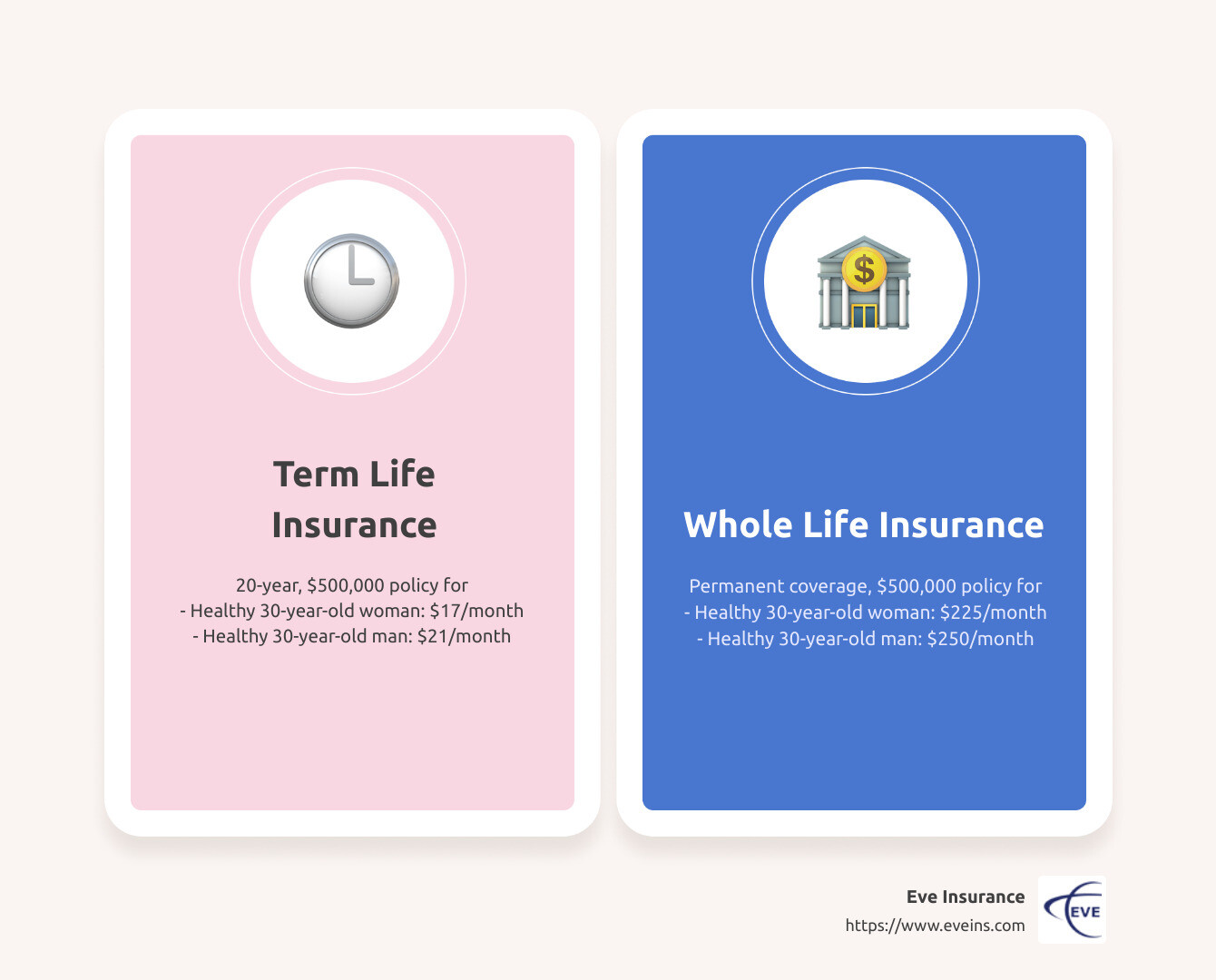
Most 82-80 term policies have an expiration age, often between 80 and 90. While a 50-year-old may feel that age 80 is a long way off, if the goal of the insurance is to cover funeral costs, a term policy that expires could leave the family unprotected if the insured outlives the term. In contrast, Whole Life insurance lasts until death, though it is more expensive at the outset.
The $1 Marketing Hook
The "$1 buys $50,000" advertisement is a marketing strategy for the first month's premium only. Many 50-year-olds are surprised when their second-month bill is $60 or higher. It is vital to look at the "Schedule of Premiums" included in the policy document, which outlines exactly what the cost will be at ages 51, 56, 61, and 66.
The "Death Benefit Reduction" Clause
Some versions of the 82-80 or similar simplified term products may have clauses that reduce the death benefit once the insured reaches a very advanced age (e.g., 75 or 80) to keep the premiums from becoming completely unaffordable. Always verify if your $50,000 benefit stays at $50,000 for the life of the policy.
How to Apply for 82-80 Coverage in 2026
The application process for this specific policy series remains streamlined in 2026. Because it is a direct-to-consumer product, you can typically complete the process without an agent.
- Request a Quote: Visit the official carrier website or respond to a direct mail piece to see the current rate table for your specific age and state.
- Complete the Health Questionnaire: You will answer questions about major diagnoses (Heart disease, Cancer, Stroke, COPD, etc.) and your height/weight ratio.
- Authorize Information Release: You must sign a HIPAA authorization allowing the insurer to check your prescription history (via databases like Milliman IntelliScript) and your MIB records.
- Initial Payment: Pay the $1 introductory premium to put the coverage "in force" pending underwriting.
- Review the Policy: Once the policy arrives in the mail, you typically have a 30-day "Free Look" period. Use this time to read the 82-80 form and confirm the premium step-up schedule.
Frequently Asked Questions
Does the 82-80 policy require a medical exam at age 50?
No, the 82-80 series is a simplified issue product. For a 50-year-old, approval is based on a written health questionnaire and a background check of medical and prescription databases. No physical exam, blood work, or physician’s statement is usually required unless there are significant discrepancies in the application.
Why is the 82-80 series so popular for people in their 50s?
Its popularity stems from the low barrier to entry. Many people in their 50s begin to realize they are underinsured but are intimidated by the prospect of a medical exam or have minor health conditions like high blood pressure. The 82-80 policy offers a "middle ground" of quick, accessible coverage for smaller amounts that are perfect for covering debts or final expenses.
Will my premium really increase at age 51?
The 82-80 policy uses five-year age brackets (e.g., 46–50, 51–55, 56–60). If you buy the policy when you are 50, you are at the final year of that bracket. Consequently, your premium will increase the very next year when you turn 51 and move into the next bracket. It is important to ask for the rate for the next bracket before committing.
Can I convert this term policy to whole life later?
Many Globe Life term policies, including versions of the 82-80 series, include a conversion privilege. This allows the policyholder to switch to a permanent whole life policy without a new medical exam. However, the premium for the whole life policy will be based on your age at the time of conversion, which will be much higher than the term rate.
Is $50,000 enough coverage for a 50-year-old?
This depends on your goals. If the intent is to cover a mortgage or replace 10 years of income, $50,000 is likely insufficient. However, if the goal is to ensure your spouse has enough money for a funeral (averaging $8,000–$12,000 in 2026) and to pay off a small credit card debt, then a $30,000 or $50,000 82-80 policy may be perfectly adequate.
Practical Recommendation
If you are 50 years old and considering the 82-80 life insurance series, your first step should be to calculate the total cost over the next 15 years. Because the premiums increase every five years, a policy that looks cheap today may become a financial burden in your mid-60s.
Request a full premium schedule from the insurer before the "Free Look" period expires. If you find that the cost at age 65 is more than you are willing to pay, and you are in relatively good health, consider applying for a 15-year or 20-year Level Term policy from a different carrier. While it may require a quick medical exam, it will provide price certainty through your retirement years, often at a lower total cost.