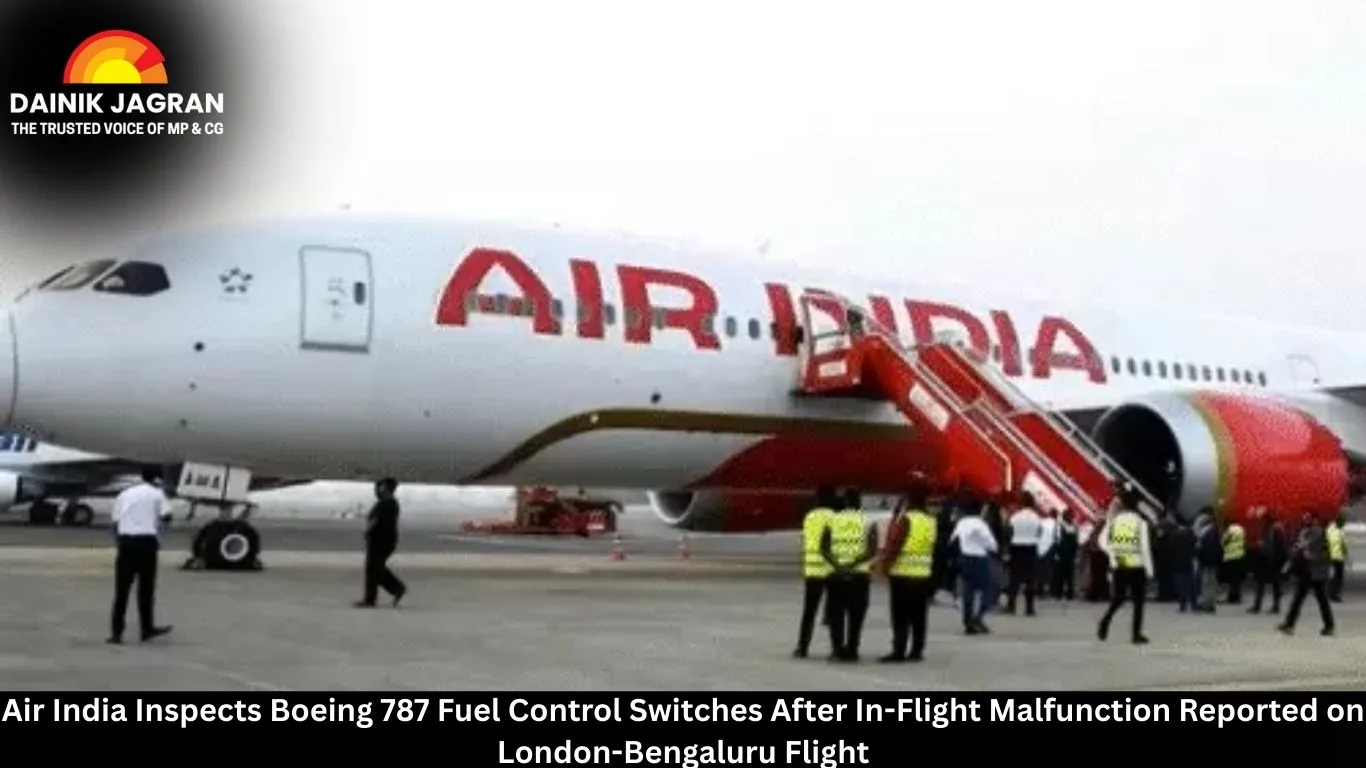
The Boeing 787 Dreamliner family features varying fuel capacities designed to balance range and payload. The 787-8 carries approximately 33,340 US gallons (126,206 liters), while the larger 787-9 and 787-10 variants both accommodate roughly 36,641 US gallons (138,700 liters), supporting ultra-long-haul missions exceeding 8,000 nautical miles.
Understanding the Fuel Tank Architecture of the Boeing 787
The Boeing 787 Dreamliner represents a radical departure from traditional aluminum aircraft design, and its fuel system is no exception. To understand the fuel capacity details of the 787, one must first look at how the airframe is constructed. The wings and fuselage sections are primarily made of Carbon Fiber Reinforced Polymer (CFRP). This composite structure allows for thinner, more aerodynamically efficient wings that can still house massive quantities of Jet A-1 fuel.
The fuel system is divided into three primary tanks: the Left Main Tank, the Right Main Tank, and the Center Tank. Unlike some older wide-body aircraft that utilized horizontal stabilizer tanks (trim tanks) to manage the center of gravity, the 787 manages its longitudinal stability through advanced fly-by-wire software and precise fuel scheduling between these three primary internal volumes.
Main Wing Tanks
The left and right wing tanks are integrated into the internal structure of the wings. Because the 787 wings have a significant "flex" or dihedral during flight, the fuel system must account for the changing shape of the tank. Scavenge pumps are used to ensure that fuel is constantly moved toward the boost pumps located at the lowest point of the tanks, preventing "unuseable fuel" scenarios. These tanks are the primary source of fuel for the engines during most phases of flight.
The Center Tank
The center tank is located within the fuselage cross-section, between the two wing roots. In the 787-9 and 787-10 variants, this tank is expanded to provide the extra range required for "hub-to-point" long-haul routes. Fuel from the center tank is typically used first during the climb and initial cruise phase. This practice, known as "center tank first" logic, helps reduce the structural loads on the wing roots by keeping the weight in the wings as long as possible, providing a "wing-bending relief" effect.
Comparative Fuel Capacity: 787-8, 787-9, and 787-10
While the 787 family shares a common cockpit and many systems, the fuel capacities differ to meet the specific mission profiles of each variant. As of 2026, these three variants remain the workhorses of global long-haul aviation, each optimized for different combinations of passenger count and distance.
| Specification | Boeing 787-8 | Boeing 787-9 | Boeing 787-10 |
|---|---|---|---|
| Total Fuel Capacity (US Gallons) | 33,340 gal | 36,641 gal | 36,641 gal |
| Total Fuel Capacity (Liters) | 126,206 L | 138,700 L | 138,700 L |
| Total Fuel Weight (Approx. kg) | 101,323 kg | 111,397 kg | 111,397 kg |
| Total Fuel Weight (Approx. lb) | 223,378 lb | 245,587 lb | 245,587 lb |
| Maximum Range (Full Payload) | 7,305 nmi | 7,530 nmi | 6,330 nmi |
| Service Ceiling | 43,100 ft | 43,100 ft | 41,100 ft |
The 787-8: The Original Dreamliner
The 787-8 was designed to replace the Boeing 767-300ER. With a capacity of roughly 101,323 kg of fuel, it was the first mid-size widebody capable of flying long-range routes that were previously only accessible to much larger aircraft like the 747 or 777. Its fuel capacity is lower than its siblings because it has a shorter fuselage and a slightly different internal tank configuration, yet it remains highly efficient for "long and thin" routes where passenger demand doesn't justify a larger jet.
The 787-9: The Range Leader
The 787-9 is widely considered the "sweet spot" of the family. By stretching the fuselage and strengthening the landing gear, Boeing was able to increase the Maximum Takeoff Weight (MTOW). This allowed for a larger center tank capacity. With 138,700 liters of fuel, the 787-9 can stay in the air for over 17 hours, making it the preferred choice for ultra-long-haul flights such as Perth to London or New York to Singapore.
The 787-10: Capacity over Range
Interestingly, the 787-10 shares the exact same fuel capacity as the 787-9 (138,700 liters). However, because the 787-10 is significantly longer and carries more passengers and cargo, it is heavier. This extra weight means it burns more fuel per mile than the -9. Consequently, despite having the same amount of fuel on board, its maximum range is shorter (approximately 6,330 nautical miles). It is optimized for high-density, medium-to-long-haul routes rather than the extreme ultra-long-haul missions of the 787-9.
Fuel Weight and Density Considerations
In aviation, fuel is almost always measured by weight (kilograms or pounds) rather than volume (liters or gallons). This is because the energy content of the fuel is tied to its mass, and the weight of the fuel is a critical component of the aircraft's weight and balance calculations.
Fuel density is not constant; it changes based on temperature. As fuel gets colder, it becomes denser (occupies less volume for the same mass). Conversely, in hot environments, the fuel expands. The 787's Fuel Quantity Indication System (FQIS) uses a series of sensors inside the tanks to measure both the volume and the dielectric constant of the fuel to calculate an accurate mass.
For the 787-9, the nominal weight of 111,397 kg is based on a standard fuel density of 0.803 kg/L. If an airline is operating in a very cold climate, they might be able to physically fit slightly more mass into the tanks, though they are always limited by the certified Maximum Fuel Capacity and the aircraft's Maximum Takeoff Weight (MTOW).
The Role of Composites in Fuel Storage and Safety
The use of composite materials in the 787 wings provides several advantages for fuel storage. Traditional aluminum wings require thousands of fasteners (rivets), each of which is a potential leak path that must be sealed with heavy polysulfide sealants. The 787’s composite wing skins are manufactured in large, continuous pieces, significantly reducing the number of joints and fasteners.
Furthermore, composites are excellent insulators compared to aluminum. This means that the fuel inside a 787 wing is better protected from the extreme cold of high-altitude flight (-50°C or lower). This insulation helps prevent the fuel from reaching its "freezing point"—the temperature at which wax crystals begin to form, which can clog fuel filters. While Jet A-1 has a freezing point of -47°C, the composite structure of the 787 provides an extra margin of safety on long trans-polar flights.
Lightning Protection and Fuel
A common concern with composite aircraft is lightning strikes. Since carbon fiber is less conductive than aluminum, Boeing integrated a copper mesh into the composite skin. This creates a Faraday Cage effect, ensuring that if lightning strikes the wing, the electrical current remains on the outer surface and does not penetrate the fuel tanks or ignite fuel vapors.
Fuel Management and Monitoring Systems
The Boeing 787 features one of the most automated fuel management systems in commercial aviation. The Flight Management System (FMS) continuously monitors fuel flow from the two massive engines—either the General Electric GEnx-1B or the Rolls-Royce Trent 1000.
The Nitrogen Generation System (NGS)
Safety is a primary driver of the 787’s fuel system design. Following the investigation into TWA Flight 800, the FAA mandated "flammability reduction" systems for center fuel tanks. The 787 utilizes an advanced Nitrogen Generation System (NGS). This system strips oxygen from the air and pumps nitrogen-enriched air into the "ullage" (the empty space above the fuel in the tanks). By keeping the oxygen level below 12%, the system ensures that the atmosphere inside the tank cannot support combustion, effectively eliminating the risk of a tank explosion.
Fuel Crossfeed and Balancing
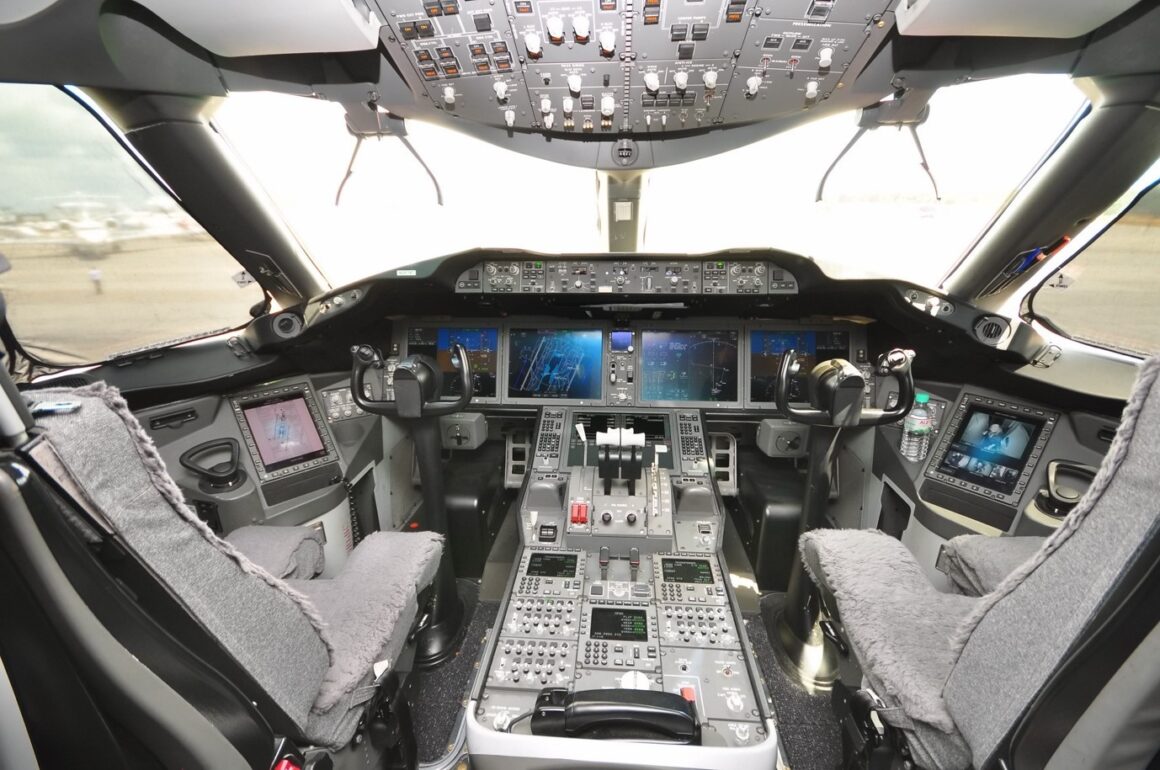
During flight, the engines may burn fuel at slightly different rates, or one engine might be shut down in an emergency. The 787’s fuel system includes a crossfeed valve that allows both engines to draw fuel from a single tank or for fuel to be balanced between the left and right sides. This is critical for maintaining the lateral trim of the aircraft. Pilots monitor this through the MFD (Multi-Function Display) in the "Fuel Synoptic" page, which provides a real-time graphical representation of pumps, valves, and quantities.
Operational Range and Fuel Efficiency
The primary selling point of the 787 was its "20% better fuel efficiency" compared to the aircraft it replaced (like the Boeing 767 and Airbus A330). This efficiency isn't just about the fuel capacity; it's about the Specific Fuel Consumption (SFC) of the engines and the aerodynamic lift-to-drag ratio.
- Engine Efficiency: The GEnx and Trent 1000 engines utilize high bypass ratios (nearly 10:1). This means most of the air goes around the engine core, providing thrust more efficiently at cruise speeds.
- Raked Wingtips: Instead of traditional vertical winglets, the 787 uses raked wingtips. These increase the effective span of the wing and reduce the vortex drag, allowing the aircraft to climb faster and stay at higher, more fuel-efficient altitudes (up to 43,000 feet) sooner in the flight.
- Weight Reduction: The 787's "more electric" architecture removed the heavy pneumatic bleed-air systems found on older jets. By using electric compressors for cabin pressurization and electric heaters for wing anti-ice, the engines can dedicate more of their energy to producing thrust rather than "bleeding" air for secondary systems.
Practical Fuel Planning for Long-Haul Missions
When a flight dispatcher plans a route for a Boeing 787, they don't just look at the total capacity; they must calculate several distinct "blocks" of fuel.
- Taxi Fuel: The fuel used to move from the gate to the runway (typically 500–1,000 kg).
- Trip Fuel: The fuel required to fly from the departure airport to the destination, accounting for predicted winds and weight.
- Contingency Fuel: Usually 3-5% of the trip fuel, meant to cover unforeseen circumstances like air traffic control delays.
- Alternate Fuel: The fuel required to perform a missed approach at the destination and fly to a secondary airport.
- Final Reserve: A mandatory 30 minutes of fuel (at holding speed) that must remain in the tanks upon landing.
For a 787-9 flying from London to Tokyo, the aircraft might take off with nearly a full load (110,000 kg). By the time it reaches Tokyo 12 hours later, it will have burned roughly 75,000 to 85,000 kg of that fuel, depending on the cargo load and the strength of the jet stream.
Frequently Asked Questions
What is the fuel burn rate of a Boeing 787 per hour?
The fuel burn rate depends heavily on the variant and the phase of flight. On average, during cruise, a Boeing 787-8 burns approximately 4,900 to 5,400 kg (10,800 to 11,900 lbs) of fuel per hour. The larger 787-9 burns slightly more, roughly 5,500 to 6,000 kg per hour. These figures are significantly lower than the older Boeing 777-200ER, which can burn upwards of 7,000 kg per hour on similar routes.
Can the Boeing 787 dump fuel in an emergency?
Yes, the Boeing 787 is equipped with a fuel jettison (dump) system. Because the aircraft's Maximum Takeoff Weight (MTOW) is much higher than its Maximum Landing Weight (MLW), a 787 that needs to return to the airport shortly after takeoff would be too heavy to land safely without damaging the landing gear. The jettison system can pump fuel out of nozzles located on the trailing edge of the wings, allowing the pilot to reduce the aircraft's weight to a safe landing limit within minutes.
Does the 787-10 have a lower range because of its fuel capacity?
The 787-10 has a lower range not because it has less fuel—it actually has the same capacity as the 787-9—but because it is physically larger and heavier. The increased fuselage length adds structural weight and allows for more passengers and cargo. This higher gross weight increases the fuel burn per mile, meaning the 138,700 liters of fuel don't carry the aircraft as far as they do on the lighter 787-9.
What type of fuel does the Boeing 787 use?
The Boeing 787 is certified to operate on standard commercial aviation turbine fuels, primarily Jet A (used in the United States) and Jet A-1 (the international standard). It is also fully compatible with Sustainable Aviation Fuel (SAF) blends. As of 2026, many operators are increasingly using SAF blends of up to 50% to reduce the carbon footprint of Dreamliner operations.
How does the 787 handle fuel temperature in extremely cold environments?
The 787 uses a Fuel-Oil Heat Exchanger (FOHE). This system uses the heat generated by the engine oil to warm the fuel before it enters the engine's fuel controllers. This serves two purposes: it cools the engine oil and prevents ice crystals from forming in the fuel, ensuring a consistent flow even when flying through the coldest parts of the atmosphere.
Summary Recommendation for Operators and Analysts
When evaluating the Boeing 787 fuel capacity details, it is vital to distinguish between volumetric capacity and weight-limited capacity. For mission planning, always prioritize the weight (kg/lb) based on the specific fuel density provided at the uplift point.
For those looking for maximum range, the 787-9 remains the definitive choice due to its superior fuel-to-weight ratio. For high-capacity regional or transcontinental routes where range is less of a factor than seat-count, the 787-10 offers the best economics, despite having the same fuel tank volume as the -9. Always ensure that the Nitrogen Generation System (NGS) is fully operational before long-range dispatch to remain compliant with ETOPS (Extended-range Twin-engine Operational Performance Standards) and international safety regulations.