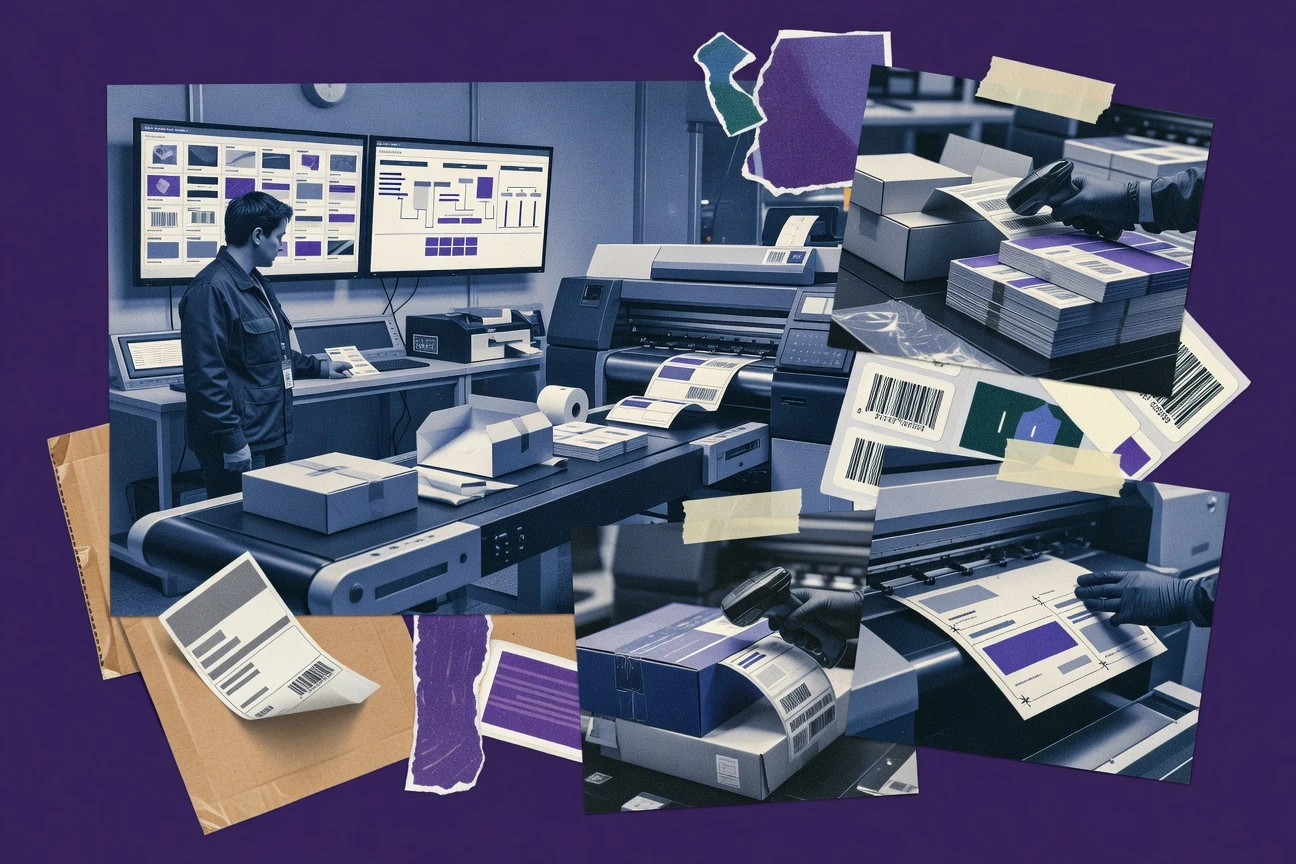
Choosing the right print on demand (POD) fulfillment partner is essential for building a reliable, profitable ecommerce business, as it dictates your product quality, profit margins, shipping speeds, and overall customer satisfaction. When evaluating the marketplace, five major platforms consistently stand out for online merchants: Printful, Printify, Gelato, Gooten, and Teespring (now known as Spring). Each provider operates on a distinct business model, offering varying strengths in product catalogs, geographic printing networks, platform integrations, and pricing structures that suit different types of creators and retailers.
Understanding the Print on Demand Fulfillment Model
Print on demand is a specialized ecommerce fulfillment method where custom products are manufactured only after an order is successfully placed on your online store. Unlike traditional retail or wholesale models that require large upfront capital investments, bulk manufacturing, and physical warehouse space, POD eliminates inventory risk. When a customer purchases a custom t-shirt, mug, or phone case from your storefront, the order details route automatically to your chosen POD partner, who prints, packs, and ships the item directly to the end consumer under your brand name.
The fundamental appeal of this fulfillment model lies in its low barrier to entry and operational simplicity. Entrepreneurs can launch a fully functional merchandise store in a matter of hours without worrying about stock management, equipment maintenance, or supply chain bottlenecks. However, this convenience comes with a trade-off: per-item production costs are higher than bulk manufacturing, which narrows profit margins. Consequently, success in the print on demand space depends heavily on selecting a fulfillment partner that balances reliable print quality, competitive base costs, and efficient shipping logistics.
Key Factors to Consider When Comparing POD Companies
Before analyzing individual providers, you must evaluate several operational criteria to ensure a vendor aligns with your business goals. Not all fulfillment networks are created equal, and a platform that excels at apparel printing might fall short when it comes to home decor or paper goods.
Product Catalog and Diversity
The variety of blank items available for customization dictates how far you can scale your brand. Some providers specialize heavily in apparel, offering dozens of t-shirt, hoodie, and hat brands, while others maintain robust catalogs encompassing drinkware, wall art, stationery, tech accessories, and eco-friendly home goods. Reviewing the catalog ensures you can source all your desired products from a single vendor or strategically combine suppliers.
Global Print Networks and Shipping Speeds
Logistics can make or break an ecommerce brand. Providers with localized fulfillment centers spanning North America, Europe, Asia, and Australia reduce transit times and mitigate customs duties. Examine where your target audience lives and choose a partner with printing facilities located close to those geographic hubs to ensure fast, predictable delivery.
E-commerce Platform Integrations
Seamless technical integration between your online storefront and the POD supplier is vital for automated workflows. Leading fulfillment companies offer direct, native integrations or robust API connections for major ecommerce platforms such as Shopify, WooCommerce, Etsy, Squarespace, and Wix. These integrations sync products, transmit order data automatically, and push tracking information back to your customers without manual intervention.
Pricing Structure and Profit Margins
POD pricing involves base product costs, shipping fees, and optional branding add-ons like custom neck labels or packing slips. Some platforms operate on a subscription model (such as Printify Premium) that unlocks lower base product costs in exchange for a monthly fee. Calculating your margins requires factoring in all these costs alongside your retail pricing strategy.
Comprehensive Comparison of the Top 5 POD Companies
| Feature / Provider | Printful | Printify | Gelato | Gooten | Spring (Teespring) |
|---|---|---|---|---|---|
| Fulfillment Model | In-house facilities & vetted partners | Network of third-party print providers | Global network of localized partners | Vetted network of global manufacturers | In-house and partner manufacturing |
| Primary Strength | High quality control & branding options | Competitive pricing & massive product variety | Localized global production & fast delivery | Automated routing & scaling for larger stores | Built-in social media monetization tools |
| Store Integrations | Shopify, Etsy, WooCommerce, Wix, Squarespace + 15 others | Shopify, Etsy, WooCommerce, eBay, Wix, Squarespace | Shopify, Etsy, WooCommerce, Wix, Squarespace, API | Shopify, Etsy, WooCommerce, BigCommerce, API | YouTube, TikTok, Instagram, Linktree |
| Subscription Option | Printful Growth / Enterprise plans | Printify Premium (monthly/annual fee) | Gelato+ / Gelato+ Gold | None (standard tiered pricing) | None |
| Best Suited For | Brand builders prioritizing quality & packaging | Budget-conscious sellers & catalog variety | International sellers seeking local production | Established stores scaling multi-product lines | Content creators & social media influencers |
1. Printful: Best for Quality Control and Brand Building
Printful is widely recognized as an industry pioneer and gold standard for quality control within the print on demand ecosystem. Unlike aggregator platforms that route orders to third-party manufacturers, Printful operates its own fulfillment facilities in North America, Europe, and partnered locations elsewhere. This direct oversight allows the company to maintain strict quality assurance standards across its printing techniques, which include Direct-to-Garment (DTG), embroidery, sublimation, and all-over printing.
Key Features and Performance
Printful’s product catalog spans high-end apparel, activewear, hats, bags, drinkware, and home decor. While its base product prices tend to be higher than some competitors, the investment is offset by reliable consistency, lower defect rates, and advanced white-label branding options. Merchants can add custom packing slips, inside collar labels, and branded stickers to outgoing orders, reinforcing brand identity. Furthermore, Printful offers comprehensive design tools, a mockup generator, and seamless integrations with over 20 ecommerce platforms.
Pros and Cons
- Pros: Exceptional, consistent print quality; in-house manufacturing guarantees reliability; robust white-label branding and packaging options; excellent customer support.
- Cons: Higher base product costs reduce profit margins; shipping fees can accumulate quickly for multi-item orders originating from different facilities.
2. Printify: Best for Variety and Profit Margins
Printify functions differently than Printful by operating as a print-provider network rather than a manufacturer. When you place an order, Printify routes it to one of its many vetted third-party print shops located around the world. This marketplace model creates a competitive ecosystem where multiple suppliers offer the same blank products at varying price points, giving merchants extraordinary flexibility.
Key Features and Performance
Printify boasts one of the largest product catalogs in the industry, featuring hundreds of items ranging from standard t-shirts and hoodies to niche goods like jewelry, pet accessories, and custom rugs. The standout feature of Printify is its pricing model: the free tier provides access to standard pricing, while the Printify Premium subscription unlocks deep discounts on base product costs (often 20% to 30% off), making it exceptionally attractive for growing stores aiming to maximize profit margins.
Pros and Cons
- Pros: Highly competitive base prices; massive catalog with diverse product categories; ability to select specific print providers based on location, rating, and cost.
- Cons: Quality can vary depending on which third-party provider fulfills the order; out-of-stock inventory fluctuations require active catalog management.
3. Gelato: Best for Global Reach and Local Production
Gelato focuses heavily on solving the geographical and environmental friction of cross-border ecommerce. By partnering with a localized network of print shops across more than 30 countries, Gelato enables merchants to sell globally while manufacturing locally. This means a customer in Germany receives an item printed in Germany, whereas a customer in the United States receives their product from a domestic facility.
Key Features and Performance
This localized production model drastically reduces transit times, minimizes international shipping costs, and eliminates customs delays. Furthermore, printing closer to the end consumer significantly lowers carbon emissions, appealing to eco-conscious brands. Gelato specializes in paper products (stationery, wall art, photo books) alongside a robust selection of apparel and drinkware. They offer paid subscription tiers (Gelato+ and Gelato+ Gold) that provide shipping discounts, access to premium graphics, and automated image scaling tools.
Pros and Cons
- Pros: Exceptional international delivery speeds; reduced carbon footprint through local manufacturing; strong focus on paper and print products.
- Cons: Smaller apparel catalog compared to Printful or Printify; localized pricing can fluctuate based on regional supply chain costs.
4. Gooten: Best for Automated Scaling and Management
Gooten is a reliable fulfillment partner designed with a strong emphasis on automation and backend logistics for scaling ecommerce businesses. Like Printify, Gooten utilizes a vetted global manufacturing network, but it manages the routing process automatically behind the scenes to ensure orders are assigned to the most efficient print facility available.
Key Features and Performance
Gooten excels in handling complex operational workflows, making it a preferred choice for medium-to-large online stores that manage high order volumes or diverse product lines. Their product catalog covers standard apparel, unique home decor, custom furniture, and pet products. Gooten also provides a reliable vetting process for its manufacturers, maintaining rigorous quality control standards across its partner network and offering robust customer service support to resolve fulfillment issues quickly.
Pros and Cons
- Pros: Advanced automated order routing; strong focus on scaling for high-volume stores; diverse, unique product offerings.
- Cons: Less granular control over which specific third-party provider prints individual items; integration setup can be slightly more technical than beginner platforms.
5. Spring (formerly Teespring): Best for Content Creators and Social Selling
Spring occupies a unique niche in the print on demand landscape by functioning as an all-in-one platform tailored specifically for social media creators, influencers, and digital artists. Rather than acting purely as a back-end fulfillment engine for an external website, Spring provides an integrated storefront ecosystem where creators can design merchandise and sell directly to their audience.
Key Features and Performance
Spring integrates natively with major social media platforms, including YouTube Shopping, TikTok, Instagram, and Linktree. This allows creators to showcase and sell custom apparel, drinkware, and accessories directly inside video feeds and social profiles without requiring a separate Shopify or WooCommerce store. Spring manages the entire transaction lifecycle, including storefront hosting, payment processing, manufacturing, and shipping, while handling customer service inquiries.
Pros and Cons
- Pros: Native social media integrations for seamless selling; no need for an external ecommerce website; zero upfront costs and built-in audience monetization tools.
- Cons: Less customization control over the storefront design; profit margins depend heavily on retail pricing and platform commission structures; limited utility for traditional ecommerce merchants.
Frequently Asked Questions
Which print on demand company offers the highest profit margins?
Printify generally offers the highest potential profit margins due to its low base product costs, especially when utilizing the Printify Premium subscription. By comparing multiple third-party print providers for the same blank item, merchants can select the most cost-effective option to maximize their per-item earnings.
Can I connect multiple POD suppliers to a single online store?
Yes, many merchants connect multiple POD suppliers—such as combining Printful for apparel and Gelato for wall art—to build a comprehensive product catalog on platforms like Shopify or Etsy. Inventory and order routing apps help manage these multi-vendor setups efficiently.
Do print on demand fulfillment companies handle customer returns?
Policies vary by provider, but most POD companies do not accept returns for buyer's remorse (e.g., if a customer orders the wrong size or color). Merchants must establish their own return policies and coordinate with their POD partner if an item arrives damaged, defective, or misprinted, in which case most providers will offer a free replacement.
How do I ensure good print quality when using aggregator networks?
When working with networks that utilize multiple third-party printers like Printify or Gooten, it is crucial to order physical samples of your designs before listing them for sale. Additionally, review printer ratings, shipping performance metrics, and customer feedback within your dashboard to select the most reliable manufacturing partners.
Do I need registered business credentials to start using POD platforms?
Most print on demand platforms allow you to sign up and begin designing products using only an email address. However, as your business generates revenue, you will need to comply with local tax regulations, register your business entity if required by your jurisdiction, and set up sales tax collection on your ecommerce platform.
Conclusion and Next Action
Selecting the ideal print on demand fulfillment partner depends entirely on your business model, target geography, and product aspirations. If top-tier quality and custom packaging are your primary goals, Printful is the most reliable choice. If you want to maximize profit margins and access a massive product catalog, Printify stands out. For international scaling, Gelato provides unmatched localized production, while Gooten serves growing stores well through automated routing, and Spring empowers content creators with social media monetization.
Your immediate next step is to sign up for free accounts on your top two preferred platforms, upload a sample design, and order physical product samples to personally verify print quality, fabric feel, and shipping durations before launching your storefront to the public.