The search for the "4 agreements book pdf" typically reflects a reader's desire to access Don Miguel Ruiz’s famous Toltec wisdom book digitally, either for quick reference, study, or portable reading. While unauthorized PDF downloads often populate search engine results, finding legitimate digital copies involves purchasing official e-books through authorized retailers like Amazon Kindle, Apple Books, or borrowing through digital library platforms like OverDrive and Libby, while understanding the book's core philosophy remains essential for personal development.
Contextualizing The Four Agreements in Modern Literature
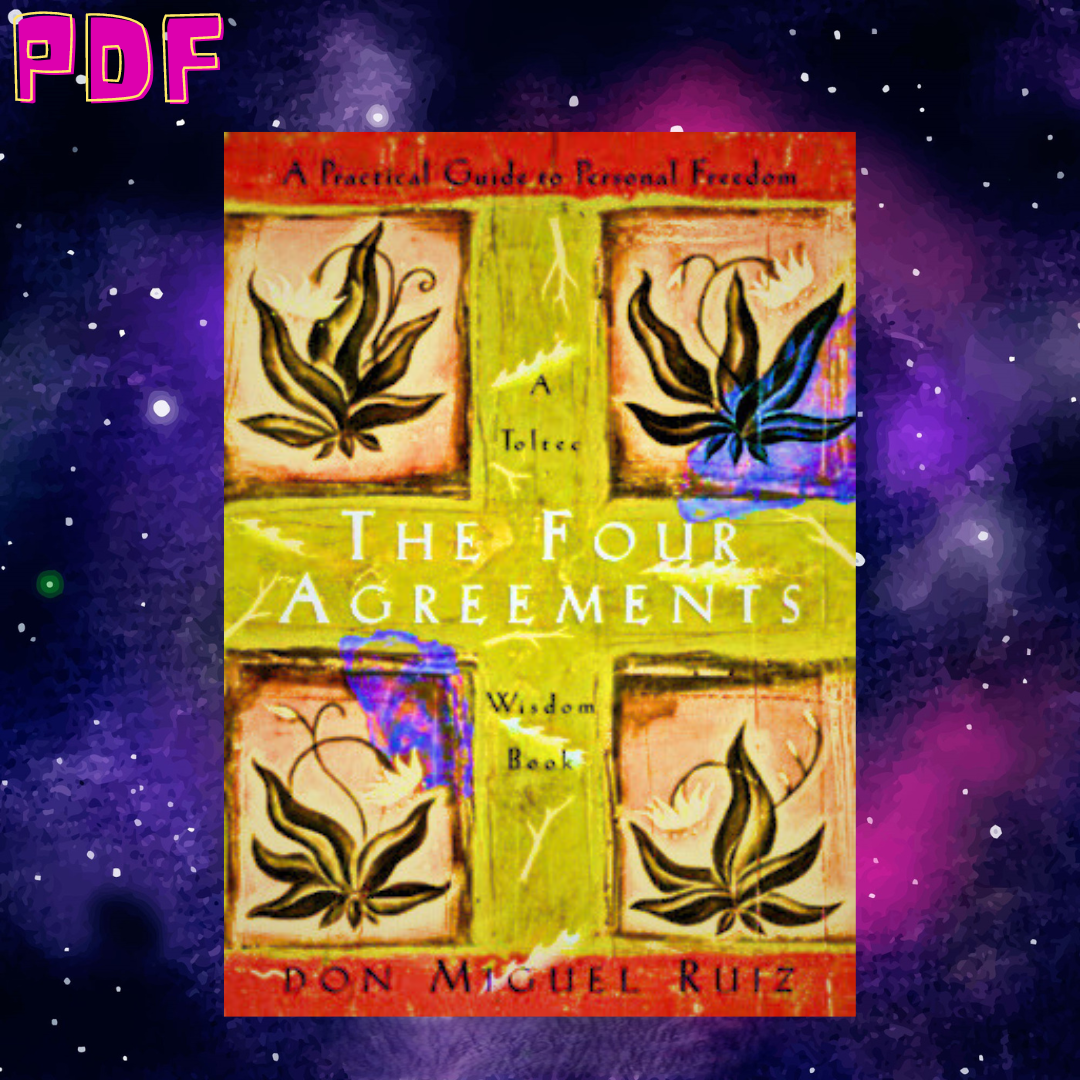
Published in 1997 by Amber-Allen Publishing, The Four Agreements: A Practical Guide to Personal Freedom has remained a fixture in self-help, spirituality, and personal development literature for decades. Written by Don Miguel Ruiz with Janet Mills, the book draws from ancient Toltec wisdom—the beliefs and practices of a society of Indigenous scientists and artists in southern Mexico who formed a scientific and cultural community to explore and conserve spiritual knowledge.
The primary premise of the text is that much of human suffering stems from "domestication" and social conditioning. According to Ruiz, children absorb rules, beliefs, and emotional trauma from parents, educators, and society at large. This socialization creates a rigid belief system—what Ruiz terms the "dream of the planet"—that dictates how individuals perceive reality, judge themselves, and interact with others.
Digital searches for a "4 agreements book pdf" often stem from a desire to bypass traditional purchasing channels to quickly access these concepts. However, understanding the origin of these ideas provides the necessary foundation for applying them properly. The book does not offer a complex academic framework; rather, it distills ancient pragmatic insights into four concise, highly actionable behavioral rules designed to disrupt unconscious psychological patterns.
Navigating Digital Access: PDFs vs. Authorized E-Books
When searching for specific book files online, users frequently encounter public domain documents, academic papers, or unauthorized scans hosted on file-sharing websites. Understanding the distinctions between unauthorized digital formats and legitimate e-book distribution channels helps protect personal cybersecurity and respects intellectual property rights.
Legal and Practical Channels for Digital Reading
For readers seeking to read The Four Agreements on a tablet, e-reader, or smartphone, several official and legal avenues exist that provide high-end digital formatting superior to a static PDF scan.
- Authorized Retailers: Platforms such as Amazon Kindle, Apple Books, Barnes & Noble Nook, and Google Play Books offer official e-book versions optimized for reflowable text, font adjustment, and bookmarking.
- Public Libraries: Through digital apps like Libby, Hoopla, and CloudLibrary, cardholders can borrow the digital or audio version of the book for free using their local library credentials.
- Subscription Services: Audio and e-book subscription models, including Audible or Kindle Unlimited (when active in the platform's catalog), occasionally feature the title or its companion works.
Risks Associated with Unofficial PDF Downloads
Downloading documents from unverified third-party websites carries multiple risks that go beyond copyright considerations.
| Feature | Authorized E-Book Platforms | Unofficial PDF Sites |
|---|---|---|
| File Safety | Encrypted, malware-free files optimized for devices. | Frequently bundled with adware, trackers, or malware. |
| Formatting | Reflowable text, adjustable fonts, and dictionary support. | Fixed-layout image scans, poorly formatted OCR text, or incomplete chapters. |
| Author Support | Direct financial support to the publisher and estate. | No compensation to creators; often run by ad-revenue or phishing operations. |
| Legality | Fully licensed distribution. | Pirated distribution violating international copyright law. |
Breakdown of the Four Core Agreements
The core value of The Four Agreements lies in the simplicity and depth of its titular rules. Each agreement targets a specific arena of human communication, thought, and emotional reaction. Examining them individually clarifies why the book maintains such sustained popularity.
Agreement 1: Be Impeccable with Your Word
The first agreement addresses the immense power of human speech and thought. Ruiz emphasizes that words are not merely ink on paper or sounds in the air; they possess creative force. To be "impeccable" means to be without sin, and in this context, it signifies refusing to use the word against oneself or others.
- Self-Application: Eliminating self-deprecating internal dialogue, guilt, and self-doubt.
- Interpersonal Impact: Recognizing that gossip, malicious remarks, and harsh judgments cast emotional spells on listeners that can persist for years.
- Operational Execution: Speaking with integrity, saying only what you mean, and utilizing the power of communication in the direction of truth and love.
Agreement 2: Don't Take Anything Personally
This agreement focuses on emotional sovereignty. Ruiz argues that nothing others do is because of you. Even when someone appears to direct praise or insults squarely at an individual, that person is operating entirely out of their own belief system, personal history, and emotional state.
- Breaking the Habit of Reactivity: Realizing that taking offense makes one an easy prey for unnecessary suffering.
- Immunity to Opinion: Accepting that whether someone thinks you are wonderful or terrible has no bearing on your actual intrinsic worth.
- Psychological Shift: Moving from a self-centered perspective—where the world revolves around how others treat you—to an objective standpoint.
Agreement 3: Don't Make Assumptions
Human beings have an innate drive to make sense of ambiguous situations, frequently leaping to conclusions when information is missing. The third agreement advises finding the courage to ask questions and express what you really want until communication is clear.
- The Danger of Projection: Assuming that everyone sees, thinks, and feels the exact same way you do.
- Relational Harmony: Eliminating the silent dramas and misunderstandings that fester in personal and professional partnerships simply because expectations were unvoiced.
- Practical Action: Seeking clarity rather than relying on mind-reading or internal speculation.
Agreement 4: Always Do Your Best
The final agreement serves as a dynamic stabilizer for the first three. Ruiz acknowledges that "your best" will change from moment to moment—it will be different when you are healthy versus when you are sick, or energized versus exhausted.
- Avoiding Self-Judgment: By simply doing your best in any given situation, you avoid self-abuse, regret, and the need for excessive punishment or remorse.
- Consistent Action: Focusing on the execution of tasks for the pure joy of doing them rather than anticipating a specific external reward.
- Sustainable Effort: Preventing burnout by understanding that pushing past your current capacity yields diminishing returns.
Frequently Asked Questions
Can I legally download a free PDF of The Four Agreements?
No, The Four Agreements is protected under international copyright law by Amber-Allen Publishing. Any website offering a free, unencrypted PDF download of the complete book is likely distributing pirated material. Legal digital access requires purchasing an e-book or borrowing it through a public library app like Libby.
Who is the author of The Four Agreements?
The book was written by Don Miguel Ruiz, a spiritual teacher and former surgeon, in collaboration with Janet Mills. Ruiz belongs to the Eagle Knight lineage and draws heavily upon ancient Toltec philosophical traditions in his teachings.
Are there companion books or workbooks available?
Yes, Don Miguel Ruiz has expanded upon his initial work with several follow-up publications, including The Mastery of Love, The Voice of Knowledge, The Fifth Agreement (co-authored with his son, Don Jose Ruiz), and The Four Agreements Companion Book.
How long does it take to read the book?
The Four Agreements is a relatively short, accessible book, typically spanning around 160 pages. Most readers can finish the entire text in a single sitting or over two to three short reading sessions, though integrating the principles requires ongoing, long-term practice.
Recommended Next Actions
For readers seeking to implement the principles found within The Four Agreements, starting with digital access through a reputable library platform or purchasing an authorized e-book ensures a reliable reading experience. Rather than attempting to master all four agreements simultaneously, select one agreement to focus on for a single week—such as monitoring your internal dialogue to ensure you are being impeccable with your word—before progressing through the rest of the framework.