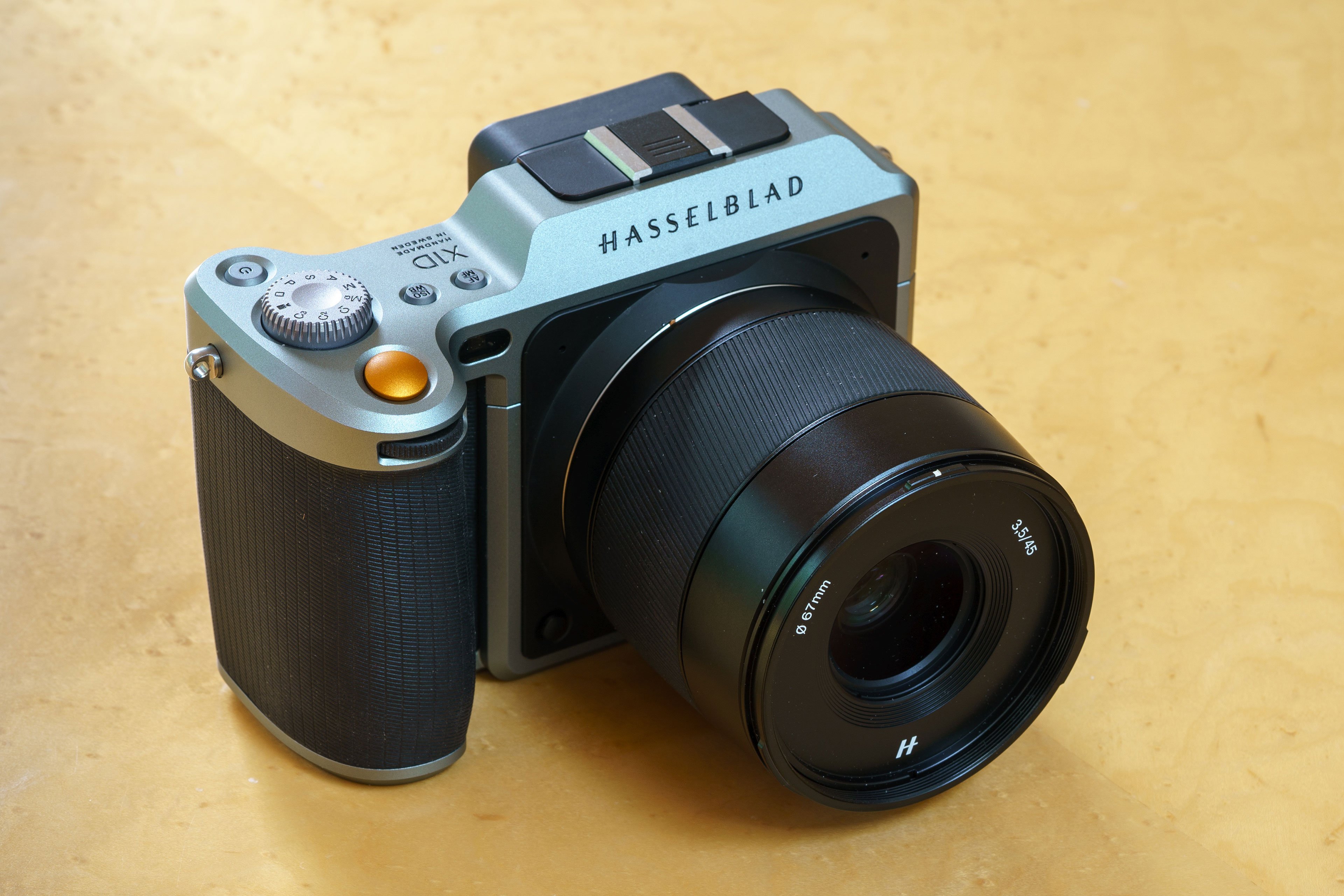
The 2018 Hasselblad X1D 50c stands as a landmark device in the evolution of digital photography, introducing the world's first compact mirrorless medium format camera. Featuring a large 50-megapixel CMOS sensor packed into a sleek, portable body resembling a high-end full-frame DSLR, it bridges the gap between ultra-high-resolution studio systems and nimble outdoor travel gear.
Introduction to the Hasselblad X1D 50c
When Hasselblad introduced the X1D platform, and subsequently refined its ecosystem through 2018 firmware updates and lens expansions, the medium format landscape shifted dramatically. Historically, medium format cameras were heavy, tethered studio workhorses requiring robust tripods and extensive case transport. The X1D 50c shattered this paradigm by offering a sensor measuring 43.8 × 32.9 mm—roughly 1.7 times larger than a standard full-frame 35mm sensor—inside a weather-sealed, ergonomic aluminum chassis weighing just 725 grams with a battery.
This overview explores the architecture, technical capabilities, operational handling, optics ecosystem, and practical value of the 2018 Hasselblad X1D 50c. By examining how this camera performs across diverse shooting scenarios, photographers can understand its unique strengths, as well as the deliberate compromises made to achieve its ground-breaking form factor.
Core Sensor Technology and Image Quality
At the heart of the Hasselblad X1D 50c is a 50-megapixel CMOS sensor that delivers exceptional resolving power, dynamic range, and color fidelity. Unlike smaller full-frame sensors, the physical surface area of this medium format sensor allows for larger individual pixels, which capture more light data and produce smoother tonal gradations.
Dynamic Range and Color Science
The camera boasts an impressive dynamic range of up to 14 stops, allowing photographers to pull incredible shadow detail from high-contrast scenes without introducing excessive digital noise. Highlights can be recovered with remarkable fidelity, preserving cloud textures and bright architectural elements.
Hasselblad’s proprietary Natural Color Solution (HNCS) is integrated into the system, delivering skin tones and environmental colors that closely match human visual perception. Rather than relying on rigid camera profiles or aggressive saturation boosts, HNCS computes colors mathematically to ensure accuracy straight out of the RAW file conversion, saving significant time in post-production.
ISO Performance and Raw Output
Operating at a native base ISO of 100, the X1D 50c maintains clean files up to ISO 3200. While modern full-frame sensors may offer higher extreme ISO ceilings, the medium format files retain a distinct organic grain structure when pushed. Images are captured as 16-bit 3F RAW files, storing massive amounts of color data that give landscape, commercial, and fine-art photographers immense flexibility during editing.
Body Design, Ergonomics, and Handling
The physical design of the X1D 50c is arguably its most revolutionary attribute. Sculpted from a solid block of aluminum, the camera body presents a minimalist aesthetic reminiscent of Scandinavian design principles.
Handgrip and Controls
The right-hand grip is deep and contoured, providing a secure and comfortable hold despite the camera's dense construction. Physical controls are intentionally sparse, relying instead on a clean touch-screen interface. The top plate features a mode dial, a customizable control wheel, and a shutter button that doubles as the power switch.
Viewfinder and Rear Display
Composing images is handled via an electronic viewfinder (EVF) with 2.36 million dots and 0.87x magnification, providing a bright, clear preview of exposure and focus. Below the EVF sits a large 3.0-inch tilting touchscreen featuring 920,000 dots. The user interface mimics modern smartphone navigation, allowing photographers to swipe through menus, pinch-to-zoom into fine details, and adjust shooting parameters with minimal friction.
The XCD Lens Ecosystem and Leaf Shutters
A camera is only as good as the glass attached to it, and Hasselblad developed a dedicated line of autofocus lenses—the XCD series—specifically for the X1D platform.
Central Leaf Shutter Mechanism
Unlike traditional focal-plane shutter systems found in most mirrorless and DSLR cameras, XCD lenses utilize integrated central leaf shutters. This design offers two massive operational advantages:
- Flash Synchronization: The leaf shutter enables flash sync speeds up to 1/2000 of a second across the entire aperture range, allowing photographers to overpower bright ambient daylight with studio strobes or portable speedlights without specialized high-speed sync (HSS) modes.
- Reduced Vibration: Because the shutter mechanism resides inside the lens rather than moving across the sensor plane, mechanical shock and vibration are minimized, resulting in sharper handheld shots at slower shutter speeds.
Optical Performance
XCD lenses are engineered to resolve the extreme demands of a 50-megapixel medium format sensor. Prime lenses such as the XCD 45mm f/3.5 and XCD 90mm f/2.5 deliver edge-to-edge sharpness, minimal chromatic aberration, and pleasing optical fall-off.
Technical Specifications Summary
To fully comprehend the capabilities of the 2018 Hasselblad X1D 50c, review the core technical parameters outlined in the table below.
| Feature | Specification |
|---|---|
| Sensor Type | CMOS, 50 megapixels |
| Sensor Size | 43.8 × 32.9 mm (Medium Format) |
| Image Size (Max) | 8272 × 6200 pixels (RAW 16-bit) |
| Dynamic Range | Up to 14 stops |
| ISO Range | 100 to 25,600 |
| Shutter Speed (Leaf) | 60 minutes to 1/2000s (with flash sync at all speeds) |
| Storage Media | Dual UHS-II SD Card slots |
| Connectivity | USB 3.0 Type-C, Mini HDMI, Audio In/Out, Wi-Fi, GPS |
| Weight | 725g (with battery and memory card) |
Performance, Workflow, and Operational Limitations
While the image output of the X1D 50c is breathtaking, evaluating the camera requires an honest look at its operational speed and limitations. This is a contemplative tool designed for deliberate shooting styles rather than fast-paced action or sports journalism.
Startup and Autofocus Speeds
Early firmware iterations of the X1D faced criticism for slow startup times and sluggish autofocus acquisition. By 2018, subsequent firmware updates had vastly improved responsiveness, reducing startup time to roughly a couple of seconds. However, the contrast-based autofocus system remains optimized for accuracy rather than speed, meaning it can hunt in low-light conditions or track moving subjects with difficulty.
Battery Life and Power Management
The compact body houses a relatively small lithium-ion battery. Battery life is rated conservatively, and heavy use of the rear touchscreen or live-view EVF drains power quickly. Photographers working in the field for extended periods must carry at least one or two spare batteries to ensure uninterrupted shooting sessions.
Tethering and Software Integration
For studio photographers, the camera integrates seamlessly with Phocus, Hasselblad’s proprietary tethering and image processing software. Phocus offers pristine raw conversion tools that extract the absolute maximum dynamic range and color accuracy from 3F files, though third-party support via Adobe Lightroom and Camera Raw is also fully established.
Comparative Positioning in the Medium Format Market
| Attribute | 2018 Hasselblad X1D 50c | Fujifilm GFX 50S | Full-Frame DSLRs (e.g., Canon 5D Mark IV) |
|---|---|---|---|
| Form Factor | Compact Mirrorless | Modular Mirrorless | Traditional DSLR |
| Shutter Type | In-lens Leaf Shutter | Focal-Plane Shutter | Focal-Plane Shutter |
| Max Flash Sync | 1/2000 sec | 1/125 sec | 1/200 sec |
| Weight | 725g | 825g | 890g |
| Lens Ecosystem | XCD Lenses | GF Lenses | EF / F Mount Lenses |
Common Mistakes and Best Practices
Photographers transitioning to the Hasselblad X1D 50c often encounter a learning curve due to the unique characteristics of high-resolution medium format systems.
- Neglecting Camera Shake: At 50 megapixels, micro-vibrations are magnified. Utilize sturdy tripods when working in low light, and remember that the reciprocal rule for shutter speed must be strictly applied or bypassed with image stabilization where available.
- Over-relying on Autofocus Tracking: Accept that the X1D 50c is not built for fast-moving subjects. Practice manual focus techniques using the high-resolution EVF and focus peaking for stationary portraits, architecture, and landscapes.
- Ignoring Storage Requirements: Uncompressed 16-bit RAW files consume massive amounts of card space. Invest in high-speed, high-capacity UHS-II SD cards and ensure your computer backup workflow can handle large file sizes.
Frequently Asked Questions
Can the Hasselblad X1D 50c be used for everyday street photography?
Yes, its lightweight, understated aluminum body makes it surprisingly discreet for street photography. However, its slower autofocus and deliberate shutter operation require a patient, contemplative shooting style rather than rapid snap-shooting.
How does the leaf shutter benefit outdoor portrait photographers?
The central leaf shutter syncs with flashes up to 1/2000s. This allows outdoor portraits shot in bright daylight to use wide apertures (like f/2.8 or f/3.5) for a shallow depth of field while completely subduing the ambient sun with flash.
Is the X1D 50c weather-sealed?
Yes, the camera body features robust weather sealing designed to withstand dust and moisture in challenging outdoor environments, provided it is paired with weather-sealed XCD lenses.
Can legacy Hasselblad V-system lenses be used on the X1D 50c?
Yes, using an optional adapter (such as the XH or XV adapter), legacy Hasselblad lenses can be mounted. However, autofocus functionality will be lost, and metering behavior will depend on the specific adapter configuration.
What is the advantage of a 16-bit color depth?
A 16-bit file records trillions of color variations, providing significantly smoother tonal transitions and reducing the risk of color banding when pulling shadows or pushing highlights during post-processing.
Conclusion and Final Recommendation
The 2018 Hasselblad X1D 50c remains a milestone achievement in digital camera design, successfully proving that medium format image quality does not require studio-bound bulk. For landscape, architectural, fine-art, and portrait photographers who prioritize uncompromising resolution, color fidelity, and dynamic range in a portable package, this camera offers an exceptional creative experience. While its autofocus speed and battery life place practical limits on action photography, its deliberate workflow, leaf-shutter flash capabilities, and ergonomic design ensure it delivers breathtaking photographic results for the patient artist.