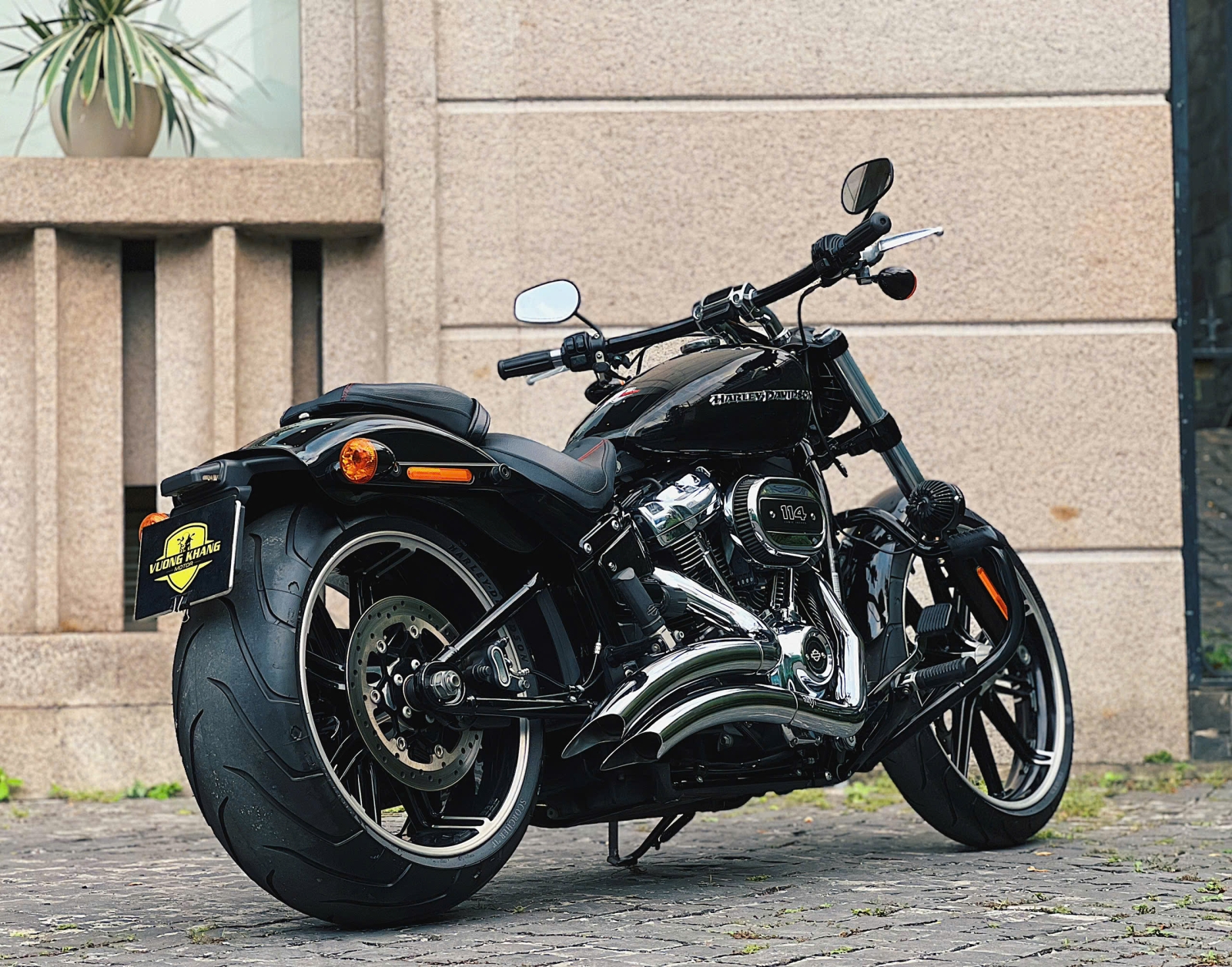
The 2018 Harley-Davidson Softail Breakout 114 represents a radical design shift for the iconic manufacturer, combining drag-strip aesthetics with the completely overhauled, stiffer, and lighter Softail chassis introduced that model year. Powered by the potent Milwaukee-Eight 114 cubic-inch engine, this factory custom cruiser delivers massive low-end torque, an aggressive long-and-low riding stance, and surprisingly agile handling compared to its Twin Cam predecessors.
Introduction to the 2018 Softail Platform Revolution
The year 2018 marked a monumental turning point for Harley-Davidson. The Motor Company made the bold decision to merge its traditional Dyna and Softail chassis lines into a single, completely redesigned Softail platform. The objective was clear: shed unwanted weight, dramatically increase frame rigidity, and improve lean angles while preserving the classic hardtail look that cruiser enthusiasts demand.
At the spearhead of this revolution sat the Softail Breakout. Long recognized for its ultra-wide rear tire, raked-out front end, and minimalist styling, the Breakout received the full benefit of this engineering overhaul. Pairing the high-performance Milwaukee-Eight 114 engine with a chassis that weighed significantly less than previous iterations transformed the bike from a straight-line parade cruiser into a machine with genuine dynamic capability. For riders seeking a head-turning factory custom that does not sacrifice modern ride quality, the 2018 Breakout 114 remains a fascinating study in contrast and capability.
Design Philosophy and Visual Presence
The visual identity of the 2018 Harley-Davidson Softail Breakout 114 is defined by its dramatic, elongated proportions. It unapologetically channels the spirit of American drag racing, featuring a chopped front fender, a heavily raked front end, and a massive 240mm rear tire mounted on a wide wheel.
Stance and Ergonomics
The riding position is distinctly forward-biased, utilizing drag-style handlebars mounted directly on risers and forward foot controls. This creates a stretched-out posture that puts the rider front and center, emphasizing the striking profile of the fuel tank. The 3.5-gallon fuel "peanut" style tank is sleek and narrow, emphasizing the width of the engine and the front end. However, this aesthetic choice limits touring range, requiring more frequent stops on longer highway journeys.
Lighting and Instrumentation
Modern minimalism extends to the instrumentation. Harley-Davidson equipped the 2018 Breakout with a compact, digital riser-mounted display that integrates cleanly into the handlebar clamp. It provides speed, gear selection, fuel level, and tachometer readings without cluttering the clean lines of the front end. The signature LED Daymaker headlight cuts through dark roads effectively while anchoring the front profile with a contemporary aesthetic.
Engine and Drivetrain: The Milwaukee-Eight 114
At the heart of the Breakout 114 is the Milwaukee-Eight 114 V-twin engine, displacing 1,868 cubic centimeters. This power plant utilizes a four-valve cylinder head design, dual spark plugs per cylinder, and internal counterbalancers to tame primary vibration while retaining the classic Harley-Davidson exhaust note and engine pulse.
Power Delivery and Performance
The engine punches out a massive 119 lb-ft of torque at a low 3,000 RPM. In practical terms, this translates to effortless acceleration from a standstill and instantaneous passing power at highway speeds without needing to aggressively downshift. Throttle response is crisp and direct, managed via electronic throttle control (ride-by-wire).
Transmission and Exhaust
Power is sent through a smooth-shifting Cruise Drive 6-speed transmission, which keeps highway cruising revs comfortably low. The stock exhaust is a 2-into-2 staggered system that complies with noise and emissions regulations while emitting a deep, bass-heavy rumble. Enthusiasts often swap this out for an aftermarket stage exhaust to unlock more volume and a modest performance gain, though the stock setup provides ample grunt out of the box.
Chassis Dynamics, Suspension, and Handling
The biggest selling point of the 2018 Softail overhaul is how it handles compared to older Softail models. The new steel tubular frame is significantly stiffer and lighter, reducing overall chassis flex during hard cornering.
Suspension Components
Up front, the Breakout utilizes a 49mm dual-bending valve (DBV) fork that improves damping control and reduces weight. In the rear, a single under-seat hidden monoshock replaces the dual shocks of older Softail models. This modern rear suspension is easily adjustable via an under-seat preload adjuster, allowing riders to dial in the setup for solo riding or carrying luggage.
Handling the 240mm Rear Tire
Cruisers featuring ultra-wide rear tires—like the 240/40R18 Michelin Scorcher 11 fitted to the Breakout—historically suffered from heavy, resistant steering characteristics, often wanting to stand up or resist turning into corners. While the Breakout 114 still requires deliberate steering input due to its wide rear rubber and aggressive 34-degree rake, the rigid new chassis and revised geometry make turn-in significantly more neutral and predictable than its predecessors. Lean angles, while still limited by footpeg clearance compared to naked bikes or adventure tourers, are vastly improved over pre-2018 custom cruisers.
Braking and Safety
Bringing a heavy cruiser to a halt requires substantial stopping power. The 2018 Breakout 114 features a single 4-piston fixed caliper gripping a 300mm disc up front, and a 2-piston floating caliper with a 292mm disc in the rear.
Anti-lock Braking System (ABS) came standard on the 114-cubic-inch model variants, providing essential security on slippery or unexpected road surfaces. The brakes offer progressive feel and strong bite, though aggressive riders hauling down a heavy machine from high speeds will want to utilize both front and rear brakes simultaneously for optimal stopping distances.
Specifications Comparison
To fully understand where the 2018 Softail Breakout 114 sits within the Harley-Davidson lineup, reviewing its core technical specifications alongside its key sibling, the Fat Boy 114, highlights how geometry alters ride dynamics.
| Technical Specification | 2018 Softail Breakout 114 | 2018 Softail Fat Boy 114 |
|---|---|---|
| Engine Type | Milwaukee-Eight 114 V-Twin | Milwaukee-Eight 114 V-Twin |
| Displacement | 1,868 cc (114 cu in) | 1,868 cc (114 cu in) |
| Torque | 119 lb-ft @ 3,000 RPM | 119 lb-ft @ 3,000 RPM |
| Front Tire | 130/60B21 63H | 160/60R18 70V |
| Rear Tire | 240/40R18 79V | 240/40R18 79V |
| Lean Angle (Right/Left) | 26.8° / 25.2° | 25.6° / 25.6° |
| Fuel Capacity | 3.5 gallons (13.2 liters) | 5.0 gallons (18.9 liters) |
| Weight (In Running Order) | 670 lbs (304 kg) | 697 lbs (316 kg) |
Ownership Considerations: Pros and Cons
Evaluating the 2018 Softail Breakout 114 requires balancing head-turning custom aesthetics against everyday practicality.
Advantages
- Stunning Aesthetic: Factory-custom drag-bike looks straight off the showroom floor.
- Torquey Engine: The Milwaukee-Eight 114 offers immediate acceleration and effortless passing power.
- Chassis Rigidity: Significantly lighter and stiffer frame compared to pre-2018 Softails, resulting in sharper handling.
- Modern Amenities: Clean digital instrumentation, bright LED lighting, and standard ABS.
Disadvantages
- Limited Fuel Range: The 3.5-gallon tank necessitates frequent fuel stops on extended trips.
- Stretched Ergonomics: Forward controls and drag bars may cause lower back and shoulder fatigue on long rides for shorter riders.
- Wide Rear Tire Compromise: While improved, the 240mm rear tire still requires heavier steering effort in tight corners compared to narrower-tire cruisers.
- Limited Passenger Comfort: The stock rear pillion seat is minimal, making two-up touring uncomfortable without aftermarket upgrades.
Frequently Asked Questions
What is the difference between the 107 and 114 engine models in 2018?
The primary difference is displacement and performance output. The 2018 Breakout was offered in both Milwaukee-Eight 107 (1,746 cc) and 114 (1,868 cc) variants. The 114 model provides higher torque, faster acceleration, premium badging, and additional standard styling details like the air cleaner insert and contrasting wheel finishes.
Is the 2018 Harley-Davidson Breakout 114 good for long-distance touring?
It is not optimized for long-distance touring. While the Milwaukee-Eight engine eats up highway miles comfortably, the 3.5-gallon fuel tank limits range, the forward riding position exposes the rider to wind blast, and the rear seat is sparse. It excels as a weekend cruiser, boulevard brawler, and short-trip custom motorcycle.
Can you put a passenger on a stock 2018 Softail Breakout 114?
Yes, but with caveats. The bike comes equipped with a small passenger pillion pad and rear footpegs, but the passenger accommodations are designed for short trips rather than comfortable cross-country journeys due to the minimal padding and lack of a backrest.
How does the 2018 Softail chassis improve over older models?
The 2018 Softail frame design eliminated dozens of components and welding points, increasing overall chassis rigidity by up to 65% while shedding approximately 30 to 35 pounds depending on the model. This drastically reduces frame flex during aggressive cornering and improves overall stability.
What maintenance does the Milwaukee-Eight 114 require?
Routine maintenance includes regular oil and filter changes every 5,000 miles, primary chaincase fluid checks, belt tension inspections, and brake fluid flushes bi-annually. The engine utilizes self-adjusting hydraulic lifters, eliminating manual valve clearance adjustments.
Final Recommendation
The 2018 Harley-Davidson Softail Breakout 114 is a purpose-built statement piece that benefits immensely from the structural and mechanical upgrades of Harley's modern cruiser era. It is best suited for riders who prioritize aggressive styling, head-turning custom presence, and massive low-end torque for weekend rides and urban cruising. Riders looking for cross-country touring comfort should explore touring models like the Street Glide or Road King, but for pure visual impact paired with modern cruiser performance, the Breakout 114 delivers an unforgettable ride.