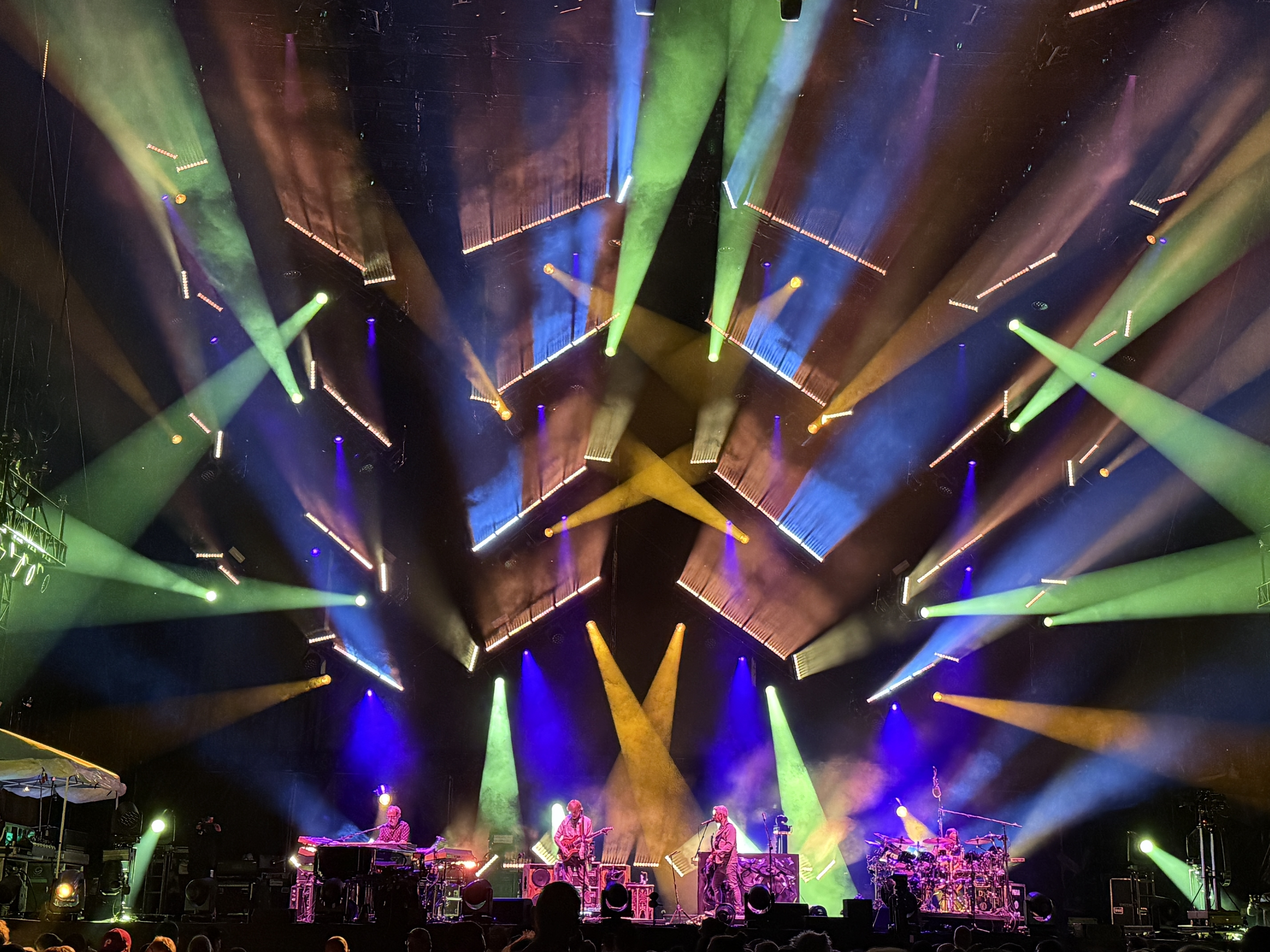
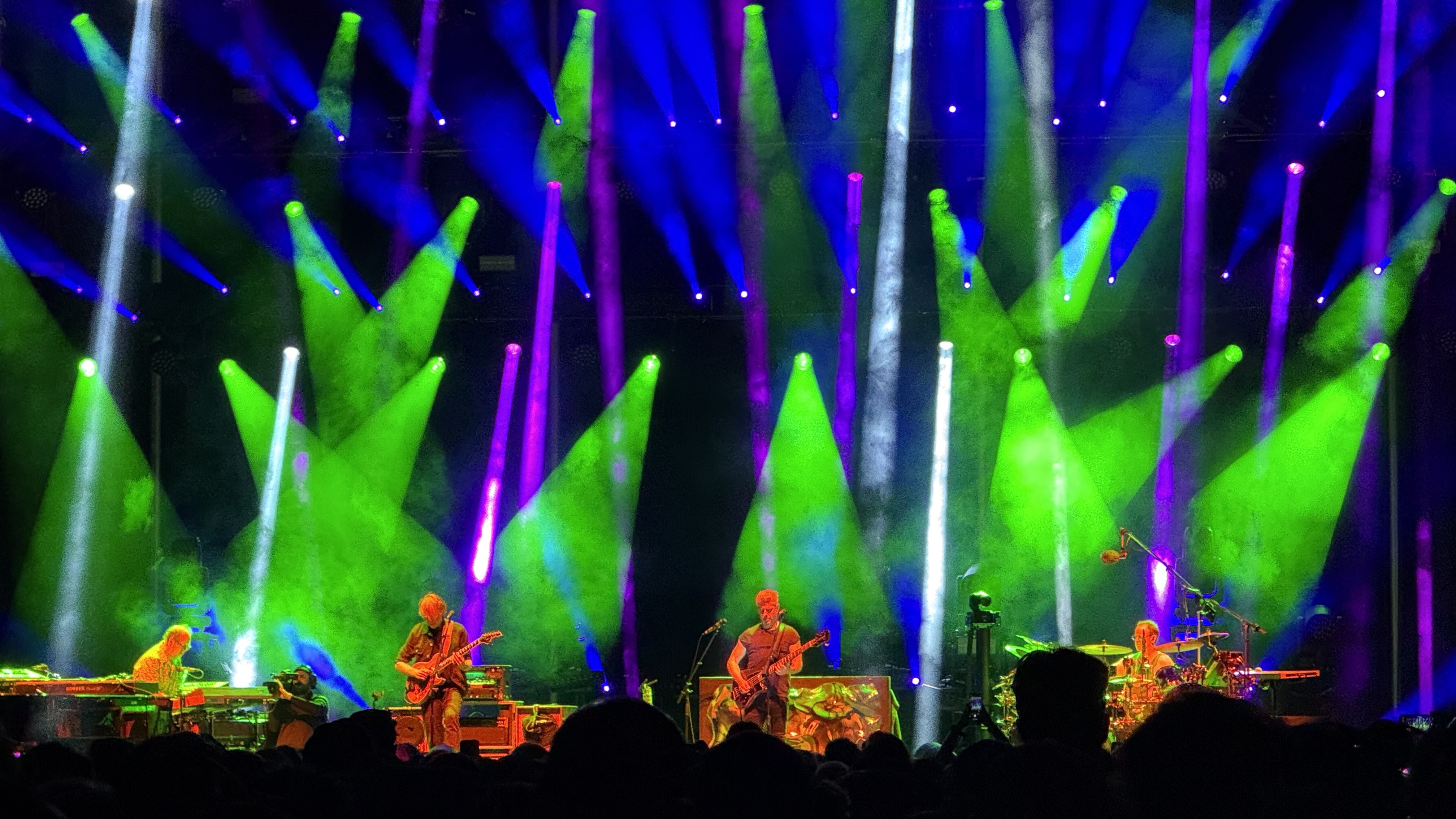
In 2017, music industry financial data and net worth evaluations revealed that the iconic American rock band Phish had accumulated a collective net worth estimated between $200 million and $260 million. Frontman Trey Anastasio led individual valuations at approximately $85 million, while bandmates Jon Fishman, Mike Gordon, and Page McConnell each held estimates of $45 million to $60 million.
Unpacking Phish’s 2017 Financial Reveal: The Core Wealth Figures
When financial analytics platforms and music trade publications compiled valuation estimates in 2017, the financial scale of Vermont-born jam band Phish gained widespread public attention. Unlike traditional pop or rock acts whose valuations rely heavily on Billboard Hot 100 radio hits or major label advance checks, Phish built a multi-million-dollar empire almost entirely through touring supremacy, direct-to-consumer merchandising, live recording archives, and private corporate entities.
By mid-2017, industry estimates published across financial and entertainment media established the combined wealth of the four band members—Trey Anastasio, Mike Gordon, Jon Fishman, and Page McConnell—at roughly a quarter of a billion dollars. This valuation placed Phish among the highest-earning American touring bands of their era, operating with financial autonomy rarely achieved in the modern recording industry.
Individual 2017 Net Worth Estimates:
- Trey Anastasio (Guitar/Vocals): ~$85 Million
- Mike Gordon (Bass/Vocals): ~$45 - $60 Million
- Jon Fishman (Drums/Vocals): ~$45 - $60 Million
- Page McConnell (Keyboards): ~$45 - $60 Million
The difference between Trey Anastasio’s estimated net worth and that of his bandmates primarily stems from publishing credits and external projects. As the primary composer for the vast majority of the band’s core catalog, Anastasio receives the primary share of performance rights organization (PRO) royalties through ASCAP. Additionally, his active solo touring schedule with the Trey Anastasio Band (TAB), orchestral performances, and theatrical writing contributions—such as his Tony-nominated score for Hands on a Hardbody—generated revenue streams distinct from Phish’s collective accounts.
The remaining three members maintained balanced financial portfolios grounded in an equal four-way split of all operational band earnings. Income from live ticket revenues, official merchandise sales, pay-per-view live streams, and archival physical releases was distributed equally among the quartet under their shared corporate structures.
Key Financial Catalysts of 2017: The Baker's Dozen and Summer Tour
The 2017 financial reveal coincided with one of the most lucrative and critically acclaimed artistic endeavors in modern concert history: The Baker's Dozen residency at Madison Square Garden (MSG) in New York City. Spanning 13 non-consecutive nights between July 21 and August 6, 2017, the run set a precedent for stadium-level venue residencies.
Baker's Dozen Financial Summary (MSG, 2017):
- Total Nights: 13
- Unique Songs Played: 237 (Zero repeats)
- Tickets Sold: 227,385 (100% Sold Out)
- Total Gross Box Office: $15,041,405
- Banner Ceremonies: Permanent MSG Rafters Banner Raised
According to concert trade logs from Billboard Boxscore and Pollstar, the 13-night run grossed $15,041,405 from 227,385 ticket sales. Because the residency took place entirely at a single arena, Phish drastically reduced the overhead logistics typically associated with standard nationwide touring—such as daily trucking equipment teardowns, cross-country diesel fuel expenses, and multi-city hotel stays for crew members. As a result, profit margins for the residency were significantly higher than standard tour stops.
Beyond the MSG residency, Phish’s overall 2017 summer and fall dates added tens of millions to their gross annual balance sheet. Stops at Dick's Sporting Goods Park in Commerce City, Colorado, and traditional outdoor amphitheaters across the United States elevated Phish’s total 2017 touring gross past the $35 million mark.
The Business Model of Phish: Non-Traditional Revenue Streams
To understand how Phish accumulated their 2017 net worth figures, it is essential to examine their underlying business model. Formed at the University of Vermont in 1983, the band recognized early on that commercial radio play and conventional record label contracts were ill-suited to their lengthy, improvisational extended jams. Instead, Phish pioneered a direct-to-fan financial architecture that anticipated modern digital streaming trends by decades.
- Phish Financial Engine
- Live Touring Residencies & Festivals
- Independent IP Ownership (JEMP Records)
- Archival & Digital Apps (LivePhish/Nugs.net)
Direct Ticket Distribution and Fan Loyalty
In the early 1990s, the band established Phish Tickets, a mail-order ticketing service that directly allocated a substantial portion of concert venue tickets directly to fan-club members. By maintaining control over primary ticket distribution, Phish minimized third-party promoter cuts, reduced ticketing fees for their audience, and captured maximum face-value revenue directly into their operating accounts.
Intellectual Property Control: JEMP Records
In 2005, following the expiration of their multi-album deal with Elektra Records, Phish founded their independent record imprint, JEMP Records. Named after the initials of the band members (Jon, Ernest/Trey, Mike, Page), JEMP Records allowed the group to regain ownership of their master tapes and handle all physical and digital reissues internally.
By bypassing traditional major label distribution fees, Phish retained upwards of 70% to 80% of wholesale physical profits and digital streaming margins on all archival releases, vinyl pressings, and live box sets.
Monolithic Merchandising Operation: Phish Dry Goods
Phish operates their internal merchandising company, known as Dry Goods. Unlike artists who license their logos to mass market third-party apparel companies for low single-digit royalty percentages, Phish retains full in-house design, manufacturing, and fulfillment control. From limited-edition screen-printed gig posters—which frequently sell out at $50 to $100 per print and command premium prices on secondary markets—to custom apparel and home goods, Dry Goods functions as a high-margin revenue engine.
Comparative Net Worth Breakdown of Phish Band Members
The table below illustrates the estimated financial standing, key revenue sources, and publishing structures for each member of Phish as reported during the 2017 financial evaluation period:
| Band Member | Core Instrument | Estimated 2017 Net Worth | Primary Revenue Sources | Songwriting & Royalty Equity |
|---|---|---|---|---|
| Trey Anastasio | Lead Guitar / Lead Vocals | ~$85 Million | Phish touring/merch, Trey Anastasio Band (TAB), solo publishing, theatrical composition | Primary publishing share (ASCAP composer of core catalog) |
| Mike Gordon | Bass Guitar / Vocals | ~$50 Million | Phish touring/merch, Mike Gordon Band, film projects, JEMP Records equity | Equal 1/4 share of band profits & co-writing royalties |
| Jon Fishman | Drums / Percussion / Vocals | ~$50 Million | Phish touring/merch, side projects, commercial business ventures, JEMP equity | Equal 1/4 share of band profits & co-writing royalties |
| Page McConnell | Keyboards / Synthesizers / Vocals | ~$50 Million | Phish touring/merch, Page McConnell solo/side bands, JEMP Records equity | Equal 1/4 share of band profits & co-writing royalties |
Archival Monetization and the LivePhish Platform
Another pivotal element of Phish’s net worth expansion leading up to 2017 was the early adoption of high-definition digital audio distribution through LivePhish.com, launched in partnership with Nugs.net in December 2002.
Digital Audio Monetization Model:
- Concert Performance Recorded Live on Stage
- Soundboard Mix Rendered Within Hours of Show Completion
- Direct Upload to LivePhish App & Web Store
- Immediate Monetization via Digital Purchases & Monthly Subscriptions
While most touring bands historically relied on bootleg cassette recordings for show distribution, Phish turned live concert taping into an official subscription revenue engine. Within hours of a concert's conclusion, multi-track soundboard recordings are mastered and uploaded to the LivePhish platform. Fans purchase individual MP3/FLAC downloads or subscribe to the LivePhish+ streaming app service.
By turning their expansive live concert catalog into a recurring SaaS-style (software-as-a-service) content subscription model, Phish created a continuous income stream that operates independently of conventional record release cycles.
Modern Corporate Structure and Management
Phish's financial security relies on professional corporate governance. For the majority of their career, the band operated under Dionysian Productions, a Burlington-based management enterprise established by early manager John Paluska. As the band's operations grew, management transitioned to Coran Capshaw’s Red Light Management, one of the largest independent music management enterprises in the world.
Under Capshaw’s guidance, Phish structured their operations into specialized corporate entities:
- Phish Inc.: Manages master touring contracts, venue agreements, liability insurance, and major corporate assets.
- JEMP Records LLC: Holds trademark ownership, catalog master recordings, and physical manufacturing licenses.
- Phish Dry Goods LLC: Manages all retail, online, and event venue physical merchandise distribution.
- The WaterWheel Foundation: The band's 501(c)(3) non-profit charitable arm created in 1997. Funded through fan donations, specialized ticket auctions, and targeted merch sales, WaterWheel has raised millions of dollars for Vermont charities and environmental conservation without dipping into the band's operational income.
By segregating liabilities and keeping accounting functions in-house, Phish avoided the standard financial missteps that plagued many 1970s and 1980s rock acts, ensuring high net equity retention for all four members.
Retrospective Analysis: 2017 as a Financial Benchmark
Looking back from 2026, the net worth figures revealed in 2017 marked a major milestone in Phish's commercial growth. The financial success of the Baker's Dozen proved that an independent jam band could achieve arena residency gross revenues on par with mainstream pop headliners without corporate radio play.
Long-Term Asset & Earnings Evolution:
- Pre-2004: Traditional touring model with major label distribution (Elektra).
- 2005-2016: Rebuilt infrastructure via JEMP Records, LivePhish, and ticket lottery.
- 2017 Financial Peak: $200M+ collective net worth, $15M single MSG residency.
- Post-2017 Trajectory: Expansion into international destination festivals (Riviera Maya) and modern multi-media venues (Las Vegas Sphere).
In the years following 2017, Phish expanded their lucrative business operations into destination events, such as their annual multi-day Phish Riviera Maya concerts in Mexico, and multi-night runs at the Las Vegas Sphere. These high-ticket destination runs further established Phish as one of the most commercially durable and financially stable bands in live music history.
Frequently Asked Questions (FAQ)
What was Phish's combined net worth revealed in 2017?
In 2017, industry financial analyses estimated Phish's combined net worth between $200 million and $260 million. This total reflects the aggregate net worth of all four original band members combined with shared corporate assets and catalog rights.
Who is the richest member of Phish?
Lead guitarist and vocalist Trey Anastasio is the richest member of Phish, with an estimated net worth of $85 million reported in 2017. His higher valuation stems from primary songwriting and publishing credits across the band's catalog, along with solo tours and outside compositional work.
How much money did Phish make from the 2017 Baker's Dozen residency?
According to official Billboard Boxscore data, Phish's 13-night Baker's Dozen residency at Madison Square Garden grossed $15,041,405 in ticket sales across 227,385 sold-out seats. Profit margins were exceptionally high due to minimal travel and staging overhead costs.
How do Phish band members split their earnings?
Phish splits overall touring revenue, merchandise profits, live streaming subscriptions, and JEMP Records earnings equally among all four band members. Primary publishing royalties differ based on songwriter performance rights registry credits, where Trey Anastasio holds the largest portion.
Does Phish own their master music recordings?
Yes. Phish owns their complete catalog of master recordings through their independent label, JEMP Records, established in 2005. Retaining master ownership enables the band to retain the vast majority of physical and digital distribution royalties.
Strategic Takeaways for Music Industry Financial Analysis
Analyzing the 2017 financial figures of Phish provides key insights into alternative wealth creation within the entertainment industry:
- Prioritize Ownership Over Advances: By founding JEMP Records and owning their master tapes, Phish created long-term enterprise value rather than relying on short-term record company advances.
- Monetize Live Performance Archives: Utilizing platforms like LivePhish converts standard concert tours into perpetual, subscription-based digital media assets.
- Optimize Logistics for Residency Models: The 2017 Baker's Dozen proved that multi-night single-venue residencies dramatically lower touring overhead while maintaining peak box office ticket sales.
- Maintain Operational Governance: Structuring separate business units for merchandising, touring, and archival licensing protects personal assets and preserves long-term multi-member wealth equity.