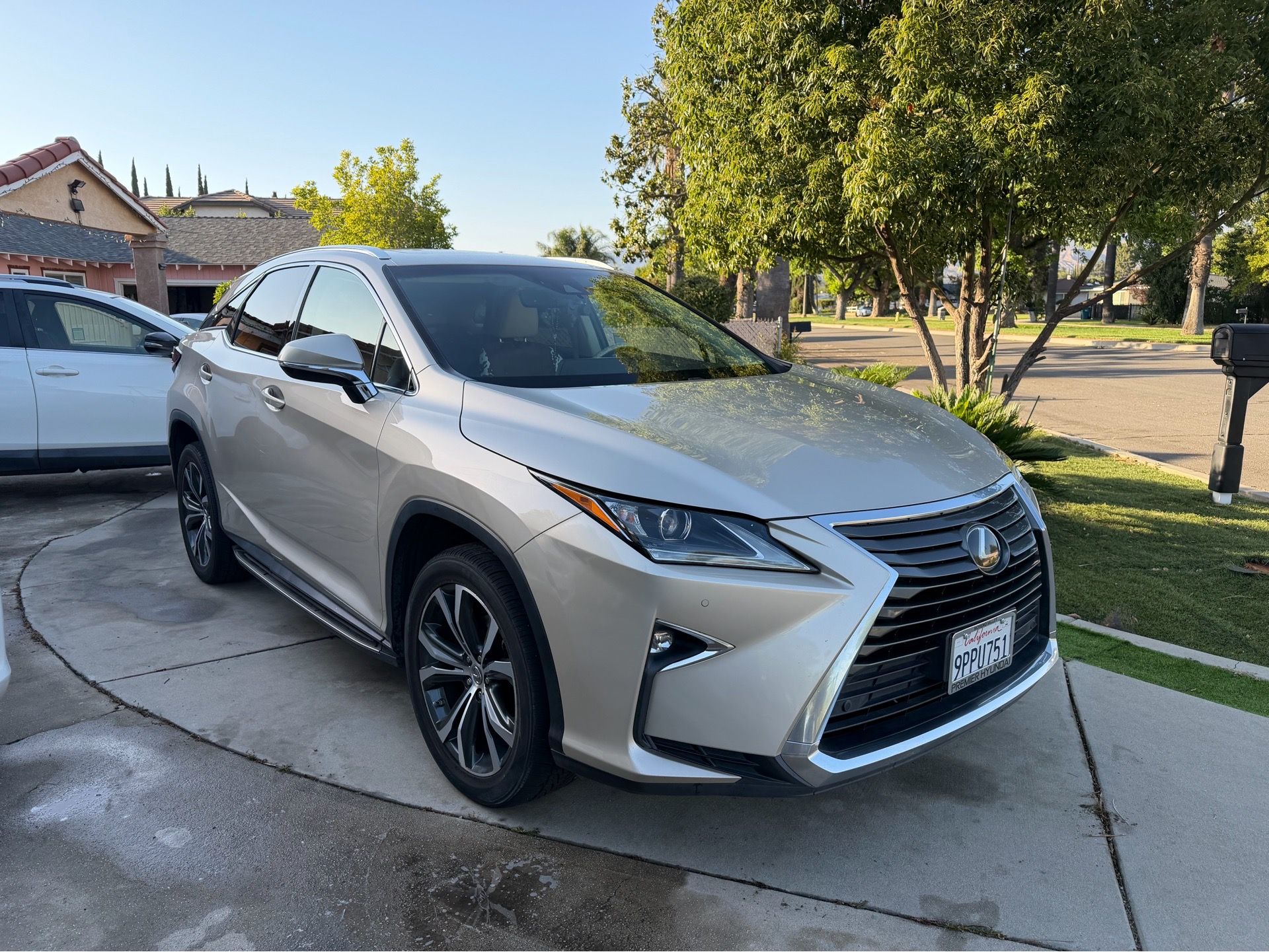
The 2017 Lexus RX 350 achieves a 0 to 60 mph acceleration time ranging from 6.8 to 7.9 seconds, depending on whether it is configured with Front-Wheel Drive (FWD) or All-Wheel Drive (AWD), as well as variations between manufacturer baselines and independent testing protocols. Powered by a 295-horsepower 3.5-liter V6 engine, its performance reflects a refined balance of luxury comfort and steady mechanical output.
1. Engine Performance Specifications and Powertrain Architecture
Understanding the acceleration timeline of the 2017 Lexus RX 350 requires examining the mechanical foundation introduced with the fourth-generation (AL20) RX series. The 2017 model year features Lexus’s proven 3.5-liter V6 engine, designated internally as the 2GR-FKS. This naturally aspirated engine replaced the older 2GR-FE engine, introducing advanced combustion technology aimed at enhancing both fuel economy and power delivery.
- 3.5L V6 Engine: 295 hp / 267 lb-ft
- 8-Speed Automatic Transmission
- FWD Configuration
- Curb Wt: ~4,222 lbs
- 0-60: ~7.1 - 7.7s
- AWD Configuration
- Curb Wt: ~4,387 lbs
- 0-60: ~6.8 - 7.9s
- FWD Configuration
- 8-Speed Automatic Transmission
Core Powertrain Specifications
- Engine Type: 3.5-liter 60-degree V6, aluminum block and cylinder heads
- Engine Code: 2GR-FKS
- Induction: Naturally Aspirated with Variable Intake System (ACIS)
- Fuel Delivery: D-4S Direct and Port Fuel Injection System
- Valvetrain: Double Overhead Cam (DOHC), 4 valves per cylinder with Dual VVT-iW (Variable Valve Timing-intelligent Wide) on intake and VVT-i on exhaust
- Peak Horsepower: 295 hp @ 6,300 RPM
- Peak Torque: 267 lb-ft @ 4,700 RPM
- Transmission: 8-speed Direct-Shift electronically controlled automatic transmission (ECT-i) with paddle shifters on F Sport models
- Compression Ratio: 11.8:1
- Recommended Fuel: Premium unleaded (91 octane or higher recommended for maximum power output)
The D-4S injection system utilizes both high-pressure direct injection into the combustion chambers and low-pressure port injection into the intake ports. At low to medium engine loads, the system combines both methods to optimize fuel air mixing and minimize particulate emissions. Under full-throttle conditions—such as a 0–60 mph acceleration test—the engine relies predominantly on direct injection to maximize charge cooling, allow an 11.8:1 compression ratio without engine knock, and deliver full rated torque.
The 2GR-FKS engine also utilizes the Atkinson cycle during light cruising conditions by delaying the closure of the intake valves, allowing a portion of the intake charge to flow back into the intake manifold. When the driver demands immediate acceleration, the VVT-iW system seamlessly switches back to the conventional Otto cycle to deliver full power.
2. 2017 Lexus RX 350 0–60 Acceleration Metrics Breakdown
When evaluating 0 to 60 mph performance, it is vital to differentiate between conservative manufacturer claims and real-world instrumented testing conducted by automotive publications.
Manufacturer vs. Tested Acceleration Times
- Official Lexus Claim (FWD): 7.7 seconds
- Official Lexus Claim (AWD): 7.9 seconds
- Independent Tested Time (FWD): ~7.1 to 7.3 seconds
- Independent Tested Time (AWD / F Sport AWD): ~6.8 to 7.0 seconds (utilizing standard 1-foot rollout industry practices)
Lexus intentionally publishes conservative acceleration figures to represent worst-case conditions, including full vehicle loads, standard pump fuel, and unconditioned road surfaces. Independent instrumented tests routinely show that an AWD 2017 Lexus RX 350 can reach 60 mph in roughly 6.8 to 6.9 seconds when launching cleanly on dry asphalt.
- 0 mph: 0.0s
- 30 mph: ~2.5s
- 60 mph: ~6.8s - 7.3s
- 1/4 Mile (92 mph): ~15.2s - 15.5s
The Incremental Speed Timeline
To visualize how the 2017 RX 350 builds speed during a maximum-effort acceleration launch from a standstill:
- 0–30 mph (2.4 to 2.6 seconds): Off the line, the torque converter flashes to roughly 2,200 RPM before engaging completely. Front-wheel-drive models may experience minor traction control intervention or momentary wheelspin if launched aggressively. All-wheel-drive models engage the electromagnetic coupling in the rear differential immediately upon throttle application, vectoring up to 50% of available engine torque to the rear wheels to eliminate front axle slippage.
- 0–60 mph (6.8 to 7.3 seconds): The 8-speed transmission shifts out of first gear around 36 mph, holding engine speed near the 6,300 RPM power peak. The shift into second gear occurs quickly, continuing linear power delivery through the 60 mph barrier.
- 5–60 mph Rolling Start (Street Start): 7.3 to 7.5 seconds: Without brake-torquing the torque converter from a dead stop, the rolling 5–60 mph time reflects real-world highway merging power. The slight lag compared to a brake-torqued standing start is due to the 8-speed automatic needing a moment to execute downshifts when the accelerator is floored from low speeds.
- Quarter-Mile Timeline (15.2 to 15.5 seconds @ 91–93 mph): Continuing beyond 60 mph, third gear takes the vehicle through the end of the quarter-mile drag strip interval. Acceleration remains steady, though aerodynamic drag begins to moderate speed gains as the 4,300-pound crossover approaches triple-digit speeds.
3. Historical Evolution: Lexus RX 0–60 Performance Timeline
To place the 2017 model in proper context, it helps to examine how the 0 to 60 mph performance of the Lexus RX lineup has evolved across successive model generations. The timeline demonstrates a clear progression from luxury-cruiser performance to modern, responsive acceleration profiles.
Generation Timeline & Average 0-60 Times:
- 1st Gen (1999-2003): ~8.5s - 8.8s
- 2nd Gen (2004-2009): ~7.4s - 7.8s
- 3rd Gen (2010-2015): ~7.1s - 7.5s
- 4th Gen (2016-2022): ~6.8s - 7.3s (2017 Model Year)
- 5th Gen (2023+ Base): ~7.2s - 7.5s (2.4L Turbo 4-Cyl)
First Generation (1999–2003: Lexus RX 300)
- Engine: 3.0-liter 1MZ-FE V6 (220 hp / 222 lb-ft)
- Transmission: 4-speed automatic
- 0–60 mph Time: 8.5 to 8.8 seconds
- Context: Established the luxury crossover segment. Acceleration was smooth for its era, though limited by four wide transmission gear ratios.
Second Generation (2004–2009: Lexus RX 330 / RX 350)
- Engine: 3.3-liter 3MZ-FE V6 (230 hp) upgraded in 2007 to 3.5-liter 2GR-FE V6 (270 hp / 251 lb-ft)
- Transmission: 5-speed automatic
- 0–60 mph Time: 7.4 to 7.8 seconds (2007–2009 RX 350)
- Context: The mid-cycle introduction of the 3.5-liter 2GR-FE engine in 2007 dropped 0–60 times significantly below 8 seconds.
Third Generation (2010–2015: Lexus RX 350)
- Engine: 3.5-liter 2GR-FE V6 (275 hp / 256 lb-ft)
- Transmission: 6-speed automatic (standard); 8-speed added on F Sport in 2013
- 0–60 mph Time: 7.0 to 7.5 seconds
- Context: The third generation refined power delivery and expanded electronic torque management.
Fourth Generation (2016–2022: Lexus RX 350 — Includes 2017 Model)
- Engine: 3.5-liter 2GR-FKS V6 (295 hp / 267 lb-ft)
- Transmission: 8-speed automatic across all trims
- 0–60 mph Time: 6.8 to 7.3 seconds (Tested)
- Context: Marked the addition of direct injection (D-4S) and an 8-speed gearbox across the entire model line, yielding optimal balance between high-end horsepower and fuel efficiency.
Fifth Generation (2023+: Lexus RX 350)
- Engine: 2.4-liter T24A-FTS Turbocharged inline 4-cylinder (275 hp / 317 lb-ft)
- Transmission: 8-speed automatic
- 0–60 mph Time: 7.2 to 7.5 seconds (Base Gas AWD); faster on high-output hybrid variants (RX 500h F Sport Performance at ~5.9s)
- Context: The brand transitioned from naturally aspirated V6 power to turbocharged four-cylinder powerplants to meet modern emissions standards, exchanging peak horsepower for low-end torque.
4. Trim Levels and Drivetrain Configurations Compared
The 2017 Lexus RX 350 was offered in three primary trim/drivetrain variants: Front-Wheel Drive (FWD), All-Wheel Drive (AWD), and the performance-styled F Sport. While all share the same 295-hp V6 engine, mechanical differences in power distribution, weight, and suspension tuning alter launch dynamics.
Dynamic Torque Control AWD System
The AWD system used in the 2017 RX 350 does not use a central mechanical differential. Instead, it features an electronically controlled electromagnetic coupling attached to the rear differential housing.
During steady-state highway cruising, the system disengages the rear coupling to send 100% of power to the front wheels for maximum fuel efficiency. However, under initial acceleration from a stop, sensors monitor throttle angle, steering angle, and wheel speeds to pre-emptively lock the rear coupling, sending up to a 50:50 front-to-rear torque split. This prevents front tire scrub and improves 0–60 off-the-line acceleration.
F Sport Trim Variations
The RX 350 F Sport adds several chassis hardware upgrades, including:
- Adaptive Variable Suspension (AVS) with active dampening control
- Drive Mode Select with Sport S and Sport S+ modes
- Sport-tuned electric power steering calibration
- 20-inch alloy wheels with lower-profile 235/55R20 tires
While Sport S+ mode sharpens throttle response and firms up the dampers, it does not add raw horsepower. Consequently, 0–60 acceleration between a standard AWD RX 350 and an F Sport AWD is functionally identical, with the F Sport benefiting primarily from reduced body roll and slightly improved initial tire grip.
| Trim / Configuration | Engine Specs | Transmission | Weight (lbs) | Lexus 0–60 (s) | Tested 0–60 (s) | 1/4 Mile Performance |
|---|---|---|---|---|---|---|
| RX 350 FWD | 3.5L V6 (295 hp / 267 lb-ft) | 8-Speed Auto | ~4,222 | 7.7 | 7.1 – 7.3 | 15.4s @ 92 mph |
| RX 350 AWD | 3.5L V6 (295 hp / 267 lb-ft) | 8-Speed Auto | ~4,387 | 7.9 | 6.8 – 7.0 | 15.2s @ 93 mph |
| RX 350 F Sport FWD | 3.5L V6 (295 hp / 267 lb-ft) | 8-Speed Auto | ~4,222 | 7.7 | 7.1 – 7.3 | 15.4s @ 92 mph |
| RX 350 F Sport AWD | 3.5L V6 (295 hp / 267 lb-ft) | 8-Speed Auto | ~4,387 | 7.9 | 6.8 – 7.0 | 15.2s @ 93 mph |
5. Factors Influencing 0–60 Performance and Aging Dynamics
For owners and secondary-market buyers evaluating a 2017 Lexus RX 350, several operational factors affect real-world performance metrics.
- Mechanical Condition & Fuel Quality
- Atmospheric / Environmental Altitude
- Tire Compound & Suspension Quality
- Vehicle Curb Weight & Installed Options
- Final Real-World 0-60 Time
1. Drive Mode Select Settings
- Eco Mode: Delays throttle valve opening relative to pedal depression and forces earlier transmission upshifts. 0–60 times in Eco mode can exceed 9.0 seconds.
- Normal Mode: Standard linear mapping.
- Sport / Sport S+ Mode: Increases throttle sensitivity, holds gears longer into the RPM band, and increases hydraulic pressure within the 8-speed auto to execute slightly quicker shifts.
2. Vehicle Weight and Installed Equipment
Optional packages alter the vehicle's power-to-weight ratio:
- The optional Panoramic Glass Roof adds roughly 70–80 lbs of weight high on the chassis.
- High-spec Luxury Package trims carrying power rear seats, dual-screen rear entertainment, and 20-inch wheels add up to 150 lbs over a base vehicle, adding 0.1 to 0.2 seconds to 0–60 times.
3. Engine Maintenance and Component Health
As the 2017 RX 350 ages, maintaining factory performance requires attention to key areas:
- Carbon Buildup on Intake Valves: Thanks to the dual-injection D-4S system, fuel is periodically sprayed directly onto the back of the intake valves via port injectors. This minimizes carbon buildup compared to direct-injection-only engines. However, dirty fuel injectors can degrade performance over time.
- Spark Plug Condition: The 2GR-FKS engine requires iridium spark plugs changed at 60,000-mile intervals. Worn spark plugs cause subtle ignition timing retard under heavy engine load, dulling full-throttle response.
- Mass Air Flow (MAF) Sensor Cleanliness: A dirty MAF sensor miscalculates incoming air volume, forcing the engine control module (ECM) to pull back timing, slowing acceleration.
- Transmission Fluid Degradation: Fluid condition in the 8-speed gearbox impacts shift speed and torque converter lockup efficiency. Fresh fluid maintains crisp gear transitions.
4. Environmental and Altitude Impact
Being a naturally aspirated engine, the 2GR-FKS loses roughly 3% of its power for every 1,000 feet of elevation above sea level. At an altitude of 5,000 feet (such as in Denver, CO), power drops from 295 hp to approximately 250 hp, stretching 0–60 mph performance closer to 8.5–8.8 seconds.
Frequently Asked Questions
Is the 2017 Lexus RX 350 fast compared to its competitors?
The 2017 RX 350 offers adequate, smooth acceleration for a midsize luxury crossover, but it was not designed as a high-performance vehicle. Competitors equipped with turbocharged 6-cylinder engines—such as the Audi Q7 3.0T or BMW X5 xDrive35i—achieved 0–60 mph times in the 5.8 to 6.3-second range. However, the naturally aspirated V6 in the Lexus provides long-term reliability advantages over many turbocharged engines.
Why is the AWD version of the 2017 RX 350 faster 0–60 than the FWD version in real-world tests?
While the AWD version is roughly 165 pounds heavier than the FWD model, its ability to launch without traction loss gives it an advantage off the line. Under full throttle, the FWD model can slip its front tires, triggering electronic traction control intervention that reduces engine torque momentarily. The AWD system routes power to all four wheels instantly, eliminating wheelspin and resulting in a cleaner, faster initial launch.
Does using 87-octane gasoline slow down the 2017 Lexus RX 350 0–60 time?
Yes. While the owner's manual permits 87-octane regular gasoline in emergencies, the engine's 11.8:1 compression ratio requires 91-octane or higher premium fuel to make its full rated 295 horsepower. Operating on lower-octane fuel causes the Engine Control Module (ECM) to retard ignition timing to prevent engine knock, reducing output by roughly 10–15 horsepower and adding 0.2 to 0.4 seconds to the 0–60 acceleration time.
How does the 2017 RX 350 0–60 performance compare to the RX 450h hybrid model?
The 2017 RX 450h hybrid pairs the 3.5-liter V6 with electric drive motors to produce a combined total system output of 308 horsepower. Due to immediate electric motor torque off the line, the RX 450h posts a 0–60 time of roughly 7.1 to 7.3 seconds, making it comparable to or slightly faster than a standard FWD gas model, despite carrying an extra 200–300 pounds of hybrid battery hardware.
Operational Guidance for Owners and Buyers
To maintain optimal acceleration and throttle performance in a 2017 Lexus RX 350:
- Verify Fuel Grade: Always fuel with 91-octane premium gasoline to ensure the ECM operates at full advance timing without knock intervention.
- Inspect Air Intake System: Clean or replace the engine air filter every 15,000 to 30,000 miles. A clogged air filter restricts airflow into the intake manifold, impacting high-RPM horsepower.
- Check Drivetrain Mounts: Engine and transmission mounts degrade over time. Soft or cracked mounts absorb engine torque during aggressive launches, dampening throttle responsiveness.
- Maintain Recommended Tire Pressures: Under-inflated tires increase rolling resistance, while worn tires with compromised tread compound impair AWD initial traction during launches. Ensure tires match factory load and speed ratings (V-rated or higher).