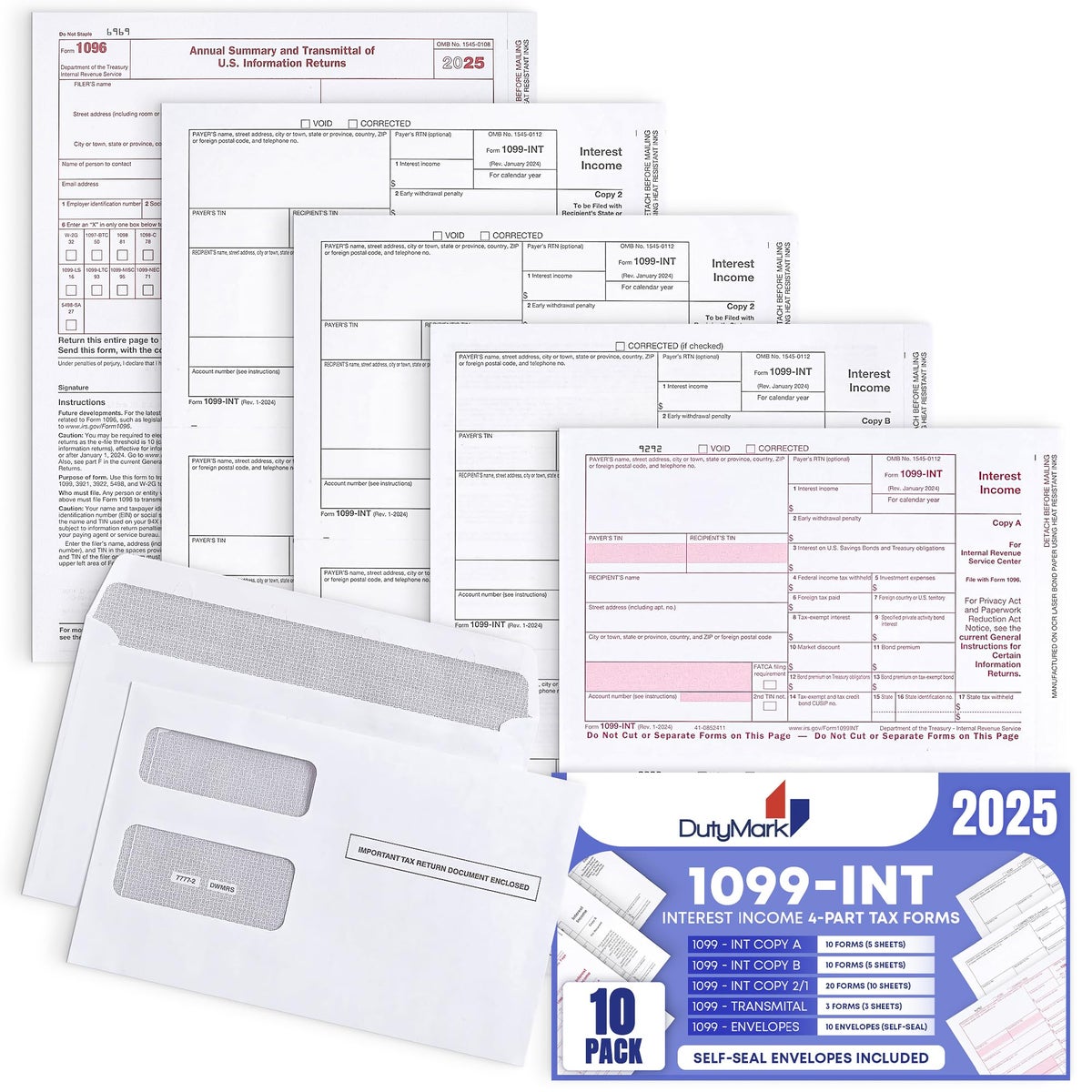
When a life insurance policy earns interest—such as through accumulated dividends, policy cash value growth left on deposit, or delayed death benefit payouts—the insurance company may issue a Form 1099-INT. Understanding these tax reporting rules helps policyholders and beneficiaries distinguish between tax-free life insurance distributions and taxable interest income, ensuring accurate reporting to the Internal Revenue Service.
Navigating the intersection of life insurance policies and tax reporting can quickly become confusing, particularly when financial institutions and insurance carriers issue tax forms like the Form 1099-INT. While the foundational principle of permanent life insurance is that cash value grows on a tax-deferred basis, and death benefits are generally paid out income-tax-free, specific financial scenarios trigger mandatory tax reporting. When a policyholder or beneficiary receives interest income from an insurance carrier, the transaction crosses from standard insurance administration into taxable financial events.
This guide unpacks the complex rules governing Form 1099-INT issuance within the context of life insurance. It examines when interest is generated, how insurance companies determine reporting thresholds, the distinction between cash value growth and taxable interest, and what beneficiaries and policyholders must do when these tax documents arrive in the mail.
The Fundamentals of Life Insurance Cash Value and Interest
To understand why a Form 1099-INT might be generated by a life insurance company, it is essential to look at how permanent life insurance policies—such as whole life, universal life, and variable universal life—accumulate value.
Permanent life insurance policies feature a dual structure: a death benefit component and a cash value component. A portion of the premium payments goes toward the insurance protection, while the remaining balance enters a cash value account. This account grows over time based on guaranteed interest rates, dividends declared by mutual insurance companies, or market-indexed performance.
Tax-Deferred vs. Taxable Growth
Under United States tax law (specifically Internal Revenue Code Section 7702), the internal growth of cash value within a life insurance policy is tax-deferred. This means that as long as the policy remains active and does not lapse, surrender, or trigger certain disqualifying distributions, the policyholder does not pay annual income tax on the interest, dividends, or capital gains accumulating inside the cash value. Because the growth is tax-deferred, it does not generate a Form 1099-INT during normal, ongoing accumulation.
However, tax deferral ends under specific operational conditions. If the cash value is withdrawn, if the policy is surrendered for its cash surrender value, or if funds are separated from the policy structure and left to earn interest independently, tax rules shift immediately.
When Does a Life Insurance Policy Generate a Form 1099-INT?
A Form 1099-INT is titled "Interest Income." Payers use it to report interest payments of $10 or more (or $600 or more in certain trade or business contexts) to the IRS and the recipient. In the life insurance industry, a 1099-INT is typically issued in a few specific scenarios.
- Death Benefit Proceeds on Deposit
- When Form 1099-INT is Triggered: Beneficiary leaves death benefit in an interest-bearing account with the insurer.
- Dividend Accumulations
- When Form 1099-INT is Triggered: Policyholder leaves policy dividends on deposit to earn interest.
- Policy Surrenders and Overpayments
- When Form 1099-INT is Triggered: Accumulated interest portions paid out during full surrenders or refunds.
1. Death Benefit Proceeds Held on Deposit
When an insured person passes away, the beneficiary is entitled to the policy's death benefit. Frequently, beneficiaries choose not to take the entire lump sum immediately. Instead, insurance companies often provide a retained asset account or allow the beneficiary to leave the proceeds on deposit with the company's general account, where the funds earn interest while the beneficiary decides how to use them.
While the death benefit itself remains income-tax-free, any interest earned on that death benefit after the date of the insured's death is fully taxable income. The insurance company will issue a Form 1099-INT to the beneficiary reporting this specific interest amount.
2. Policy Dividends Left to Accumulate
Participating whole life insurance policies pay annual dividends to policyholders. Policyholders typically choose from several options regarding these dividends:
- Take them as cash.
- Apply them toward premium payments.
- Purchase paid-up additions.
- Leave them on deposit with the insurance company to earn interest.
If the policyholder chooses to leave dividends on deposit, the dividends themselves are generally considered a return of premium and are not taxable. However, the interest earned on those accumulated dividends is taxable in the year it is credited to the account. If that interest totals $10 or more, the insurance carrier must issue a Form 1099-INT.
3. Interest on Overpayments and Premium Refunds
Occasionally, administrative errors, delayed underwriting adjustments, or policy loan repayments result in premium overpayments. If the insurance company holds these funds and pays interest on the returned balance, that interest income is reportable on a Form 1099-INT.
Form 1099-INT vs. Form 1099-R: Know the Difference
Taxpayers frequently confuse Form 1099-INT with Form 1099-R (Distributions From Pensions, Annuities, Retirement or Profit-Sharing Plans, IRAs, Insurance Contracts, etc.). Understanding the boundary between these two forms prevents filing errors.
- Form 1099-R is issued when a policyholder surrenders a life insurance policy, takes a taxable policy withdrawal (that exceeds the cost basis, known as "investment in the contract"), or takes a taxable distribution from an annuity. It tracks the movement of principal and accumulated cash value.
- Form 1099-INT is issued strictly for interest payments derived from funds held by the insurance company outside of the core policy cash value structure, such as accumulated dividend interest or interest accrued on delayed death claims.
If a policyholder surrenders a whole life policy and receives a lump sum representing both their return of premium (basis) and accumulated earnings, they will typically receive a Form 1099-R, not a 1099-INT, because the earnings are classified as contract distribution gains rather than standard bank or deposit interest.
Tax Implications for Policyholders and Beneficiaries
Receiving a Form 1099-INT means the IRS has received a matching document. Failing to report the income listed on the form can trigger automated underreporting notices from the IRS (such as a CP2000 notice).
For Policyholders (Accumulated Dividends)
If you receive a 1099-INT for interest earned on accumulated dividends, you must report this amount on your federal income tax return (typically on Schedule B of Form 1040) as ordinary interest income, even if you did not withdraw the interest and chose to leave it with the insurance company. Under constructive receipt rules, because the interest was credited to your account and available for your use, it is taxable in the year earned.
For Beneficiaries (Retained Asset Accounts)
As established, the core death benefit is exempt from federal income tax under Internal Revenue Code Section 101(a). However, beneficiaries must carefully separate the tax-free death benefit from the taxable interest reported on Form 1099-INT.
- Box 1 (Interest Income): This box shows the taxable interest earned on the death benefit while held by the insurer. This must be reported as ordinary income.
- The Principal Death Benefit: This does not appear on Form 1099-INT and is excluded from gross income.
Common Mistakes and Compliance Pitfalls
Navigating life insurance tax documents requires precision. Avoiding common errors ensures compliance with tax laws and prevents unnecessary financial penalties.
Confusing Return of Premium with Interest
Policyholders sometimes assume that all money received from an insurance company is tax-free because life insurance is generally associated with tax advantages. It is vital to remember that while the insurance contract's core benefits enjoy special status, external interest earnings—like bank interest—are subject to standard income tax rates.
Ignoring Small Amounts Under $10
Insurance companies are not legally required to issue a Form 1099-INT if the interest earned is less than $10. However, taxpayers are still legally required to report all interest income, regardless of whether a 1099-INT was issued. Omitting interest earned simply because a form was not generated violates federal tax reporting rules.
Failing to Match Cost Basis
When evaluating distributions and cash value movements, keeping an accurate record of your policy's cost basis (the total premiums paid minus any tax-free dividends or withdrawals previously taken) is critical. While cost basis affects 1099-R reporting more directly than 1099-INT reporting, understanding your overall policy accounting prevents confusion when multiple forms arrive from a single carrier.
Frequently Asked Questions
Do I have to pay taxes on interest earned from life insurance cash value?
No, the internal growth (interest, dividends, and capital gains) of cash value within a permanent life insurance policy is tax-deferred. You do not pay taxes on this growth annually as long as the policy remains in force. Taxes only apply if you surrender the policy for a gain, take non-compliant withdrawals, or leave specific funds (like dividends or death benefits) in separate interest-bearing accounts.
Why did I get a Form 1099-INT from my life insurance company if I didn't cash out my policy?
You likely received a Form 1099-INT because you left policy dividends on deposit with the insurance company to accumulate interest, or because interest accrued on a death benefit left on deposit. That specific interest is treated as taxable income in the year it is credited, even if you left the money with the insurer.
Is a life insurance death benefit considered taxable interest?
No. The primary death benefit payout is income-tax-free under IRC Section 101(a). However, if the beneficiary chooses to leave the death benefit on deposit with the insurance company to earn interest rather than taking a lump sum, the interest earned after the date of death is taxable and reported on a Form 1099-INT.
What should I do if the amount on my Form 1099-INT is incorrect?
If you believe the interest reported on your Form 1099-INT is inaccurate, contact the insurance company's customer service or tax reporting department immediately. Request a detailed accounting of the interest calculation and, if an error was made, ask the company to issue a corrected Form 1099-INT before you file your tax return.
Do I report interest income if my insurance company didn't send a Form 1099-INT?
Yes. Insurance companies are only mandated to issue a Form 1099-INT if the cumulative interest earned reaches $10 or more. Regardless of whether a form is mailed to you, federal tax law requires you to report all taxable interest earned during the tax year.
Next Actions and Professional Guidance
When managing life insurance policies that generate tax reporting documents, taking proactive steps ensures financial clarity:
- Review Annual Statements: Examine your annual policy anniversary statements to track dividend accumulations and interest-bearing side accounts.
- Organize Tax Documents: Retain all Forms 1099-INT and 1099-R alongside your tax preparation records.
- Consult a Professional: Because tax laws regarding life insurance (such as Modified Endowment Contract rules under IRC Section 7702A) are intricate, consult a certified public accountant (CPA) or a fee-only financial planner before making major policy surrenders, withdrawals, or complex beneficiary settlements.