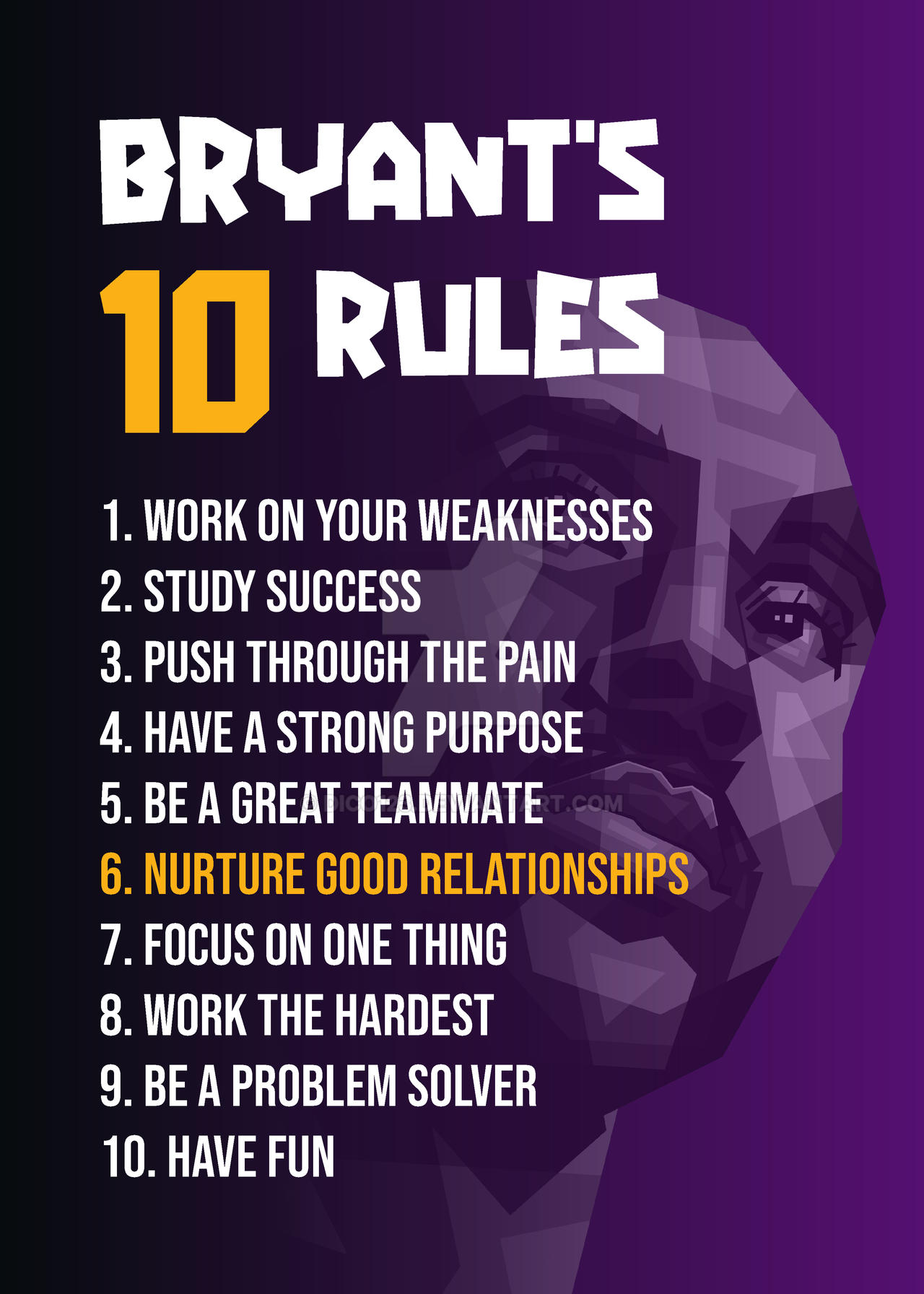
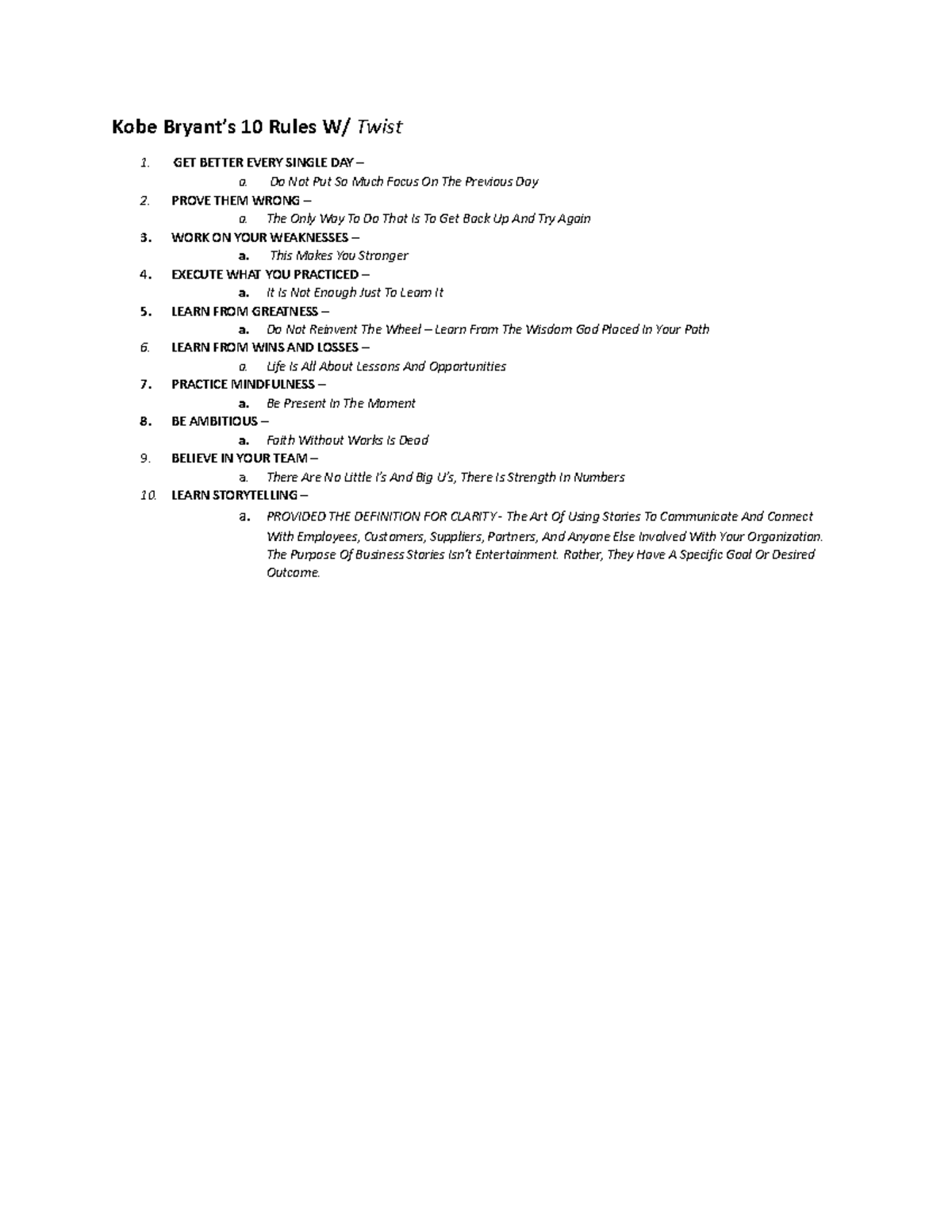
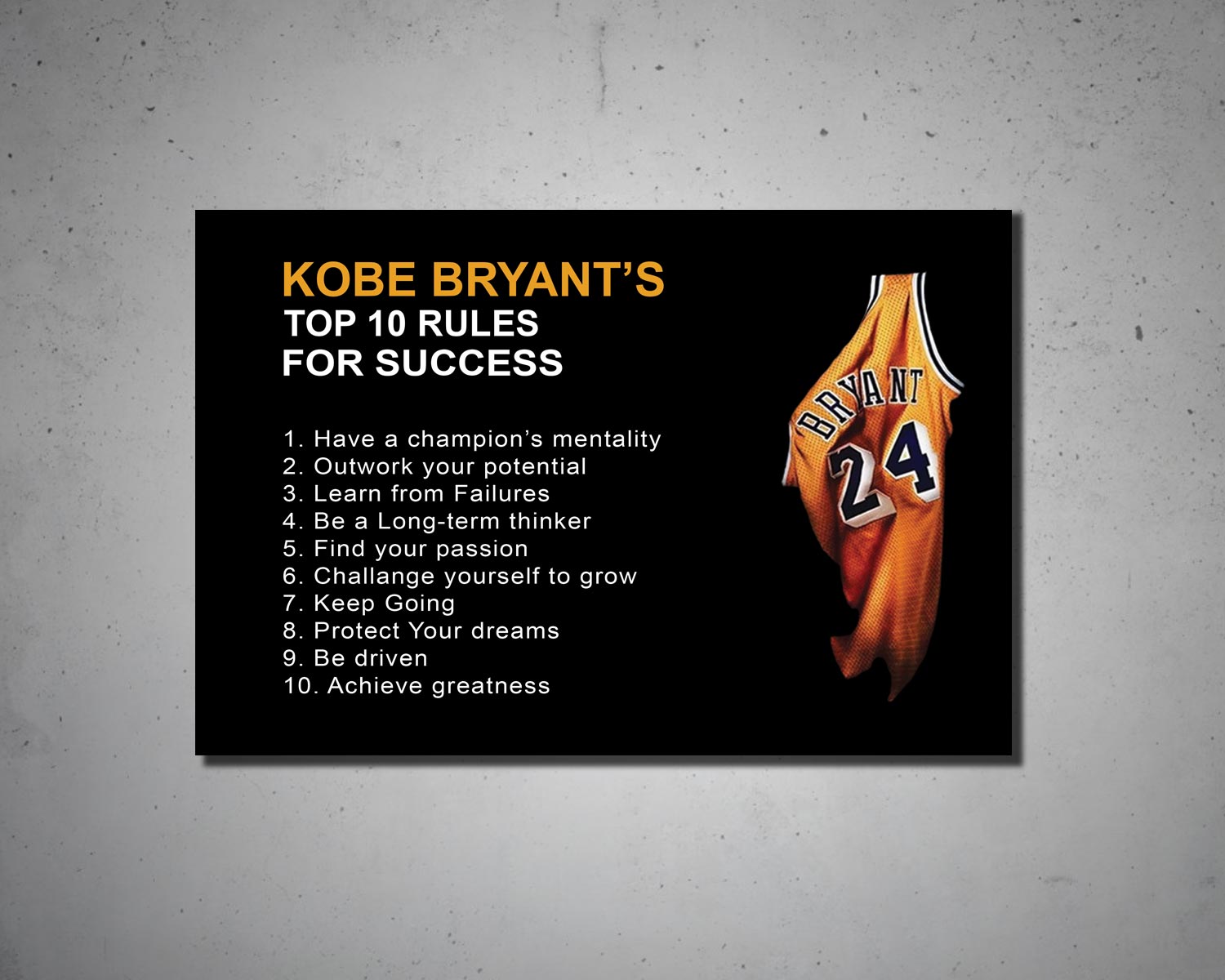
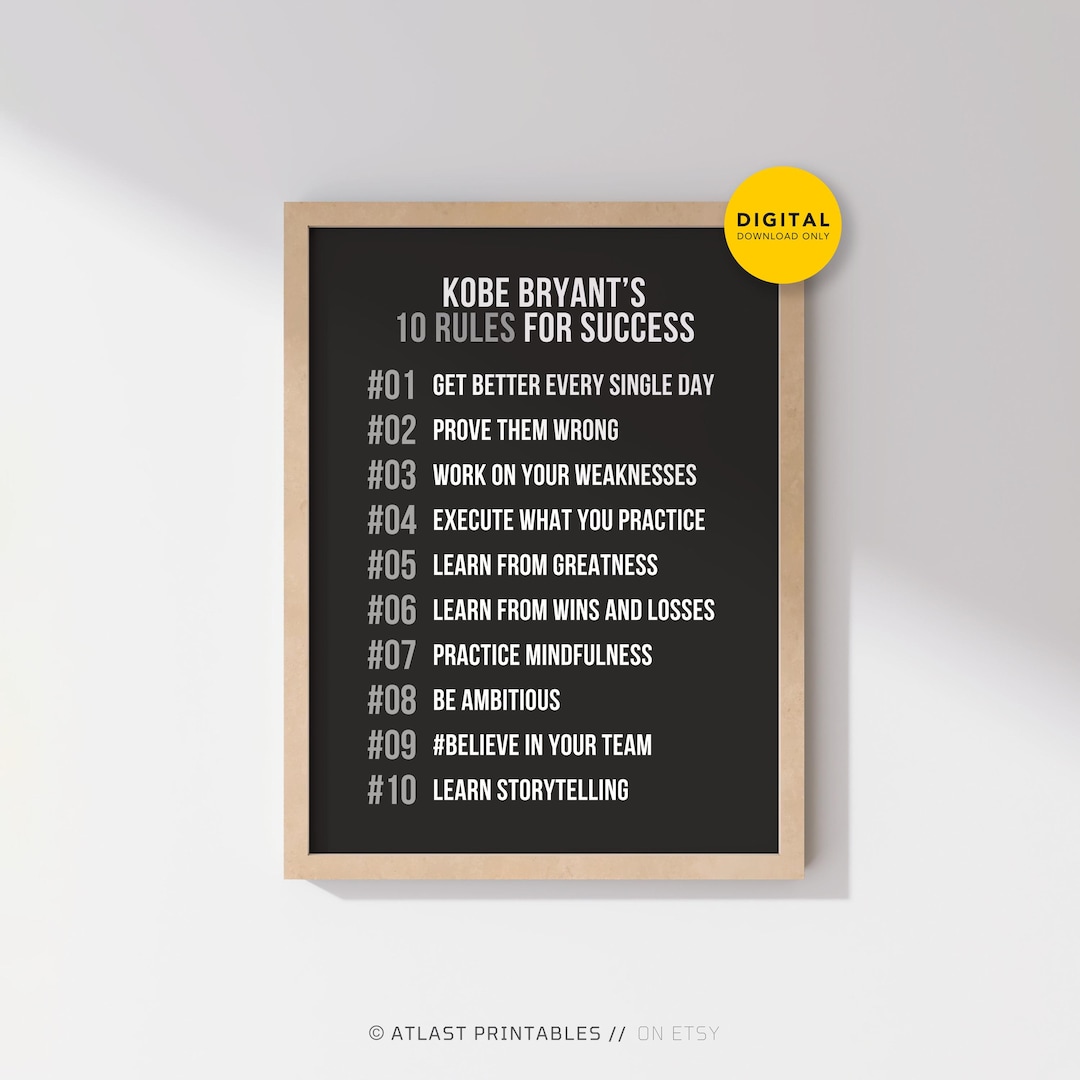
Kobe Bryant’s 10 rules represent a systematic framework for achieving elite performance, relentless self-improvement, and mental toughness, drawing from his legendary two-decade career in the National Basketball Association. These principles—often referred to collectively as the "Mamba Mentality"—focus on obsessive preparation, emotional control, continuous learning, and an uncompromising drive to outwork the competition in any discipline.
The Origins and Evolution of the Mamba Mentality
The term "Mamba Mentality" did not exist when Kobe Bryant entered the NBA straight out of Lower Merion High School in 1996. It was forged over years of early-morning workouts, crushing playoff defeats, physical rehabilitation from catastrophic injuries, and a profound psychological evolution. Bryant coined the term during a reflective period in his career, noting that it was a mindset focused on the process of constant improvement rather than the end result.
Understanding these rules requires looking past the cliché of working hard. Bryant’s philosophy was operational, clinical, and intensely analytical. He studied opponents not just to beat them on the court, but to understand their footwork, psychology, breathing patterns, and training routines. This meticulous approach transformed raw athletic talent into a masterclass of basketball execution.
Today, these principles serve as a blueprint not only for athletes but for entrepreneurs, artists, students, and professionals striving for mastery. By breaking down the 10 core tenets of his philosophy, individuals can apply a structured, high-performance lens to their own personal and professional goals.
Rule 1: Outwork Everyone (Get Outworked by No One)
The foundational pillar of Bryant’s philosophy is absolute, non-negotiable work ethic. This was famously manifested in his "4 AM workouts," where he would arrive at the gym hours before his teammates, begin training alone, and complete a full regimen before most people woke up.
| Time | Activity |
|---|---|
| 4:00 AM | Arrival at gym, stretching, ball handling |
| 5:00 AM - 7:00 AM | Shooting drills (800+ made shots) |
| 7:30 AM - 9:00 AM | Conditioning and weight training |
| 11:00 AM - 1:00 PM | Team practice / scrimmage |
| 3:00 PM - 5:00 PM | Skill refinement / secondary workout |
The Psychology of Preparation
For Bryant, work ethic was a competitive advantage. He reasoned that if he worked four hours a day while a competitor worked two, the mathematical accumulation of those extra hours over years would create an insurmountable performance gap. This rule demands brutal honesty with oneself: are you doing the work required to win, or are you just doing enough to feel comfortable?
Rule 2: Learn from Every Failure and Defeat
Losses are painful, but Bryant viewed them as essential data points rather than permanent judgments of character. After the Los Angeles Lakers lost the 2008 NBA Finals to the Boston Celtics, Bryant did not wallow in self-pity. Instead, he studied the game film obsessively, identified the physical and tactical weaknesses exposed by the Celtics' defense, and modified his offseason training to build the exact strength and stamina needed to overcome them.
Practical Application of Failure
- Deconstruct the Loss: Analyze what went wrong without emotional defensiveness.
- Isolate Variables: Identify specific technical or strategic breakdowns.
- Adjust the Process: Implement immediate changes in training protocols to address vulnerabilities.
Rule 3: Maintain Absolute Focus (Laser-Like Concentration)
Distraction is the enemy of excellence. On the basketball court, Bryant was known for developing a tunnel vision that excluded external noise, media criticism, and crowd pressure. This level of focus requires mental conditioning. When executing a task, whether it is shooting a game-winning free throw or drafting a business proposal, the mind must quiet all external inputs and attach exclusively to the immediate objective.
Rule 4: Embrace the Pain and Physical Toll
Excellence exacts a price. Bryant played through torn ligaments, broken fingers, severe back spasms, and a torn Achilles tendon. While playing through injuries requires medical evaluation and careful risk assessment, the broader philosophical rule applies to discomfort: growth occurs outside the comfort zone. If you shrink from physical or mental fatigue, mastery remains out of reach.
Rule 5: Radically Redefine Your Limits
Human beings naturally self-impose ceilings based on what they believe is possible or what society deems realistic. Bryant rejected this premise entirely. He believed that limits, like fears, are often illusions. When he set a goal—such as mastering a specific post move used by Hakeem Olajuwon—he did not accept that it might be too difficult; he reverse-engineered the steps required to achieve it until the barrier dissolved.
Rule 6: Be a Perpetual Student of the Game
No matter how successful or knowledgeable a person becomes, arrogance halts progress. Bryant spent hours studying the history of basketball, analyzing games played decades before he was born, and seeking out advice from legendary figures like Bill Russell, Michael Jordan, and even chess master Garry Kasparov.
Core Learning Tactics
- Study Masters: Analyze the greatest practitioners in your field.
- Cross-Pollinate Disciplines: Draw inspiration from unrelated fields (e.g., studying film direction, creative writing, or business strategy).
- Ask Questions: Maintain the curiosity of a beginner, regardless of status.
Rule 7: Learn How to Lead Others Effectively
Early in his career, Bryant struggled to connect with teammates who did not share his relentless drive. He learned that true leadership is not about demanding perfection or berating others; it is about elevating everyone around you. This required emotional intelligence: understanding what motivates each individual teammate and pushing them in the specific way they needed to be pushed.
Rule 8: Let Your Work Speak for Itself
Talk is cheap. Bryant rarely engaged in verbal back-and-forth with critics or opponents in the media. Instead, he let his performance on the court silence doubters. This rule encourages individuals to redirect energy away from public relations, social media posturing, and excuses, funneling that energy entirely into tangible execution and results.
Rule 9: Find Joy in the Journey, Not Just the Destination
While Bryant was hyper-competitive and obsessed with winning championships, he repeatedly emphasized that his deepest fulfillment came from the process of getting there. The pre-dawn drives to the arena, the sweat, the silent hours in the gym—that was where the true satisfaction resided. If you only enjoy the trophy, you will suffer through the 99% of life required to earn it.
Rule 10: Pass the Knowledge On (Leave a Legacy)
In the final chapter of his life and career, Bryant shifted his focus toward mentorship. Through his work with youth basketball players, his coaching of his daughter Gianna’s team, and projects like his Academy Award-winning animated short film Dear Basketball, he dedicated himself to transmitting his knowledge to the next generation. True mastery is incomplete until it is shared.
Comparative Analysis: Traditional Mindset vs. Mamba Mentality
To fully appreciate the impact of these rules, it is helpful to contrast standard professional approaches with Bryant’s framework across key operational areas.
| Category | Standard Approach | Mamba Mentality Approach |
|---|---|---|
| Preparation | Train during scheduled hours; maintain work-life balance. | Obsessive, pre-dawn preparation; prioritize mastery over comfort. |
| Handling Failure | Blame external factors, referees, or bad luck. | Relentless film study; internalize accountability and adjust the process. |
| Setbacks & Pain | Avoid discomfort; rest at the first sign of fatigue. | Embrace friction and pain as necessary components of growth. |
| Competition | Focus on beating opponents' current skill levels. | Focus on self-transcendence and continuous personal evolution. |
| Legacy | Accumulate personal accolades and wealth. | Empower others, transfer knowledge, and build generational impact. |
Frequently Asked Questions
What is the core definition of the Mamba Mentality?
The Mamba Mentality is a constant quest to be the best version of yourself. It is a focused approach to life and work that prioritizes relentless preparation, emotional resilience, continuous learning, and an uncompromising work ethic over short-term comfort or external validation.
Can the rules of Kobe Bryant be applied outside of sports?
Yes. While forged on the basketball court, these 10 rules are universally applicable. Entrepreneurs, corporate executives, artists, and students utilize these exact principles to break through professional ceilings, manage complex projects, and maintain long-term discipline in competitive environments.
How did Kobe Bryant develop his famous work ethic?
Bryant’s work ethic was cultivated from childhood through intense self-discipline, inspired by observing European professional leagues during his youth in Italy and studying legendary athletes like Michael Jordan. He treated every practice as a game-winning opportunity, gradually expanding his daily physical and mental limits over a twenty-year career.
Why is failure considered so important in Bryant’s philosophy?
In Bryant’s framework, failure provides the most accurate diagnostic data available. Success can mask technical flaws and strategic errors, whereas a definitive defeat strips away illusions and forces an individual to confront reality, correct mistakes, and rebuild stronger.
How do you balance relentless work ethic with burnout prevention?
While Bryant was famous for extreme training hours, he also emphasized physical recovery, mental focus, and finding genuine joy in the daily process. Sustainable high performance requires intelligent load management, proper nutrition, and ensuring that the obsessive drive is fueled by passion rather than anxiety.
Practical Next Actionable Steps
- Audit Your Preparation: Review your current weekly schedule. Identify one area where you are currently coasting or doing the minimum required, and increase your commitment level by 20%.
- Conduct a Failure Review: Take your most recent setback—professional, personal, or athletic—and write down three objective lessons it taught you about your process.
- Adopt a Learning Habit: Select one master in your specific field of interest and commit to studying their methods, history, and daily habits for the next thirty days.