Navigating the rules of auto insurance in California can be complex, and losing coverage unexpectedly can leave drivers legally vulnerable and financially exposed. Insurers in the state can cancel or non-renew policies for several specific, legally regulated reasons, ranging from nonpayment of premiums and driver's license suspensions to fraudulent claims and undisclosed household drivers.
Auto insurance is mandatory in California, requiring drivers to maintain minimum liability coverage under the financial responsibility laws overseen by the California Department of Motor Vehicles (DMV) and regulated by the California Department of Insurance (CDI). When an insurance carrier decides to drop a policyholder, it must adhere to strict state guidelines regarding notification periods and permissible grounds for termination. Understanding why policies get canceled helps drivers maintain continuous coverage, avoid costly coverage gaps, and prevent higher premiums in the competitive California insurance market.
Understanding California Auto Insurance Regulations
California operates under a fault-based insurance system where drivers are financially responsible for accidents they cause. To legally drive on public roads, motorists must carry at least the state-mandated minimum liability limits: $15,000 for injury or death of one person per accident, $30,000 for injury or death of multiple people per accident, and $5,000 for property damage.
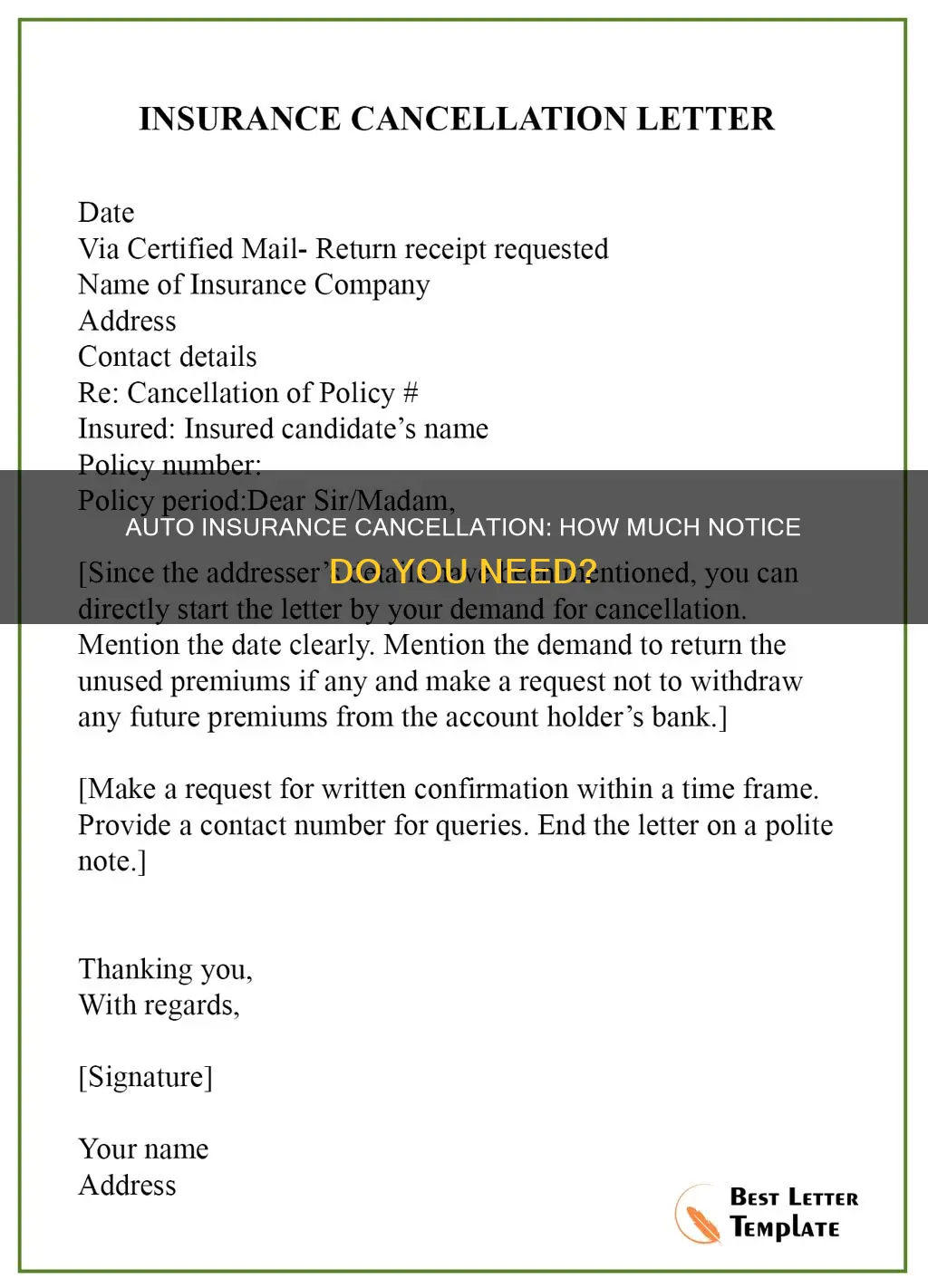
The CDI strictly regulates how and when an insurance company can drop a policy. State law distinguishes between a cancellation (terminating a policy during its active term, which is heavily restricted after the first 60 days) and a non-renewal (choosing not to extend coverage when the policy term expires). Insurance companies must provide written notice well in advance—typically at least 10 days for nonpayment of premium and 20 days for other authorized reasons such as license suspension or material misrepresentation.
1. Nonpayment of Premium
The single most common reason for auto insurance cancellation in California is the failure to pay the monthly or semi-annual premium on time. Insurers rely on timely payments to keep policies active.
When a payment fails due to an expired credit card, insufficient funds in a checking account, or a bounced check, the insurer will issue a billing notice. If the balance remains unpaid past the grace period, the company will issue a formal notice of cancellation for nonpayment. California law requires insurers to provide a specific notice window—usually 10 days before the cancellation takes effect—giving the policyholder a final chance to settle the account. Reinstating a canceled policy often requires paying the full past-due balance, and repeated payment failures can lead to permanent non-renewal.
2. Suspension or Revocation of Driver’s License
To maintain an active auto insurance policy, the primary named insured and listed drivers must hold valid driving privileges. If the California DMV suspends or revokes a driver’s license, the insurance company has legal grounds to cancel or restrict the policy.
Licenses are commonly suspended due to accumulating too many points on a driving record, failing to report an accident, defaulting on child support, or receiving a driving under the influence (DUI) conviction. When an insurer discovers a license suspension—often through routine periodic checks of motor vehicle records (MVR)—they will move to remove the driver or cancel the policy entirely if that driver is the primary owner. Driving without a valid license and without insurance can result in severe legal penalties, vehicle impoundment, and mandatory filing of an SR-22 certificate.
3. Material Misrepresentation or Fraud on the Application
Honesty is a legal requirement when applying for auto insurance. Providing false or misleading information on an application is classified as material misrepresentation, which gives the insurance company the right to cancel the policy or even rescind it from inception as if it never existed.
Common misrepresentations include:
- Falsifying the primary garaging address to secure lower rates.
- Omitting regular drivers living in the same household, such as teenage children or roommates.
- Concealing a history of major accidents or traffic violations.
- Misrepresenting the primary use of the vehicle (e.g., claiming personal use when the vehicle is used for commercial rideshare or delivery).
Insurers cross-reference application data with comprehensive consumer databases, credit reports, and DMV records. When discrepancies surface, policies are swiftly flagged for cancellation or rescission.
4. Accumulation of Too Many Traffic Violations or Accidents
California utilizes a point system administered by the DMV to track driving records. Minor infractions like speeding tickets or running a red light add one point, while major offenses like reckless driving or hit-and-run add two points.
If a driver accumulates excessive points during a policy term, they cross the insurer's internal risk threshold. While insurers often handle minor infractions by increasing rates at renewal, an aggressive accumulation of accidents and tickets can trigger a mid-term cancellation or a decision not to renew the policy when the term expires. High-risk drivers who are dropped by standard carriers often have to secure coverage through the California Automobile Assigned Risk Plan (CAARP).
5. Undisclosed Household Drivers and Vehicle Users
Insurance policies are priced based on the risk profile of every person who has access to the insured vehicle. A frequent reason for cancellation or denial of claims is the discovery of an undisclosed regular driver living in the same household.
Policyholders are contractually required to list all licensed residents of voting age or driving age living at their address. If a household member reaches driving age and gets a license, or if a relative moves in with a poor driving record, the policyholder must notify the insurer. Failing to disclose these drivers constitutes withholding material risk information, prompting the insurance company to cancel the policy or exclude the driver.
6. Conviction of Major Driving Offenses (DUI/Reckless Driving)
Certain criminal and traffic convictions radically alter a policyholder's risk profile. A conviction for driving under the influence (DUI), reckless driving, vehicular manslaughter, or street racing almost always results in immediate policy cancellation or non-renewal.
In California, a DUI conviction remains on a driving record for 10 years and triggers mandatory filings such as an SR-22 (Certificate of Financial Responsibility). Many standard insurance carriers are unwilling to assume the legal and financial liability of high-risk drivers with recent DUI convictions, forcing these motorists to seek specialized non-standard insurance markets.
7. Commercial or Unauthorized Business Use of a Personal Policy
Standard personal auto insurance policies are designed strictly for personal, commuting, and recreational driving. They explicitly exclude coverage for commercial activities, such as commercial delivery, courier services, or transporting goods for hire.
While rideshare companies like Uber and Lyft have specific legislative frameworks and supplemental insurance requirements in California, using a standard personal vehicle for commercial delivery without a commercial endorsement or rideshare rider violates policy terms. If an insurer discovers that a personal vehicle is being used for commercial purposes, they will typically cancel the policy for altering the risk exposure without authorization.
8. Failure to Comply with Underwriting Verification Requests
During the life of a policy or immediately following inception, insurance underwriters may request additional documentation to verify information provided on the application. This can include proof of garaging address, vehicle odometer readings, photographs of the vehicle, or signed financial affidavits.
If an insurance company sends formal requests for verification and the policyholder ignores them or fails to provide the required documentation within the specified deadline, the insurer will issue a notice of cancellation. Underwriters cannot properly assess risk without verified data, making compliance mandatory to keep coverage active.
9. Modification of the Vehicle Beyond Acceptable Underwriting Limits
Many vehicle owners customize their cars and trucks with aftermarket parts, lift kits, performance engine modifications, custom paint jobs, or specialized sound systems. While minor cosmetic changes are generally acceptable, extreme modifications can change the safety dynamics and replacement cost of the vehicle.
If a policyholder modifies a vehicle in a way that violates state safety laws or exceeds the insurer's underwriting guidelines—such as installing illegal lift heights or excessive horsepower enhancements without declaring them—the insurance carrier may cancel the policy due to unapproved risk elevation.
10. Carrier Withdrawal or Non-Renewal of Geographic Markets
Sometimes an auto insurance cancellation has nothing to do with the individual driver's record. Insurance companies periodically reassess their business models, loss ratios, and geographic exposures across California.
In recent years, several major insurance carriers have scaled back operations, restricted new business writings, or completely withdrawn specific policy types from the California market due to rising repair costs, litigation trends, and regulatory constraints. When an insurer decides to exit a specific geographic territory or discontinue an entire line of coverage, they must issue legal non-renewal notices to all affected policyholders, requiring those drivers to shop for a new provider before their expiration date.
Summary of Cancellation Reasons and Actions
| Reason for Cancellation | Type (Mid-term vs. Non-renewal) | Typical Notice Period | Recommended Driver Action |
|---|---|---|---|
| Nonpayment | Mid-term Cancellation | 10 Days | Pay past-due balance immediately to request reinstatement. |
| License Suspension | Mid-term Cancellation | 20 Days | Resolve issue with the DMV; secure SR-22 if required. |
| Fraud / Misrepresentation | Cancellation or Rescission | 20 Days (or immediate if rescinded) | Contact legal counsel or CDI if misrepresentation is disputed. |
| Excessive Violations | Non-renewal or Mid-term | 20 to 30 Days | Shop for high-risk or non-standard insurance carriers. |
| Undisclosed Drivers | Mid-term Cancellation | 20 Days | Add the driver to the policy or exclude them formally. |
| Major Convictions (DUI) | Non-renewal or Mid-term | 20 to 30 Days | Obtain specialized high-risk insurance and file an SR-22. |
| Commercial Vehicle Use | Mid-term Cancellation | 20 Days | Switch to a proper commercial or rideshare-endorse policy. |
| Unresponsive to Audits | Mid-term Cancellation | 20 Days | Provide requested underwriting documents immediately. |
| Unapproved Modifications | Non-renewal or Mid-term | 20 Days | Revert modifications or find a specialty insurer. |
| Market Withdrawal | Non-renewal | 30 to 60 Days | Begin shopping for alternative coverage well before the deadline. |
Frequently Asked Questions
What should I do if my auto insurance is canceled in California?
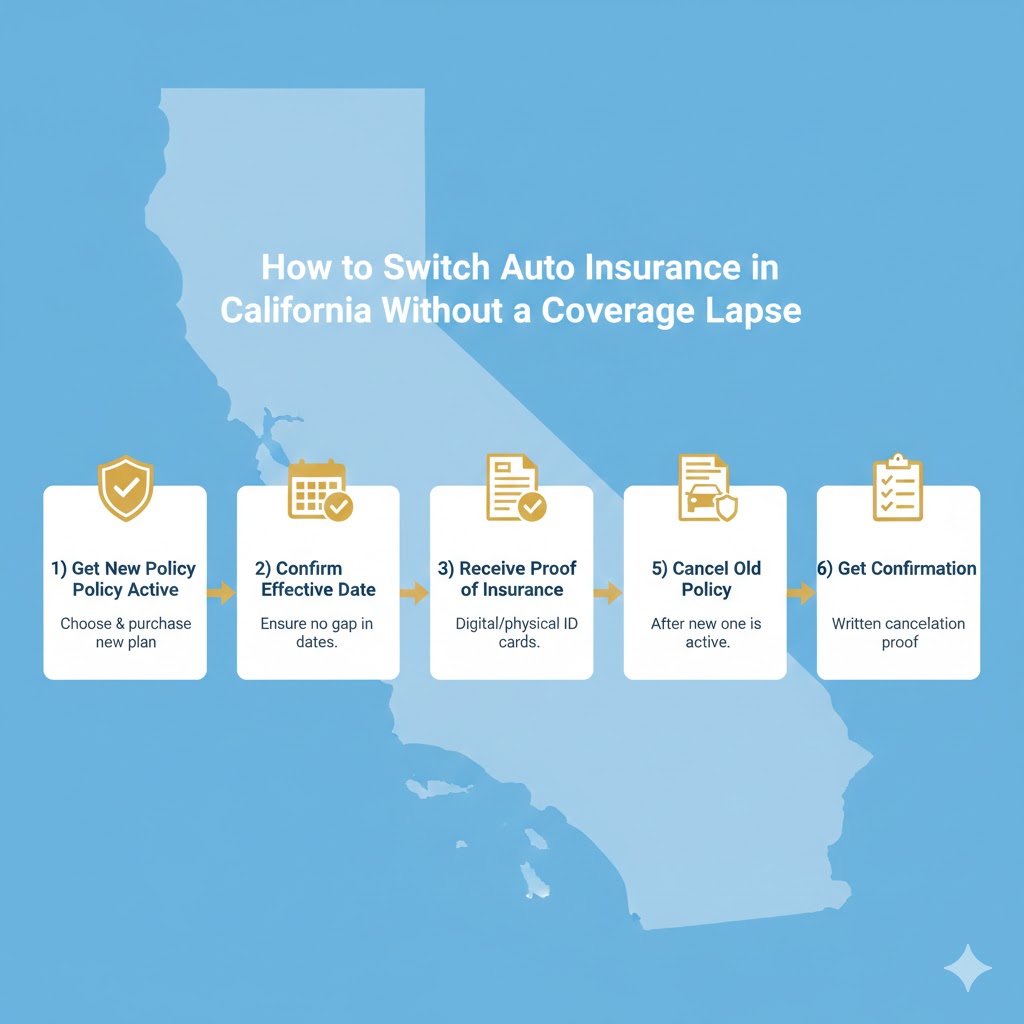
Review the written notice immediately to understand the exact reason and effective date. Contact your insurer to see if the issue can be resolved—such as paying overdue balances or providing missing documents. If the cancellation is final, shop for a new policy immediately to prevent a coverage gap, which can lead to higher rates and penalties from the California DMV.
Can an insurance company cancel my policy mid-term in California?
Yes, but California Insurance Code strictly limits mid-term cancellations after a policy has been in effect for 60 days. Permissible reasons are restricted primarily to nonpayment of premium, suspension of the driver's license, or material misrepresentation and fraud. For other underwriting issues, insurers must generally wait until the end of the policy term and issue a non-renewal notice.
How does a cancellation affect my future insurance rates?
A cancellation for nonpayment or high-risk driving behavior signals increased risk to other insurance companies. When you apply for a new policy, prospective insurers will review your MVR and loss history report (such as CLUE reports), often resulting in significantly higher premium quotes or placement in a non-standard insurance tier.
What is the difference between a cancellation and a non-renewal?
A cancellation occurs during the active policy term, usually triggered by a rule violation like nonpayment or license suspension. A non-renewal occurs at the natural expiration date of the policy term, where the insurer chooses not to offer a contract extension. Non-renewals typically require longer advance written notice than mid-term cancellations.
How can I get coverage if standard insurers reject me in California?
If standard insurance companies refuse to cover you due to a poor driving record, multiple accidents, or major convictions, you can obtain coverage through the California Automobile Assigned Risk Plan (CAARP). CAARP is a state-mandated program that ensures all eligible drivers can secure basic liability insurance, though premiums are generally higher than standard rates.
Next Steps and Professional Guidance
If you receive a notice of cancellation or non-renewal from your insurance provider, do not ignore it. Address the root cause immediately by settling outstanding balances, correcting DMV records, or gathering required underwriting documents.
If you believe your policy was canceled unfairly or in violation of California insurance regulations, you can file a formal request for assistance or a consumer complaint with the California Department of Insurance online or by calling their consumer hotline. To prevent legal penalties and keep your vehicle registered, secure replacement coverage before your current policy officially terminates.