The 1 Mosaic platform, the flagship product of Mosaic Smart Data, experienced its most transformative period in 2018. This year marked the transition from a specialized fintech startup to a critical industry infrastructure provider for the Fixed Income, Currencies, and Commodities (FICC) markets, highlighted by a global rollout with J.P. Morgan and a successful $9 million Series A funding round.
In the fast-moving world of capital markets, 2018 stands out as the definitive year for the adoption of real-time data analytics. For Mosaic Smart Data, the developer of the 1 Mosaic platform, the events of 2018 provided the necessary momentum to solve one of the oldest problems in investment banking: the fragmentation of data across different trading desks and asset classes. Looking back from 2026, the 2018 timeline remains the blueprint for how fintech firms can successfully integrate with Tier-1 global financial institutions.
The Genesis and Purpose of 1 Mosaic
Before examining the 2018 timeline, it is essential to understand what 1 Mosaic represents. At its core, 1 Mosaic is a real-time data aggregation and analytics engine. In the FICC markets—which include everything from government bonds to exotic currency derivatives—data is notoriously "siloed." A bank's London desk might have no visibility into the trading patterns of its New York office, and the corporate bond team might be unaware of relevant shifts in the credit default swap (CDS) market.
The 1 Mosaic platform was designed to act as a "single pane of glass" or a "mosaic" of the entire market landscape. It ingests raw transaction data from every internal and external source, normalizes it using sophisticated machine learning algorithms, and presents it in a way that sales and trading teams can use to provide better service to their clients. By the start of 2018, the industry's need for this technology had reached a breaking point due to new regulatory requirements and shrinking margins.
The Regulatory Catalyst: MiFID II in January 2018
The 2018 timeline begins with a massive regulatory shift. On January 3, 2018, the Markets in Financial Instruments Directive II (MiFID II) officially went into effect across the European Union. This regulation demanded unprecedented levels of transparency and reporting for financial transactions.
For the developers of 1 Mosaic, MiFID II was a significant tailwind. Banks were suddenly legally required to track "Best Execution"—proving they were getting the best possible price for their clients. To do this, they needed the exact type of real-time, cross-asset data aggregation that 1 Mosaic provided. Throughout the first quarter of 2018, the platform was rapidly adapted to help banks meet these new compliance standards while simultaneously finding ways to monetize the data they were now required to collect.
Q1–Q2 2018: The J.P. Morgan Global Rollout
One of the most significant events in the 1 Mosaic 2018 timeline was the completion of its global rollout across J.P. Morgan’s fixed income sales and trading business. Following a successful pilot program that began in late 2017, the first half of 2018 saw the platform deployed to thousands of users worldwide.
This was not merely a software installation; it was a fundamental shift in how the world’s largest investment bank handled data. By using 1 Mosaic, J.P. Morgan traders were able to see a unified view of client activity across all FICC products. This allowed them to identify "liquidity gaps" and "service opportunities" that were previously invisible. The success of this rollout served as a powerful "proof of concept" for the rest of the industry, signaling that 1 Mosaic was enterprise-ready for the most demanding environments.
October 2018: The $9 Million Series A Funding Round
Perhaps the most critical financial milestone in the 2018 timeline occurred in October. Mosaic Smart Data announced that it had secured $9 million in Series A funding. The composition of this investment round was as important as the dollar amount itself.
The round was led by:
- J.P. Morgan: Doubling down on their belief in the platform after the global rollout.
- ICAP (now part of TP ICAP): One of the world’s largest inter-dealer brokers.
- CommerzVentures: The venture capital arm of Commerzbank.
This funding allowed the company to significantly expand its engineering team and accelerate the development of the 1 Mosaic platform’s predictive analytics capabilities. Instead of just showing what had happened, the platform began to use the Series A capital to build tools that could predict what a client might want to trade next, based on historical patterns and current market volatility.
Technical Milestones: Normalization and Machine Learning
Throughout 2018, the 1 Mosaic platform underwent several technical upgrades that defined its current 2026 capabilities. The primary challenge in FICC data is that different venues (like Bloomberg, Tradeweb, or MarketAxess) use different formats for the same data.
In 2018, 1 Mosaic introduced enhanced data normalization layers. This allowed the platform to take "noisy" data and convert it into a standardized format in milliseconds. This year also saw the integration of natural language processing (NLP) to help analyze voice-based trades, ensuring that even transactions happening over the phone were captured and indexed within the Mosaic system.
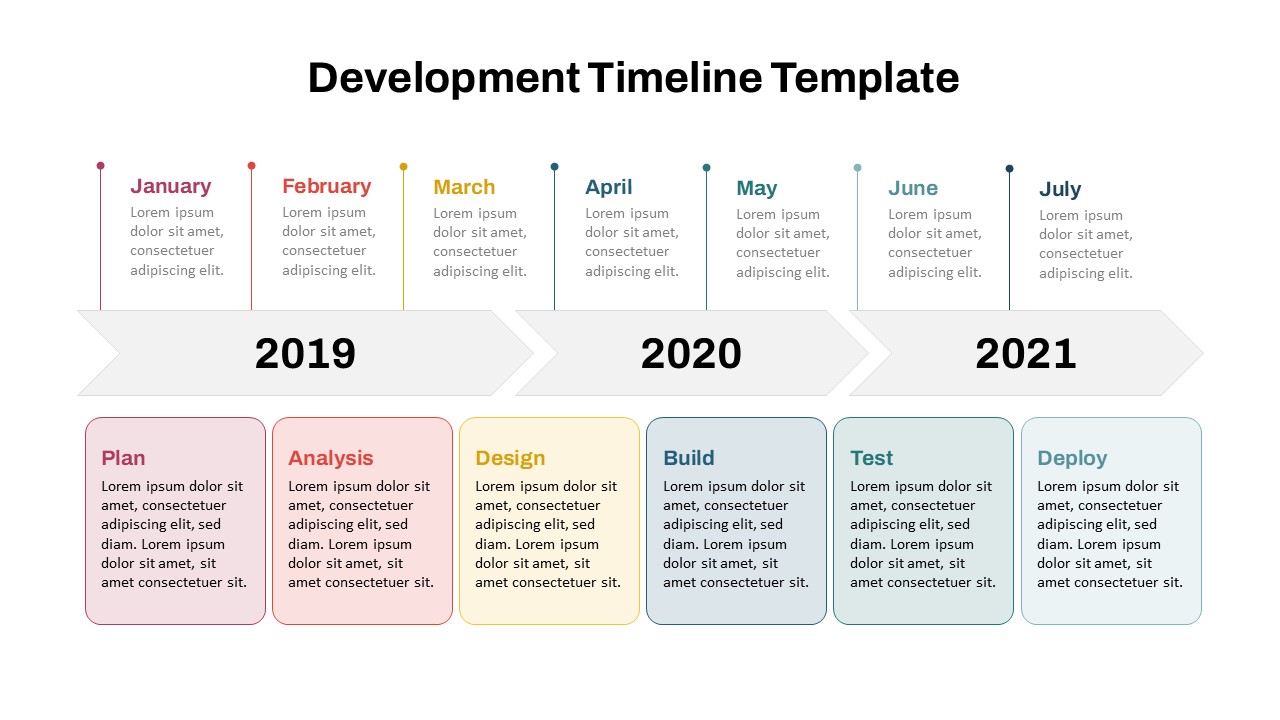
2018 Timeline Table: Key Events and Milestones
| Month (2018) | Key Event | Description |
|---|---|---|
| January | MiFID II Implementation | The launch of MiFID II creates an immediate demand for 1 Mosaic's transparency and reporting tools. |
| March | J.P. Morgan Expansion | Completion of the initial global rollout phase for J.P. Morgan's FICC trading desks. |
| May | The Fintech 50 | Mosaic Smart Data is named to the prestigious "Fintech 50" list, highlighting 1 Mosaic as a top-tier innovation. |
| August | New Asset Class Integration | 1 Mosaic expands its reach to include specialized commodities and emerging market currencies. |
| October | Series A Funding | A $9 million investment round led by J.P. Morgan, ICAP, and CommerzVentures is finalized. |
| December | Predictive Engine Beta | The first iterations of the machine-learning-driven predictive analytics tools are tested by core partners. |
The Impact on Sales and Trading Workflows
By the end of 2018, the 1 Mosaic platform had fundamentally altered the daily workflow of sales teams. Before 1 Mosaic, a salesperson might spend 30 minutes gathering data from three different terminals to prepare for a client call.
Following the 2018 updates, the platform provided an automated "Client Health Score" and "Relationship Summary." This allowed the salesperson to see, at a glance, if the client’s trading volume was dropping in one area but increasing in another. This proactive approach to relationship management became the standard for the industry in the years that followed, moving the profession from reactive order-taking to data-driven advisory.
Industry Recognition and Awards
The 2018 timeline is also defined by external validation. Beyond the investment from major banks, 1 Mosaic received several high-profile industry accolades. Being named to the Fintech 50 was a significant milestone, but the platform also gained traction in trade publications as a solution for "The Liquidity Problem."
At various 2018 industry conferences, Matthew Hodgson (CEO and founder) presented the vision for 1 Mosaic not just as a tool for J.P. Morgan, but as a utility for the entire market. This "utility mindset"—the idea that everyone benefits from cleaner, more accessible data—helped 1 Mosaic gain traction with other Tier-2 and Tier-3 banks who were struggling to compete with the technology budgets of the "Bulge Bracket" firms.
Strategic Partnerships: ICAP and the Inter-Dealer Market
The inclusion of ICAP in the October 2018 funding round was a strategic masterstroke. While J.P. Morgan represented the "sell-side" (banks), ICAP represented the inter-dealer market where banks trade with each other.
In late 2018, 1 Mosaic began integrating more deeply with inter-dealer broker data. This allowed the platform to offer an even broader view of the market. Users could now compare their internal "private" data against the "public" market data provided by brokers, allowing them to see if they were truly being competitive in their pricing. This integration is what finally earned the platform its name "1 Mosaic"—one single, unified view of the entire financial puzzle.
Challenges and Lessons from the 2018 Expansion
It was not all smooth sailing. The 2018 timeline also reflects the immense difficulty of cleaning legacy financial data. Many banks discovered that their internal record-keeping was so fragmented that 1 Mosaic had to be custom-configured to recognize their unique internal codes.
This led to the development of the "Mosaic Integration Framework," a set of APIs and connectors designed to speed up the onboarding process. The lessons learned during the J.P. Morgan rollout in early 2018 were applied to make subsequent installations faster and less labor-intensive. This move toward a more "plug-and-play" architecture was a major theme of the company's internal development during the fourth quarter of 2018.
The Legacy of 2018 in the 2026 Financial Landscape
Looking at 1 Mosaic today in 2026, the influence of that 2018 period is undeniable. The platform has now expanded into equity markets and private credit, but the underlying philosophy of data democratization and real-time normalization remains the same.
The $9 million raised in 2018 was the fuel that allowed the company to survive the market volatility of the early 2020s. More importantly, the global rollout at J.P. Morgan proved that large-scale financial institutions could successfully adopt agile fintech solutions without compromising security or regulatory compliance.
Frequently Asked Questions
What exactly is the "1 Mosaic" platform?
1 Mosaic is a real-time data analytics platform created by Mosaic Smart Data. It is specifically designed for the FICC (Fixed Income, Currencies, and Commodities) markets. It aggregates data from multiple sources, cleanses it, and provides actionable insights to sales and trading desks, helping them understand client behavior and market liquidity.
Why was 2018 such a significant year for the platform?
2018 was the "breakout" year for 1 Mosaic due to several factors: the implementation of MiFID II regulations, the successful global rollout within J.P. Morgan, and a $9 million Series A funding round that included major industry players like ICAP and CommerzVentures.
Who were the primary investors in the 2018 funding round?
The October 2018 Series A round was led by J.P. Morgan, with significant participation from ICAP (part of TP ICAP) and CommerzVentures. This combination of a Tier-1 bank and a major inter-dealer broker provided the platform with massive industry credibility.
How does 1 Mosaic help with MiFID II compliance?
MiFID II requires banks to prove they are providing "Best Execution" for their clients. 1 Mosaic helps by capturing every quote and trade across all platforms, allowing compliance officers and traders to analyze their performance against the broader market in real-time, ensuring they meet regulatory transparency standards.
What technical problem did 1 Mosaic solve in 2018?
The platform solved the "data silo" problem. In most banks, data for different assets (like bonds vs. currencies) was stored in separate systems that didn't talk to each other. 1 Mosaic normalized this data into a single format, providing a "mosaic" view of all client activities across the entire bank.
Conclusion and Next Actions
The 2018 timeline for 1 Mosaic serves as a case study in fintech maturation. By aligning with regulatory shifts (MiFID II), securing Tier-1 institutional backing (J.P. Morgan), and focusing on the difficult technical task of data normalization, the platform established itself as an indispensable tool for modern capital markets.
For financial institutions looking to emulate this success or integrate similar analytics today in 2026, the primary takeaway is the importance of data quality over data quantity. The success of 1 Mosaic was not just about collecting more data, but about making the existing data useful. Organizations should prioritize the implementation of normalization layers and cross-asset visibility to ensure their sales and trading teams are not operating in the dark.