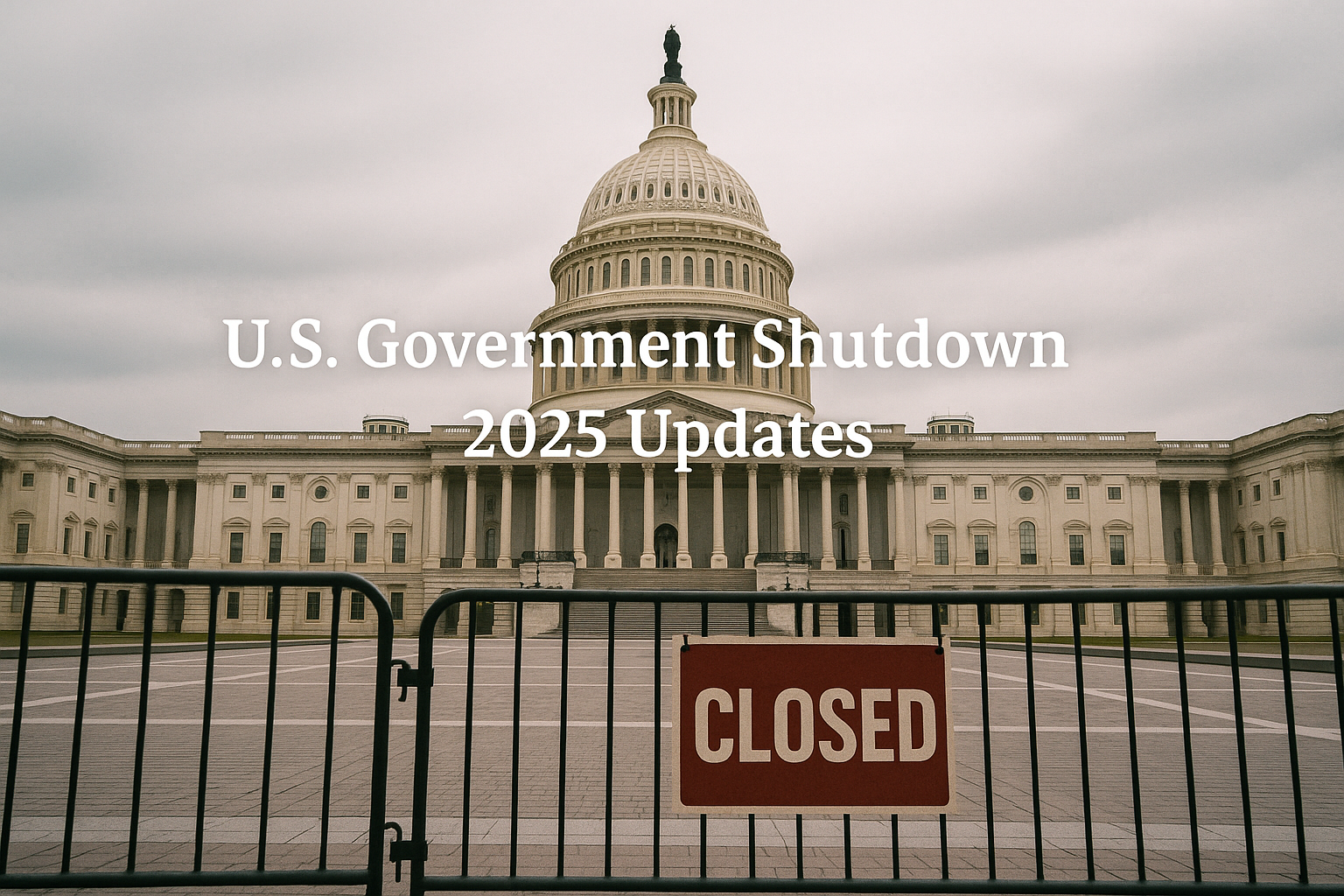
A federal government shutdown occurring on October 1—the start of the federal fiscal year—triggers the suspension of non-essential government services, the furlough of federal employees, and the disruption of federally funded programs. While essential operations, such as national security and emergency services, remain active, citizens and businesses may experience delays in permit processing, benefit disbursements, and federal assistance services.
Understanding the Fiscal Year Cycle
The federal government operates on a fiscal year (FY) that begins on October 1 and ends on September 30. For the federal government to continue spending money and operating at full capacity, Congress must pass, and the President must sign, appropriations legislation. When this process fails to conclude by the September 30 deadline, the government enters a "lapse in appropriations."
This lapse is the technical mechanism behind a shutdown. Because the Anti-Deficiency Act prohibits federal agencies from obligating funds that have not been appropriated by Congress, any agency or program without a signed budget or a temporary Continuing Resolution (CR) must immediately scale back its operations to only those deemed essential.
Categorizing Essential vs. Non-Essential Services
The term "shutdown" is often misunderstood as a total cessation of government activity. In reality, the government remains partially open. The distinction between essential and non-essential is defined by whether a function is necessary for the safety of human life or the protection of property.
Essential services that typically continue during a shutdown include:
- Military Operations: Active-duty military personnel continue to perform their duties, though pay schedules may be disrupted depending on specific legislative actions.
- Law Enforcement: Federal agencies like the FBI, DEA, and Border Patrol remain operational.
- Emergency Response: FEMA operations and disaster relief efforts that are already underway usually continue.
- Air Traffic Control: Safety-critical aviation operations remain fully staffed.
Conversely, non-essential services—which often suffer the most noticeable impacts—include:
- National Parks and Museums: Many may close, or operate with severely limited staff, leading to issues with maintenance and public access.
- Non-Emergency Processing: Applications for passports, visas, and certain government-backed loans often face significant backlogs.
- Regulatory Oversight: Inspections and non-critical administrative reviews are frequently paused.
Economic and Financial Impacts
The financial repercussions of a shutdown are felt across the public and private sectors. The immediate impact is the cessation of paychecks for federal civilian employees. While these employees have historically received back pay following a shutdown, the temporary loss of income can cause severe financial strain, impacting local economies where federal workers reside.
Contractors, however, face a different reality. Unlike federal employees, contractors are rarely guaranteed back pay for the duration of a shutdown. This can lead to liquidity issues for small businesses that rely on federal contracts, potentially delaying project timelines and creating a ripple effect through their supply chains.
Table: Comparison of Shutdown Impacts by Sector
| Sector | Primary Impact | Status During Shutdown |
|---|---|---|
| Federal Civilian Employees | Delayed paychecks | Furloughed or working without pay |
| Military Personnel | Potential pay disruption | Duty continues |
| National Parks | Reduced access/maintenance | Frequently closed or limited |
| Passport Services | Processing backlogs | Significantly delayed |
| Social Security | Payment continuity | Generally continues (mandatory funding) |
| Government Contractors | Unpaid contract delays | Highly variable; often no back pay |
Critical Services and Public Benefits
One of the most frequently asked questions regarding a shutdown concerns the status of mandatory benefit programs. Programs like Social Security, Medicare, and Medicaid are often funded through "mandatory spending" rather than "discretionary spending," which requires annual appropriations. Consequently, these payments typically continue uninterrupted during a shutdown.
However, the administrative side of these programs can be affected. If you are waiting for a new application to be processed or seeking a resolution to a claim, you may find that the local administrative office is operating with a skeleton crew, leading to increased wait times and diminished customer service capacity.
Preparing for Potential Disruptions
If you anticipate interacting with a government agency around the October 1 timeframe, proactive management of your requirements is essential.
- Expedite Submissions: If you are planning to apply for a passport, visa, or federal permit, submit your documentation well before the end of September. Once a shutdown begins, the processing window expands unpredictably.
- Verify Contractor Status: If your business is a federal contractor, review your contract terms and communicate with your contracting officer before September 30. Understanding your firm's liability and payment status is critical for short-term cash flow planning.
- Monitor Agency Announcements: Each agency maintains its own "shutdown contingency plan," which is published on the Office of Management and Budget (OMB) website or the agency's official portal. These documents provide the most granular detail on which specific programs will continue and which will be halted.
- Emergency Funds: For families reliant on federal salaries, maintaining an emergency savings buffer is the only effective defense against the volatility of federal budget negotiations.
Common Misconceptions
A prevalent myth is that the government "shuts down" entirely. Another is that taxes stop being collected. In reality, the Internal Revenue Service (IRS) continues to accept tax filings and payments during a shutdown, as revenue collection is considered an essential function. Similarly, legal proceedings in federal courts often continue for a period, funded by "fee accounts" that are independent of annual appropriations, although this can change if a shutdown extends over several weeks.
Challenges in Communication
During a shutdown, communication channels between the government and the public often become constrained. Official websites may not be updated, and public information officers may be among those furloughed. This creates an information vacuum that is often filled by speculation. Relying exclusively on official (.gov) domains is the most effective way to avoid misinformation during these periods. If a specific agency’s website is inaccessible, check the official social media channels of that agency, as these are sometimes used for emergency updates.
Long-term Consequences of Recurring Shutdowns
Beyond the immediate daily impact, frequent threats or realizations of a government shutdown create a climate of uncertainty. This uncertainty can negatively affect federal recruitment and retention. When public service is perceived as unstable, the government may struggle to attract top talent in competitive fields like cybersecurity, engineering, and healthcare. Furthermore, economic analysts note that prolonged shutdowns reduce overall GDP growth, as both consumer spending and government capital investment stall.
Next Actions for Citizens and Businesses
If the government approaches an October 1 deadline without a signed budget, follow these steps to protect your interests:
- Assess Dependency: Identify if your income, business revenue, or required permits depend on a federal agency.
- Prioritize Essential Tasks: Complete all federal filings and submissions before September 25 to avoid the end-of-month rush and potential technical disruptions.
- Document Everything: If a service is delayed, keep records of your attempts to contact the agency and the status of your request. This documentation may be necessary for future appeals or claims once normal operations resume.
- Consult Professionals: If you are a federal contractor or receive specialized federal grants, consult with legal counsel or your agency representative to understand the specific implications for your active agreements.
The complexity of a government shutdown means that while there is no "one size fits all" impact, the risk to individuals is largely centered on administrative delays and income instability, while the risk to businesses is tied to contract interruptions and cash flow. By staying informed through official channels and preparing for potential service slowdowns, you can mitigate the most severe disruptions associated with fiscal lapses.
Frequently Asked Questions
Does the government stop paying Social Security during a shutdown? No. Social Security, Medicare, and other mandatory entitlement programs are funded through separate, permanent appropriations. Beneficiaries should continue to receive their payments as scheduled, although the customer service staff managing these programs may be reduced.
Will my passport application be processed if the government shuts down? Passport processing is often delayed. While some agencies may maintain essential passport services, the non-essential staff responsible for routine processing are often furloughed, which extends the turnaround time for applications. It is best to avoid any non-essential travel document applications during a potential shutdown period.
Are national parks closed during a shutdown? The status of national parks varies. In some past shutdowns, gates remained open with limited or no staffing, which created safety and maintenance issues. In others, they were closed entirely. Always check the National Park Service website for the specific status of a location before traveling.
Can I still contact my federal representative if the government shuts down? Yes. Members of Congress and their staff are not subject to the same furlough rules as executive branch employees. Congressional offices remain open to assist constituents, though the federal agencies they contact on your behalf may be unresponsive.
Do federal contractors get back pay after a shutdown? Generally, no. Unlike federal employees, who are frequently granted back pay by legislative action, federal contractors are typically not guaranteed compensation for work hours lost during a shutdown. Contractors should consult their specific contract terms for "force majeure" or "stop-work" clauses.