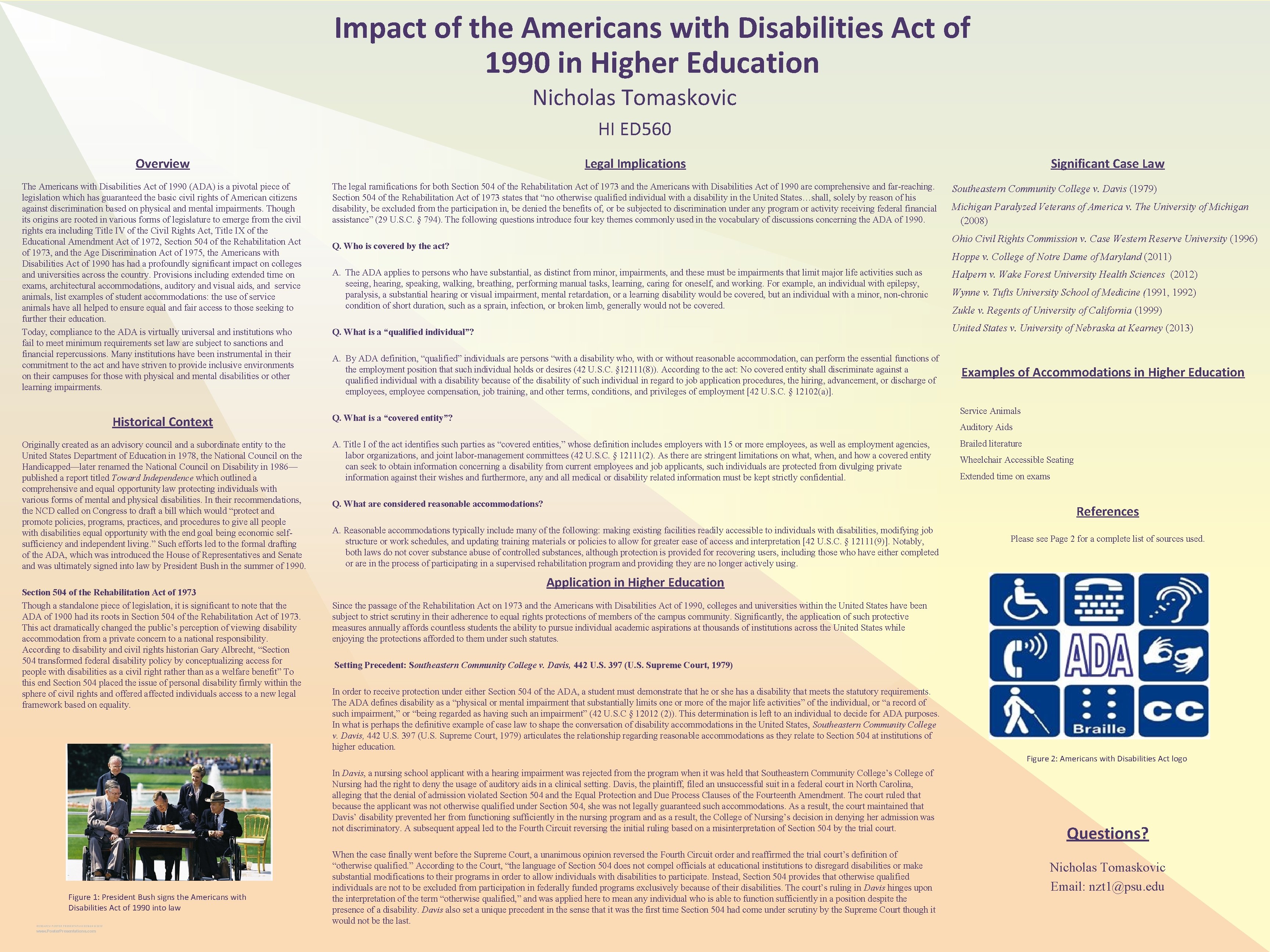
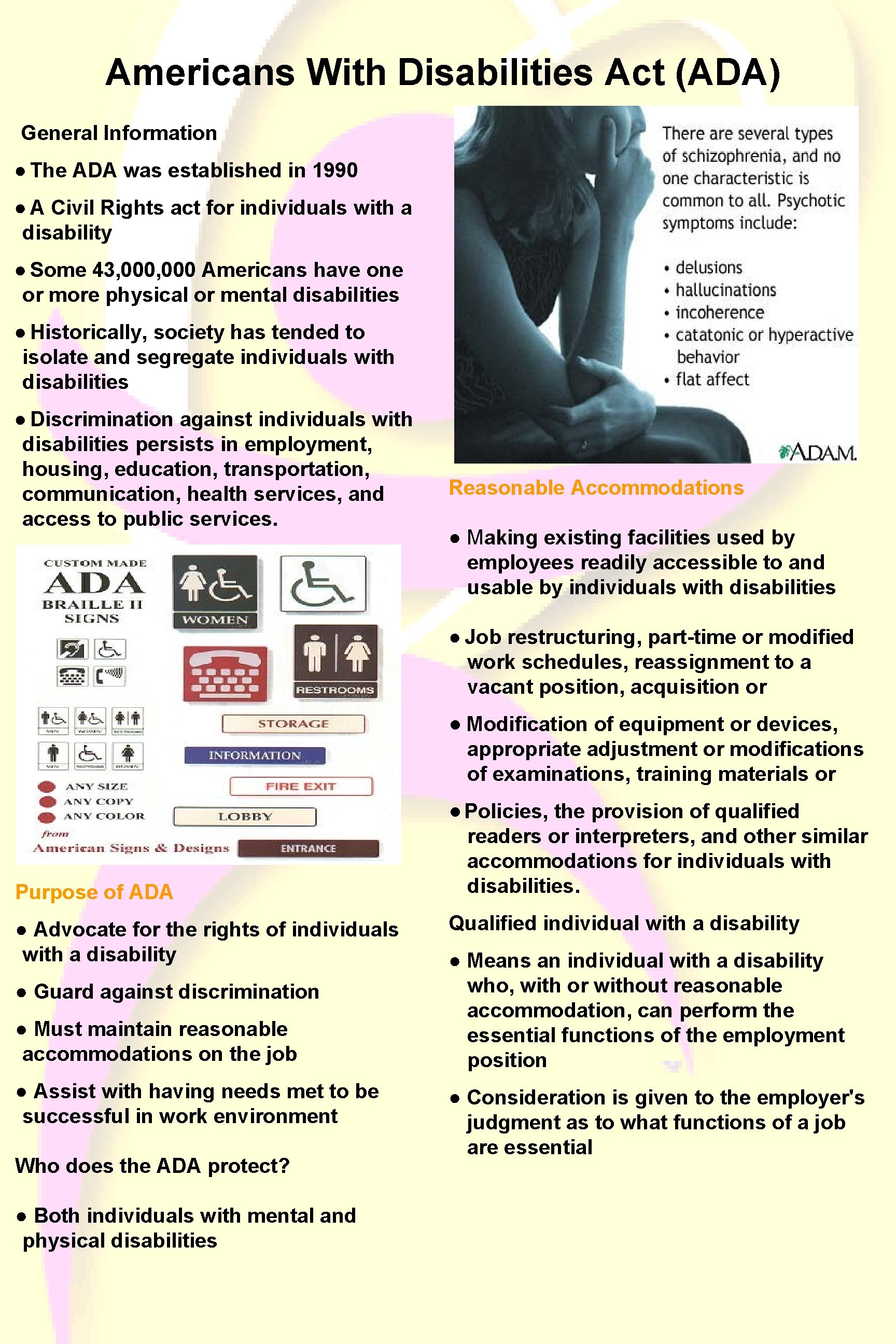
The Americans with Disabilities Act (ADA) of 1990 is a landmark federal civil rights law that prohibits discrimination against individuals with disabilities in employment, public services, public accommodations, and telecommunications. It ensures equal opportunity and access for people with disabilities in both the private and public sectors across the United States.
The Legislative Foundation and Purpose of the ADA
Signed into law on July 26, 1990, by President George H.W. Bush, the Americans with Disabilities Act (ADA) represents one of the most significant pieces of civil rights legislation in United States history. Its primary objective is to guarantee that people with disabilities have the same rights and opportunities as everyone else. This includes equal access to jobs, the ability to purchase goods and services, and participation in state and local government programs and services.
Before the ADA, individuals with disabilities often faced systemic barriers that excluded them from the mainstream of American life. While the Rehabilitation Act of 1973 provided some protections for those interacting with federal agencies or receiving federal funding, it did not reach the private sector or the vast majority of state and local government operations. The ADA closed these gaps, modeling its protections after the Civil Rights Act of 1964, which prohibited discrimination on the basis of race, color, religion, sex, or national origin.
As of 2026, the ADA remains the gold standard for disability rights globally, though it has been refined by judicial rulings and the ADA Amendments Act (ADAAA) of 2008. The law is divided into five specific sections, known as "Titles," each addressing a different facet of public life.
Defining Disability Under the ADA
To be protected by the ADA, an individual must have a disability or have a relationship or association with an individual with a disability. The ADA defines a person with a disability as someone who:
- Has a physical or mental impairment that substantially limits one or more "major life activities."
- Has a record of such an impairment (such as a person in recovery from cancer or a mental health condition).
- Is regarded as having such an impairment, even if the impairment does not actually exist or is not substantially limiting.
"Major life activities" include, but are not limited to, functions such as caring for oneself, performing manual tasks, walking, seeing, hearing, speaking, breathing, learning, and working. The 2008 Amendments (ADAAA) clarified that the definition of disability should be interpreted broadly, ensuring that the focus remains on whether discrimination occurred rather than an extensive analysis of whether the individual’s condition meets a strict clinical definition of "disability."
Title I: Employment
Title I of the ADA is designed to help people with disabilities access the same employment opportunities and benefits available to people without disabilities. It is enforced by the U.S. Equal Employment Opportunity Commission (EEOC).
Coverage and Prohibitions
Title I applies to private employers with 15 or more employees, as well as state and local government employers, employment agencies, and labor unions. It prohibits discrimination in all employment practices, including job application procedures, hiring, firing, advancement, compensation, and training.
Reasonable Accommodations
A central requirement of Title I is the provision of "reasonable accommodations." This refers to any modification or adjustment to a job or the work environment that enables a qualified applicant or employee with a disability to participate in the application process or perform essential job functions.
Examples of reasonable accommodations include:
- Making existing facilities accessible (e.g., installing ramps).
- Job restructuring or modifying work schedules.
- Acquiring or modifying equipment or devices (e.g., screen readers or ergonomic chairs).
- Providing qualified readers or interpreters.
The Interactive Process
When an employee requests an accommodation, the employer and employee should engage in an "interactive process." This is a collaborative dialogue to identify the precise limitations resulting from the disability and potential reasonable accommodations that could overcome those limitations.
Undue Hardship
Employers are not required to provide an accommodation if it would impose an "undue hardship" on the operation of the business. Undue hardship is defined as an action requiring significant difficulty or expense when considered in light of factors such as an employer’s size, financial resources, and the nature and structure of its operation.
Title II: State and Local Government Activities
Title II applies to all programs, activities, and services of public entities at the state and local levels. This includes everything from public schools and town meetings to social services and public transportation.
Program Accessibility
Public entities must ensure that their programs and services, when viewed in their entirety, are accessible to and usable by individuals with disabilities. This does not necessarily mean every older building must be retrofitted, but the entity must provide "program access" through methods such as moving a meeting to an accessible floor or providing an alternative means of participation.
Public Transportation
Title II also covers public transportation provided by public entities, such as city buses and rail systems. New buses and rail cars must be accessible, and authorities must provide paratransit services for individuals who cannot use the regular fixed-route system due to their disability.
Digital Accessibility in 2026
A critical development in Title II compliance is the 2024 Department of Justice (DOJ) final rule regarding website and mobile application accessibility. By 2026, many larger state and local government entities have already reached the deadline for ensuring their digital platforms meet Web Content Accessibility Guidelines (WCAG) 2.1 Level AA standards. This ensures that residents can access vital government services, pay taxes, or register to vote online regardless of visual, auditory, or motor impairments.
Title III: Public Accommodations
Title III prohibits discrimination on the basis of disability in the activities of places of public accommodations. These are private entities that own, lease, lease to, or operate facilities such as restaurants, hotels, theaters, doctor's offices, pharmacies, retail stores, museums, libraries, parks, private schools, and day care centers.
Barrier Removal
For existing facilities, Title III requires the removal of architectural barriers when it is "readily achievable" to do so. Readily achievable means "easily accomplishable and able to be carried out without much difficulty or expense." If a business can show that removing a barrier is not readily achievable, it must provide its goods or services through alternative methods if those methods are readily achievable (e.g., providing curbside pickup).
New Construction and Alterations
All new construction of public accommodations and commercial facilities must be accessible. When existing facilities are altered, the altered areas must be made accessible to the maximum extent feasible.
Service Animals
Under Title III (and Title II), businesses and government entities must generally allow service animals—specifically dogs that are individually trained to do work or perform tasks for the benefit of an individual with a disability—to accompany people with disabilities in all areas where the public is allowed to go.
Title IV: Telecommunications
Title IV addresses telephone and television access for people with hearing and speech disabilities. It is primarily regulated by the Federal Communications Commission (FCC).
Telecommunications Relay Services (TRS)
Title IV requires common carriers (telephone companies) to establish nationwide 24/7 telecommunications relay services. These services allow callers with hearing or speech disabilities who use Teletypewriters (TTYs) or similar devices to communicate with anyone who has a standard telephone via a communications assistant.
Closed Captioning
Title IV also mandated closed captioning of federally funded public service announcements. Since the 1990 passage, subsequent laws like the Twenty-First Century Communications and Video Accessibility Act (CVAA) have expanded these requirements to include internet-based video programming.
Title V: Miscellaneous Provisions
Title V contains various provisions that explain the ADA’s relationship to other laws, its impact on insurance providers, and its prohibition against retaliation.
Key aspects include:
- Non-Retaliation: It is illegal to threaten, coerce, or discriminate against any individual because they have opposed an act made unlawful by the ADA or because they participated in an investigation or proceeding under the ADA.
- Attorney's Fees: Courts have the discretion to award attorney's fees to the prevailing party in any action brought under the Act.
- State Immunity: It clarifies that states cannot claim immunity from ADA lawsuits under the Eleventh Amendment (though later Supreme Court rulings have nuanced this regarding Title I and Title II money damages).
ADA Compliance Summary Table
| Title | Focus Area | Primary Regulatory/Enforcement Body | Key Requirement |
|---|---|---|---|
| Title I | Employment | EEOC | Reasonable accommodations for qualified employees. |
| Title II | State & Local Gov | Department of Justice (DOJ) | Equal access to all public programs and digital services. |
| Title III | Public Accommodations | Department of Justice (DOJ) | Barrier removal in private businesses open to the public. |
| Title IV | Telecommunications | FCC | Nationwide relay services and closed captioning. |
| Title V | Miscellaneous | Various | Prohibits retaliation and outlines legal fees. |
Common Misconceptions and Compliance Hurdles
Despite the ADA being in place for over three decades, several misconceptions persist that can lead to legal liability for organizations.
The "Grandfather Clause" Myth
One of the most common misconceptions is the belief that older buildings are "grandfathered in" and do not need to comply with the ADA. While the ADA does distinguish between new construction and existing facilities, there is no blanket exemption. Title III requires "readily achievable" barrier removal in existing buildings, and Title II requires "program accessibility" regardless of the age of the building.
Service Animals vs. Emotional Support Animals
Under the ADA, a "service animal" is limited to dogs (and in some cases miniature horses) that are trained to perform specific tasks. Emotional Support Animals (ESAs), which provide comfort through their presence but are not trained for specific tasks, are not considered service animals under Titles II and III. However, they may be considered a reasonable accommodation in housing under the Fair Housing Act or in employment under Title I.
The Scope of "Reasonable"
Employers often fear that "reasonable" is a subjective term that will bankrupt them. However, data from the Job Accommodation Network (JAN) consistently shows that the majority of accommodations cost $0, while the rest typically involve a one-time cost of less than $500.
Enforcement Mechanisms
The ADA is enforced through both administrative complaints and private lawsuits.
- EEOC: For Title I violations, individuals must file a charge of discrimination with the EEOC before filing a lawsuit in federal court.
- DOJ: For Title II and III, individuals can file administrative complaints with the Department of Justice or file private lawsuits directly. The DOJ has the authority to file lawsuits in cases of general public importance or where a "pattern or practice" of discrimination is identified.
- Remedies: Depending on the Title, remedies can include injunctive relief (ordering the barrier to be removed), back pay, compensatory damages, and, in some Title I cases, punitive damages.
Digital Accessibility in the Current Landscape
As we move through 2026, the focus of ADA enforcement has shifted heavily toward the digital realm. The Department of Justice’s 2024 ruling explicitly defined technical standards for state and local government web content. For private businesses under Title III, while there is no specific "codified" technical standard in the original 1990 text, courts and the DOJ have consistently maintained that websites are "places of public accommodation." Most organizations now look to the Web Content Accessibility Guidelines (WCAG) 2.1 or 2.2 as the benchmark for avoiding litigation and ensuring their digital storefronts are accessible to screen readers and other assistive technologies.
Frequently Asked Questions
Does the ADA apply to small businesses? Title I (Employment) applies to private employers with 15 or more employees. However, Title III (Public Accommodations) applies to all businesses that are open to the public, regardless of the number of employees. Even a "mom-and-pop" shop must remove barriers if it is readily achievable to do so.
What is a "qualified" individual with a disability? In the context of employment, a qualified individual is someone who meets the legitimate skill, experience, education, or other requirements of a position and can perform the "essential functions" of the job, with or without reasonable accommodation.
Are private clubs and religious organizations exempt? Private clubs and religious organizations (including places of worship) are generally exempt from the requirements of Title III of the ADA. However, if a religious organization operates a private school or day care center that is open to the public, other civil rights laws or state laws may still apply.
What constitutes an "essential function" of a job? Essential functions are the basic job duties that an employee must be able to perform. Factors to consider include whether the position exists specifically to perform that function, the number of other employees available to perform the function, and the degree of expertise required.
Can an employer ask if I have a disability during an interview? No. Under Title I, an employer cannot ask disability-related questions or require a medical examination before making a conditional job offer. They may ask about your ability to perform specific job functions, but they cannot ask about the disability itself.
Practical Steps for Compliance
For organizations looking to ensure they are meeting the standards of the ADA in 2026, several proactive steps are recommended. First, conduct an accessibility audit of both physical facilities and digital assets. For physical locations, this involves checking ramp slopes, door widths, and restroom configurations against the 2010 ADA Standards for Accessible Design.
For digital assets, utilize automated scanning tools combined with manual testing by individuals who use assistive technology to ensure WCAG compliance. Secondly, establish a clear procedure for handling accommodation requests. This includes training HR staff and managers on the "interactive process" to ensure requests are handled consistently and legally. Finally, document all efforts toward accessibility, particularly when a specific barrier removal is deemed "not readily achievable," as this documentation is vital if a complaint is ever filed.
For more information, visit the official ADA.gov website maintained by the Department of Justice, or consult the U.S. Equal Employment Opportunity Commission for employment-specific guidelines.