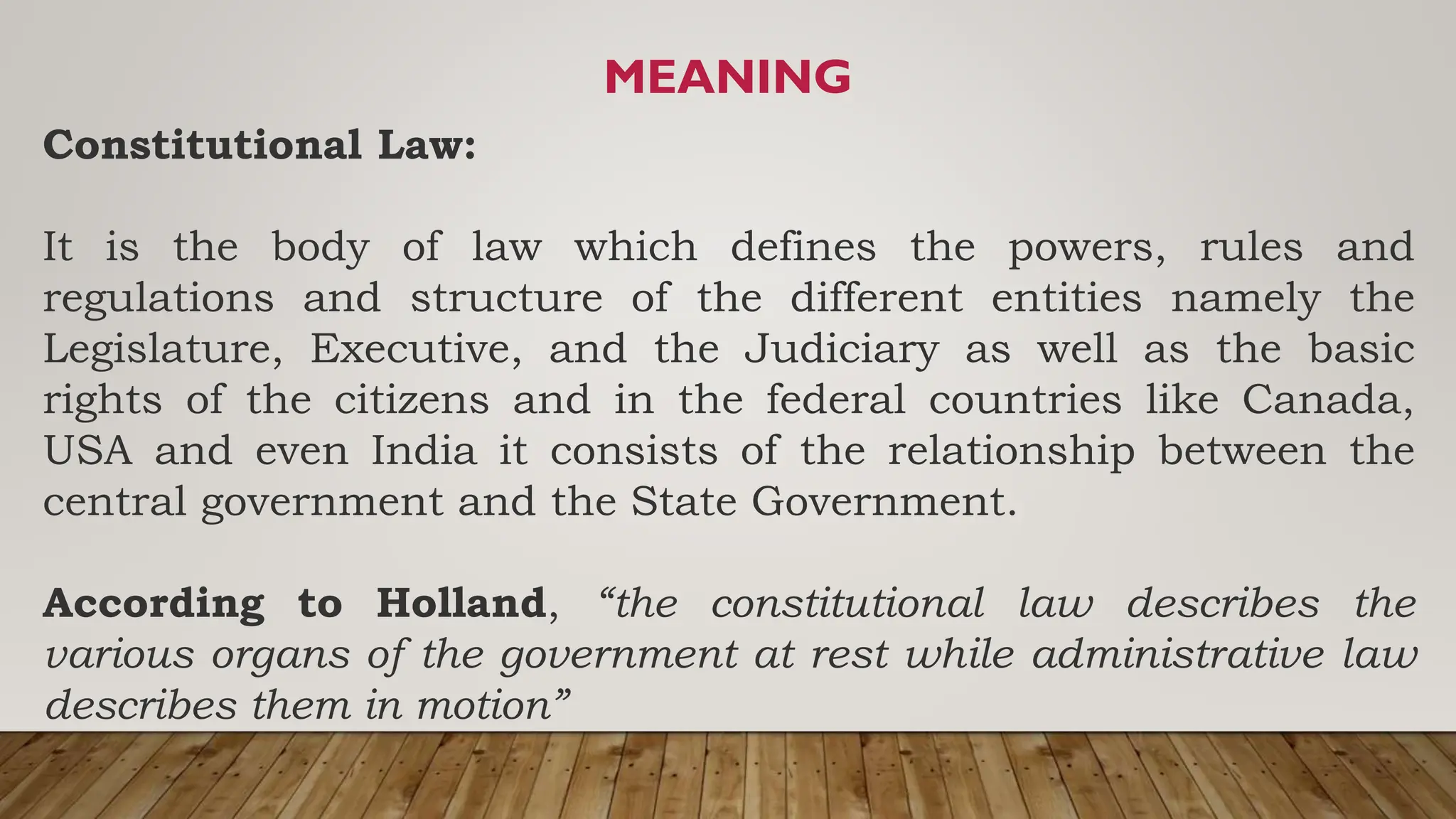
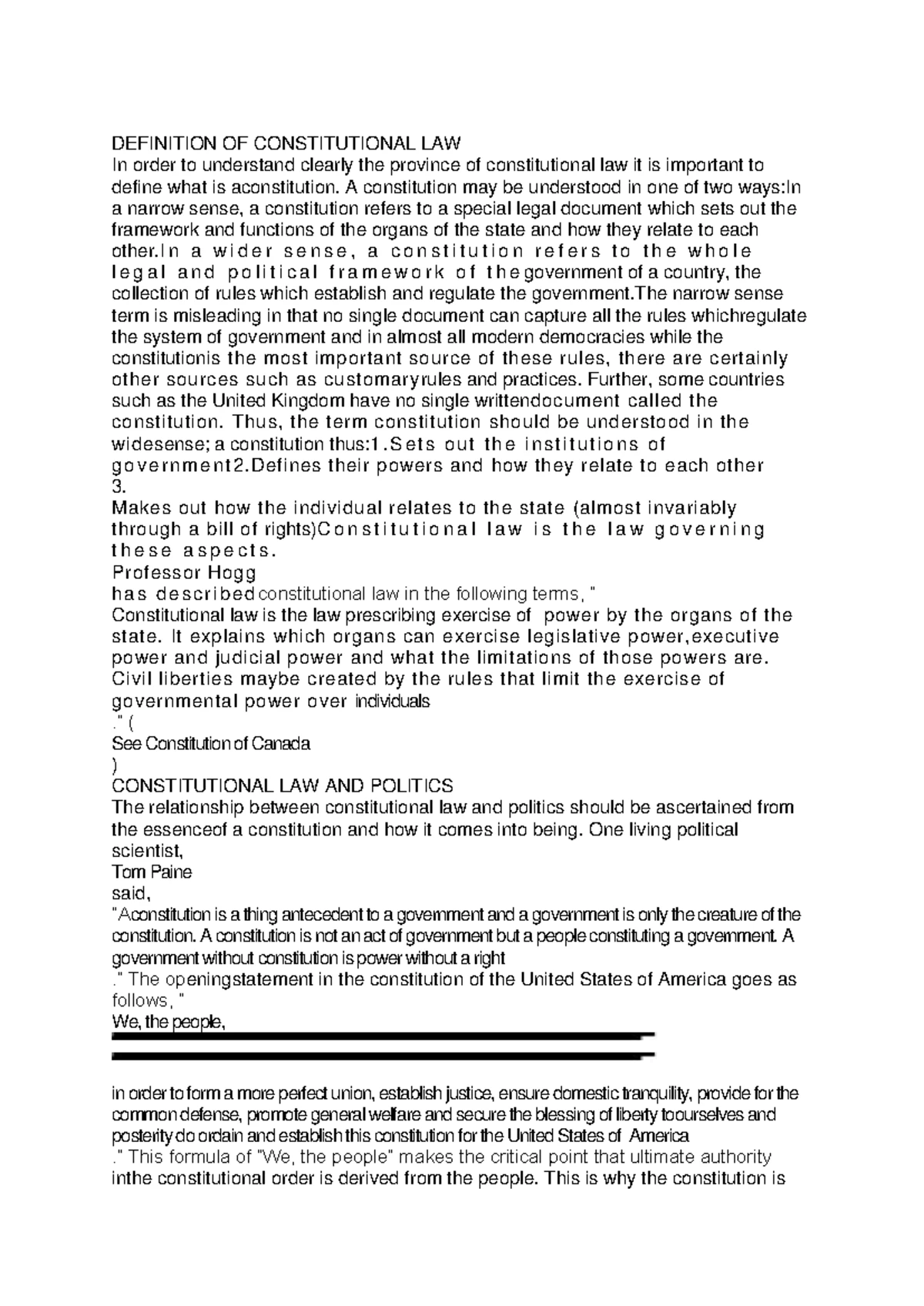
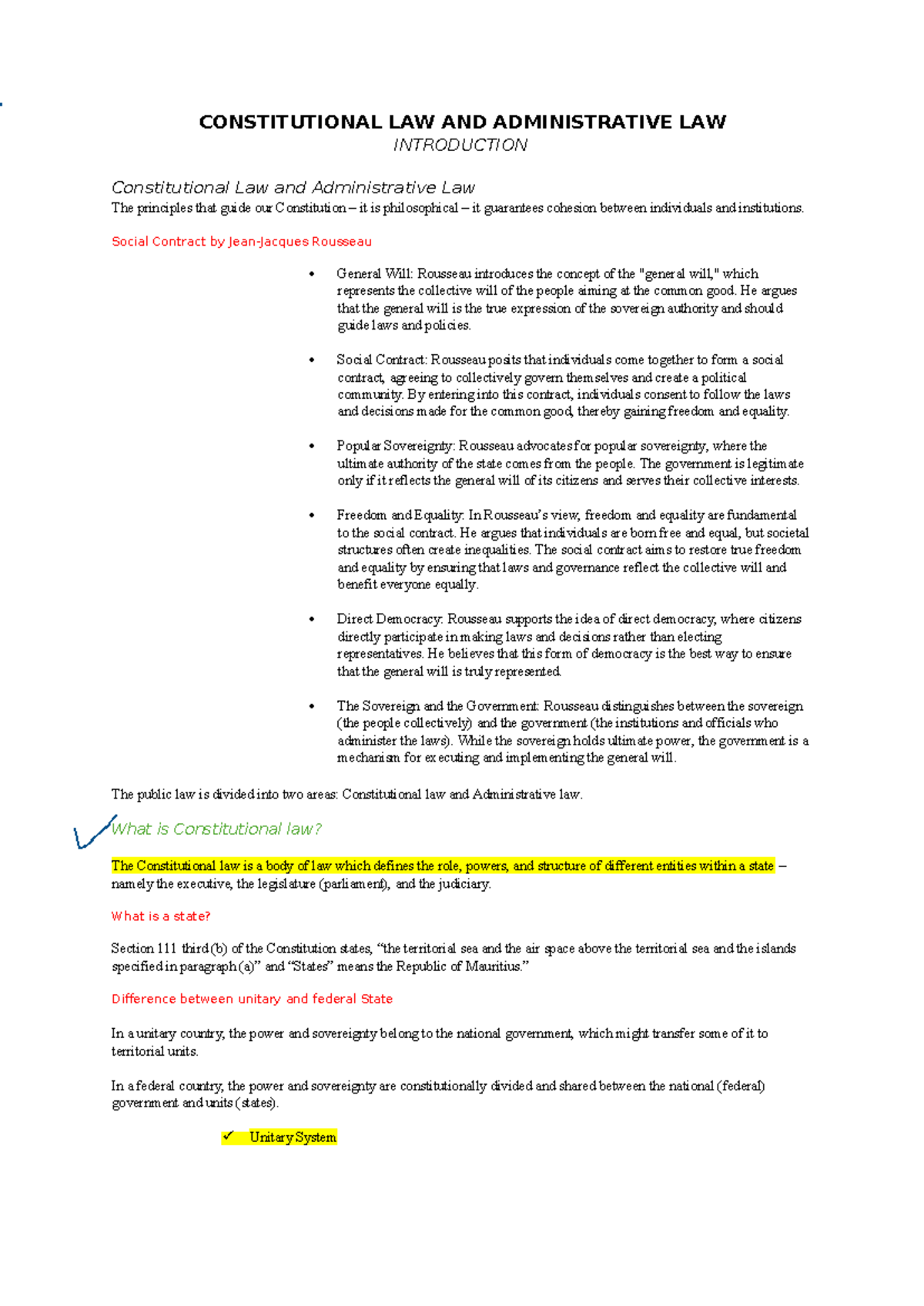
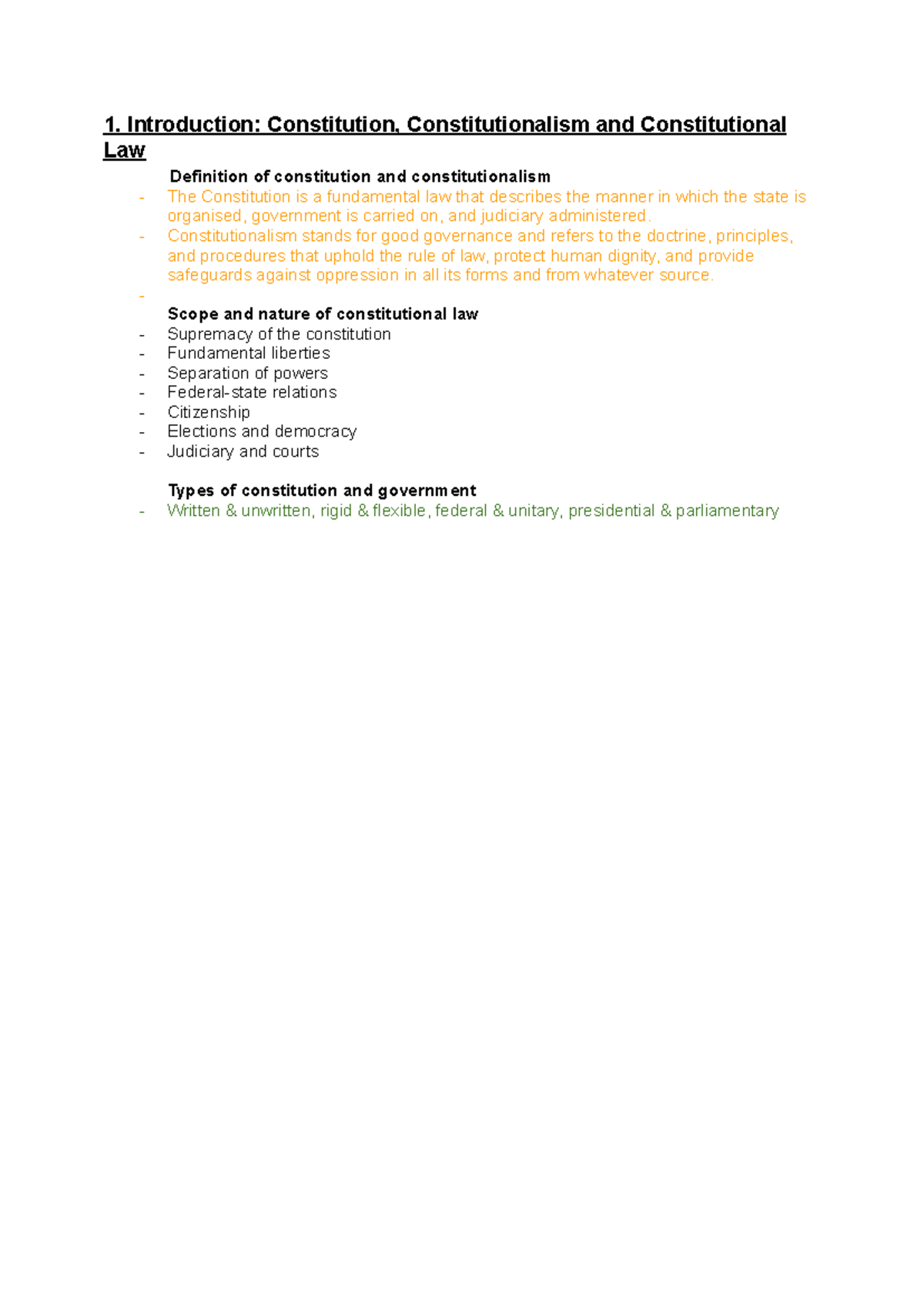
Constitutional law is the body of rules, doctrines, and judicial interpretations that define the nature, functions, and limits of a government. It establishes the foundational structure for a political system, distributes power among different branches of government, and enshrines the fundamental rights and liberties of the individuals who reside within its jurisdiction.
The Fundamental Purpose of Constitutional Law
At its core, constitutional law serves as the "supreme law" of a nation or a sub-national jurisdiction, such as a state or province. Unlike statutory law, which is created by legislatures to address specific societal problems or regulate daily conduct, constitutional law concerns itself with the legitimacy of the government itself. It provides the roadmap for how laws are made, how they are enforced, and how they are interpreted by the judiciary.
The primary objective of this legal framework is to prevent the concentration of absolute power. By creating a system of checks and balances, constitutional law ensures that the executive, legislative, and judicial branches remain accountable to one another and to the public. Furthermore, it creates a protected sphere of human activity—often codified as a Bill of Rights or a Charter of Rights—where the state is prohibited from infringing upon the individual, regardless of the political will of the majority.
Distinguishing Constitutional Law from Other Legal Fields
To understand constitutional law, it is helpful to contrast it with other areas of the law. Statutory law, for instance, consists of the day-to-day legislative output of elected bodies. If a legislature passes a traffic safety law, that is a statute. If a citizen challenges that statute on the grounds that it violates their right to free speech or due process, the case enters the realm of constitutional law.
Common law, conversely, is derived from judicial decisions made over time. While constitutional law is often codified in a written document, its practical application relies heavily on the common law tradition of "precedent"—the idea that courts should follow the logic of previous rulings. Thus, constitutional law is often a hybrid: it is anchored in the text of a written constitution but shaped by the evolving interpretations of high courts.
Key Components of a Constitution
While every nation has a unique constitutional arrangement, most functional constitutional systems share several structural components. Understanding these is essential for a complete definition of the field.
The Distribution of Power
A constitution defines the scope of authority for each branch of government. It answers foundational questions: Who has the power to declare war? Who manages the national treasury? Who is responsible for interpreting the law? By separating these roles, the constitution forces cooperation and creates friction, which is intentionally designed to slow down the government and prevent impulsive or authoritarian shifts in power.
Federalism and Jurisdictional Limits
In many nations, the constitution defines the relationship between the central (federal) government and regional (state or provincial) governments. This is known as federalism. Constitutional law in this context acts as an umpire, determining which level of government has the authority to regulate specific activities, such as education, commerce, or criminal law.
Individual Rights and Liberties
Perhaps the most visible aspect of constitutional law is the protection of individual rights. These include procedural rights (such as the right to a fair trial or protection against unreasonable searches) and substantive rights (such as freedom of religion, expression, and assembly). Constitutional law defines the boundaries where the individual’s rights end and the state’s compelling interest in public order begins.
The Role of the Judiciary in Constitutional Interpretation
A constitution is merely a document unless it is enforced. In most democratic systems, this falls to the judiciary. The power of judicial review is the mechanism by which courts examine the actions of the legislative and executive branches to determine their consistency with the constitution.
When a court engages in judicial review, it is not merely determining if a law is "good" or "bad" policy. Instead, it is performing a technical analysis of whether the act in question is authorized by the constitution. If the court finds a conflict, it may declare the law or action "unconstitutional," rendering it null and void. This is perhaps the most significant function of constitutional law: it provides a legal mechanism for the people to hold their government to the standards established in the national charter.
Comparative Framework: Statutory vs. Constitutional Law
| Feature | Statutory Law | Constitutional Law |
|---|---|---|
| Source | Legislatures (Parliament/Congress) | Fundamental Charter or Constitution |
| Primary Focus | Regulation of behavior and social policy | Structure of government and individual rights |
| Amendment Process | Standard legislative vote | Typically requires a supermajority or special process |
| Hierarchy | Subject to constitutional review | Highest level of legal authority |
| Goal | Address specific public needs | Protect the framework and fundamental liberties |
How Constitutional Law Evolves
Constitutional law is not static. While the text of a written constitution may remain unchanged for decades or even centuries, its meaning is subject to dynamic interpretation. This evolution happens through two primary channels: formal amendments and judicial interpretation.
- Formal Amendments: This is the explicit process of changing the text of the document. Because this process is usually intentionally difficult, it ensures that constitutional changes reflect a broad consensus of the populace rather than the temporary whims of a legislative majority.
- Judicial Interpretation: As society changes, the application of constitutional principles often evolves. For example, protections against "unreasonable search and seizure" that were written in the 18th century must be interpreted by modern courts to account for digital data, cloud storage, and artificial intelligence. The court serves as a living bridge between the historical intent of the drafters and the realities of modern governance.
Limitations and Challenges
It is important to acknowledge that constitutional law is not a universal panacea for political conflict. A country can have a beautifully written constitution but suffer from weak enforcement, corruption, or a lack of judicial independence. The strength of constitutional law depends entirely on the degree to which state actors respect the rule of law and the willingness of the citizenry to demand adherence to those principles.
Furthermore, there is often a tension between "originalism"—the practice of interpreting the constitution based on what its words meant at the time they were written—and the "living constitution" theory, which argues that the document must be interpreted to meet the changing needs of current generations. This debate is at the heart of nearly every significant constitutional dispute in the modern world.
Frequently Asked Questions
Does every country have a constitutional law system? Technically, every sovereign state has a constitutional structure, but not every state has a single written "constitution." Some nations, like the United Kingdom, rely on an "uncodified" constitution composed of various statutes, judicial decisions, and long-standing conventions. Regardless of the form, the principles of constitutional law—the regulation of government power—remain the same.
What happens if a government passes a law that violates the constitution? In systems with judicial review, the law can be challenged in court. If a judge or justice agrees that the law infringes on constitutional protections or exceeds the government's granted authority, the court can strike down that law, making it unenforceable.
Can constitutional law be changed by a simple majority vote? Rarely. Because constitutions are designed to be stable, the process for changing them is usually much more rigorous than passing standard laws. It typically requires a supermajority vote in the legislature or ratification by a specific percentage of regional or state entities.
Is constitutional law the same as international law? No. Constitutional law deals with the internal structure and governance of a specific country. International law deals with the relationships between sovereign states, international organizations, and individuals across borders. However, some constitutions do incorporate international treaties into their domestic law.
Why is it so difficult to change a constitution? Stability is the goal. If a constitution could be changed by a simple majority, it would be vulnerable to the temporary passions of the electorate or the interests of a single political faction. The difficulty of the amendment process protects the fundamental rights of the minority against the majority.
Practical Next Steps for Understanding Your Legal System
If you are interested in exploring the constitutional law of your own country, the most practical approach is to locate the official text of your nation's constitution. Most modern governments host these documents on official websites (usually managed by a Ministry of Justice, a Supreme Court, or a National Archives).
Once you have the text, review the preamble, which often explains the philosophy of the state. Then, examine the articles that define the roles of the executive, legislative, and judicial branches. Finally, read the section dedicated to rights. By engaging directly with the foundational document of your jurisdiction, you can move from a general understanding to a specific appreciation of how your government is structured to function and how your rights are legally protected.
If you are dealing with a specific legal issue, always remember that constitutional law is a complex field that interacts with local, regional, and national statutes. This information provides a conceptual foundation, but it is not legal advice. For specific questions regarding the application of the law to a personal situation, consult with a qualified attorney licensed in your jurisdiction, as they can provide the expertise necessary to navigate the specific statutes and precedents that apply to your case.