Life insurance premiums paid by a Self-Managed Super Fund (SMSF) are generally tax-deductible for the fund, provided the policy is held to provide a superannuation benefit for members. While the premium is technically a deductible expense for the fund, it reduces the fund's net taxable income, and trustees must ensure the cover complies with the "sole purpose test" and legislative requirements under the Superannuation Industry (Supervision) Act 1993.
Understanding the Role of Life Insurance in an SMSF
For many Australians, an SMSF serves as the primary vehicle for retirement planning. Integrating life insurance directly into this structure is a common strategy used to protect the fund’s assets and the financial future of members and their beneficiaries. When an SMSF takes out a life insurance policy—often referred to as "insurance inside super"—the fund becomes the policy owner, and the premiums are paid directly from the fund’s bank account.
From a technical perspective, the deductibility of these premiums arises because they are considered a legitimate operational expense of the fund. Under current Australian taxation law, superannuation funds are taxed at a concessional rate of 15% on their earnings and contributions. By claiming the insurance premium as a tax deduction, the SMSF effectively lowers the amount of taxable income it reports, which can result in a direct tax saving for the fund.
The Sole Purpose Test and Regulatory Compliance
The most critical factor in determining whether an SMSF can hold and deduct life insurance premiums is the "sole purpose test." Under Australian law, an SMSF must be maintained for the sole purpose of providing retirement benefits to its members or to their dependants if a member dies before retirement.
If an insurance policy does not align with these purposes, the deduction may be disallowed, and the trustees could face penalties for non-compliance. Generally, trustees are permitted to hold:
- Life Insurance (Death Cover): Provides a lump sum to beneficiaries if a member passes away.
- Total and Permanent Disability (TPD) Insurance: Provides a benefit if a member is permanently unable to work.
- Income Protection (Salary Continuance) Insurance: Provides a monthly benefit for a defined period if a member is temporarily unable to work due to illness or injury.
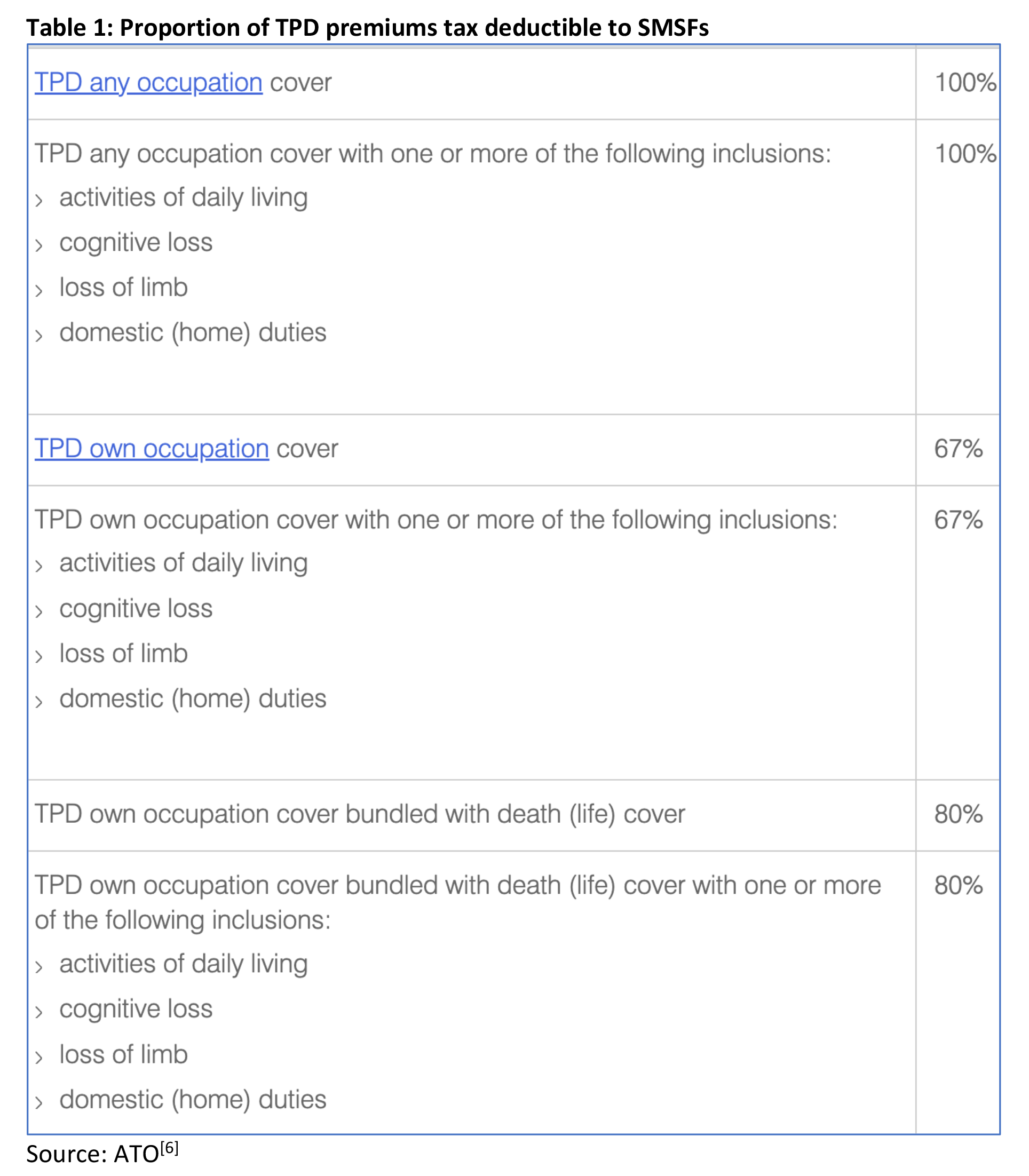
It is vital to note that some types of "own occupation" TPD cover are no longer permitted to be held within superannuation due to changes in regulatory standards. Trustees must ensure their specific insurance product meets the "any occupation" definition of disability to remain compliant with the Superannuation Industry (Supervision) Regulations.
How Tax Deductibility Works in Practice
When an SMSF pays for insurance, the transaction is recorded as an expense in the fund’s annual accounts. During the end-of-year tax filing process, this expense is subtracted from the fund's assessable income.
- Assessable Income: This includes concessional contributions (such as employer Superannuation Guarantee payments) and investment earnings (dividends, interest, rental income).
- Deductible Expenses: These include audit fees, investment management fees, and insurance premiums.
- Taxable Income: The remaining balance after expenses, which is taxed at the 15% rate.
Because the premium is deductible, the fund effectively pays for the insurance using "pre-tax" dollars. This is often more cost-effective than an individual paying for a policy personally, where the premiums would be paid out of after-tax income, providing no immediate tax relief to the individual.
Comparing Insurance Funding Methods
Choosing between paying for insurance inside an SMSF or through personal funds involves a trade-off between cash flow efficiency and benefit accessibility.
| Feature | Insurance inside SMSF | Insurance outside SMSF (Personal) |
|---|---|---|
| Premium Funding | Paid from SMSF assets | Paid from personal after-tax income |
| Tax Deductibility | Deductible for the fund | Generally not deductible |
| Benefit Payout | Paid to the SMSF | Paid to the individual |
| Accessibility | Restricted by condition of release | Readily accessible |
| Tax on Payout | May be taxed if paid to non-dependants | Generally tax-free |
Important Considerations for Trustees
Before proceeding with an insurance policy inside an SMSF, trustees must consider the impact on liquidity and the potential tax implications for beneficiaries.
Liquidity Management: SMSF trustees must ensure the fund has sufficient cash to pay annual premiums. If the fund is tied up in illiquid assets like direct property, it may struggle to cover the costs, forcing the sale of assets at unfavorable times.
Benefit Restrictions: When a payout occurs, the money is paid into the SMSF. The trustee then needs to distribute these funds to the dependants. If the beneficiaries are not "tax dependants" under Australian law (such as adult children), the portion of the payout that represents the taxable component of the super benefit may be subject to a lump sum tax of up to 17% (including Medicare levy).
Trustee Obligations: Under the Superannuation Industry (Supervision) Act 1993, trustees are legally required to formulate and review an investment strategy that specifically considers whether the fund should hold insurance cover for members. Documenting this decision—even if the decision is not to take out insurance—is a mandatory compliance step. Failure to document this review can lead to an adverse audit report.
Common Pitfalls and Troubleshooting
A common mistake is the "overlap" of coverage. Some members may have insurance inside their industry or retail super funds without realizing it. If they establish a new SMSF and purchase insurance there without canceling the old policies, they may end up "double-insuring" themselves, paying unnecessary premiums that erode their retirement savings.
Another frequent error involves the definition of disability. As of 2026, insurance policies held within super must align with the Superannuation Industry (Supervision) Regulations definitions. If a policy uses a definition of "disability" that is more generous than the legal requirement for superannuation, the insurer might refuse to pay the benefit into the SMSF, leaving the trustees in a difficult legal position.
Trustees should work closely with a financial adviser or an insurance broker specializing in SMSFs to ensure that the policy wording, the fund's trust deed, and the investment strategy are fully aligned.
Frequently Asked Questions
Does the ATO require specific documentation for insurance deductions? Yes. You must keep all policy documents, premium payment records, and evidence of the trustees' annual review of insurance needs. These documents support the deduction in your annual SMSF tax return.
Can I deduct the full premium for all insurance types? Generally, yes, provided the cover is for death, TPD, or income protection. However, you cannot deduct premiums for policies that do not comply with the Superannuation Industry (Supervision) Act, such as trauma insurance, which is generally not permitted inside an SMSF.
What happens if the SMSF cannot pay the premium? If the fund has insufficient cash, the insurance policy will lapse. Unlike personal insurance, you cannot easily pay these premiums from outside the fund without treating the payment as a contribution, which is subject to strict legislative caps.
Are there tax advantages to the payout? If a death benefit is paid to a tax-dependant (such as a spouse or child under 18), it is usually tax-free. If paid to a non-dependant, tax may apply to the taxable component of the payment. Consult a tax professional regarding your specific beneficiary structure.
How often should we review our insurance? The Superannuation Industry (Supervision) Act requires trustees to consider insurance as part of the annual investment strategy review. However, it is prudent to review cover whenever there is a significant change in a member's personal circumstances, such as marriage, the birth of a child, or a significant change in income.
Recommendation for Trustees
The decision to insure within an SMSF should be treated as a strategic financial move rather than a routine expense. Trustees should first conduct a comprehensive audit of existing insurance across all superannuation accounts to avoid duplication. Second, confirm that the fund’s trust deed specifically permits the purchase of such insurance. Finally, ensure that the insurance policy's "conditions of release" match the legal requirements for accessing money within a superannuation environment. Given the complexity of tax law and the potential for regulatory penalties, obtaining a written recommendation from a licensed financial adviser is the recommended first step for any SMSF trustee evaluating insurance options.