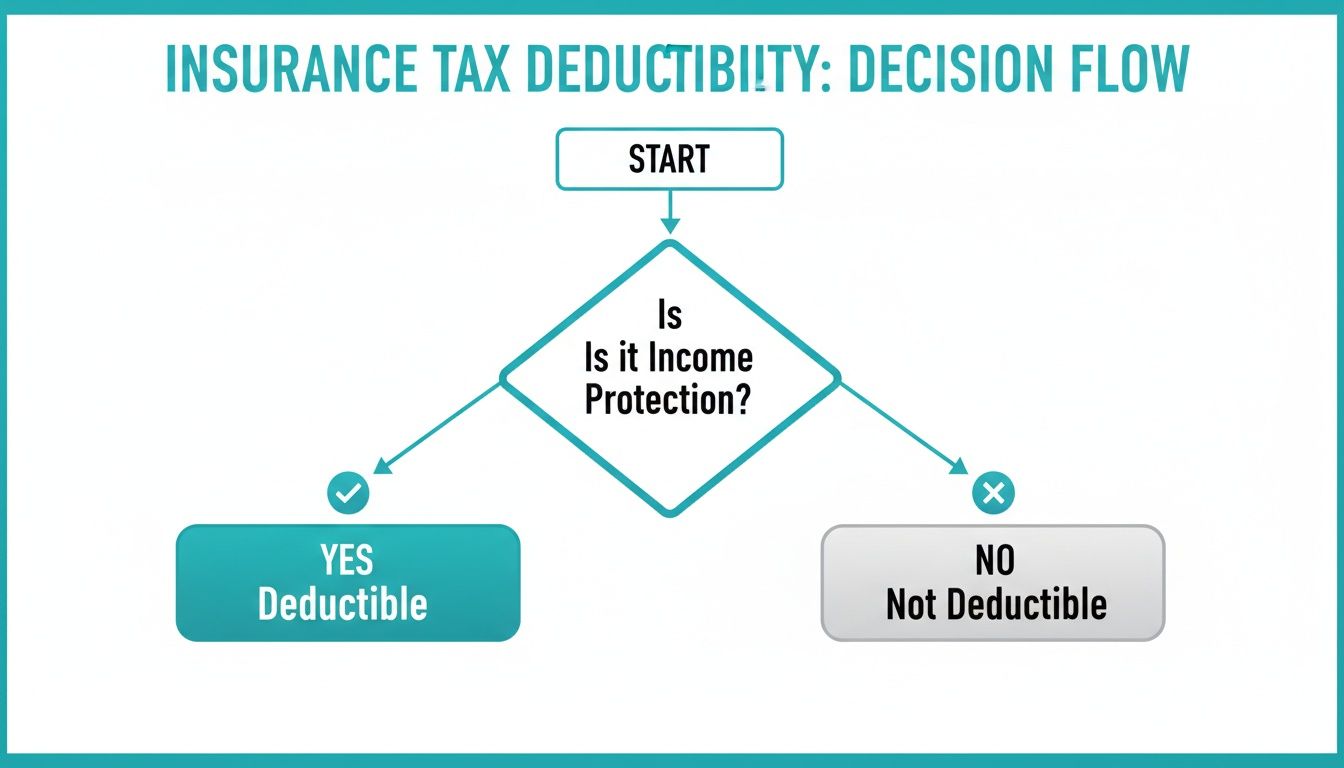
For the vast majority of individual taxpayers, life insurance policy premiums are not tax deductible. The Internal Revenue Service (IRS) generally considers life insurance premiums a personal expense rather than a business or investment cost. While there are narrow exceptions for specific business-owned policies or charitable arrangements, these situations require precise structuring and compliance with tax code provisions to qualify.
Understanding the IRS Perspective on Life Insurance Premiums
To understand why life insurance premiums are generally not deductible, it is helpful to look at how the IRS categorizes personal expenditures. Under the Internal Revenue Code (IRC), personal, living, or family expenses are explicitly nondeductible unless specifically authorized by law.
Because life insurance is viewed as a financial product designed to provide a death benefit—which is generally received by beneficiaries tax-free—the cost of maintaining that coverage is treated as a personal choice. From the perspective of the tax authorities, you are purchasing a product that protects your family or estate, similar to how you might pay for homeowner’s insurance or car insurance. While these expenses may protect your assets, they do not qualify as "ordinary and necessary" business expenses or medical deductions for the average individual.
The "Personal Expense" Classification
When you purchase a term, whole, or universal life insurance policy as an individual, you are utilizing after-tax dollars. You pay your premiums out of the income you have already received, on which you have already paid income tax. Because the policy is a personal contract between you and the insurer, the government does not grant a tax break on the monthly or annual premium payments.
Exceptions to the General Rule: When Deductibility Applies
While the general rule is one of non-deductibility, there are specific scenarios where life insurance premiums can be treated as deductible expenses. These exceptions almost exclusively occur in professional or commercial settings rather than personal ones.
1. Life Insurance as a Business Expense
If you are a business owner or a self-employed professional, you might be tempted to deduct life insurance premiums for yourself or your employees. The IRS allows this deduction only under very specific circumstances:
- Employee Benefit Plans: If a business pays for group-term life insurance for its employees, the premiums are generally deductible as a business expense. However, there are limits based on the amount of coverage provided. If the coverage exceeds $50,000 per employee, the value of the excess coverage may be considered taxable income to the employee.
- Non-Beneficiary Status: A business cannot deduct premiums if the business itself is a direct or indirect beneficiary of the policy. If you take out a policy on your own life to secure a business loan, and the lender requires you to name the business as the beneficiary, the premiums are not deductible because the business stands to gain from the death benefit.
2. Charitable Contributions
Some individuals use life insurance as a tool for charitable giving. If you assign the ownership of a life insurance policy to a qualified 501(c)(3) charity, you may be able to deduct the premium payments as charitable contributions. This requires strict adherence to IRS rules regarding the transfer of ownership. You must ensure the charity is named as the irrevocable owner and beneficiary of the policy. Merely naming a charity as a beneficiary while retaining ownership of the policy typically does not result in a tax deduction for the premiums paid.
3. Alimony and Divorce Decrees
Prior to the Tax Cuts and Jobs Act of 2017, there were limited instances where life insurance premiums required by a divorce decree could potentially be categorized as alimony, making them deductible for the payer. However, for divorce agreements executed or significantly modified after December 31, 2018, alimony is generally no longer deductible for the payer or includable in the income of the recipient. Consequently, this avenue for deducting life insurance premiums is largely obsolete for modern agreements.
Comparison Table: Deductibility Scenarios
| Scenario | Deductible? | Key Condition |
|---|---|---|
| Personal Life Insurance | No | Considered a personal expense |
| Group-Term Life (Employees) | Yes | Business expense for the employer |
| Life Insurance for Business Debt | No | Business is the beneficiary |
| Irrevocable Charity Ownership | Yes | Policy owned by a 501(c)(3) entity |
| Divorce-Mandated Policy | No | Tax law changes after 2018 |
Common Misconceptions and Risks
Navigating the tax treatment of insurance products is fraught with potential pitfalls. Misinterpreting these rules can lead to errors on your tax return, which may trigger audits or penalties.
The "Investment" Fallacy
Many policyholders believe that because whole life or universal life policies have a "cash value" component, the premiums should be treated as an investment-related expense. This is incorrect. The growth of cash value within a life insurance policy is tax-deferred, meaning you do not pay taxes on that growth while it accumulates inside the policy. Because you receive the benefit of tax-deferred growth, the IRS does not allow you to deduct the premiums used to fund that growth. Treating premiums as a deductible investment expense is a common error that auditors frequently flag.
The Hidden Trap of Business-Owned Policies
Business owners often assume that because they pay premiums through their business account, they can automatically deduct them. If the business is the beneficiary—which is common when a business buys "key person" insurance to protect against the loss of an essential executive—the premiums are definitively not deductible. Attempting to claim these as a business expense is a major compliance risk that could result in the disallowance of the deduction and the assessment of interest and penalties.
What Happens When the Policy Pays Out?
Understanding the taxability of the benefit is just as important as understanding the deductibility of the premiums. In most cases, the death benefit received by the beneficiary of a life insurance policy is income tax-free. This is a significant tax advantage. Because the payout is tax-free, the IRS justifies the inability to deduct the premiums. If you were allowed to deduct the premiums (reducing your taxes during your life) and the beneficiary received the payout tax-free, the IRS would essentially be subsidizing the policy's entire cost without ever collecting tax revenue on the transaction.
Practical Steps and Next Actions
If you are currently paying life insurance premiums and are unsure of their tax status, take the following steps to ensure you are in compliance:
- Review Your Policy Ownership: Verify who owns the policy. If you own it personally, you cannot deduct the premiums. If it is owned by a business, verify whether the business is a beneficiary.
- Consult a Tax Professional: Tax laws are subject to interpretation and jurisdictional nuance. Before claiming any deduction related to insurance, consult with a Certified Public Accountant (CPA) or tax attorney who understands your specific business structure or charitable intent.
- Document Charitable Gifts: If you intend to use life insurance for charitable giving, obtain written documentation from the charity acknowledging the transfer of ownership. Retain copies of all premium receipts to substantiate your annual charitable deduction claims.
- Audit Your Business Expenses: If you are a business owner, conduct an annual review of your insurance portfolio. Ensure that policies intended as employee benefits are correctly classified and that "key person" policies are not being erroneously deducted.
- Re-evaluate Divorce Agreements: If you have an older divorce decree that includes insurance stipulations, consult a legal professional to determine if those stipulations remain relevant under current tax codes.
Frequently Asked Questions
Are term life insurance premiums deductible if I am self-employed?
Generally, no. Even if you are self-employed, term life insurance on your own life is considered a personal expense. You cannot deduct these premiums on your Schedule C or other personal tax forms, regardless of your employment status.
Can I deduct life insurance premiums if I have a health condition?
No. There is no provision in the federal tax code that allows for the deduction of life insurance premiums based on health status or medical needs. While certain medical expenses are deductible if they exceed a percentage of your adjusted gross income, life insurance is not classified as a medical expense.
What is "key person" insurance and why isn't it deductible?
Key person insurance is a policy a business buys on a vital employee to mitigate the financial risk of their death. The premiums are not deductible because the business is the owner and the beneficiary. The IRS views this as an internal business asset, not a deductible expense.
Can I deduct the premiums if my business pays for my life insurance?
If the business pays the premiums, the cost may be considered a fringe benefit to you. If the amount of the coverage exceeds certain IRS limits (specifically for group-term life), the value of those premiums may be included in your taxable income, meaning you are essentially paying tax on the benefit, not deducting the cost.
Is there any way to lower my tax bill using life insurance?
While you cannot deduct premiums, life insurance can be an effective tax-planning tool. The cash value in permanent policies grows tax-deferred, and the death benefit is usually income tax-free for heirs. Consult a financial advisor to discuss how these features can fit into a broader estate plan rather than focusing on premium deductibility.
What should I do if I previously deducted life insurance premiums?
If you erroneously deducted life insurance premiums in previous tax years, you should consult with a tax professional regarding the potential need to file an amended return (Form 1040-X). Correcting these errors proactively can help you avoid future interest and penalty assessments from the IRS.